Loading...
Charles the Bald vs Yaroslav the Wise
Yaroslav the Wise leads by 9.6 pts · 2 figures compared
…
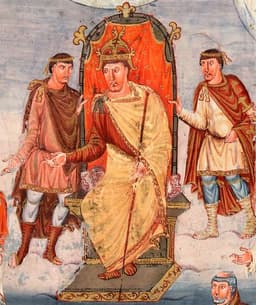
Charles the Bald
Emperor · Medieval
50.7Total
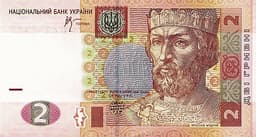
Yaroslav the Wise
Emperor · Medieval
60.3Total
Basic Information
Born
823
978
Died
877
1054
Era
Medieval
Medieval
Nationality
Frankish Empire
Kievan Rus
Occupation
Emperor
Emperor
Civilization
Western
Western
Score Comparison
Military (10%)
10.0
72.5
Political (20%)
68.0
70.0
Influence (20%)
54.9
55.0
Legacy (20%)
46.7
52.0
Leadership (15%)
65.0
72.0
Strategy (15%)
43.3
50.0
TOTAL
50.7
60.3
Charles the Bald — Complete Timeline
843 AD
Treaty of VerdunPolitical Action
Charles the Bald, along with his brothers Lothair and Louis the German, signed the Treaty of Verdun, dividing the Carolingian Empire into three kingdoms. Charles received West Francia, which became the foundation of modern France.
TreatyDivisionWest FranciaFrance
Impact: global
845 AD
Defense against Viking RaidsWar
Charles faced repeated Viking invasions, including the siege of Paris in 845. He paid large tributes (Danegeld) to buy off attackers, a strategy that temporarily secured peace but drained royal resources and exposed military weakness.
VikingsDanegeldSiege of Paris
Impact: national
875 AD
Coronation as Holy Roman EmperorPolitical Action◆ Major
Pope John VIII crowned Charles the Bald as Holy Roman Emperor, following the death of Louis II. This coronation asserted Charles's claim to imperial authority but was contested by other Carolingian rulers.
CoronationHoly Roman EmpirePapacy
Impact: regionalconstructive
Yaroslav the Wise — Complete Timeline
1016 AD
Promulgation of the Russkaya PravdaReform
Yaroslav issued the Russkaya Pravda (Rus' Justice), the first written legal code in Kievan Rus. It codified laws on crime, property, and inheritance, replacing customary law and establishing a unified legal system.
Legal CodeLawGovernance
Impact: nationalconstructive
1036 AD
Defeat of the PechenegsWar◆ Major
Yaroslav led the Kievan army to a decisive victory over the Pechenegs near Kiev. The defeat ended Pecheneg raids on Rus territory and secured the southern borders, allowing for a period of peace and prosperity.
Military VictoryBorder SecurityPechenegs
Impact: regionalconstructive
1037 AD
Construction of Saint Sophia Cathedral, KievCultural◆ Major
Yaroslav commissioned the Saint Sophia Cathedral in Kiev, modeled on the Hagia Sophia in Constantinople. The cathedral became the spiritual and cultural center of Kievan Rus, housing a library and scriptorium.
ArchitectureCathedralCultural Center
Impact: nationalconstructive
1043 AD
Marriage Alliances with European RoyaltyPolitical Action◆ Major
Yaroslav arranged marriages for his children with European royal families: his daughters married kings of France, Norway, and Hungary, and his sons married Byzantine and Polish princesses. This integrated Kievan Rus into European dynastic networks.
DiplomacyMarriage AlliancesEuropean Integration
Impact: regionalconstructive
Expert Analysis
Origins
Charles the Bald was born on June 13, 823, in Frankfurt, the youngest son of Emperor Louis the Pious and his second wife Judith. His grandfather was Charlemagne, the legendary Frankish emperor. Charles's early life was marked by family conflict: his father's attempts to secure a kingdom for him provoked rebellions from his older half-brothers, Lothair and Louis the German. These struggles defined his formative years, as he was constantly maneuvering for survival and inheritance.
Yaroslav the Wise was born around 978 in Kiev, the son of Vladimir the Great, who Christianized Kievan Rus. Yaroslav's early life was similarly turbulent. He fought against his half-brother Sviatopolk for control of Kiev after Vladimir's death in 1015. Yaroslav emerged victorious in 1019, securing the throne of Kiev after years of civil war. His background as a prince of a recently Christianized state gave him a unique perspective on state-building and cultural development.
Rise to Power
Charles the Bald's rise was a product of the Carolingian civil wars. In 843, the Treaty of Verdun divided the empire among the three surviving sons of Louis the Pious. Charles received West Francia, roughly modern France. This was a significant achievement, but his kingdom was weak, plagued by Viking raids and internal dissent. His coronation as Holy Roman Emperor in 875 by Pope John VIII marked his highest point, but it came after years of political manipulation and warfare with his brother Louis the German.
Yaroslav the Wise's rise was more direct. After defeating Sviatopolk in 1019, he consolidated power by defeating other rivals, including his brother Mstislav. By 1036, Yaroslav was the sole ruler of Kievan Rus. His reign marked a golden age. He expanded his territory, founded the city of Yaroslavl, and established diplomatic ties with Europe. His rise was characterized by military success and shrewd political marriages.
Leadership & Governance
Charles the Bald's leadership was reactive and pragmatic. He faced constant Viking raids, often paying Danegeld (tribute) to buy peace. For example, in 845, he paid 7,000 pounds of silver to Viking raiders. He also struggled to control his nobility, relying on grants of land to secure loyalty. His governance score of 65.0 reflects his ability to maintain power despite weak military resources (military score: 10.0). He issued capitularies but lacked the authority to enforce them effectively.
Yaroslav the Wise was a proactive builder. He promulgated the Russkaya Pravda (Rus' Justice), the first written legal code in the region, which standardized laws on crime, property, and inheritance. He also commissioned the Saint Sophia Cathedral in Kiev, a symbol of his cultural ambitions. His leadership score of 72.0 reflects his ability to centralize power and promote Christianity. He fostered a cultural renaissance, translating Byzantine texts into Old Church Slavonic.
Triumph & Tragedy
Charles the Bald's greatest triumph was the Treaty of Verdun, which secured his kingdom. His coronation as emperor in 875 was another high point. However, his failures were significant: his military weakness (score: 10.0) left him unable to defend his realm effectively. The siege of Paris in 845 exposed his reliance on tribute. He also failed to create a stable succession; after his death in 877, West Francia fragmented.
Yaroslav the Wise's triumph was the defeat of the Pechenegs in 1036, ending their raids and securing Kiev's southern border. His legal code and cathedral construction were lasting achievements. Yet his tragedy was the fragmentation of his realm after his death in 1054. By dividing his lands among his sons, he undid his centralization efforts, leading to decline. His influence score of 55.0 and legacy score of 52.0 reflect this mixed outcome.
Character & Destiny
Charles the Bald was intelligent and politically astute but indecisive and overly reliant on negotiation. His military score of 10.0 underscores his lack of martial skill. He often chose diplomacy over battle, which preserved his throne but invited aggression. His destiny was to be a caretaker king, overshadowed by his grandfather's legacy.
Yaroslav the Wise was ambitious and visionary. His military score of 72.5 and political score of 70.0 reflect his balanced capabilities. He was a patron of learning and religion, earning the epithet 'Wise.' His destiny was to elevate Kievan Rus to a European power, but his failure to establish a durable succession doomed his achievements.
Legacy
Charles the Bald's legacy is mixed. He preserved the Carolingian dynasty in West Francia but failed to prevent Viking incursions. His reign contributed to the feudal fragmentation that defined medieval France. His legacy score of 46.7 reflects his limited impact. Yaroslav the Wise's legacy is more profound. The Russkaya Pravda influenced later Russian law, and Saint Sophia Cathedral remains a landmark. His marriage alliances connected Rus to Europe: his daughter Anna became Queen of France. His legacy score of 52.0 is slightly higher, but the decline after his death tempers his influence.
Conclusion
Yaroslav the Wise had a greater impact than Charles the Bald. With a total score of 60.3 against Charles's 50.7, Yaroslav outperformed in military (72.5 vs 10.0), leadership (72.0 vs 65.0), and political (70.0 vs 68.0) categories. While Charles's political maneuvering secured his throne, Yaroslav's state-building and cultural patronage left a more enduring mark on Eastern Europe. The codification of laws and architectural achievements outlasted Charles's fragile kingdom. Therefore, Yaroslav the Wise is the more significant historical figure.
Rankings
🥇
Yaroslav the WiseLeader
Mil: 72.5Pol: 70.0Inf: 55.0
60.3
🥈
Charles the Bald
Mil: 10.0Pol: 68.0Inf: 54.9
50.7
+9.6 behind
How This Comparison Works
Algorithm
Each figure is scored on 6 dimensions (0—100 scale) based on structured historical data: Military (10%), Political (20%), Influence (20%), Legacy (20%), Leadership (15%), Strategy (15%). The weighted total produces the final ranking.
Data Sources
Scores are computed from structured sub-indicators in the database. Scale factors adjust for era (Ancient ×0.85, Modern ×1.0) and civilization size (Eastern ×1.05, Other ×0.80) to account for differences in population and military scale.
Maximum 3 Figures
Comparisons are limited to 2—3 figures to ensure readability and statistical meaningfulness.
Error Margins
±5 points per dimension — Sub-scores are derived from historical records with inherent uncertainty. Two figures within 5 points on a dimension should be considered roughly equivalent in that area.
Total Score Accuracy
±3 points overall — The weighted combination of 6 dimensions produces a total score with approximately ±3 points of uncertainty. Differences of less than 3 points are not statistically significant— the figures are effectively tied.
Known Limitations
- Historical records are incomplete and uneven across civilizations
- Figures from oral-tradition societies may be underrepresented
- Occupation labels can misclassify multi-role figures
- Scores measure capability and impact, not moral character
- Quantitative scoring is a comparison tool, not absolute truth
Capability Radar
Military (10%) — Battles & Warfare
Battles
45
60
Win Rate
40
65
Expansion
35
55
Political (20%) — Governance & Reform
Reform
45
85
Diplomacy
55
80
Economy
50
70
Influence (20%) — Cultural & Global Reach
Cultural
40
65
Global
30
55
Legacy (20%) — Historical Impact
Historical
45
70
Longevity
35
60
Leadership (15%) — Power & Stability
Tenure
60
75
Stability
40
70
Strategy (15%) — Tactics & Innovation
Strategy
40
60
Tactics
35
55
Reform
30
50
Similar Comparisons
Comments & Discussion
No comments yet. Be the first to share your thoughts!