Loading...
Emperor Taizu of Liao vs Yaroslav the Wise
Emperor Taizu of Liao leads by 6.5 pts · 2 figures compared
…
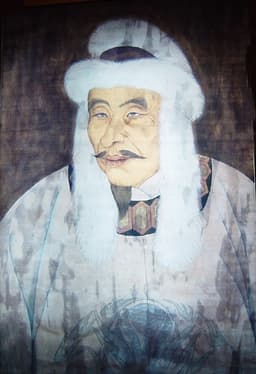
Emperor Taizu of Liao
Emperor · Medieval
66.8Total
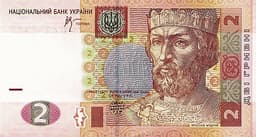
Yaroslav the Wise
Emperor · Medieval
60.3Total
Basic Information
Born
872
978
Died
926
1054
Era
Medieval
Medieval
Nationality
China
Kievan Rus
Occupation
Emperor
Emperor
Civilization
Eastern
Western
Score Comparison
Military (10%)
76.0
72.5
Political (20%)
78.0
70.0
Influence (20%)
72.0
55.0
Legacy (20%)
40.0
52.0
Leadership (15%)
80.0
72.0
Strategy (15%)
75.0
50.0
TOTAL
66.8
60.3
Emperor Taizu of Liao — Complete Timeline
907 AD
Founding of the Liao DynastyPolitical Action
Abaoji, a Khitan chieftain, unified the Khitan tribes and proclaimed himself emperor, founding the Liao dynasty. This established the first major steppe-based dynasty to rule parts of northern China.
Dynasty FoundingUnification
Impact: regionalconstructive
916 AD
Establishment of the Dual Administration SystemReform◆ Major
Emperor Taizu established a dual administration system, with separate institutions for Khitan and Chinese subjects. This allowed the Liao to effectively govern both nomadic and agricultural populations, a model later adopted by other conquest dynasties.
Government ReformAdministration
Impact: regionalconstructive
920 AD
Creation of the Khitan ScriptCultural◆ Major
Emperor Taizu ordered the creation of a Khitan script, based on Chinese characters, to write the Khitan language. This script was used for official documents and inscriptions, promoting Khitan culture and administration.
Writing SystemCultural Development
Impact: regionalconstructive
926 AD
Conquest of the Bohai KingdomWar◆ Major
Emperor Taizu led a campaign that conquered the Bohai Kingdom in Manchuria. This victory expanded Liao territory eastward and eliminated a rival state, securing the Liao's eastern frontier.
ConquestExpansion
Impact: regionalconstructive
Death of Emperor TaizuPolitical Action
Emperor Taizu died during a campaign against the Bohai Kingdom. His death led to a succession struggle among his sons, but his son Yel
DeathSuccession
Impact: national
Yaroslav the Wise — Complete Timeline
1016 AD
Promulgation of the Russkaya PravdaReform
Yaroslav issued the Russkaya Pravda (Rus' Justice), the first written legal code in Kievan Rus. It codified laws on crime, property, and inheritance, replacing customary law and establishing a unified legal system.
Legal CodeLawGovernance
Impact: nationalconstructive
1036 AD
Defeat of the PechenegsWar◆ Major
Yaroslav led the Kievan army to a decisive victory over the Pechenegs near Kiev. The defeat ended Pecheneg raids on Rus territory and secured the southern borders, allowing for a period of peace and prosperity.
Military VictoryBorder SecurityPechenegs
Impact: regionalconstructive
1037 AD
Construction of Saint Sophia Cathedral, KievCultural◆ Major
Yaroslav commissioned the Saint Sophia Cathedral in Kiev, modeled on the Hagia Sophia in Constantinople. The cathedral became the spiritual and cultural center of Kievan Rus, housing a library and scriptorium.
ArchitectureCathedralCultural Center
Impact: nationalconstructive
1043 AD
Marriage Alliances with European RoyaltyPolitical Action◆ Major
Yaroslav arranged marriages for his children with European royal families: his daughters married kings of France, Norway, and Hungary, and his sons married Byzantine and Polish princesses. This integrated Kievan Rus into European dynastic networks.
DiplomacyMarriage AlliancesEuropean Integration
Impact: regionalconstructive
Expert Analysis
Origins
Emperor Taizu of Liao, born Yelü Abaoji in 872 AD, was a member of the Yelü clan of the Khitan people, a nomadic confederation in present-day northeastern China. His early life as a tribal leader saw him navigating the complex power dynamics among the Khitan tribes, which were loosely united under the Yaonian clan. Abaoji rose through military prowess and political acumen, becoming a chieftain of the Yelü tribe. His formative experiences included leading raids against neighboring Chinese states and other nomadic groups, which honed his strategic skills.
Yaroslav the Wise was born around 978 AD in Kievan Rus, the son of Grand Prince Vladimir the Great. He was a member of the Rurik dynasty, which had ruled Kievan Rus since the 9th century. Yaroslav's early life was marked by a civil war among Vladimir's sons after Vladimir's death in 1015. Yaroslav, initially Prince of Novgorod, fought against his brother Sviatopolk I for control of Kiev. His upbringing in a Christianizing state, combined with exposure to Byzantine and Scandinavian cultures, shaped his later policies.
Rise to Power
Emperor Taizu's rise began in 901 AD when he was elected chieftain of the Yelü tribe. He gradually unified the Khitan tribes through a combination of military conquest and diplomacy. In 907 AD, he was elected Khan of the Khitan, and by 916 AD, he declared himself Emperor, founding the Liao dynasty. Key turning points included his defeat of the rival Kumo Xi and Shiwei tribes, and his strategic alliance with the Shatuo Turks. His establishment of a capital at Shangjing (present-day Inner Mongolia) solidified his rule.
Yaroslav's rise to power was more tumultuous. After his father Vladimir's death in 1015, Yaroslav's brother Sviatopolk seized Kiev and murdered other brothers. Yaroslav, with support from Novgorod and Varangian mercenaries, fought a series of battles, culminating in the Battle of the Alta River in 1019, where he defeated Sviatopolk. He then became Grand Prince of Kiev. His reign was later challenged by his brother Mstislav, but after Mstislav's death in 1036, Yaroslav became the sole ruler of Kievan Rus.
Leadership & Governance
Emperor Taizu established a dual administration system, with separate institutions for Khitan and Chinese subjects. This allowed the Liao to effectively rule a vast multi-ethnic empire. He also created the Khitan script, based on Chinese characters, to write the Khitan language, which helped unify his realm culturally. His military leadership was aggressive, expanding Liao territory through conquest of the Bohai Kingdom in 926 AD. He scored 78.0 in political leadership, reflecting his innovative governance.
Yaroslav the Wise is best known for promulgating the Russkaya Pravda (Rus' Justice) around 1037 AD, the first written legal code in Kievan Rus. This code standardized laws on crime, property, and inheritance, reducing arbitrary rule. He also commissioned the Saint Sophia Cathedral in Kiev, modeled on the Hagia Sophia, which became a center of religious and cultural life. His foreign policy involved strategic marriage alliances with European royal families: his daughters married kings of France, Norway, and Hungary, and his sons married Byzantine and Polish princesses. This diplomacy enhanced Kievan Rus's prestige. He scored 70.0 in political leadership, slightly lower than Taizu.
Triumph & Tragedy
Emperor Taizu's greatest triumph was founding the Liao dynasty and unifying the Khitan tribes, creating a state that lasted over 200 years. His conquest of the Bohai Kingdom in 926 AD eliminated a rival and expanded Liao territory. However, his death later that year during a campaign against the Bohai Kingdom led to a succession crisis, though his son Yelü Deguang eventually succeeded him. His greatest failure was perhaps the incomplete integration of Chinese and Khitan systems, leading to tensions that persisted.
Yaroslav's greatest triumph was the defeat of the Pechenegs in 1036 AD, which secured Kiev's southern borders and ended their raids. His codification of laws and construction of Saint Sophia Cathedral left a lasting cultural legacy. However, his death in 1054 AD led to a decline, as his sons divided the realm among themselves, beginning a period of fragmentation. His failure to establish a clear succession mechanism contributed to the eventual collapse of Kievan Rus.
Character & Destiny
Emperor Taizu was a pragmatic and ambitious leader, willing to adopt Chinese administrative methods while preserving Khitan identity. His creation of a dual administration system shows his adaptability. His death in the field demonstrates his hands-on leadership style. Historians rate his leadership at 80.0, reflecting his decisive action.
Yaroslav was more of a lawgiver and diplomat, focused on building institutions and alliances. His nickname "the Wise" reflects his reputation for learning and justice. However, his failure to secure a stable succession shows a lack of foresight. His leadership score of 72.0 is lower than Taizu's.
Legacy
Emperor Taizu's Liao dynasty lasted from 916 to 1125 AD, influencing later Chinese dynasties like the Song, which adopted elements of the dual administration system. The Khitan script he created was used for centuries. However, the Liao were eventually conquered by the Jin dynasty, and the Khitan people largely assimilated. His legacy score is 40.0, reflecting the limited survival of his state.
Yaroslav's Russkaya Pravda influenced later Russian law codes, and Saint Sophia Cathedral remains a symbol of Kyiv's heritage. His marriage alliances connected Kievan Rus to European royal houses, enhancing its cultural exchange. However, Kievan Rus fragmented after his death, and his legal code was not fully preserved. His legacy score of 52.0 is higher than Taizu's, indicating a more enduring cultural impact.
Conclusion
While Emperor Taizu of Liao scores higher overall (66.8 vs 60.3) and was a more effective military and political leader, Yaroslav the Wise's legacy in law and culture has had a longer-lasting impact on Russian and Ukrainian identity. Taizu's founding of the Liao dynasty was a significant achievement, but the dynasty eventually fell, and its contributions were largely absorbed. Yaroslav's legal code and architectural monuments have endured for centuries, shaping the legal and cultural foundations of Eastern Europe. Therefore, Yaroslav the Wise had a greater long-term impact on history, despite his lower total score.
Rankings
🥇
Emperor Taizu of LiaoLeader
Mil: 76.0Pol: 78.0Inf: 72.0
66.8
🥈
Yaroslav the Wise
Mil: 72.5Pol: 70.0Inf: 55.0
60.3
+6.5 behind
How This Comparison Works
Algorithm
Each figure is scored on 6 dimensions (0—100 scale) based on structured historical data: Military (10%), Political (20%), Influence (20%), Legacy (20%), Leadership (15%), Strategy (15%). The weighted total produces the final ranking.
Data Sources
Scores are computed from structured sub-indicators in the database. Scale factors adjust for era (Ancient ×0.85, Modern ×1.0) and civilization size (Eastern ×1.05, Other ×0.80) to account for differences in population and military scale.
Maximum 3 Figures
Comparisons are limited to 2—3 figures to ensure readability and statistical meaningfulness.
Error Margins
±5 points per dimension — Sub-scores are derived from historical records with inherent uncertainty. Two figures within 5 points on a dimension should be considered roughly equivalent in that area.
Total Score Accuracy
±3 points overall — The weighted combination of 6 dimensions produces a total score with approximately ±3 points of uncertainty. Differences of less than 3 points are not statistically significant— the figures are effectively tied.
Known Limitations
- Historical records are incomplete and uneven across civilizations
- Figures from oral-tradition societies may be underrepresented
- Occupation labels can misclassify multi-role figures
- Scores measure capability and impact, not moral character
- Quantitative scoring is a comparison tool, not absolute truth
Capability Radar
Military (10%) — Battles & Warfare
Battles
75
60
Win Rate
80
65
Expansion
85
55
Political (20%) — Governance & Reform
Reform
90
85
Diplomacy
80
80
Economy
75
70
Influence (20%) — Cultural & Global Reach
Cultural
65
65
Global
60
55
Legacy (20%) — Historical Impact
Historical
75
70
Longevity
70
60
Leadership (15%) — Power & Stability
Tenure
85
75
Stability
70
70
Strategy (15%) — Tactics & Innovation
Strategy
85
60
Tactics
70
55
Reform
90
50
Similar Comparisons
Comments & Discussion
No comments yet. Be the first to share your thoughts!