Loading...
Charles the Bold vs Julius Caesar
Julius Caesar leads by 24.9 pts · 2 figures compared
…
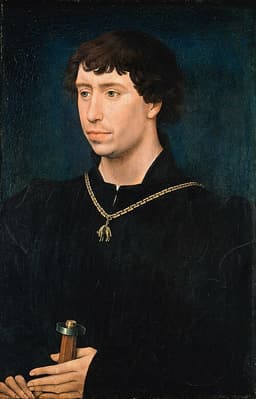
Charles the Bold
Emperor · Medieval
57.9Total

Julius Caesar
General · Ancient
82.8Total
Basic Information
Born
1433
-100
Died
1477
-44
Era
Medieval
Ancient
Nationality
Burgundy
Roman Republic
Occupation
Emperor
General
Civilization
Western
Western
Score Comparison
Military (10%)
52.5
88.0
Political (20%)
68.0
78.0
Influence (20%)
59.0
85.0
Legacy (20%)
49.2
82.0
Leadership (15%)
65.7
80.0
Strategy (15%)
55.0
85.0
TOTAL
57.9
82.8
Charles the Bold — Complete Timeline
1467 AD
Inherited the Burgundian LandsPolitical Action◆ Major
Charles succeeded his father Philip the Good as Duke of Burgundy. He inherited a wealthy and powerful state comprising the Burgundian Netherlands, Franche-Comt
SuccessionBurgundian State
Impact: regionalconstructive
1468 AD
War with France and the Treaty of PéronneWar◆ Major
Charles forced King Louis XI of France to sign the Treaty of P
TreatyFranco-Burgundian ConflictDiplomacy
Impact: regional
1474 AD
Siege of NeussWar◆ Major
Charles besieged the imperial city of Neuss for nearly a year, defying the Holy Roman Emperor Frederick III. The siege ended inconclusively when an imperial army approached. This conflict alienated the German princes and weakened Charles's political position.
SiegeImperial ConflictBurgundian Wars
Impact: regionaldestructive
1476 AD
Battle of GrandsonWar◆ Major
Charles's army was defeated by the Swiss Confederacy at Grandson. The Burgundians abandoned their camp, which was looted. The defeat was a major setback, shattering the myth of Burgundian invincibility and encouraging further Swiss resistance.
BattleSwiss ConfederacyDefeat
Impact: regionaltragic
Battle of MoratWar◆ Major
Charles suffered a second devastating defeat by the Swiss at Morat. His army was routed, and he lost much of his artillery and baggage. The defeat effectively ended Burgundian ambitions in Switzerland and left Charles's state vulnerable.
BattleSwiss ConfederacyDefeat
Impact: regionaltragic
1477 AD
Battle of Nancy and DeathWar
Charles was killed in battle at Nancy while fighting the Swiss and the Duke of Lorraine. His body was found mutilated. His death ended the Burgundian state as an independent power, and his lands were divided between France and the Habsburgs through his daughter Mary.
BattleDeathEnd of Burgundy
Impact: regionaltragic
Julius Caesar — Complete Timeline
58 BC
Gallic WarsWar◆ Major
Caesar, as proconsul of Gaul, launched a series of campaigns that conquered all of Gaul (modern France, Belgium, and parts of Switzerland). He fought numerous battles, including against the Helvetii, the Belgae, and the Gallic chieftain Vercingetorix. The wars brought immense wealth and a loyal army to Caesar.
Gallic WarsConquestRoman Expansion
Impact: regional
49 BC
Crossing the RubiconPolitical Action◆ Major
Caesar led Legio XIII across the Rubicon River into Italy, defying the Roman Senate's order to disband his army. This act triggered a civil war against Pompey and the Optimates, ultimately leading to Caesar's dictatorship and the end of the Roman Republic.
Roman Civil WarEnd of RepublicPower Struggle
Impact: global
48 BC
Battle of PharsalusWar◆ Major
Caesar's outnumbered army defeated the larger forces of Pompey the Great at Pharsalus in Greece. Caesar's tactical use of a reserve line to counter Pompey's cavalry charge proved decisive. Pompey fled to Egypt, where he was assassinated, leaving Caesar as the undisputed master of the Roman world.
Roman Civil WarBattleDecisive Victory
Impact: regional
44 BC
Appointment as Dictator for LifePolitical Action◆ Major
The Roman Senate appointed Caesar dictator perpetuo (dictator for life), granting him unprecedented personal power. This move concentrated military, legislative, and judicial authority in one person, effectively ending the Roman Republic's traditional system of checks and balances and alarming many senators.
DictatorshipEnd of RepublicPower Consolidation
Impact: regionaldestructive
Assassination on the Ides of MarchPolitical Action◆ Major
A group of Roman senators, led by Marcus Junius Brutus and Gaius Cassius Longinus, stabbed Caesar to death at a meeting of the Senate in the Theatre of Pompey. The assassination was intended to restore the Republic, but instead triggered another civil war that led to the rise of the Roman Empire.
AssassinationRoman PoliticsEnd of Republic
Impact: globaldestructive
Expert Analysis
charles-the-bold-vs-julius-caesar
# The Ambitious Edge: Why Caesar Conquered an Empire While Charles the Bold Lost One
On a January morning in 49 BCE, Julius Caesar stood at the Rubicon River, a small stream separating his province of Gaul from Italy proper. To cross with his legions would mean civil war—a gamble that could end in triumph or utter ruin. He crossed. Fourteen centuries later, in the snows of January 1477, another ambitious ruler lay dead in a frozen ditch outside Nancy, his body stripped naked, his face so battered by pike blows that it took days to identify him. Charles the Bold, Duke of Burgundy, had also gambled everything on his military might. One man died at the height of his power, stabbed by senators in the Senate house. The other died alone, abandoned by his army, in a muddy field. The difference between them was not merely luck, but something far deeper—a question of how ambition meets the world.
Origins
Both men inherited more than they built, yet they inherited very different things. Caesar was born into the patrician Julian clan, an ancient but impoverished family in a Roman Republic already straining under the weight of its own success. His Rome was a city of ruthless competition, where glory and wealth went to generals who conquered foreign lands and politicians who outmaneuvered their rivals. The Republic rewarded audacity, and Caesar learned this lesson young.
Charles the Bold, by contrast, was born in 1433 into the richest court in Europe. His father, Philip the Good of Burgundy, ruled a patchwork of territories—the Low Countries, Franche-Comté, and much of eastern France—that had become the economic powerhouse of the medieval world. Burgundy was not a kingdom but a duchy, a political anomaly that existed only because the French crown was weak and the Burgundian dukes were brilliant. Charles inherited wealth, but he also inherited a structural problem: his lands were scattered, surrounded by enemies, and legally subordinate to a king he refused to acknowledge as his master.
Rise to Power
Caesar’s path to power was a masterclass in political patience wrapped in military daring. He climbed the cursus honorum—the ladder of Roman offices—methodically, borrowing enormous sums to fund games and bribes that bought popularity. His real breakthrough came in 58 BCE, when he secured command of Gaul. Over eight years, he conquered the entire region, writing his own propaganda in the *Commentaries* that still read like adventure literature. He made himself rich, built a loyal army, and waited for the Republic to hand him an excuse to strike.
Charles’s rise was more straightforward. When Philip the Good died in 1467, Charles simply inherited. But inheritance is not the same as conquest. Charles had to assert authority over fractious nobles, rebellious cities like Ghent and Liège, and a French king, Louis XI, who was arguably the most devious monarch of the age. Where Caesar had spent decades earning loyalty through shared plunder and personal charisma, Charles expected loyalty by right of birth. This difference would prove fatal.
Leadership & Governance
Caesar governed through a blend of clemency and calculation. When he defeated his Roman enemies, he pardoned them—a strategy that turned former foes into grateful allies. He reformed the calendar, granted citizenship to provincials, and initiated public works that employed the poor. His dictatorship was absolute, but he always dressed it in the language of tradition. He understood that power in Rome required performance.
Charles governed through fear and iron will. He centralized administration, created a professional army with artillery and disciplined infantry, and tried to forge his scattered territories into a unified kingdom. He demanded total obedience and punished defiance brutally. When the city of Liège resisted, he burned it to the ground and massacred its inhabitants. The contrast with Caesar’s clemency is stark: Caesar forgave his enemies because he wanted them to owe him; Charles destroyed his enemies because he could not imagine them as anything else.
Militarily, Caesar was a genius of maneuver and logistics. At Alesia in 52 BCE, he besieged the Gallic chieftain Vercingetorix while simultaneously building fortifications to repel a massive relief army—and won. Charles, with a Strategy score of 55.2 against Caesar’s 88, was competent but inflexible. At Grandson in 1476, he deployed his army in a strong position, but when the Swiss pikemen charged, his mercenaries panicked and fled. At Morat, he repeated the same mistake. He never adapted to the Swiss tactic of rapid, massed infantry assault.
Triumph & Tragedy
Caesar’s greatest triumph was not a battle but a political act: crossing the Rubicon. In that single decision, he ended the Roman Republic and began the Empire. His tragedy came on the Ides of March, 44 BCE, when sixty senators stabbed him to death. He had centralized so much power that he made himself a target, yet he had failed to secure his legacy with a stable succession.
Charles’s tragedy was far more complete. His greatest moment was arguably the Treaty of Péronne in 1468, when he trapped King Louis XI and forced him to recognize Burgundian independence. But his downfall came in a cascade of defeats. After Grandson and Morat, his treasury was depleted, his army shattered. At Nancy in 1477, he fought with a small, exhausted force against the Swiss and the Duke of Lorraine. He died on the battlefield, his body mutilated. His only daughter, Mary, was forced to marry the Habsburg emperor, and Burgundy was carved up between France and the Holy Roman Empire. Within a generation, the Burgundian state vanished from the map.
Character & Destiny
Caesar was a gambler who calculated his odds. He knew when to be bold and when to be merciful. His personality—charming, ruthless, intellectually curious—allowed him to inspire loyalty in men who had every reason to betray him. He understood that politics was the art of making people want what you want.
Charles was a gambler who could not stop. He was proud, stubborn, and obsessed with glory. He dreamed of reviving the ancient Kingdom of Lotharingia, but he lacked the flexibility to achieve it. When the Swiss offered peace after Grandson, he refused. When his nobles advised caution, he ignored them. His personality was his destiny: he could not bend, so he broke.
Legacy
Caesar’s legacy is immeasurable. His name became synonymous with imperial power—Kaiser and Tsar both derive from it. His reforms outlived him, and the Roman Empire he unwittingly created lasted another five centuries in the West. He is remembered as a genius, a tyrant, and a founder.
Charles’s legacy is a footnote. He is remembered, if at all, as the last of the great Burgundian dukes, a man who nearly built a kingdom between France and Germany but failed because he could not match his ambition with wisdom. His death enabled the rise of the Habsburgs, who would dominate Europe for centuries, but he himself is a cautionary tale.
Conclusion
The difference between Caesar and Charles the Bold is not that one succeeded and the other failed—Caesar, after all, was assassinated at fifty-five, his work unfinished. The difference is that Caesar understood the world he lived in, while Charles tried to force the world to fit his vision. Caesar knew when to cross a river. Charles did not know when to stop. In the end, ambition alone is never enough; it must be paired with the judgment to know which battles to fight, which enemies to forgive, and which rivers to leave uncrossed. Charles the Bold had the ambition of a Caesar, but not the mind of one—and that is why one man’s name became a title, while the other’s became a warning.
Rankings
🥇
Julius CaesarLeader
Mil: 88.0Pol: 78.0Inf: 85.0
82.8
🥈
Charles the Bold
Mil: 52.5Pol: 68.0Inf: 59.0
57.9
+24.9 behind
How This Comparison Works
Algorithm
Each figure is scored on 6 dimensions (0—100 scale) based on structured historical data: Military (10%), Political (20%), Influence (20%), Legacy (20%), Leadership (15%), Strategy (15%). The weighted total produces the final ranking.
Data Sources
Scores are computed from structured sub-indicators in the database. Scale factors adjust for era (Ancient ×0.85, Modern ×1.0) and civilization size (Eastern ×1.05, Other ×0.80) to account for differences in population and military scale.
Maximum 3 Figures
Comparisons are limited to 2—3 figures to ensure readability and statistical meaningfulness.
Error Margins
±5 points per dimension — Sub-scores are derived from historical records with inherent uncertainty. Two figures within 5 points on a dimension should be considered roughly equivalent in that area.
Total Score Accuracy
±3 points overall — The weighted combination of 6 dimensions produces a total score with approximately ±3 points of uncertainty. Differences of less than 3 points are not statistically significant— the figures are effectively tied.
Known Limitations
- Historical records are incomplete and uneven across civilizations
- Figures from oral-tradition societies may be underrepresented
- Occupation labels can misclassify multi-role figures
- Scores measure capability and impact, not moral character
- Quantitative scoring is a comparison tool, not absolute truth
Capability Radar
Military (10%) — Battles & Warfare
Battles
65
95
Win Rate
40
92
Expansion
60
97
Political (20%) — Governance & Reform
Reform
65
90
Diplomacy
45
85
Economy
60
82
Influence (20%) — Cultural & Global Reach
Cultural
50
88
Global
35
94
Legacy (20%) — Historical Impact
Historical
55
95
Longevity
40
96
Leadership (15%) — Power & Stability
Tenure
55
75
Stability
30
60
Strategy (15%) — Tactics & Innovation
Strategy
55
94
Tactics
60
96
Reform
70
88
Similar Comparisons
Comments & Discussion
战略考古者6/17/2026
事实冷峻:恺撒死时罗马横跨地中海,查理死时勃艮第已被法国肢解。一个是权力的顶点,一个是权力的坟墓。但让我们诚实点——恺撒有军团、有海运、有稳定的粮食供应链。查理有火药、有骑士、却没能整合帝国财政。区别不是勇气,是后勤。
DUKE OF DESTINY6/17/2026
Caesar’s gamble at the Rubicon was calculated audacity—he knew his legions were loyal to him alone. Charles’s fatal charge at Nancy was desperate bravado, ignoring that his Swiss mercenaries had already fled. Caesar read his enemies; Charles underestimated them. One died building an empire, the other throwing one away.
战史解码6/17/2026
数据不会撒谎:恺撒在高卢八年打了30场主要战役,伤亡比惊人地高效;大胆查理在15年内核心领土缩水40%。一个把战争当精密仪器,另一个当骰子赌桌。别拿罗马的雄鹰跟勃艮第的狮子比,压根不是同个量级。
CLASSICUS IRATUS6/17/2026
Caesar wrote his own history, literally—his Commentaries are masterful propaganda framing every defeat as strategy, every retreat as tactics. Charles left no such defense, just battlefield corpses. Who controls the narrative controls the legacy. The Bold’s corpse was identified by his lung scar; Caesar’s by his assassins’ daggers. Both brutal, but only one immortalized himself in ink.
文史考据狂6/17/2026
拜托,别用中世纪公爵对标共和国末期独裁官。查理苦心经营的无敌军团在格兰森一战就被瑞士长矛兵打穿,而恺撒的法萨卢斯战役直接终结了庞培的东方军团。时代不同、经济基础不同、军制不同,但本质相同:查理缺了恺撒那种把政治当血肉游戏的天赋。
SALADIN’S GHOST6/17/2026
Both overreached, but Caesar understood timing. He crossed the Rubicon when Rome was weak; Charles attacked the Swiss when they were Europe’s deadliest infantry. Caesar exploited republican decay; Charles ignored Burgundy’s financial limits—his army cost 10,000 florins daily in 1476. Ambition without context is just suicide.