Loading...
Charles VI vs John III of Sweden
John III of Sweden leads by 1.4 pts · 2 figures compared
…
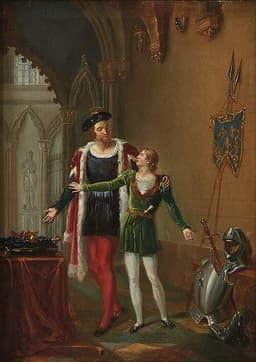
Charles VI
Emperor · Modern
50.0Total
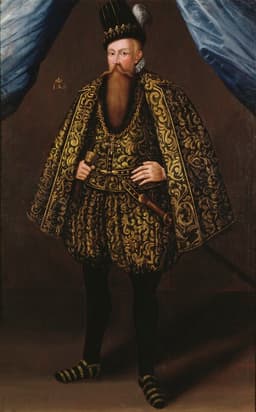
John III of Sweden
Emperor · Modern
51.4Total
Basic Information
Born
1685
1537
Died
1740
1592
Era
Modern
Modern
Nationality
Holy Roman Empire
Sweden
Occupation
Emperor
Emperor
Civilization
Western
Western
Score Comparison
Military (10%)
50.0
50.0
Political (20%)
45.0
68.0
Influence (20%)
54.9
53.3
Legacy (20%)
49.2
44.2
Leadership (15%)
53.2
53.2
Strategy (15%)
42.3
38.3
TOTAL
50.0
51.4
Charles VI — Complete Timeline
1713 AD
Issued the Pragmatic SanctionPolitical Action
Charles VI issued the Pragmatic Sanction, a legal instrument to ensure that the Habsburg hereditary lands could be inherited by a female heir (his daughter Maria Theresa) in the absence of a male son. He spent decades securing recognition from European powers, but it failed to prevent the War of the Austrian Succession.
Pragmatic SanctionSuccessionHabsburg
Impact: global
1739 AD
Treaty of BelgradePolitical Action◆ Major
Charles VI's forces, after a disastrous war with the Ottoman Empire, signed the Treaty of Belgrade. The treaty ceded Belgrade and northern Serbia to the Ottomans, reversing the gains of the Treaty of Passarowitz and weakening Habsburg influence in the Balkans.
Ottoman WarTreatyTerritorial Loss
Impact: regionaldestructive
1740 AD
War of the Austrian SuccessionWar◆ Major
Charles VI's death in 1740 triggered the War of the Austrian Succession, as Prussia, France, and Bavaria challenged Maria Theresa's inheritance. The war, lasting until 1748, resulted in the loss of Silesia to Prussia but confirmed Maria Theresa's rule in most Habsburg lands.
War of the Austrian SuccessionMaria TheresaSilesia
Impact: global
John III of Sweden — Complete Timeline
1569 AD
Coronation of John IIIPolitical Action◆ Major
John III was crowned King of Sweden after deposing his half-brother Eric XIV. His reign focused on religious reconciliation and cultural patronage, including the introduction of the Red Book liturgy.
CoronationSuccession
Impact: national
Imprisonment of Eric XIVPolitical Action
John III ordered the continued imprisonment of his deposed half-brother Eric XIV, who was held at various castles until his death in 1577. This secured John's throne but created a lasting stain on his reign.
ImprisonmentDynastic Conflict
Impact: nationaldestructive
1570 AD
War against Russia (Livonian War)War◆ Major
John III continued Sweden's involvement in the Livonian War against Russia, seeking control over Estonia and Livonia. The war ended inconclusively in 1583 with the Treaty of Plussa, ceding some territories to Sweden.
Livonian WarRussiaTerritorial Conflict
Impact: regional
1574 AD
Establishment of the Swedish Jesuit MissionPolitical Action
John III invited Jesuit priests to Sweden to promote Catholic-Lutheran dialogue and secretly negotiated with the Papacy about a possible reunion. The mission failed due to Protestant opposition and the Jesuits' expulsion in 1580.
JesuitsCatholicismReligious Diplomacy
Impact: national
1576 AD
Promulgation of the Red BookCultural◆ Major
John III issued the Red Book (Liturgy of 1576), a new church liturgy that incorporated Catholic elements into Lutheran worship. This attempt to reconcile Catholicism and Lutheranism caused conflict with the Swedish clergy and nobility.
LiturgyReligious ReformCatholic-Lutheran
Impact: national
Expert Analysis
Origins
Charles VI (1685–1740) was born into the Habsburg dynasty, the second son of Emperor Leopold I. As a younger son, he was initially groomed for the Spanish throne, but the death of his brother Joseph I in 1711 made him Holy Roman Emperor. He received a thorough Jesuit education and was deeply influenced by Baroque piety and dynastic tradition. His early life was spent in the shadow of the War of the Spanish Succession, where he claimed the Spanish crown but ultimately failed to secure it.
John III of Sweden (1537–1592) was the son of King Gustav Vasa, the founder of modern Sweden. His mother was Margareta Leijonhufvud, a noblewoman. John was educated in Lutheran theology and humanist studies, but he developed a fascination with Renaissance culture and Catholicism during his travels abroad. His early life was marked by rivalry with his half-brother Eric XIV, leading to a coup that placed John on the throne in 1568.
Rise to Power
Charles VI rose to prominence through diplomacy and dynastic maneuvering. After the War of the Spanish Succession, he secured the Habsburg claim to the Spanish Netherlands and Italian territories through the Treaty of Rastatt (1714). His major turning point came in 1713 when he issued the Pragmatic Sanction, a legal instrument designed to ensure that his daughter Maria Theresa could inherit the Habsburg lands. He spent the rest of his reign negotiating with European powers to guarantee this agreement, sacrificing territory and treasure to gain signatures.
John III became king by deposing his half-brother Eric XIV in 1568, after Eric had alienated the nobility and shown signs of mental instability. John's coup was supported by the Swedish aristocracy, who were dissatisfied with Eric's autocratic rule. After Eric's imprisonment, John was crowned in 1569. His reign initially focused on consolidating power and continuing the Livonian War against Russia, which had been begun by Eric.
Leadership & Governance
Charles VI was a cautious, methodical ruler who prioritized legal and diplomatic solutions. His governance was characterized by a centralized bureaucracy and a reliance on the Pragmatic Sanction as the cornerstone of his policy. He spent vast sums on securing international recognition, including ceding territories to Bavaria and Saxony. His leadership style was conservative; he resisted reforms and clung to Habsburg traditions. For example, he refused to modernize the army, which scored only 50.0 in military capability, leading to defeats against the Ottomans and Prussians.
John III was a more innovative and culturally oriented leader. He attempted to reconcile Catholicism and Lutheranism through the Red Book (Liturgy of 1576), which introduced Catholic elements such as vestments, incense, and prayers for the dead into Swedish worship. He also invited Jesuit missionaries to Sweden, hoping to reunite with Rome. However, this policy alienated the Lutheran clergy and nobility, leading to resistance. Politically, John scored 68.0, reflecting his ability to navigate court intrigues, but his religious reforms ultimately failed.
Triumph & Tragedy
Charles VI's greatest success was securing the Pragmatic Sanction, which allowed Maria Theresa to inherit the Habsburg domains. However, this triumph was hollow: upon his death in 1740, the War of the Austrian Succession erupted, as Prussia, France, and Bavaria challenged the succession. His other notable achievement was the Treaty of Passarowitz (1718), which briefly expanded Habsburg influence in the Balkans. But his failure lay in military weakness: the disastrous war against the Ottomans ended with the Treaty of Belgrade (1739), ceding Belgrade and northern Serbia. His political score of 45.0 reflects these strategic errors.
John III's triumph was his cultural patronage: he built the magnificent Uppsala Castle and promoted Renaissance art and architecture. His Red Book was an ambitious attempt to heal the religious schism, but it failed due to opposition from the Lutheran establishment and the Papacy's unwillingness to compromise. His tragedy was the continued imprisonment of his brother Eric XIV, which haunted his reign. The Livonian War ended inconclusively in 1583, with Sweden gaining some territory but at great cost. His legacy score of 44.2 reflects the limited impact of his reforms.
Character & Destiny
Charles VI was a dogged, persistent ruler who believed in the power of legal instruments to shape destiny. He spent his entire reign trying to secure the future of his dynasty, but his inflexibility and lack of military prowess doomed his efforts. Historians note that his obsession with the Pragmatic Sanction blinded him to the need for military and administrative reforms. His total score of 50.0 reflects a balanced but unremarkable reign.
John III was a complex figure: a Lutheran king with Catholic sympathies, a humanist with autocratic tendencies. He was intellectually curious but politically naive, as his religious policies alienated key supporters. His destiny was shaped by the religious tensions of the Reformation era; his attempts at reconciliation were ahead of their time but ultimately impractical. His total score of 51.4 edges out Charles VI, but his influence was limited to Sweden.
Legacy
Charles VI's legacy is tied to the Pragmatic Sanction and the War of the Austrian Succession. The war weakened the Habsburg monarchy but also led to the rise of Prussia as a major power. His failure to modernize the army contributed to the decline of Habsburg influence in Germany. However, his daughter Maria Theresa became one of the most effective Habsburg rulers, implementing reforms that Charles had resisted.
John III's legacy is more localized. The Red Book was eventually abandoned, and Sweden remained firmly Lutheran. His attempts to reintroduce Catholicism were reversed by his son Sigismund, who was deposed for being too Catholic. John's cultural patronage left a mark on Swedish architecture and art, but his political and religious projects were largely failures.
Conclusion
While John III of Sweden scores slightly higher overall (51.4 vs 50.0), Charles VI had a greater impact on European history. The Pragmatic Sanction, despite its failure to prevent war, shaped the diplomatic landscape of the 18th century and directly led to the War of the Austrian Succession, which redefined the balance of power. John III's efforts, though culturally significant, did not alter the course of the Reformation or Swedish history. Charles VI's legacy is more consequential, even if his personal leadership was flawed.
Rankings
🥇
John III of SwedenLeader
Mil: 50.0Pol: 68.0Inf: 53.3
51.4
🥈
Charles VI
Mil: 50.0Pol: 45.0Inf: 54.9
50.0
+1.4 behind
How This Comparison Works
Algorithm
Each figure is scored on 6 dimensions (0—100 scale) based on structured historical data: Military (10%), Political (20%), Influence (20%), Legacy (20%), Leadership (15%), Strategy (15%). The weighted total produces the final ranking.
Data Sources
Scores are computed from structured sub-indicators in the database. Scale factors adjust for era (Ancient ×0.85, Modern ×1.0) and civilization size (Eastern ×1.05, Other ×0.80) to account for differences in population and military scale.
Maximum 3 Figures
Comparisons are limited to 2—3 figures to ensure readability and statistical meaningfulness.
Error Margins
±5 points per dimension — Sub-scores are derived from historical records with inherent uncertainty. Two figures within 5 points on a dimension should be considered roughly equivalent in that area.
Total Score Accuracy
±3 points overall — The weighted combination of 6 dimensions produces a total score with approximately ±3 points of uncertainty. Differences of less than 3 points are not statistically significant— the figures are effectively tied.
Known Limitations
- Historical records are incomplete and uneven across civilizations
- Figures from oral-tradition societies may be underrepresented
- Occupation labels can misclassify multi-role figures
- Scores measure capability and impact, not moral character
- Quantitative scoring is a comparison tool, not absolute truth
Capability Radar
Military (10%) — Battles & Warfare
Battles
20
20
Win Rate
15
25
Expansion
10
15
Political (20%) — Governance & Reform
Reform
60
55
Diplomacy
65
50
Economy
40
45
Influence (20%) — Cultural & Global Reach
Cultural
30
40
Global
40
20
Legacy (20%) — Historical Impact
Historical
55
45
Longevity
50
30
Leadership (15%) — Power & Stability
Tenure
70
60
Stability
30
40
Strategy (15%) — Tactics & Innovation
Strategy
15
20
Tactics
10
15
Reform
10
30
Similar Comparisons
Comments & Discussion
No comments yet. Be the first to share your thoughts!