Loading...
Charles VI vs Reza Shah
Reza Shah leads by 8.6 pts · 2 figures compared
…
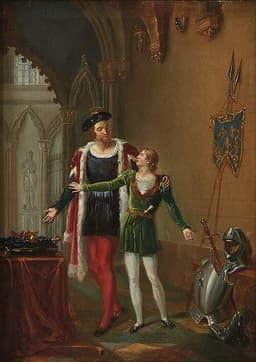
Charles VI
Emperor · Modern
50.0Total

Reza Shah
Emperor · Modern
58.6Total
Basic Information
Born
1685
1878
Died
1740
1944
Era
Modern
Modern
Nationality
Holy Roman Empire
Iran
Occupation
Emperor
Emperor
Civilization
Western
Middle Eastern
Score Comparison
Military (10%)
50.0
38.3
Political (20%)
45.0
78.0
Influence (20%)
54.9
56.7
Legacy (20%)
49.2
52.0
Leadership (15%)
53.2
66.0
Strategy (15%)
42.3
60.0
TOTAL
50.0
58.6
Charles VI — Complete Timeline
1713 AD
Issued the Pragmatic SanctionPolitical Action
Charles VI issued the Pragmatic Sanction, a legal instrument to ensure that the Habsburg hereditary lands could be inherited by a female heir (his daughter Maria Theresa) in the absence of a male son. He spent decades securing recognition from European powers, but it failed to prevent the War of the Austrian Succession.
Pragmatic SanctionSuccessionHabsburg
Impact: global
1739 AD
Treaty of BelgradePolitical Action◆ Major
Charles VI's forces, after a disastrous war with the Ottoman Empire, signed the Treaty of Belgrade. The treaty ceded Belgrade and northern Serbia to the Ottomans, reversing the gains of the Treaty of Passarowitz and weakening Habsburg influence in the Balkans.
Ottoman WarTreatyTerritorial Loss
Impact: regionaldestructive
1740 AD
War of the Austrian SuccessionWar◆ Major
Charles VI's death in 1740 triggered the War of the Austrian Succession, as Prussia, France, and Bavaria challenged Maria Theresa's inheritance. The war, lasting until 1748, resulted in the loss of Silesia to Prussia but confirmed Maria Theresa's rule in most Habsburg lands.
War of the Austrian SuccessionMaria TheresaSilesia
Impact: global
Reza Shah — Complete Timeline
1921 AD
1921 Persian coup d'étatPolitical Action◆ Major
Reza Khan, commander of the Persian Cossack Brigade, led a coup that seized Tehran. This action overthrew the Qajar government and established Reza Khan as Minister of War, setting the stage for his eventual rise to the throne.
CoupPahlavi DynastyQajar
Impact: national
1925 AD
Coronation as Reza ShahPolitical Action◆ Major
The Constituent Assembly voted to depose the Qajar dynasty and crown Reza Khan as Reza Shah Pahlavi. This founded the Pahlavi dynasty, which ruled Iran until 1979.
CoronationPahlavi Dynasty
Impact: national
1936 AD
Kashf-e hijab decreeReform◆ Major
Reza Shah issued a decree banning the wearing of the hijab (headscarf) in public. Police forcibly removed veils from women, and the policy aimed to modernize Iranian society by adopting Western dress, causing widespread resentment among religious conservatives.
Social ReformWomen's RightsControversy
Impact: nationaldestructive
1938 AD
Trans-Iranian Railway constructionReform◆ Major
Reza Shah oversaw the completion of the Trans-Iranian Railway, connecting the Caspian Sea to the Persian Gulf. The railway was a major infrastructure project funded by a national tax on tea and sugar, facilitating trade and military transport.
InfrastructureModernization
Impact: nationalconstructive
1941 AD
Anglo-Soviet invasion of IranWar◆ Major
British and Soviet forces invaded Iran to secure oil fields and supply routes to the USSR. Reza Shah's refusal to expel German nationals triggered the invasion, leading to his forced abdication and exile.
World War IIInvasionAbdication
Impact: globaltragic
Forced abdication and exilePolitical Action◆ Major
Following the Anglo-Soviet invasion, Reza Shah abdicated in favor of his son Mohammad Reza Pahlavi. He was forced into exile by the British, first to Mauritius and then to South Africa, where he died in 1944.
ExileAbdication
Impact: nationaltragic
Expert Analysis
Origins
Charles VI was born in 1685 in Vienna, the second son of Holy Roman Emperor Leopold I. As a younger son, he was initially destined for the Spanish throne, but after his elder brother Joseph I died in 1711, Charles inherited the Habsburg domains. He was educated in the rigid court etiquette of the Habsburgs and trained in statecraft, but lacked military experience.
Reza Shah, born Reza Khan in 1878 in Alasht, Mazandaran, came from a modest military family. His father died when he was young, and he was raised by his mother. He joined the Persian Cossack Brigade as a private, rising through the ranks due to his discipline and ambition. Unlike Charles, Reza Shah had no formal education but learned through military service.
Rise to Power
Charles VI became Holy Roman Emperor in 1711 after his brother's sudden death. His rise was a result of dynastic accident rather than personal ambition. His reign was dominated by the War of the Spanish Succession (1701–1714), which ended with the Treaty of Utrecht, costing Spain but securing Austria's Italian possessions. His key turning point was the Pragmatic Sanction of 1713, a legal document to ensure his daughter Maria Theresa could inherit Habsburg lands, overriding Salic law.
Reza Shah rose through the 1921 Persian coup d'état, where he, as commander of the Cossack Brigade, marched into Tehran and seized power. Initially serving as War Minister, he became Prime Minister in 1923, then in 1925 the Constituent Assembly deposed the Qajar dynasty and crowned him Reza Shah Pahlavi. His rise was a direct result of military action and political maneuvering, not inheritance.
Leadership & Governance
Charles VI's leadership was focused on diplomacy and legal maneuvering. His governance revolved around securing the Pragmatic Sanction through treaties and concessions with European powers. He spent enormous resources on bribes and alliances, but failed to modernize the Habsburg military or economy. His political score of 45.0 reflects his inability to prevent the War of the Austrian Succession after his death.
Reza Shah's governance was authoritarian and modernizing. He centralized power, suppressed tribal revolts, and implemented reforms: building the Trans-Iranian Railway (completed 1938), establishing secular courts, and promoting education. His leadership score of 66.0 reflects his decisive but repressive style. He issued the Kashf-e hijab decree in 1936, forcibly banning the veil, aiming to modernize Iranian society.
Triumph & Tragedy
Charles VI's greatest success was securing the Pragmatic Sanction, which allowed Maria Theresa to inherit the Habsburg domains, preserving the dynasty. However, his failure to build a strong military (military score 50.0) led to the War of the Austrian Succession (1740–1748), where Prussia seized Silesia. His Treaty of Belgrade (1739) with the Ottomans ceded Belgrade and northern Serbia, a humiliating loss.
Reza Shah's triumphs include the Trans-Iranian Railway, which connected the Caspian Sea to the Persian Gulf, boosting trade and military transport. He also founded the University of Tehran (1934). His tragedy was the Anglo-Soviet invasion of Iran in 1941, triggered by his refusal to expel German nationals. He was forced to abdicate in favor of his son, Mohammad Reza Pahlavi, and died in exile in 1944.
Character & Destiny
Charles VI was cautious and legalistic, preferring diplomacy to war. His obsession with the Pragmatic Sanction consumed his reign, yet his lack of military preparation doomed his daughter to war. Historians assess him as a well-intentioned but ineffective ruler.
Reza Shah was autocratic and impatient, driving modernization through force. His heavy-handed tactics, such as forced unveiling and suppression of religious opposition, created resentment. His refusal to compromise with the Allies led to his downfall. He scored 78.0 in political acumen, but his strategy score of 60.0 was insufficient to navigate World War II.
Legacy
Charles VI's legacy is the Pragmatic Sanction, which enabled the Habsburg Monarchy to survive under Maria Theresa. However, his failure to strengthen the military contributed to Austria's decline as a great power. His legacy score is 49.2.
Reza Shah's legacy is more substantial: he founded the Pahlavi dynasty, built infrastructure, and secularized Iran. However, his authoritarian methods and forced modernization created tensions that contributed to the 1979 Iranian Revolution. His legacy score is 52.0.
Conclusion
Reza Shah had greater impact. His total score of 58.6 exceeds Charles VI's 50.0, with higher scores in political (78.0 vs 45.0), leadership (66.0 vs 53.2), and strategy (60.0 vs 42.3). While Charles VI secured succession, Reza Shah transformed Iran's infrastructure and institutions, leaving a deeper mark. Charles's failures led to war; Reza's reforms, though flawed, set Iran on a path to modernization. Reza Shah's influence outweighs Charles VI's.
Rankings
🥇
Reza ShahLeader
Mil: 38.3Pol: 78.0Inf: 56.7
58.6
🥈
Charles VI
Mil: 50.0Pol: 45.0Inf: 54.9
50.0
+8.6 behind
How This Comparison Works
Algorithm
Each figure is scored on 6 dimensions (0—100 scale) based on structured historical data: Military (10%), Political (20%), Influence (20%), Legacy (20%), Leadership (15%), Strategy (15%). The weighted total produces the final ranking.
Data Sources
Scores are computed from structured sub-indicators in the database. Scale factors adjust for era (Ancient ×0.85, Modern ×1.0) and civilization size (Eastern ×1.05, Other ×0.80) to account for differences in population and military scale.
Maximum 3 Figures
Comparisons are limited to 2—3 figures to ensure readability and statistical meaningfulness.
Error Margins
±5 points per dimension — Sub-scores are derived from historical records with inherent uncertainty. Two figures within 5 points on a dimension should be considered roughly equivalent in that area.
Total Score Accuracy
±3 points overall — The weighted combination of 6 dimensions produces a total score with approximately ±3 points of uncertainty. Differences of less than 3 points are not statistically significant— the figures are effectively tied.
Known Limitations
- Historical records are incomplete and uneven across civilizations
- Figures from oral-tradition societies may be underrepresented
- Occupation labels can misclassify multi-role figures
- Scores measure capability and impact, not moral character
- Quantitative scoring is a comparison tool, not absolute truth
Capability Radar
Military (10%) — Battles & Warfare
Battles
20
30
Win Rate
15
40
Expansion
10
30
Political (20%) — Governance & Reform
Reform
60
85
Diplomacy
65
60
Economy
40
70
Influence (20%) — Cultural & Global Reach
Cultural
30
55
Global
40
50
Legacy (20%) — Historical Impact
Historical
55
60
Longevity
50
40
Leadership (15%) — Power & Stability
Tenure
70
65
Stability
30
50
Strategy (15%) — Tactics & Innovation
Strategy
15
40
Tactics
10
35
Reform
10
75
Similar Comparisons
Comments & Discussion
No comments yet. Be the first to share your thoughts!