Loading...
Charles XII of Sweden vs Mohammad Zia-ul-Haq
Mohammad Zia-ul-Haq leads by 1.0 pts · 2 figures compared
…
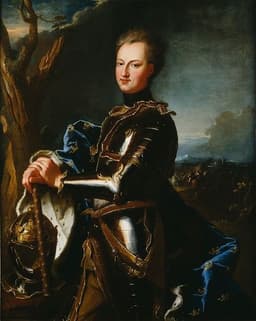
Charles XII of Sweden
General · Modern
56.6Total

Mohammad Zia-ul-Haq
General · Modern
57.6Total
Basic Information
Born
1682
1924
Died
1718
—
Era
Modern
Modern
Nationality
Sweden
Pakistan
Occupation
General
General
Civilization
Western
Indian
Score Comparison
Military (10%)
78.0
50.0
Political (20%)
39.4
68.0
Influence (20%)
56.7
55.0
Legacy (20%)
52.0
49.2
Leadership (15%)
68.0
80.0
Strategy (15%)
55.0
43.3
TOTAL
56.6
57.6
Charles XII of Sweden — Complete Timeline
1700 AD
Battle of NarvaWar◆ Major
Charles XII led a Swedish army of 8,000 to defeat a Russian force of 37,000 besieging Narva. The victory established his reputation as a military prodigy and temporarily halted Russian expansion in the Baltic.
Great Northern WarBattleSwedish Empire
Impact: regional
1706 AD
Invasion of SaxonyWar◆ Major
Charles XII invaded Saxony and forced Elector Augustus II to renounce his claim to the Polish throne through the Treaty of Altranst
Great Northern WarPolandSaxony
Impact: regional
1709 AD
Battle of PoltavaWar
Charles XII's Swedish army was decisively defeated by Peter the Great's Russian forces at Poltava. Charles fled to the Ottoman Empire, and the battle marked the end of Sweden's status as a great power and the rise of Russia.
Great Northern WarBattleSwedish Decline
Impact: globaldestructive
1718 AD
Siege of FredrikstenWar◆ Major
Charles XII was killed by a bullet to the head while besieging the Norwegian fortress of Fredriksten. His death ended the Great Northern War and led to the collapse of the Swedish Empire, with territories ceded to Russia.
DeathSiegeNorway
Impact: regionaltragic
Mohammad Zia-ul-Haq — Complete Timeline
1977 AD
Coup d'État of 1977Political Action
General Mohammad Zia-ul-Haq led a military coup against Prime Minister Zulfikar Ali Bhutto, suspending the constitution and imposing martial law. He cited political instability and corruption as justification, beginning a decade of military rule.
CoupMartial LawBhutto Overthrow
Impact: nationaldestructive
1979 AD
Islamization of PakistanReform◆ Major
Zia-ul-Haq launched a comprehensive Islamization program, introducing Hudood ordinances, Islamic courts, and mandatory zakat. He aligned Pakistan's legal and educational systems with conservative Sunni interpretations, reshaping society for decades.
IslamizationHudood OrdinancesReligious Reform
Impact: nationaldestructive
Execution of Zulfikar Ali BhuttoPolitical Action◆ Major
Zia-ul-Haq oversaw the execution of former Prime Minister Zulfikar Ali Bhutto after a controversial murder trial. The execution was condemned internationally and deepened political divisions in Pakistan, leading to long-term instability.
Bhutto ExecutionPolitical RepressionControversy
Impact: nationaltragic
1980 AD
Support for Afghan MujahideenWar◆ Major
Zia-ul-Haq provided extensive military and financial support to Afghan mujahideen fighting the Soviet invasion. Pakistan became a key conduit for U.S. and Saudi aid, influencing the outcome of the Soviet-Afghan War and regional geopolitics.
Afghan WarMujahideenSoviet Union
Impact: regionalconstructive
1988 AD
Death in Plane CrashOther◆ Major
Zia-ul-Haq died in a mysterious plane crash near Bahawalpur along with several senior generals and the U.S. ambassador. The cause remains disputed, with theories ranging from mechanical failure to sabotage, ending his 11-year rule.
Plane CrashDeathMystery
Impact: nationaltragic
Expert Analysis
Origins
Charles XII of Sweden was born in 1682 to King Charles XI and Ulrika Eleonora of Denmark. His father ensured he received a rigorous education in military science, languages, and statecraft. By age 15, he was fluent in Swedish, Latin, German, and French. His father's death in 1697 left Charles as an absolute monarch at 15, but he quickly asserted his authority, dismissing the regency council and taking full control.
Mohammad Zia-ul-Haq was born in 1924 in Jalandhar, Punjab, British India. His father was a modest government clerk. Zia attended St. Stephen's College in Delhi and later joined the British Indian Army in 1943. After partition, he opted for Pakistan and rose through the ranks. He was a devout Muslim, influenced by the Deobandi school. By 1976, he was appointed Chief of Army Staff by Prime Minister Zulfikar Ali Bhutto, who sought a loyalist.
Rise to Power
Charles XII ascended the throne at 15, but his authority was challenged by the Triple Alliance of Denmark-Norway, Saxony-Poland, and Russia. In 1700, at age 18, he led a daring amphibious assault on Copenhagen, forcing Denmark out of the war. Later that year, at the Battle of Narva, he commanded 8,000 Swedes against 37,000 Russians, achieving a stunning victory that killed or captured 15,000 Russians while losing only 667 Swedes. This established his reputation as a military prodigy.
Zia-ul-Haq rose to power through a coup d'état on July 5, 1977. Bhutto's Pakistan People's Party had won a controversial election, sparking protests. Zia arrested Bhutto, suspended the constitution, and imposed martial law. Initially, he promised elections within 90 days, but repeatedly postponed them. In 1979, he oversaw Bhutto's execution after a Supreme Court conviction for conspiracy to murder a political opponent. Zia then consolidated power, becoming President in 1978 and ruling until his death.
Leadership & Governance
Charles XII's leadership was autocratic and militaristic. He personally led his army in the field, sharing hardships with soldiers. He reformed the Swedish army with a professional standing force and innovative tactics, such as the use of shock cavalry and aggressive infantry assaults. However, he neglected diplomacy and governance, leaving Sweden's administration to subordinates. His insistence on war drained Sweden's resources. He scored 68.0 in leadership but only 39.4 in political acumen.
Zia-ul-Haq's governance combined military authoritarianism with Islamization. He introduced Hudood ordinances, enforcing Islamic punishments for theft, adultery, and alcohol consumption. He established Sharia courts and mandatory zakat (religious tax). He suppressed political opposition, banned trade unions, and censored media. His leadership score of 80.0 reflects his ability to maintain control, but his political score of 68.0 shows his skill in manipulating institutions. He aligned Pakistan with the US during the Soviet-Afghan War, channeling billions in aid to mujahideen.
Triumph & Tragedy
Charles XII's greatest triumph was his early military victories, especially Narva (1700) and his invasion of Saxony (1706), which forced Augustus II to renounce the Polish throne. However, his invasion of Russia in 1708-1709 ended in disaster at Poltava, where his army was decimated. He fled to the Ottoman Empire, failing to persuade them to attack Russia. His death at the Siege of Fredriksten in 1718, aged 36, ended Sweden's era as a great power.
Zia-ul-Haq's triumphs include stabilizing Pakistan after the 1977 crisis, strengthening the economy through remittances and aid, and successfully supporting the Afghan mujahideen, which contributed to the Soviet withdrawal from Afghanistan. His tragedies include the execution of Bhutto, which deepened political polarization, and his Islamization policies, which marginalized women and minorities. His death in a 1988 plane crash remains suspicious, possibly a sabotage, and left Pakistan without a clear successor.
Character & Destiny
Charles XII was fearless, stubborn, and ascetic. He never married, had no heirs, and lived for war. His refusal to negotiate peace after early victories prolonged the war and exhausted Sweden. Historian Voltaire called him "the last of the Vikings." His character—brave but inflexible—led to his downfall. He scored 55.0 in strategy, reflecting his tactical brilliance but strategic miscalculation.
Zia-ul-Haq was calculating, religious, and patient. He used Islam to legitimize his rule and outmaneuvered political rivals through alliances with religious parties. He was personally devout but also pragmatic, as seen in his alliance with the US. His character ensured his survival for 11 years, but his legacy is controversial. He scored 43.3 in strategy, indicating a focus on short-term gains over long-term stability.
Legacy
Charles XII's legacy is mixed. He is remembered as a military genius but also as a ruler who ruined Sweden. His military innovations influenced later leaders, but Sweden lost its great power status. His scores: Military 78.0, Legacy 52.0. He is a national hero in Sweden, but his impact is largely historical.
Zia-ul-Haq's legacy is profound in Pakistan. His Islamization reshaped the legal and social fabric, leading to increased sectarianism and extremism. His support for the Afghan jihad contributed to the rise of militant groups. He is revered by Islamists but criticized by liberals. His scores: Political 68.0, Legacy 49.2, Leadership 80.0. His impact on Pakistan and the region endures.
Conclusion
While Charles XII's military brilliance is unmatched (78.0 vs 50.0), Zia-ul-Haq's political and leadership scores (68.0 and 80.0) reflect a more lasting impact. Charles XII's wars were ultimately futile, while Zia-ul-Haq's policies reshaped a nation of 200 million and influenced global events. Zia-ul-Haq's total score of 57.6 edges Charles XII's 56.6, but more importantly, his legacy is still active in Pakistan's laws, politics, and society. Therefore, Mohammad Zia-ul-Haq had greater impact.
Rankings
🥇
Mohammad Zia-ul-HaqLeader
Mil: 50.0Pol: 68.0Inf: 55.0
57.6
🥈
Charles XII of Sweden
Mil: 78.0Pol: 39.4Inf: 56.7
56.6
+1.0 behind
How This Comparison Works
Algorithm
Each figure is scored on 6 dimensions (0—100 scale) based on structured historical data: Military (10%), Political (20%), Influence (20%), Legacy (20%), Leadership (15%), Strategy (15%). The weighted total produces the final ranking.
Data Sources
Scores are computed from structured sub-indicators in the database. Scale factors adjust for era (Ancient ×0.85, Modern ×1.0) and civilization size (Eastern ×1.05, Other ×0.80) to account for differences in population and military scale.
Maximum 3 Figures
Comparisons are limited to 2—3 figures to ensure readability and statistical meaningfulness.
Error Margins
±5 points per dimension — Sub-scores are derived from historical records with inherent uncertainty. Two figures within 5 points on a dimension should be considered roughly equivalent in that area.
Total Score Accuracy
±3 points overall — The weighted combination of 6 dimensions produces a total score with approximately ±3 points of uncertainty. Differences of less than 3 points are not statistically significant— the figures are effectively tied.
Known Limitations
- Historical records are incomplete and uneven across civilizations
- Figures from oral-tradition societies may be underrepresented
- Occupation labels can misclassify multi-role figures
- Scores measure capability and impact, not moral character
- Quantitative scoring is a comparison tool, not absolute truth
Capability Radar
Military (10%) — Battles & Warfare
Battles
85
10
Win Rate
75
15
Expansion
65
10
Political (20%) — Governance & Reform
Reform
30
55
Diplomacy
20
50
Economy
25
40
Influence (20%) — Cultural & Global Reach
Cultural
50
55
Global
45
50
Legacy (20%) — Historical Impact
Historical
65
55
Longevity
55
40
Leadership (15%) — Power & Stability
Tenure
60
65
Stability
15
30
Strategy (15%) — Tactics & Innovation
Strategy
70
25
Tactics
90
20
Reform
40
60
Similar Comparisons
Comments & Discussion
No comments yet. Be the first to share your thoughts!