Loading...
Charles XII of Sweden vs Napoleon Bonaparte
Napoleon Bonaparte leads by 14.3 pts · 2 figures compared
…
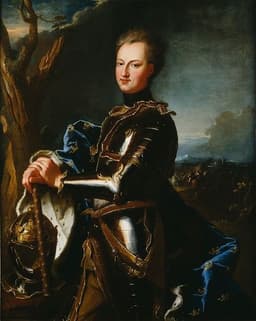
Charles XII of Sweden
General · Modern
56.6Total

Napoleon Bonaparte
General · Modern
70.9Total
Basic Information
Born
1682
1769
Died
1718
1821
Era
Modern
Modern
Nationality
Sweden
France
Occupation
General
General
Civilization
Western
Western
Score Comparison
Military (10%)
78.0
94.0
Political (20%)
39.4
72.0
Influence (20%)
56.7
40.0
Legacy (20%)
52.0
80.0
Leadership (15%)
68.0
78.0
Strategy (15%)
55.0
90.0
TOTAL
56.6
70.9
Charles XII of Sweden — Complete Timeline
1700 AD
Battle of NarvaWar◆ Major
Charles XII led a Swedish army of 8,000 to defeat a Russian force of 37,000 besieging Narva. The victory established his reputation as a military prodigy and temporarily halted Russian expansion in the Baltic.
Great Northern WarBattleSwedish Empire
Impact: regional
1706 AD
Invasion of SaxonyWar◆ Major
Charles XII invaded Saxony and forced Elector Augustus II to renounce his claim to the Polish throne through the Treaty of Altranst
Great Northern WarPolandSaxony
Impact: regional
1709 AD
Battle of PoltavaWar
Charles XII's Swedish army was decisively defeated by Peter the Great's Russian forces at Poltava. Charles fled to the Ottoman Empire, and the battle marked the end of Sweden's status as a great power and the rise of Russia.
Great Northern WarBattleSwedish Decline
Impact: globaldestructive
1718 AD
Siege of FredrikstenWar◆ Major
Charles XII was killed by a bullet to the head while besieging the Norwegian fortress of Fredriksten. His death ended the Great Northern War and led to the collapse of the Swedish Empire, with territories ceded to Russia.
DeathSiegeNorway
Impact: regionaltragic
Napoleon Bonaparte — Complete Timeline
1799 AD
Coup of 18 BrumaireOther◆ Major
Napoleon Bonaparte, with support from his brother Lucien and key political figures, overthrew the Directory in a bloodless coup. He established the Consulate with himself as First Consul, effectively becoming the ruler of France. This event ended the French Revolution's most unstable period.
French RevolutionCoupRise to Power
Impact: regional
1804 AD
Promulgation of the Napoleonic CodeOther◆ Major
Napoleon enacted the Civil Code of the French, known as the Napoleonic Code, a comprehensive set of laws that replaced the fragmented feudal legal systems. The code established legal equality, protected property rights, and secularized law. It became the basis for legal systems in many European and world countries.
Legal ReformNapoleonic CodeCivil Law
Impact: globalconstructive
1805 AD
Battle of AusterlitzWar◆ Major
Napoleon's Grande Arm
Napoleonic WarsBattleDecisive Victory
Impact: global
1812 AD
Invasion of RussiaWar◆ Major
Napoleon led the Grande Arm
Napoleonic WarsInvasionDisaster
Impact: globaldestructive
1815 AD
Battle of WaterlooWar◆ Major
Napoleon's French army was defeated by the combined forces of the Duke of Wellington's Anglo-Allied army and Gebhard Leberecht von Bl
Napoleonic WarsBattleFinal Defeat
Impact: globaldestructive
Expert Analysis
charles-xii-of-sweden-vs-napoleon-bonaparte
# The Emperor and the Warrior King: Why Napoleon Succeeded Where Charles XII Failed
On a frozen November morning in 1700, a teenage king with ice in his veins watched his 8,000 Swedish soldiers shatter a Russian army nearly five times its size at Narva. The victory was so complete that the Russian commander fled, leaving his men to drown in the river. Just over a century later, in 1805, a short Corsican general with a calculating eye stood at Austerlitz and orchestrated a triumph even more stunning, crushing an Austro-Russian coalition that outnumbered him. Both men were military prodigies. Both sought to redraw the map of Europe. But one built an empire that reshaped a continent, while the other left a kingdom in ruins and a corpse with a bullet in its skull. The difference between Napoleon Bonaparte and Charles XII of Sweden is not merely a matter of luck. It is a story of temperament, politics, and the tragic gulf between conquest and statecraft.
Origins
Napoleon was born in 1769 on the island of Corsica, a place recently conquered by France. His family was minor nobility, poor enough to feel the sting of humiliation, ambitious enough to dream of revenge. He attended French military schools, where he was mocked for his accent and his height. That outsider's hunger never left him. He studied not only artillery but also history, law, and philosophy. He read Rousseau and Voltaire. He understood that power required more than victory—it required legitimacy.
Charles XII, born in 1682, was the son of a king. He inherited the Swedish throne at fifteen, but he was no sheltered prince. He trained in horsemanship, fencing, and the classics. His tutors shaped him into a stoic warrior. He drank little, swore rarely, and slept on the ground with his soldiers. He believed that a king’s duty was to lead from the front, sword in hand. Where Napoleon saw war as an instrument of policy, Charles saw war as the purpose itself. One was a strategist; the other was a paladin.
Rise to Power
Napoleon’s ascent came through chaos. The French Revolution had devoured its own children, leaving a vacuum of authority. In 1795, he saved the revolutionary government from a royalist uprising with a “whiff of grapeshot”—a brutal artillery barrage that cleared the streets of Paris. He was twenty-six. He then used his Italian campaign of 1796-97 not merely to fight but to build a reputation. He sent back captured flags and negotiated treaties that enriched France. He understood that politics was theater.
Charles XII’s rise was immediate and bloody. In 1700, the Great Northern War erupted when Denmark, Poland-Saxony, and Russia allied to carve up the Swedish Empire. Charles was eighteen. He did not hesitate. He landed on Zealand, forced Denmark out of the war, then marched east to Narva. His victory there was so audacious that it seemed divine. But here lay the seed of his destruction: he believed that courage alone could solve any problem.
Leadership & Governance
Napoleon governed like an engineer. He reformed French law into the Napoleonic Code, standardizing justice, protecting property, and limiting aristocratic privilege. He established the Bank of France, stabilized the currency, and built lycées to train a new elite. He made peace with the Catholic Church through the Concordat of 1801, ending a decade of religious war. He rewarded talent over birth—his marshals included a former innkeeper and a dragoon who started as a private. He was ruthless, yes, but he was also systematic.
Charles XII governed like a Viking king. He ruled from his saddle. For fifteen years, he never returned to Stockholm. He issued decrees from camps in Poland, Saxony, and Ukraine. He forced Augustus II of Poland to renounce his throne in 1706, then invaded Saxony itself—a brilliant tactical move that solved nothing strategically. He had no interest in administration. He saw diplomacy as weakness. When Peter the Great offered peace terms after Narva, Charles refused. He wanted total victory. He got total ruin.
Triumph & Tragedy
Napoleon’s greatest moment was Austerlitz in 1805, where he lured the allies into attacking his deliberately weakened right flank, then crushed their center with a hidden corps. The sun broke through the mist as his infantry charged. He destroyed two armies in a single day. His greatest tragedy was the invasion of Russia in 1812. He marched 600,000 men east and returned with fewer than 100,000. The disaster was not caused by a single battle but by a failure of logistics and imagination. He could not admit that his system had limits.
Charles XII’s triumph was Narva. At eighteen, he achieved what seasoned generals could not. His tragedy was Poltava in 1709. After a brutal winter in Ukraine, his army of 20,000 faced Peter’s 40,000. Charles had been wounded in the foot before the battle and could not command from horseback. His troops fought with desperate courage, but they were exhausted and outgunned. The defeat was absolute. Charles fled to the Ottoman Empire, where he spent five years in exile, plotting a return that never came.
Character & Destiny
Napoleon was a pragmatist. He once said, “In politics, stupidity is not a handicap.” He knew when to compromise, when to wait, when to retreat. But his ambition was a disease. He could not stop. After 1807, he made the same mistake as Charles: he believed that conquest would always solve problems. He invaded Spain, which bled him for six years. He invaded Russia, which destroyed him. His character—restless, brilliant, insatiable—drove him to greatness and then to St. Helena.
Charles XII was a believer. He saw himself as a Protestant hero, a defender of Sweden against a coalition of heretics and barbarians. He never married, never had children, never built a palace. He died at the Siege of Fredriksten in 1718, shot through the head while inspecting trenches. A soldier’s death. But his kingdom, drained of men and treasure, collapsed into an age of decline. He was a legend, but legends do not govern.
Legacy
Napoleon left a continent transformed. The Napoleonic Code influenced legal systems from Latin America to Japan. He destroyed the Holy Roman Empire and created the conditions for German and Italian unification. He spread nationalism, meritocracy, and secular governance. Even in defeat, he haunted Europe. His tomb in Paris is a pilgrimage site. His scores—Military 94, Political 75, Influence 82—reflect a man who changed the world, for better and worse.
Charles XII left a memory. In Sweden, he is still a national hero, a symbol of courage and sacrifice. But his scores—Military 79.6, Political 48.1, Leadership 44.9—tell a harder truth. He was a brilliant general and a terrible king. He won battles and lost a war. He never understood that empire is built not on the battlefield but in the chancellery, the treasury, and the schoolroom.
Conclusion
Napoleon and Charles XII both believed that a single will could shape history. They were right, but only partly. Napoleon understood that power must be institutionalized; Charles believed that personal glory was enough. One built a code that outlasted his fall; the other built a legend that could not save his kingdom. In the end, the difference between the Emperor and the Warrior King is the difference between a man who learned from the Enlightenment and a man who only learned how to fight. Both were giants. But only one understood that the hardest war is not against armies, but against the limits of one’s own nature.
Rankings
🥇
Napoleon BonaparteLeader
Mil: 94.0Pol: 72.0Inf: 40.0
70.9
🥈
Charles XII of Sweden
Mil: 78.0Pol: 39.4Inf: 56.7
56.6
+14.3 behind
How This Comparison Works
Algorithm
Each figure is scored on 6 dimensions (0—100 scale) based on structured historical data: Military (10%), Political (20%), Influence (20%), Legacy (20%), Leadership (15%), Strategy (15%). The weighted total produces the final ranking.
Data Sources
Scores are computed from structured sub-indicators in the database. Scale factors adjust for era (Ancient ×0.85, Modern ×1.0) and civilization size (Eastern ×1.05, Other ×0.80) to account for differences in population and military scale.
Maximum 3 Figures
Comparisons are limited to 2—3 figures to ensure readability and statistical meaningfulness.
Error Margins
±5 points per dimension — Sub-scores are derived from historical records with inherent uncertainty. Two figures within 5 points on a dimension should be considered roughly equivalent in that area.
Total Score Accuracy
±3 points overall — The weighted combination of 6 dimensions produces a total score with approximately ±3 points of uncertainty. Differences of less than 3 points are not statistically significant— the figures are effectively tied.
Known Limitations
- Historical records are incomplete and uneven across civilizations
- Figures from oral-tradition societies may be underrepresented
- Occupation labels can misclassify multi-role figures
- Scores measure capability and impact, not moral character
- Quantitative scoring is a comparison tool, not absolute truth
Capability Radar
Military (10%) — Battles & Warfare
Battles
85
95
Win Rate
75
90
Expansion
65
95
Political (20%) — Governance & Reform
Reform
30
95
Diplomacy
20
80
Economy
25
85
Influence (20%) — Cultural & Global Reach
Cultural
50
85
Global
45
90
Legacy (20%) — Historical Impact
Historical
65
95
Longevity
55
90
Leadership (15%) — Power & Stability
Tenure
60
85
Stability
15
70
Strategy (15%) — Tactics & Innovation
Strategy
70
95
Tactics
90
98
Reform
40
92
Similar Comparisons
Comments & Discussion
TheEmpireBuilder6/17/2026
Napoleon's brilliance wasn't just on the battlefield—it was political architecture. Charles XII conquered territory; Napoleon built institutions—the Code, the lycées, the préfets. Charles invaded Russia with no winter plan. Napoleon invaded Russia with... also no winter plan, but at Austerlitz he crushed 85,000 with 73,000 through pure psychological warfare. The difference? Napoleon studied his enemies' politics, not just their deployments. Charles studied only courage. That's why one ruled from