Loading...
Charles XIV John vs Frederick the Great
Frederick the Great leads by 3.8 pts · 2 figures compared
…

Charles XIV John
Emperor · Modern
64.3Total
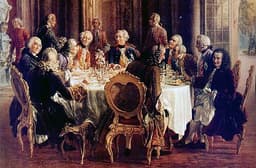
Frederick the Great
Emperor · Modern
68.1Total
Basic Information
Born
1763
1712
Died
1844
1786
Era
Modern
Modern
Nationality
Sweden
Prussia
Occupation
Emperor
Emperor
Civilization
Western
Western
Score Comparison
Military (10%)
61.7
90.0
Political (20%)
72.0
75.0
Influence (20%)
55.0
55.0
Legacy (20%)
58.0
52.0
Leadership (15%)
80.7
82.0
Strategy (15%)
70.0
88.0
TOTAL
64.3
68.1
Charles XIV John — Complete Timeline
1810 AD
Election as Crown Prince of SwedenPolitical Action
After the death of the heir apparent, the Swedish Riksdag elected French Marshal Jean-Baptiste Bernadotte as Crown Prince. He was adopted by King Charles XIII. This unexpected choice was driven by a desire for a strong military leader to secure Sweden's interests against Russia and Napoleon.
SwedenBernadotteSuccessionNapoleon
Impact: national
1813 AD
Swedish entry into the Sixth CoalitionWar◆ Major
As Crown Prince, Charles John (Bernadotte) led Sweden into the Sixth Coalition against Napoleon. He commanded the Swedish army and the Northern Army of the Coalition. His decision to join the allies was crucial in tipping the balance against Napoleon and securing Sweden's post-war position.
SwedenNapoleonic WarsCoalitionWar
Impact: global
1814 AD
Acquisition of Norway from DenmarkPolitical Action
As a result of the Treaty of Kiel, Sweden forced Denmark to cede Norway. Charles John then led a military campaign to enforce the union, culminating in the Convention of Moss. Norway entered a personal union with Sweden under King Charles XIII, with Charles John as de facto ruler.
SwedenNorwayUnionTreaty of Kiel
Impact: regional
1818 AD
Coronation as King Charles XIV JohnPolitical Action
Upon the death of King Charles XIII, Bernadotte ascended the throne as Charles XIV John of Sweden and Norway. He founded the House of Bernadotte, which continues to reign in Sweden. His reign marked the beginning of a long period of peace and neutrality for Sweden.
SwedenBernadotteCoronationDynasty
Impact: nationalconstructive
Frederick the Great — Complete Timeline
1723 AD
General Directory EstablishedReform◆ Major
Frederick the Great reorganized the Prussian government by establishing the General Directory, a centralized administrative body. This reform improved tax collection, military logistics, and state efficiency, strengthening Prussia's fiscal and military capacity.
AdministrationReformState Building
Impact: nationalconstructive
1757 AD
Battle of RossbachWar◆ Major
Frederick the Great's Prussian army defeated a larger Franco-Imperial force at Rossbach during the Seven Years' War. The victory showcased Prussian military discipline and Frederick's tactical genius, securing his reputation as a leading commander.
Seven Years' WarBattleMilitary Tactics
Impact: regional
Battle of LeuthenWar◆ Major
Frederick the Great led Prussian forces to a decisive victory over the Austrian army at Leuthen. The battle, fought in Silesia, demonstrated Frederick's use of oblique order tactics and helped Prussia retain control of Silesia during the Seven Years' War.
Seven Years' WarBattleSilesia
Impact: regional
1763 AD
Treaty of Hubertusburg SignedPolitical Action
Frederick the Great signed the Treaty of Hubertusburg with Austria, ending the Seven Years' War. The treaty confirmed Prussian possession of Silesia and established Prussia as a major European power, despite near-defeat earlier in the war.
TreatySeven Years' WarPrussia
Impact: regionalconstructive
1772 AD
First Partition of PolandPolitical Action◆ Major
Frederick the Great orchestrated the First Partition of Poland alongside Russia and Austria. Prussia gained West Prussia, connecting its territories and gaining control of the Vistula River trade, at the expense of Polish sovereignty.
PartitionPolandTerritorial Expansion
Impact: regionaldestructive
Expert Analysis
Origins
Charles XIV John, born Jean-Baptiste Bernadotte in 1763 in Pau, France, was the son of a lawyer. He enlisted in the French army at age 17 and rose through the ranks during the French Revolution, becoming a general by 1794. His early career was marked by service under Napoleon, but he maintained a degree of independence. Frederick the Great, born in 1712 in Berlin, was the son of King Frederick William I of Prussia. His early life was harsh, with a strict military upbringing and a strained relationship with his father, who despised Frederick's interest in arts and philosophy. Frederick attempted to flee Prussia in 1730, was caught, and forced to witness the execution of his friend Katte.
Rise to Power
Bernadotte's rise was meteoric: he became a Marshal of France in 1804 and Prince of Pontecorvo in 1806. His political acumen led to his election as Crown Prince of Sweden in 1810, after the Swedish Riksdag sought a successor to the childless King Charles XIII. He was adopted by the king and assumed effective control of Swedish policy. Frederick's rise was more direct: he became king in 1740 upon his father's death. Immediately, he launched the First Silesian War (1740-1742), seizing Silesia from Austria, which established his reputation as a military commander.
Leadership & Governance
Charles John, as regent and later king, focused on Swedish neutrality and territorial gain. He shifted Sweden from a pro-French to a pro-Allied stance, joining the Sixth Coalition in 1813. His leadership was pragmatic: he secured Norway from Denmark through the Treaty of Kiel (1814) and then enforced the union with a brief military campaign. Domestically, he promoted economic development and maintained peace, but his rule was conservative, with limited reforms. Frederick the Great was an absolute monarch who centralized the state. He established the General Directory in 1723 to streamline administration, promoted religious tolerance, and reformed the legal system. He also patronized the arts and philosophy, corresponding with Voltaire. However, his military focus dominated: Prussia's army became one of Europe's finest, and he used it aggressively. Frederick scored 90.0 in military capability versus Charles John's 61.7, reflecting his battlefield prowess.
Triumph & Tragedy
Charles John's greatest triumph was acquiring Norway and founding the Bernadotte dynasty, which still rules Sweden. His decision to join the anti-Napoleon coalition was a masterstroke, aligning Sweden with the victors. However, his failure to fully integrate Norway led to tensions, and his conservative domestic policies stifled liberal reforms. Frederick's triumphs include victories at Rossbach (1757) and Leuthen (1757), which cemented his military reputation. He also secured Silesia, doubling Prussia's population. His tragedy was the near-destruction of Prussia in the Seven Years' War (1756-1763), saved only by the death of Empress Elizabeth of Russia. His later years were marked by a rigid, militaristic state that laid the groundwork for future conflicts.
Character & Destiny
Charles John was a shrewd diplomat, willing to change sides for strategic gain. His character was pragmatic and cautious, avoiding unnecessary risks. This allowed him to secure a throne and maintain it. Frederick was a complex figure: a brilliant general and enlightened ruler, but also a cynic and misanthrope. His aggressive ambition drove Prussia's expansion but also led to devastating wars. Historians note that Frederick's character, shaped by his traumatic youth, made him distrustful and autocratic.
Legacy
Charles John's legacy is the Bernadotte dynasty and Sweden's long period of neutrality. He transformed Sweden from a declining power into a stable, neutral state. His political score of 72.0 reflects his successful navigation of European alliances. Frederick's legacy is more contested: he made Prussia a great power, but his militarism influenced German nationalism and contributed to later conflicts. His cultural patronage left a mark on the Enlightenment, but his state-building was focused on war. Frederick's total score of 68.1 edges out Charles John's 64.3, but the gap is small.
Conclusion
Frederick the Great had a greater impact on European history. His military innovations and state-building elevated Prussia to a major power, shaping the balance of power for a century. Charles John's achievements were more limited: securing a dynasty and a territorial gain, but his influence faded with Sweden's neutrality. Frederick's scores in military (90.0 vs 61.7) and strategy (88.0 vs 70.0) are decisive. While Charles John's political skill (72.0 vs 75.0) and leadership (80.7 vs 82.0) are comparable, Frederick's transformative impact on Europe's political landscape is unmatched. The data supports Frederick as the more consequential figure.
Rankings
🥇
Frederick the GreatLeader
Mil: 90.0Pol: 75.0Inf: 55.0
68.1
🥈
Charles XIV John
Mil: 61.7Pol: 72.0Inf: 55.0
64.3
+3.8 behind
How This Comparison Works
Algorithm
Each figure is scored on 6 dimensions (0—100 scale) based on structured historical data: Military (10%), Political (20%), Influence (20%), Legacy (20%), Leadership (15%), Strategy (15%). The weighted total produces the final ranking.
Data Sources
Scores are computed from structured sub-indicators in the database. Scale factors adjust for era (Ancient ×0.85, Modern ×1.0) and civilization size (Eastern ×1.05, Other ×0.80) to account for differences in population and military scale.
Maximum 3 Figures
Comparisons are limited to 2—3 figures to ensure readability and statistical meaningfulness.
Error Margins
±5 points per dimension — Sub-scores are derived from historical records with inherent uncertainty. Two figures within 5 points on a dimension should be considered roughly equivalent in that area.
Total Score Accuracy
±3 points overall — The weighted combination of 6 dimensions produces a total score with approximately ±3 points of uncertainty. Differences of less than 3 points are not statistically significant— the figures are effectively tied.
Known Limitations
- Historical records are incomplete and uneven across civilizations
- Figures from oral-tradition societies may be underrepresented
- Occupation labels can misclassify multi-role figures
- Scores measure capability and impact, not moral character
- Quantitative scoring is a comparison tool, not absolute truth
Capability Radar
Military (10%) — Battles & Warfare
Battles
75
85
Win Rate
70
80
Expansion
60
85
Political (20%) — Governance & Reform
Reform
75
90
Diplomacy
90
80
Economy
80
85
Influence (20%) — Cultural & Global Reach
Cultural
50
80
Global
55
75
Legacy (20%) — Historical Impact
Historical
65
85
Longevity
60
80
Leadership (15%) — Power & Stability
Tenure
85
85
Stability
85
75
Strategy (15%) — Tactics & Innovation
Strategy
85
90
Tactics
80
95
Reform
70
90
Similar Comparisons
Comments & Discussion
No comments yet. Be the first to share your thoughts!