Loading...
Chebi Khan vs James V of Scotland
James V of Scotland leads by 0.2 pts · 2 figures compared
…

Chebi Khan
Emperor · Medieval
40.5Total
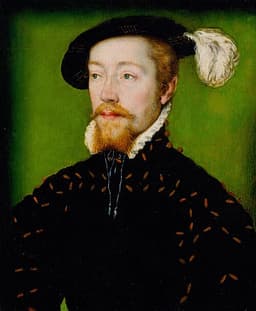
James V of Scotland
Emperor · Medieval
40.7Total
Basic Information
Born
610
1512
Died
650
1542
Era
Medieval
Medieval
Nationality
Eastern Turkic Khaganate
Scotland
Occupation
Emperor
Emperor
Civilization
Eastern
Western
Score Comparison
Military (10%)
50.0
22.6
Political (20%)
29.3
36.5
Influence (20%)
47.1
48.6
Legacy (20%)
37.5
40.0
Leadership (15%)
39.0
48.4
Strategy (15%)
41.0
35.7
TOTAL
40.5
40.7
Chebi Khan — Complete Timeline
646 AD
Rebellion against Tang ChinaWar◆ Major
Chebi Khan led a rebellion of the Eastern Turkic tribes against Tang Chinese control. He briefly restored the Eastern Turkic Khaganate, rallying support from remnants of the former khaganate and other steppe tribes.
RebellionTang DynastyEastern Turkic Khaganate
Impact: regionaldestructive
648 AD
Battle of the Altai MountainsWar◆ Major
Chebi Khan was defeated by Tang forces under the general Li Shiji at the Battle of the Altai Mountains. His army was destroyed, and he was forced to flee into the mountains, ending the brief restoration.
BattleTang DynastyDefeat
Impact: regionaldestructive
650 AD
Capture and deathPolitical Action◆ Major
Chebi Khan was captured by Tang forces and executed. His death marked the final end of the Eastern Turkic Khaganate, as Tang China consolidated control over the steppe and established the Protectorate General to Pacify the North.
CaptureDeathTang Dynasty
Impact: regionaltragic
James V of Scotland — Complete Timeline
1538 AD
Marriage to Mary of GuisePolitical Action◆ Major
James V married Mary of Guise, a French noblewoman, as his second wife. The marriage strengthened the Auld Alliance with France and produced a daughter, Mary, who would become Mary Queen of Scots.
MarriageAuld AllianceFrance
Impact: nationalconstructive
1540 AD
Execution of James Hamilton of FinnartPolitical Action
James V executed James Hamilton of Finnart, a powerful noble and former regent, for treason. The execution was part of James's policy to curb noble power and centralize royal authority, but it created lasting enmity with the Hamilton family.
ExecutionNoble PurgeCentralization
Impact: nationaldestructive
Suppression of the Lords of the IslesPolitical Action◆ Major
James V conducted a campaign to suppress the Lords of the Isles, who had long held semi-independent power in the Highlands and Islands. He executed the last Lord of the Isles, Donald Dubh, and annexed their territories to the crown.
SuppressionHighlandsCentralization
Impact: regionaldestructive
1542 AD
Battle of Solway MossWar
James V's Scottish army was routed by a smaller English force at Solway Moss near the River Esk. The defeat was a humiliating disaster, with many Scottish nobles captured. James V died shortly after, reportedly of despair.
BattleDefeatDeath
Impact: nationaltragic
Expert Analysis
Origins
**Chebi Khan** was born around 580 AD into the Ashina clan, the ruling family of the Eastern Turkic Khaganate. Little is known of his early life, but he likely grew up in the nomadic steppe traditions of horseback riding, archery, and tribal warfare. The Eastern Turkic Khaganate had been a vassal of Tang China since 630 AD, and Chebi Khan emerged as a leader seeking to restore Turkic independence.
**James V of Scotland** was born on April 10, 1512, at Linlithgow Palace, the son of King James IV and Margaret Tudor. He inherited the throne at just 17 months old after his father's death at the Battle of Flodden in 1513. His early years were marked by a prolonged regency and power struggles among the Scottish nobility, including his stepfather Archibald Douglas, 6th Earl of Angus.
Rise to Power
Chebi Khan rose to prominence around 639 AD when he led a rebellion against Tang control. He rallied the Eastern Turkic tribes, exploiting Tang China's temporary weakness during Emperor Taizong's later years. His initial successes saw the re-establishment of the Eastern Turkic Khaganate, with Chebi Khan as its khagan. However, his rule was short-lived, as the Tang quickly retaliated.
James V's rise was more gradual. He endured a tumultuous minority, with regents and nobles vying for control. He formally assumed power in 1528 at age 16, after escaping from the custody of the Earl of Angus. He then moved to assert royal authority, crushing the Douglas faction and executing key nobles like James Hamilton of Finnart in 1534. His marriage to Mary of Guise in 1538 strengthened ties with France, giving him external support.
Leadership & Governance
Chebi Khan's leadership was that of a steppe warrior-king. He relied on personal charisma and tribal loyalty to sustain his rebellion. His governance was minimal, typical of nomadic khagans, focusing on military campaigns rather than administrative reforms. He failed to build a stable state structure, which contributed to his downfall.
James V governed as a Renaissance monarch, seeking to centralize power and curb noble independence. He conducted campaigns against the Lords of the Isles, executing their leaders, and enforced royal justice. He also promoted trade and improved the Scottish navy. However, his heavy-handed tactics alienated many nobles, leading to poor support during the English invasion.
Triumph & Tragedy
Chebi Khan's greatest triumph was briefly restoring the Eastern Turkic Khaganate, a feat that scored him 47.1 in influence. His rebellion united the Turkic tribes against a powerful Tang empire. However, his tragedy was total defeat at the Battle of the Altai Mountains around 640 AD, where his army was destroyed by Tang general Li Shiji. He was captured and executed, ending the Khaganate permanently. His military score of 50.0 reflects his limited but real successes.
James V's triumphs include strengthening the Auld Alliance with France through his marriage and suppressing the Lords of the Isles, which secured the Highlands. His tragedy was the Battle of Solway Moss on November 24, 1542, where a smaller English force routed his army. The defeat was so humiliating that James fell into despair and died shortly after, reportedly from a broken heart. His political score of 36.5 reflects his failures in governance and diplomacy.
Character & Destiny
Chebi Khan was determined and charismatic, able to rally a fragmented people. But his ambition outpaced his strategic capability, as seen in his military score of 41.0. He underestimated Tang China's strength and overestimated his own resources. His destiny was sealed by his inability to secure allies or build a sustainable state.
James V was known for his vindictiveness and distrust of the nobility, which earned him the nickname 'the King of the Commons' for favoring low-born advisors. His character led him to execute powerful nobles, creating enemies. His despair after Solway Moss reflects his fragile psyche. His leadership score of 48.4 suggests a capable ruler undone by bad decisions and a lack of noble support.
Legacy
Chebi Khan is remembered as a symbol of Turkic resistance, but his legacy is minimal. The Eastern Turkic Khaganate never recovered, and Tang China absorbed the steppes. His rebellion is a footnote in Chinese history. His legacy score of 37.5 reflects this limited impact.
James V's legacy is more significant. He was the father of Mary, Queen of Scots, whose reign would shape Scottish history. His policies of centralization laid groundwork for later Stuart absolutism. The Auld Alliance with France continued after his death. However, his personal failures and early death prevented him from achieving more. His legacy score of 40.0 is slightly higher than Chebi Khan's.
Conclusion
Chebi Khan and James V both suffered catastrophic defeats that defined their reigns. Chebi Khan's rebellion was a desperate but doomed attempt to revive a fallen khaganate, while James V's defeat was a personal and political disaster. In terms of overall impact, James V edges ahead with a total score of 40.7 versus Chebi Khan's 40.5. James V's actions had lasting consequences for Scotland, including the birth of Mary, Queen of Scots, and the continuation of the Auld Alliance. Chebi Khan's rebellion was effectively erased by Tang victory. Therefore, James V had a greater historical impact, however marginal.
Rankings
🥇
James V of ScotlandLeader
Mil: 22.6Pol: 36.5Inf: 48.6
40.7
🥈
Chebi Khan
Mil: 50.0Pol: 29.3Inf: 47.1
40.5
+0.2 behind
How This Comparison Works
Algorithm
Each figure is scored on 6 dimensions (0—100 scale) based on structured historical data: Military (10%), Political (20%), Influence (20%), Legacy (20%), Leadership (15%), Strategy (15%). The weighted total produces the final ranking.
Data Sources
Scores are computed from structured sub-indicators in the database. Scale factors adjust for era (Ancient ×0.85, Modern ×1.0) and civilization size (Eastern ×1.05, Other ×0.80) to account for differences in population and military scale.
Maximum 3 Figures
Comparisons are limited to 2—3 figures to ensure readability and statistical meaningfulness.
Error Margins
±5 points per dimension — Sub-scores are derived from historical records with inherent uncertainty. Two figures within 5 points on a dimension should be considered roughly equivalent in that area.
Total Score Accuracy
±3 points overall — The weighted combination of 6 dimensions produces a total score with approximately ±3 points of uncertainty. Differences of less than 3 points are not statistically significant— the figures are effectively tied.
Known Limitations
- Historical records are incomplete and uneven across civilizations
- Figures from oral-tradition societies may be underrepresented
- Occupation labels can misclassify multi-role figures
- Scores measure capability and impact, not moral character
- Quantitative scoring is a comparison tool, not absolute truth
Capability Radar
Military (10%) — Battles & Warfare
Battles
20
15
Win Rate
25
10
Expansion
20
10
Political (20%) — Governance & Reform
Reform
10
30
Diplomacy
20
35
Economy
10
30
Influence (20%) — Cultural & Global Reach
Cultural
10
20
Global
10
10
Legacy (20%) — Historical Impact
Historical
15
25
Longevity
10
15
Leadership (15%) — Power & Stability
Tenure
15
40
Stability
10
20
Strategy (15%) — Tactics & Innovation
Strategy
20
15
Tactics
20
20
Reform
10
10
Similar Comparisons
Comments & Discussion
No comments yet. Be the first to share your thoughts!