Loading...
Chen Yi vs Claude de Villars
Claude de Villars leads by 8.6 pts · 2 figures compared
…
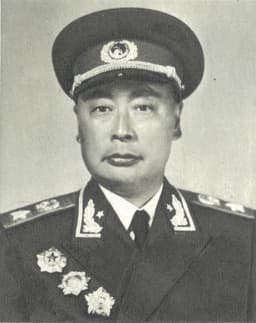
Chen Yi
General · Modern
57.5Total

Claude de Villars
General · Modern
66.1Total
Basic Information
Born
1901
1653
Died
1972
1734
Era
Modern
Modern
Nationality
China
France
Occupation
General
General
Civilization
Eastern
Western
Score Comparison
Military (10%)
52.5
80.8
Political (20%)
68.0
72.0
Influence (20%)
57.2
58.3
Legacy (20%)
50.0
52.0
Leadership (15%)
62.0
85.0
Strategy (15%)
60.0
68.5
TOTAL
57.5
66.1
Chen Yi — Complete Timeline
1945 AD
Commander of the Third Field Army in the Chinese Civil WarWar◆ Major
Chen Yi commanded the Third Field Army, which played a key role in the Huaihai Campaign and the capture of Nanjing and Shanghai. His forces were instrumental in the Communist victory in eastern China.
Chinese Civil WarMilitary Campaign
Impact: nationaldestructive
1949 AD
First Mayor of Communist ShanghaiPolitical Action◆ Major
Chen Yi was appointed the first mayor of Shanghai after the Communist takeover. He oversaw the transition of China's largest city from Nationalist to Communist control, implementing economic stabilization and political consolidation.
GovernmentShanghaiCommunist China
Impact: nationalconstructive
1955 AD
Appointed Marshal of the People's Liberation ArmyPolitical Action◆ Major
Chen Yi was appointed as one of the ten marshals of the People's Liberation Army. This honor recognized his military leadership during the civil war and his role in the Communist victory.
Military HonorPLA
Impact: nationalconstructive
1958 AD
Minister of Foreign Affairs of the People's Republic of ChinaPolitical Action◆ Major
Chen Yi was appointed Minister of Foreign Affairs, serving until 1972. He represented China at international conferences, including the Geneva Conference on Laos, and advocated for the Bandung principles of non-alignment.
DiplomacyForeign Policy
Impact: global
Claude de Villars — Complete Timeline
1702 AD
Battle of FriedlingenWar◆ Major
Villars commanded French forces at Friedlingen, defeating an Imperial army. This victory secured French control over the Rhine and earned him the rank of Marshal of France.
BattleVictoryPromotion
Impact: regionalconstructive
1709 AD
Command in the War of the Spanish SuccessionWar◆ Major
Villars took command of French forces after the defeat at Malplaquet. He rebuilt the army and conducted a defensive campaign, preventing the Allies from invading France despite severe French losses.
CommandDefenseWar
Impact: regional
1712 AD
Battle of DenainWar
Villars led a surprise attack on the Allied supply depot at Denain, defeating a larger force under Prince Eugene. This victory saved France from invasion and allowed Louis XIV to negotiate favorable terms in the Treaty of Utrecht.
BattleVictoryTreaty
Impact: globalconstructive
1714 AD
Negotiation of the Peace of RastattPolitical Action◆ Major
Villars negotiated the Peace of Rastatt with Prince Eugene, ending the War of the Spanish Succession between France and the Holy Roman Empire. The treaty confirmed French gains, including Alsace and Strasbourg.
TreatyDiplomacyPeace
Impact: globalconstructive
Expert Analysis
Origins
Chen Yi (born 1901) was the son of a minor official in Sichuan province, China. He studied in France under a work-study program, where he encountered Marxist ideas. Upon returning to China, he joined the Communist Party in 1923 and participated in the Nanchang Uprising (1927), beginning his military career. His early experiences in labor movements and guerrilla warfare shaped his pragmatic approach.
Claude de Villars (born 1653) came from a noble family in Moulins, France. His father was a diplomat, and Villars initially pursued a diplomatic career, serving as an envoy to Bavaria and Poland. He later switched to the military, buying a cavalry regiment in 1674. His aristocratic background and diplomatic training gave him a unique blend of military and political skills.
Rise to Power
Chen Yi rose through the ranks of the Red Army during the Chinese Civil War. By 1934, he was a commander in the Jiangxi Soviet. He remained behind during the Long March, leading guerrilla operations in southern China. His resilience earned him command of the New Fourth Army in 1941. During the Huaihai Campaign (1948-1949), his Third Field Army defeated Nationalist forces, capturing Nanjing and Shanghai. In 1949, he was appointed the first mayor of Shanghai, a critical political role.
Villars gained prominence during the War of the Grand Alliance (1688-1697). At the Battle of Friedlingen (1702), he defeated an Imperial army, securing the Rhine and earning his marshal's baton. His decisive victory at Denain (1712) saved France from invasion during the War of the Spanish Succession. His diplomatic background led him to negotiate the Peace of Rastatt (1714) with Prince Eugene, ending the war between France and the Holy Roman Empire.
Leadership & Governance
Chen Yi's governance of Shanghai (1949-1958) focused on stabilizing the economy and integrating the city into the new communist state. He enforced currency reform and suppressed black markets. As Foreign Minister (1958-1972), he promoted the Bandung Principles of non-alignment. His leadership style was pragmatic, balancing ideological purity with practical needs. He scored 62.0 in leadership, reflecting his ability to manage both military and political roles.
Villars commanded the French army with a blend of aggression and caution. His leadership score of 85.0 is among the highest. He rebuilt the French army after its defeat at Malplaquet (1709), restoring morale. His diplomatic skills allowed him to negotiate favorable terms at Rastatt. He was known for his charisma and ability to inspire troops, but also for his independence, often clashing with Louis XIV's ministers.
Triumph & Tragedy
Chen Yi's greatest triumph was the peaceful transition of Shanghai to communist control. He prevented widespread destruction and restored order. His role in the Huaihai Campaign was instrumental in the Communist victory. However, during the Cultural Revolution (1966-1976), he was purged and criticized for being a 'capitalist roader'. He died in 1972, disgraced but later rehabilitated. His political score of 68.0 reflects his mixed success.
Villars' triumph was the victory at Denain (1712), where he surprised the Allies and lifted the siege of Landrecies. This saved France from invasion. He also negotiated the Peace of Rastatt, which preserved French borders. His tragedy was the defeat at Malplaquet (1709), where he was wounded and forced to retreat. Despite this, he rebuilt the army and continued fighting. His military score of 80.8 indicates his effectiveness.
Character & Destiny
Chen Yi was pragmatic and resilient, but also politically naive. He believed in the Communist cause but was unable to navigate the Cultural Revolution's extremism. His willingness to compromise led to his downfall. He scored 60.0 in strategy, reflecting his tactical competence but lack of foresight in political purges.
Villars was bold and independent, often disregarding orders from Paris. His aggressive tactics at Denain contrasted with his defensive strategy after Malplaquet. He was a master of psychological warfare, spreading misinformation to deceive the Allies. His character allowed him to seize opportunities, but his independence caused friction with the court.
Legacy
Chen Yi is remembered as one of the Ten Marshals of the PLA. His work as Shanghai's first mayor established the model for communist urban governance. As Foreign Minister, he advocated for Third World solidarity. His legacy score of 50.0 is modest, as his contributions are overshadowed by Mao and Zhou Enlai. However, his military achievements in the civil war are recognized.
Villars is considered the last great marshal of Louis XIV. His victory at Denain is studied in military academies. The Peace of Rastatt stabilized Europe after the War of the Spanish Succession. His legacy score of 52.0 reflects his enduring reputation in French military history.
Conclusion
Claude de Villars had a greater impact on history than Chen Yi. His military score (80.8 vs 52.5) and leadership score (85.0 vs 62.0) are significantly higher. Villars not only won decisive battles but also shaped the diplomatic landscape of Europe. Chen Yi's achievements were important for China's communist victory, but his influence was limited by the political turmoil of the Cultural Revolution. Villars' strategic acumen and diplomatic skill saved France from invasion and secured its borders. Therefore, Villars stands as the more effective and influential commander.
Rankings
🥇
Claude de VillarsLeader
Mil: 80.8Pol: 72.0Inf: 58.3
66.1
🥈
Chen Yi
Mil: 52.5Pol: 68.0Inf: 57.2
57.5
+8.6 behind
How This Comparison Works
Algorithm
Each figure is scored on 6 dimensions (0—100 scale) based on structured historical data: Military (10%), Political (20%), Influence (20%), Legacy (20%), Leadership (15%), Strategy (15%). The weighted total produces the final ranking.
Data Sources
Scores are computed from structured sub-indicators in the database. Scale factors adjust for era (Ancient ×0.85, Modern ×1.0) and civilization size (Eastern ×1.05, Other ×0.80) to account for differences in population and military scale.
Maximum 3 Figures
Comparisons are limited to 2—3 figures to ensure readability and statistical meaningfulness.
Error Margins
±5 points per dimension — Sub-scores are derived from historical records with inherent uncertainty. Two figures within 5 points on a dimension should be considered roughly equivalent in that area.
Total Score Accuracy
±3 points overall — The weighted combination of 6 dimensions produces a total score with approximately ±3 points of uncertainty. Differences of less than 3 points are not statistically significant— the figures are effectively tied.
Known Limitations
- Historical records are incomplete and uneven across civilizations
- Figures from oral-tradition societies may be underrepresented
- Occupation labels can misclassify multi-role figures
- Scores measure capability and impact, not moral character
- Quantitative scoring is a comparison tool, not absolute truth
Capability Radar
Military (10%) — Battles & Warfare
Battles
55
85
Win Rate
60
88
Expansion
40
75
Political (20%) — Governance & Reform
Reform
50
55
Diplomacy
55
75
Economy
45
60
Influence (20%) — Cultural & Global Reach
Cultural
40
55
Global
35
55
Legacy (20%) — Historical Impact
Historical
50
70
Longevity
40
60
Leadership (15%) — Power & Stability
Tenure
60
70
Stability
50
70
Strategy (15%) — Tactics & Innovation
Strategy
55
85
Tactics
50
82
Reform
30
60
Similar Comparisons
Comments & Discussion
No comments yet. Be the first to share your thoughts!