Loading...
This comparison has not been analyzed yet.
One-time AI generation (~1 minute). Scores and timeline are already available below.
Chikuyo Chisamarengu vs Frederick V of Austria
Frederick V of Austria leads by 7.3 pts · 2 figures compared
…
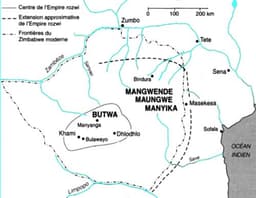
Chikuyo Chisamarengu
Emperor · Medieval
43.3Total
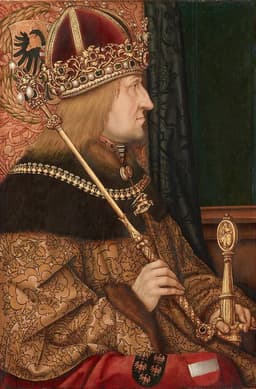
Frederick V of Austria
Emperor · Medieval
50.6Total
Basic Information
Born
1490
1415
Died
1530
1493
Era
Medieval
Medieval
Nationality
Mutapa Empire
Austria
Occupation
Emperor
Emperor
Civilization
Other
Western
Score Comparison
Military (10%)
45.0
50.0
Political (20%)
33.6
45.1
Influence (20%)
48.6
51.8
Legacy (20%)
40.0
49.2
Leadership (15%)
51.9
74.0
Strategy (15%)
38.6
25.0
TOTAL
43.3
50.6
Chikuyo Chisamarengu — Complete Timeline
1510 AD
First Contact with PortuguesePolitical Action◆ Major
Chikuyo Chisamarengu received Portuguese explorers and traders at the Mutapa court. This initial contact established diplomatic relations and opened trade in gold and ivory with the Portuguese.
Portuguese ContactDiplomacyTrade
Impact: regional
1515 AD
Portuguese Missionary ArrivalCultural
Chikuyo Chisamarengu allowed Portuguese Jesuit missionaries to enter the Mutapa Empire. He permitted Christian preaching but did not convert, maintaining traditional Shona religious practices.
MissionariesChristianityReligious Contact
Impact: regional
1520 AD
Conflict with Portuguese TradersWar◆ Major
Chikuyo Chisamarengu expelled Portuguese traders from Mutapa after disputes over gold trade terms. This led to a brief armed conflict, with Mutapa forces defeating a Portuguese expedition.
ConflictPortugueseGold Trade
Impact: regional
1525 AD
Restoration of Trade RelationsPolitical Action
Chikuyo Chisamarengu reestablished trade with the Portuguese after negotiations. He granted them limited trading rights but maintained Mutapa sovereignty, setting a precedent for future relations.
TradeDiplomacySovereignty
Impact: regionalconstructive
Frederick V of Austria — Complete Timeline
1440 AD
Election as King of the RomansPolitical Action◆ Major
Frederick was elected King of the Romans in Frankfurt, succeeding his cousin Albert II. This election placed him at the head of the Holy Roman Empire, beginning his long reign as Frederick III.
ElectionHoly Roman EmpireKingship
Impact: regional
Adoption of the AEIOU MottoCultural
Frederick III adopted the cryptic motto AEIOU, which he used on his personal belongings and buildings. The meaning remains debated, but it symbolized his claim to universal rule and Habsburg destiny.
MottoSymbolismHabsburg
1452 AD
Coronation as Holy Roman EmperorPolitical Action◆ Major
Frederick III was crowned Holy Roman Emperor by Pope Nicholas V in Rome. This was the last imperial coronation to take place in Rome, and it solidified his authority over the empire.
CoronationHoly Roman EmpirePapacy
Impact: regional
1477 AD
Marriage of Maximilian I and Mary of BurgundyPolitical Action◆ Major
Frederick III arranged the marriage of his son Maximilian to Mary of Burgundy, heiress of the Burgundian state. This union brought the Burgundian Netherlands into the Habsburg domain, greatly expanding Habsburg power.
Marriage AllianceHabsburg ExpansionBurgundy
Impact: regionalconstructive
1485 AD
Siege of Vienna (Austrian-Hungarian War)War◆ Major
Frederick III lost Vienna to the Hungarian king Matthias Corvinus after a prolonged siege. The city remained under Hungarian control until 1490, marking a significant territorial loss for Frederick.
SiegeTerritorial LossHungary
Impact: regionaldestructive
This comparison has not been analyzed yet.
One-time AI generation (~1 minute). Scores and timeline are already available below.
Rankings
🥇
Frederick V of AustriaLeader
Mil: 50.0Pol: 45.1Inf: 51.8
50.6
🥈
Chikuyo Chisamarengu
Mil: 45.0Pol: 33.6Inf: 48.6
43.3
+7.3 behind
How This Comparison Works
Algorithm
Each figure is scored on 6 dimensions (0—100 scale) based on structured historical data: Military (10%), Political (20%), Influence (20%), Legacy (20%), Leadership (15%), Strategy (15%). The weighted total produces the final ranking.
Data Sources
Scores are computed from structured sub-indicators in the database. Scale factors adjust for era (Ancient ×0.85, Modern ×1.0) and civilization size (Eastern ×1.05, Other ×0.80) to account for differences in population and military scale.
Maximum 3 Figures
Comparisons are limited to 2—3 figures to ensure readability and statistical meaningfulness.
Error Margins
±5 points per dimension — Sub-scores are derived from historical records with inherent uncertainty. Two figures within 5 points on a dimension should be considered roughly equivalent in that area.
Total Score Accuracy
±3 points overall — The weighted combination of 6 dimensions produces a total score with approximately ±3 points of uncertainty. Differences of less than 3 points are not statistically significant— the figures are effectively tied.
Known Limitations
- Historical records are incomplete and uneven across civilizations
- Figures from oral-tradition societies may be underrepresented
- Occupation labels can misclassify multi-role figures
- Scores measure capability and impact, not moral character
- Quantitative scoring is a comparison tool, not absolute truth
Capability Radar
Military (10%) — Battles & Warfare
Battles
25
15
Win Rate
30
20
Expansion
20
10
Political (20%) — Governance & Reform
Reform
20
40
Diplomacy
35
55
Economy
30
30
Influence (20%) — Cultural & Global Reach
Cultural
20
30
Global
10
20
Legacy (20%) — Historical Impact
Historical
25
50
Longevity
15
45
Leadership (15%) — Power & Stability
Tenure
40
70
Stability
25
35
Strategy (15%) — Tactics & Innovation
Strategy
25
15
Tactics
20
10
Reform
15
10
Similar Comparisons
Comments & Discussion
No comments yet. Be the first to share your thoughts!