Loading...
Frederick V of Austria vs Muhammad II of Khwarezm
Muhammad II of Khwarezm leads by 3.9 pts · 2 figures compared
…
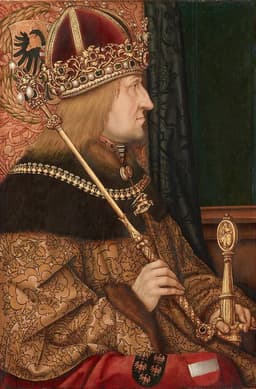
Frederick V of Austria
Emperor · Medieval
50.6Total
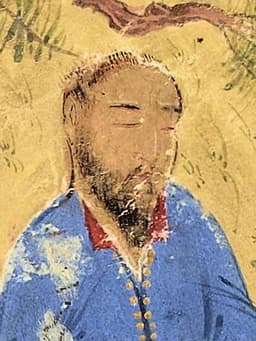
Muhammad II of Khwarezm
Emperor · Medieval
54.5Total
Basic Information
Born
1415
1169
Died
1493
1220
Era
Medieval
Medieval
Nationality
Austria
Khwarezmian Empire
Occupation
Emperor
Emperor
Civilization
Western
Middle Eastern
Score Comparison
Military (10%)
50.0
55.0
Political (20%)
45.1
40.8
Influence (20%)
51.8
60.0
Legacy (20%)
49.2
49.2
Leadership (15%)
74.0
74.0
Strategy (15%)
25.0
45.0
TOTAL
50.6
54.5
Frederick V of Austria — Complete Timeline
1440 AD
Election as King of the RomansPolitical Action◆ Major
Frederick was elected King of the Romans in Frankfurt, succeeding his cousin Albert II. This election placed him at the head of the Holy Roman Empire, beginning his long reign as Frederick III.
ElectionHoly Roman EmpireKingship
Impact: regional
Adoption of the AEIOU MottoCultural
Frederick III adopted the cryptic motto AEIOU, which he used on his personal belongings and buildings. The meaning remains debated, but it symbolized his claim to universal rule and Habsburg destiny.
MottoSymbolismHabsburg
1452 AD
Coronation as Holy Roman EmperorPolitical Action◆ Major
Frederick III was crowned Holy Roman Emperor by Pope Nicholas V in Rome. This was the last imperial coronation to take place in Rome, and it solidified his authority over the empire.
CoronationHoly Roman EmpirePapacy
Impact: regional
1477 AD
Marriage of Maximilian I and Mary of BurgundyPolitical Action◆ Major
Frederick III arranged the marriage of his son Maximilian to Mary of Burgundy, heiress of the Burgundian state. This union brought the Burgundian Netherlands into the Habsburg domain, greatly expanding Habsburg power.
Marriage AllianceHabsburg ExpansionBurgundy
Impact: regionalconstructive
1485 AD
Siege of Vienna (Austrian-Hungarian War)War◆ Major
Frederick III lost Vienna to the Hungarian king Matthias Corvinus after a prolonged siege. The city remained under Hungarian control until 1490, marking a significant territorial loss for Frederick.
SiegeTerritorial LossHungary
Impact: regionaldestructive
Muhammad II of Khwarezm — Complete Timeline
1218 AD
Conflict with Genghis KhanPolitical Action
Muhammad II executed Mongol envoys sent by Genghis Khan to establish trade relations. This act provoked the Mongol invasion of the Khwarezmian Empire, leading to one of the most devastating conquests in history.
DiplomacyMongol InvasionProvocation
Impact: globaldestructive
1219 AD
Mongol Invasion of KhwarezmWar
Genghis Khan invaded the Khwarezmian Empire with a massive army. Muhammad II failed to mount a coordinated defense, and the Mongols captured and destroyed major cities including Samarkand, Bukhara, and Urgench, massacring millions.
InvasionMongolDestruction
Impact: globaltragic
1220 AD
Flight and DeathOther◆ Major
Muhammad II fled westward as the Mongols advanced, abandoning his empire. He died on an island in the Caspian Sea, possibly from pneumonia or assassination, leaving his son Jalal ad-Din to continue the resistance.
FlightDeathCollapse
Impact: regionaltragic
Expert Analysis
Origins
Frederick V of Austria (1415–1493), also known as Frederick III, was born into the Habsburg dynasty. His early life was shaped by the death of his father when Frederick was nine, leaving him under the guardianship of his uncle. He received a thorough education in governance and chivalry, but his reign was marked by a cautious and methodical approach. In contrast, Muhammad II of Khwarezm (died 1220) was born into the Khwarezmian dynasty, which had risen from vassals of the Seljuks to a major power. He inherited a vast empire covering modern Iran, Uzbekistan, and parts of Afghanistan. His early military campaigns expanded the empire further, but his upbringing in a court rife with intrigue fostered a distrustful and autocratic style.
Rise to Power
Frederick III was elected King of the Romans in 1440, succeeding his cousin Albert II. His coronation as Holy Roman Emperor in 1452 by Pope Nicholas V was the last imperial coronation in Rome. This event solidified his status but also highlighted the declining power of the empire. Muhammad II came to power in 1200 after the death of his father, Ala ad-Din Tekish. He quickly consolidated control and launched campaigns against the Ghurids and the Abbasid Caliphate, expanding Khwarezm to its zenith. By 1218, his empire stretched from the Caspian Sea to the Indus River. However, his rise was accompanied by growing tensions with the Mongol Empire to the east.
Leadership & Governance
Frederick III's leadership was characterized by a motto he famously adopted: AEIOU, which he inscribed on buildings and objects. The meaning is debated, but it reflected his belief in the Habsburg destiny. He governed through a combination of caution, legalism, and dynastic marriage. His arrangement of the marriage of his son Maximilian to Mary of Burgundy in 1477 brought the Burgundian Netherlands into the Habsburg fold, a strategic masterstroke. However, his governance was often passive; he rarely took the field himself and relied on allies. Muhammad II ruled with an iron fist, centralizing power and demanding absolute loyalty. He alienated many vassals and neighboring rulers through his arrogance and brutality. His decision to execute Mongol envoys in 1218, despite Genghis Khan's desire for trade, was a catastrophic miscalculation that demonstrated his flawed governance—prioritizing pride over diplomacy.
Triumph & Tragedy
Frederick III's greatest triumph was the strategic marriage of his son, which laid the foundation for the Habsburg empire's dominance in Europe. His longevity (he reigned 53 years) also allowed for stability. However, his tragedy was the loss of Vienna to the Hungarian king Matthias Corvinus in 1485 after a siege. The city remained under Hungarian control until 1490, a major blow to Habsburg prestige. Muhammad II's triumph was building the largest empire in the Islamic world at the time, with a military that scored 55.0 in the comparison. His tragedy, however, was total: his empire was obliterated by the Mongols. He fled his own capital, abandoned his people, and died in obscurity on an island in the Caspian Sea. The Mongol invasion killed millions and destroyed centuries of culture.
Character & Destiny
Frederick III was cautious, frugal, and patient—traits that helped him survive in the turbulent politics of the Holy Roman Empire. His motto AEIOU (often interpreted as "Austria Est Imperare Orbi Universo" or "All the world is subject to Austria") reveals his long-term vision. Yet his passivity led to military defeats and loss of territory. Muhammad II was proud, impulsive, and authoritarian. His character directly caused his downfall: his execution of the Mongol envoys was an act of hubris that provoked a war he could not win. He failed to unite his vassals and underestimated the Mongols. Historians note that his leadership score of 74.0 reflects his ability to command loyalty initially, but his strategic score of only 45.0 shows his fatal lack of foresight.
Legacy
Frederick III's legacy is mixed. He is remembered as the last emperor crowned in Rome and the man who expanded Habsburg power through marriage. The AEIOU motto remains a symbol of Austrian identity. However, his reign saw the empire's central authority weaken. Muhammad II's legacy is catastrophic: he is remembered as the ruler who brought the Mongol invasion to the Islamic world, destroying the Khwarezmian Empire and paving the way for Mongol domination. His name is synonymous with poor leadership and the consequences of hubris. In the comparison, Muhammad II scores 54.5 total, slightly above Frederick's 50.6, but his impact was far more destructive.
Conclusion
While Muhammad II of Khwarezm scored marginally higher overall (54.5 vs 50.6), Frederick III had a more lasting and positive impact. Frederick's strategic marriage policy created the Habsburg empire that shaped European history for centuries. Muhammad II's reign, though initially powerful, ended in utter ruin and brought devastation to millions. Frederick's legacy is one of gradual expansion and stability; Muhammad's is a cautionary tale of pride leading to annihilation. Therefore, Frederick III had greater long-term impact, despite his lower total score.
Rankings
🥇
Muhammad II of KhwarezmLeader
Mil: 55.0Pol: 40.8Inf: 60.0
54.5
🥈
Frederick V of Austria
Mil: 50.0Pol: 45.1Inf: 51.8
50.6
+3.9 behind
How This Comparison Works
Algorithm
Each figure is scored on 6 dimensions (0—100 scale) based on structured historical data: Military (10%), Political (20%), Influence (20%), Legacy (20%), Leadership (15%), Strategy (15%). The weighted total produces the final ranking.
Data Sources
Scores are computed from structured sub-indicators in the database. Scale factors adjust for era (Ancient ×0.85, Modern ×1.0) and civilization size (Eastern ×1.05, Other ×0.80) to account for differences in population and military scale.
Maximum 3 Figures
Comparisons are limited to 2—3 figures to ensure readability and statistical meaningfulness.
Error Margins
±5 points per dimension — Sub-scores are derived from historical records with inherent uncertainty. Two figures within 5 points on a dimension should be considered roughly equivalent in that area.
Total Score Accuracy
±3 points overall — The weighted combination of 6 dimensions produces a total score with approximately ±3 points of uncertainty. Differences of less than 3 points are not statistically significant— the figures are effectively tied.
Known Limitations
- Historical records are incomplete and uneven across civilizations
- Figures from oral-tradition societies may be underrepresented
- Occupation labels can misclassify multi-role figures
- Scores measure capability and impact, not moral character
- Quantitative scoring is a comparison tool, not absolute truth
Capability Radar
Military (10%) — Battles & Warfare
Battles
15
55
Win Rate
20
50
Expansion
10
60
Political (20%) — Governance & Reform
Reform
40
35
Diplomacy
55
20
Economy
30
40
Influence (20%) — Cultural & Global Reach
Cultural
30
30
Global
20
40
Legacy (20%) — Historical Impact
Historical
50
55
Longevity
45
30
Leadership (15%) — Power & Stability
Tenure
70
60
Stability
35
25
Strategy (15%) — Tactics & Innovation
Strategy
15
40
Tactics
10
45
Reform
10
30
Similar Comparisons
Comments & Discussion
No comments yet. Be the first to share your thoughts!