Loading...
Chikuyo Chisamarengu vs John of England
John of England leads by 8.6 pts · 2 figures compared
…
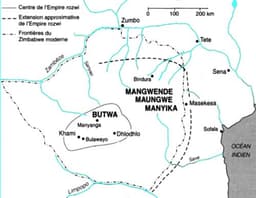
Chikuyo Chisamarengu
Emperor · Medieval
43.3Total
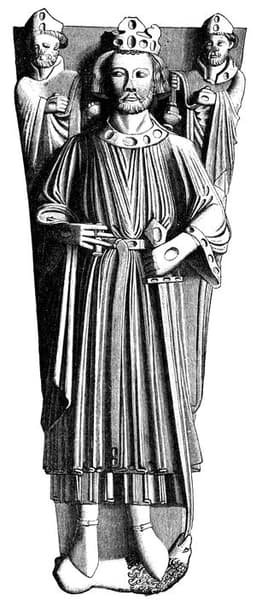
John of England
Emperor · Medieval
51.9Total
Basic Information
Born
1490
1166
Died
1530
1216
Era
Medieval
Medieval
Nationality
Mutapa Empire
England
Occupation
Emperor
Emperor
Civilization
Other
Western
Score Comparison
Military (10%)
45.0
50.0
Political (20%)
33.6
39.4
Influence (20%)
48.6
62.0
Legacy (20%)
40.0
55.0
Leadership (15%)
51.9
45.0
Strategy (15%)
38.6
50.0
TOTAL
43.3
51.9
Chikuyo Chisamarengu — Complete Timeline
1510 AD
First Contact with PortuguesePolitical Action◆ Major
Chikuyo Chisamarengu received Portuguese explorers and traders at the Mutapa court. This initial contact established diplomatic relations and opened trade in gold and ivory with the Portuguese.
Portuguese ContactDiplomacyTrade
Impact: regional
1515 AD
Portuguese Missionary ArrivalCultural
Chikuyo Chisamarengu allowed Portuguese Jesuit missionaries to enter the Mutapa Empire. He permitted Christian preaching but did not convert, maintaining traditional Shona religious practices.
MissionariesChristianityReligious Contact
Impact: regional
1520 AD
Conflict with Portuguese TradersWar◆ Major
Chikuyo Chisamarengu expelled Portuguese traders from Mutapa after disputes over gold trade terms. This led to a brief armed conflict, with Mutapa forces defeating a Portuguese expedition.
ConflictPortugueseGold Trade
Impact: regional
1525 AD
Restoration of Trade RelationsPolitical Action
Chikuyo Chisamarengu reestablished trade with the Portuguese after negotiations. He granted them limited trading rights but maintained Mutapa sovereignty, setting a precedent for future relations.
TradeDiplomacySovereignty
Impact: regionalconstructive
John of England — Complete Timeline
1204 AD
Loss of NormandyWar◆ Major
King John lost the Duchy of Normandy to King Philip II of France after the fall of Ch
Territorial LossFranceAngevin Empire
Impact: regionaldestructive
1208 AD
Interdict on EnglandPolitical Action◆ Major
Pope Innocent III placed England under interdict after John refused to accept Stephen Langton as Archbishop of Canterbury. This suspended church services, causing widespread discontent and leading to John's excommunication.
Church ConflictPapal InterdictExcommunication
Impact: nationaldestructive
1215 AD
First Barons' WarWar◆ Major
After repudiating Magna Carta, John faced the First Barons' War, where rebel barons invited Prince Louis of France to take the English throne. John fought to retain control, leading to widespread devastation.
Civil WarBaronial RevoltFrench Invasion
Impact: nationaldestructive
Signing of Magna CartaPolitical Action
Under pressure from rebellious barons, John signed Magna Carta at Runnymede. The charter limited royal power, established legal rights, and influenced constitutional law, though John later repudiated it.
CharterConstitutionalBaronial Revolt
Impact: globalconstructive
1216 AD
Death from DysenteryOther◆ Major
John died of dysentery at Newark Castle during the First Barons' War. His death allowed his young son Henry III to succeed, and the war ended with the Treaty of Lambeth.
DeathDisease
Impact: nationaltragic
Expert Analysis
Origins
**Chikuyo Chisamarengu** (c. late 15th century – early 16th century) was an emperor of the Mutapa Empire, a Shona kingdom in present-day Zimbabwe and Mozambique. Little is known of his early life, but he inherited a centralized state built on gold trade and cattle wealth. His family, the Rozvi dynasty, had controlled the region since the 14th century. Chisamarengu's upbringing likely involved military training and courtly education, preparing him to defend Mutapa's sovereignty.
**John of England** (1166–1216) was the youngest son of King Henry II and Eleanor of Aquitaine. Born in Oxford, he received a formal education but was overshadowed by his elder brothers. His father granted him the title Lord of Ireland in 1177, but he lacked a substantial inheritance. John's early years were marked by a failed rebellion against his brother Richard I in 1193-94, revealing his ambition and political opportunism.
Rise to Power
Chikuyo Chisamarengu ascended to the Mutapa throne around 1490, following a series of succession disputes. He consolidated power by suppressing rival chiefs and expanding the gold trade with Swahili merchants on the Indian Ocean coast. His key turning point came in 1498 when Portuguese explorers led by Vasco da Gama reached the region. Chisamarengu saw the Portuguese as potential trade partners and allowed them access to his court. This decision opened Mutapa to European influence but also sowed seeds of conflict.
John became King of England in 1199 after Richard I died without an heir. His accession was contested by his nephew Arthur of Brittany, leading to war with France. John captured Arthur in 1202, but his subsequent loss of Normandy in 1204 marked a major reversal. He spent years trying to regain his French lands, raising taxes and alienating his barons. His excommunication in 1209 after a dispute with Pope Innocent III over the appointment of Stephen Langton as Archbishop of Canterbury further weakened his position.
Leadership & Governance
Chikuyo Chisamarengu ruled as an absolute monarch with authority derived from the Mwari cult. He controlled the gold trade by requiring all gold to be sold through royal agents, maintaining a monopoly that enriched the state. His governance relied on appointed provincial governors (mambos) who collected tribute and enforced laws. When Portuguese traders violated agreements by demanding more gold and slave labor, Chisamarengu expelled them in 1506, leading to a brief conflict where Mutapa forces repelled Portuguese attacks. He later negotiated a restoration of trade, but on terms that preserved his sovereignty. His political score of 33.6 reflects his limited institutional reforms, but his leadership score of 51.9 indicates effective crisis management.
John's leadership was characterized by arbitrary rule and fiscal mismanagement. He imposed heavy taxes to fund failed wars, including scutage (payment in lieu of military service) and levies on barons' estates. His governance style alienated the nobility, clergy, and commoners. He lost the support of the Church through the interdict (1208-1214) and faced widespread rebellion. His political score of 39.4 and leadership score of 45.0 reflect his inability to build consensus. The Magna Carta, signed under duress in 1215, was a direct challenge to his rule, establishing principles like due process and limits on royal power.
Triumph & Tragedy
Chikuyo Chisamarengu's greatest success was preserving Mutapa's independence during the early phase of Portuguese expansion. By expelling Portuguese traders and later reestablishing controlled trade, he maintained Mutapa's economic and political autonomy. His willingness to engage diplomatically with Europeans while resisting coercion kept his empire intact. His greatest failure was underestimating the long-term Portuguese threat. After his death, Portuguese influence grew, leading to eventual decline. His influence score of 48.6 and legacy score of 40.0 reflect his limited impact beyond his reign.
John's greatest achievement was the Magna Carta, which became a foundation for constitutional law. Its clauses on fair trial, taxation by consent, and limits on royal authority influenced later documents like the U.S. Constitution. His signing of the charter, though forced, was a turning point in political history. His greatest failures include losing Normandy (1204), which diminished English continental power, and triggering the First Barons' War (1215-1217) by repudiating the charter. His death from dysentery in 1216 ended the war but left a contested legacy. His influence score of 62.0 and legacy score of 55.0 reflect his outsized impact on governance.
Character & Destiny
Chikuyo Chisamarengu was pragmatic and cautious, prioritizing stability over expansion. He engaged with Portuguese missionaries but refused to convert, showing religious conservatism. His decision to expel traders was bold but not reckless; he only did so when his authority was challenged. His character allowed him to navigate a difficult geopolitical situation, but his reluctance to modernize or form alliances with other African states limited his options. Historical assessments note his skill in maintaining Mutapa's independence, but his failure to prepare for future European encroachment.
John was cunning, vindictive, and insecure. He alienated allies through his cruelty—he allegedly starved Arthur of Brittany to death—and his arbitrary justice. His character led to repeated conflicts: with the Church, barons, and French king. His ability to manipulate legal procedures and taxation made him effective in the short term but disastrous in the long. His destiny was shaped by his inability to trust or compromise. Chroniclers like Roger of Wendover portray him as a tyrant, while modern historians note his administrative innovations, such as standardized weights and measures.
Legacy
Chikuyo Chisamarengu's legacy is primarily regional. He is remembered in Zimbabwean oral traditions as a defender of Mutapa sovereignty. The empire he preserved continued for another century but eventually fell under Portuguese influence. His reign set a precedent for African-European diplomacy that later rulers like Almeida followed. However, his impact on global history is minimal. His total score of 43.3 reflects his limited influence beyond his time.
John's legacy is global. The Magna Carta is a symbol of legal rights and constitutionalism, cited in democracies worldwide. His loss of Normandy reshaped English identity, pushing the kingdom toward insularity. The interdict and baronial conflict strengthened the Church's independence and parliamentary traditions. John's reign accelerated the decline of feudalism by exposing the limits of royal power. His total score of 51.9 underscores his significant, though often negative, impact.
Conclusion
John of England had greater historical impact than Chikuyo Chisamarengu. While Chisamarengu successfully defended his empire against early Portuguese aggression, his influence remained localized and temporally limited. The Magna Carta, born from John's failures, transformed governance across centuries and continents. John's political and military scores (39.4 and 50.0) are lower than his influence and legacy (62.0 and 55.0), indicating that his impact stemmed from unintended consequences rather than effective leadership. Chisamarengu's scores (political 33.6, influence 48.6, legacy 40.0) show a competent but constrained ruler. In the broader arc of history, John's reign produced a document that continues to shape legal systems, whereas Chisamarengu's achievements, though notable, did not transcend their era. Position: John of England.
Rankings
🥇
John of EnglandLeader
Mil: 50.0Pol: 39.4Inf: 62.0
51.9
🥈
Chikuyo Chisamarengu
Mil: 45.0Pol: 33.6Inf: 48.6
43.3
+8.6 behind
How This Comparison Works
Algorithm
Each figure is scored on 6 dimensions (0—100 scale) based on structured historical data: Military (10%), Political (20%), Influence (20%), Legacy (20%), Leadership (15%), Strategy (15%). The weighted total produces the final ranking.
Data Sources
Scores are computed from structured sub-indicators in the database. Scale factors adjust for era (Ancient ×0.85, Modern ×1.0) and civilization size (Eastern ×1.05, Other ×0.80) to account for differences in population and military scale.
Maximum 3 Figures
Comparisons are limited to 2—3 figures to ensure readability and statistical meaningfulness.
Error Margins
±5 points per dimension — Sub-scores are derived from historical records with inherent uncertainty. Two figures within 5 points on a dimension should be considered roughly equivalent in that area.
Total Score Accuracy
±3 points overall — The weighted combination of 6 dimensions produces a total score with approximately ±3 points of uncertainty. Differences of less than 3 points are not statistically significant— the figures are effectively tied.
Known Limitations
- Historical records are incomplete and uneven across civilizations
- Figures from oral-tradition societies may be underrepresented
- Occupation labels can misclassify multi-role figures
- Scores measure capability and impact, not moral character
- Quantitative scoring is a comparison tool, not absolute truth
Capability Radar
Military (10%) — Battles & Warfare
Battles
25
25
Win Rate
30
20
Expansion
20
10
Political (20%) — Governance & Reform
Reform
20
60
Diplomacy
35
20
Economy
30
25
Influence (20%) — Cultural & Global Reach
Cultural
20
45
Global
10
65
Legacy (20%) — Historical Impact
Historical
25
75
Longevity
15
70
Leadership (15%) — Power & Stability
Tenure
40
40
Stability
25
15
Strategy (15%) — Tactics & Innovation
Strategy
25
25
Tactics
20
30
Reform
15
15
Similar Comparisons
Comments & Discussion
No comments yet. Be the first to share your thoughts!