Loading...
Childeric III vs Julius Caesar
Julius Caesar leads by 38.9 pts · 2 figures compared
…
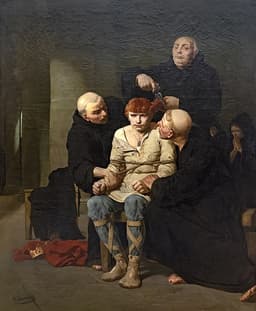
Childeric III
Emperor · Medieval
43.9Total

Julius Caesar
General · Ancient
82.8Total
Basic Information
Born
717
-100
Died
754
-44
Era
Medieval
Ancient
Nationality
Frankish Empire
Roman Republic
Occupation
Emperor
General
Civilization
Western
Western
Score Comparison
Military (10%)
15.7
88.0
Political (20%)
39.4
78.0
Influence (20%)
60.0
85.0
Legacy (20%)
35.0
82.0
Leadership (15%)
55.3
80.0
Strategy (15%)
43.4
85.0
TOTAL
43.9
82.8
Childeric III — Complete Timeline
743 AD
Elevation to KingshipPolitical Action◆ Major
Childeric III was placed on the throne by the mayors of the palace, Pepin the Short and Carloman, after a seven-year interregnum. He was the last Merovingian king, serving as a figurehead while real power rested with the Carolingian mayors.
MerovingianSuccessionFigurehead
Impact: regional
751 AD
Deposition by Pepin the ShortPolitical Action
Childeric III was deposed by Pepin the Short, the mayor of the palace, with the approval of Pope Zachary. Childeric was tonsured and confined to a monastery, ending the Merovingian dynasty. Pepin was then crowned king of the Franks, beginning the Carolingian dynasty.
MerovingianDepositionCarolingian
Impact: regional
Tonsure and ImprisonmentPolitical Action◆ Major
After his deposition, Childeric III was tonsured (his hair cut short, symbolizing loss of royal status) and imprisoned in the monastery of Saint-Bertin or Saint-Omer. His son Theuderic was also imprisoned, ensuring the end of the Merovingian bloodline's claim to power.
MerovingianImprisonmentEnd of Dynasty
Impact: regionaltragic
Julius Caesar — Complete Timeline
58 BC
Gallic WarsWar◆ Major
Caesar, as proconsul of Gaul, launched a series of campaigns that conquered all of Gaul (modern France, Belgium, and parts of Switzerland). He fought numerous battles, including against the Helvetii, the Belgae, and the Gallic chieftain Vercingetorix. The wars brought immense wealth and a loyal army to Caesar.
Gallic WarsConquestRoman Expansion
Impact: regional
49 BC
Crossing the RubiconPolitical Action◆ Major
Caesar led Legio XIII across the Rubicon River into Italy, defying the Roman Senate's order to disband his army. This act triggered a civil war against Pompey and the Optimates, ultimately leading to Caesar's dictatorship and the end of the Roman Republic.
Roman Civil WarEnd of RepublicPower Struggle
Impact: global
48 BC
Battle of PharsalusWar◆ Major
Caesar's outnumbered army defeated the larger forces of Pompey the Great at Pharsalus in Greece. Caesar's tactical use of a reserve line to counter Pompey's cavalry charge proved decisive. Pompey fled to Egypt, where he was assassinated, leaving Caesar as the undisputed master of the Roman world.
Roman Civil WarBattleDecisive Victory
Impact: regional
44 BC
Appointment as Dictator for LifePolitical Action◆ Major
The Roman Senate appointed Caesar dictator perpetuo (dictator for life), granting him unprecedented personal power. This move concentrated military, legislative, and judicial authority in one person, effectively ending the Roman Republic's traditional system of checks and balances and alarming many senators.
DictatorshipEnd of RepublicPower Consolidation
Impact: regionaldestructive
Assassination on the Ides of MarchPolitical Action◆ Major
A group of Roman senators, led by Marcus Junius Brutus and Gaius Cassius Longinus, stabbed Caesar to death at a meeting of the Senate in the Theatre of Pompey. The assassination was intended to restore the Republic, but instead triggered another civil war that led to the rise of the Roman Empire.
AssassinationRoman PoliticsEnd of Republic
Impact: globaldestructive
Expert Analysis
childeric-iii-vs-julius-caesar
# The King Who Wasn't and the General Who Was Everything
On a spring morning in 751, a Frankish king sat in a monastery, his long hair—the sacred symbol of Merovingian royalty—shorn from his head. Childeric III, the last of his dynasty, had just been deposed by his own mayor of the palace. Across the centuries and the Mediterranean, another scene unfolds: on the Ides of March in 44 BCE, a Roman dictator lies bleeding at the foot of Pompey's statue, stabbed by senators who once called him friend. One man vanished into obscurity; the other became immortal. What separates a footnote from a legend? The answer lies not in the accidents of birth, but in the choices that define a life.
Origins
Childeric III was born in 717, a king in name only. The Merovingian dynasty had long since decayed into what historians call *rois fainéants*—"do-nothing kings." These rulers were figureheads, kept in gilded cages by their mayors of the palace, the true power behind the throne. Childeric's world was one of ritual and irrelevance. He inherited not a sword but a crown that weighed nothing.
Julius Caesar, born in 100 BCE, came from a patrician family that had fallen on hard times. His Rome was a Republic in crisis—corrupt, divided, and hungry for a strong hand. Unlike Childeric, Caesar was not handed a throne. He had to build one. His uncle Marius had been a populist general; his aunt Julia had married into power. But Caesar's true inheritance was ambition, honed in the streets of a city where a man could rise—or fall—on his own merits.
The difference is fundamental: Childeric was born into a system that had already decided he would be powerless. Caesar was born into a system that was collapsing, and he learned to ride the chaos.
Rise to Power
Childeric III's elevation in 743 was not a conquest but a convenience. The mayors of the palace, Pepin the Short and his brother Carloman, needed a puppet after a seven-year interregnum. They pulled Childeric from a monastery—where he had been living in obscurity—and placed him on the throne. He was a placeholder, a symbol of continuity while the real rulers consolidated their power. His "rise" was a descent into irrelevance.
Caesar's path was the opposite. He began as a military tribune, then climbed the *cursus honorum*—the ladder of Roman offices—through a combination of brilliance and bribery. He formed the First Triumvirate with Pompey and Crassus, an alliance of convenience that allowed him to secure a command in Gaul. There, from 58 to 50 BCE, he fought eight campaigns, conquered hundreds of tribes, and wrote *Commentarii de Bello Gallico*—a masterpiece of self-promotion that made him a legend in his own lifetime.
The turning point came in 49 BCE, when the Senate ordered him to disband his army. Instead, Caesar crossed the Rubicon River, uttering the famous words, *"Alea iacta est"*—"The die is cast." It was an act of treason that launched a civil war. Childeric never crossed anything; he was carried.
Leadership & Governance
As dictator, Caesar transformed Rome. He reformed the calendar, granted citizenship to provincials, launched public works projects, and centralized administration. His military genius was matched by his political audacity: he pardoned his enemies, packed the Senate with his supporters, and accepted the title "dictator for life." Yet his reforms were not mere tyranny—they addressed real problems. The Republic had become ungovernable; Caesar aimed to replace chaos with order.
Childeric III governed nothing. His "reign" was a ceremonial shadow. The mayors of the palace administered justice, led armies, and collected taxes. When Pepin the Short decided to become king himself, he simply asked Pope Zachary for approval. The Pope ruled that it was better for the man with power to have the title. Childeric was tonsured—his hair cut, symbolizing the loss of royal status—and sent back to a monastery. He had no army to command, no allies to rally, no legacy to defend.
Caesar's leadership was active, creative, and dangerous. Childeric's was passive, symbolic, and forgettable. One shaped history; the other was erased by it.
Triumph & Tragedy
Caesar's greatest triumph was the conquest of Gaul, which added a vast territory to the Roman world and made him the wealthiest man in the Republic. His greatest tragedy was his own success: he became so powerful that his enemies could only see one solution. On the Ides of March, 44 BCE, a conspiracy of senators led by Brutus and Cassius stabbed him to death. He fell at the feet of his rival's statue, his last words—according to legend—*"Et tu, Brute?"*—"And you, Brutus?"
Childeric's "triumph" was being allowed to live. His tragedy was that he had never truly existed as a ruler. He was deposed without a fight, imprisoned without a trial, and died in 754, a forgotten monk in a forgotten cell. His only victory was that history remembers his name at all.
Character & Destiny
Caesar was a man of relentless energy, personal magnetism, and calculated risk. He slept in his chariot, dictated letters while riding, and forgave enemies who later killed him. His flaw was hubris—a belief that his genius could overcome all opposition. He dismissed the omens, ignored warnings, and walked into the Senate on that fatal day without his bodyguard.
Childeric III's character remains a blank. We have no letters, no speeches, no recorded thoughts. He was a placeholder, a man who accepted his fate because he had no power to resist it. His destiny was not to shape history but to be shaped by it—a leaf carried by currents he could not see.
The contrast is stark: Caesar's personality drove his decisions, and his decisions changed the world. Childeric's personality was irrelevant; the world changed around him.
Legacy
Julius Caesar's legacy is immeasurable. His name became synonymous with emperor—*Kaiser* in German, *Tsar* in Russian. His reforms laid the foundation for the Roman Empire, which lasted another 500 years in the West. His writings shaped military strategy and Latin prose. He remains a symbol of ambition, genius, and the peril of absolute power.
Childeric III's legacy is a single line in textbooks: the last Merovingian king. His deposition marked the end of one dynasty and the beginning of another—the Carolingians, who produced Charlemagne. But Childeric himself left nothing: no laws, no monuments, no victories. He is remembered only because he was the last.
Conclusion
Two men, two fates. Caesar died at 55, his life cut short at its peak, his name echoing through millennia. Childeric died at 37, his life a quiet extinguishment, his name a footnote. The difference was not in their times—both lived in eras of transformation. It was not in their birth—both came from royal or patrician lines. The difference was in what they did with their moment on the stage.
Caesar seized history by the throat. Childeric let history pass him by. In the end, we remember not the kings who were crowned, but the men who dared to cross their Rubicons.
Rankings
🥇
Julius CaesarLeader
Mil: 88.0Pol: 78.0Inf: 85.0
82.8
🥈
Childeric III
Mil: 15.7Pol: 39.4Inf: 60.0
43.9
+38.9 behind
How This Comparison Works
Algorithm
Each figure is scored on 6 dimensions (0—100 scale) based on structured historical data: Military (10%), Political (20%), Influence (20%), Legacy (20%), Leadership (15%), Strategy (15%). The weighted total produces the final ranking.
Data Sources
Scores are computed from structured sub-indicators in the database. Scale factors adjust for era (Ancient ×0.85, Modern ×1.0) and civilization size (Eastern ×1.05, Other ×0.80) to account for differences in population and military scale.
Maximum 3 Figures
Comparisons are limited to 2—3 figures to ensure readability and statistical meaningfulness.
Error Margins
±5 points per dimension — Sub-scores are derived from historical records with inherent uncertainty. Two figures within 5 points on a dimension should be considered roughly equivalent in that area.
Total Score Accuracy
±3 points overall — The weighted combination of 6 dimensions produces a total score with approximately ±3 points of uncertainty. Differences of less than 3 points are not statistically significant— the figures are effectively tied.
Known Limitations
- Historical records are incomplete and uneven across civilizations
- Figures from oral-tradition societies may be underrepresented
- Occupation labels can misclassify multi-role figures
- Scores measure capability and impact, not moral character
- Quantitative scoring is a comparison tool, not absolute truth
Capability Radar
Military (10%) — Battles & Warfare
Battles
4
95
Win Rate
9
92
Expansion
14
97
Political (20%) — Governance & Reform
Reform
0
90
Diplomacy
5
85
Economy
0
82
Influence (20%) — Cultural & Global Reach
Cultural
0
88
Global
0
94
Legacy (20%) — Historical Impact
Historical
5
95
Longevity
5
96
Leadership (15%) — Power & Stability
Tenure
5
75
Stability
5
60
Strategy (15%) — Tactics & Innovation
Strategy
15
94
Tactics
18
96
Reform
22
88
Similar Comparisons
Comments & Discussion
No comments yet. Be the first to share your thoughts!