Loading...
Chithira Thirunal vs Maximilian II
Chithira Thirunal leads by 5.9 pts · 2 figures compared
…
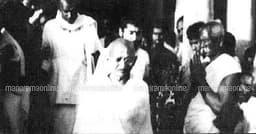
Chithira Thirunal
Emperor · Modern
57.5Total
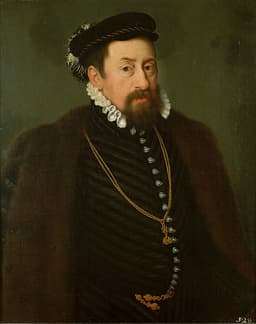
Maximilian II
Emperor · Modern
51.6Total
Basic Information
Born
1912
1527
Died
1991
1576
Era
Modern
Modern
Nationality
India
Holy Roman Empire
Occupation
Emperor
Emperor
Civilization
Indian
Western
Score Comparison
Military (10%)
44.3
50.0
Political (20%)
59.3
72.0
Influence (20%)
57.2
54.1
Legacy (20%)
47.5
42.5
Leadership (15%)
79.8
53.2
Strategy (15%)
60.0
36.8
TOTAL
57.5
51.6
Chithira Thirunal — Complete Timeline
1930 AD
Abolition of the Devadasi systemReform◆ Major
Chithira Thirunal abolished the Devadasi system in Travancore, which had involved the dedication of young girls to temples for ritualistic and often exploitative purposes. This reform was part of broader social legislation aimed at ending feudal practices and improving the status of women in the kingdom.
Social ReformWomen's RightsDevadasi
Impact: regionalprogressive
1936 AD
Temple Entry ProclamationReform
Chithira Thirunal issued the Temple Entry Proclamation, opening all government-controlled temples in Travancore to Hindus of all castes, including Dalits. This landmark reform abolished caste-based restrictions on temple entry, making Travancore the first princely state in India to do so. The proclamation was a major victory for the social reform movement.
Social ReformCaste DiscriminationTemple Entry
Impact: regionalprogressive
1937 AD
Establishment of the University of TravancoreReform◆ Major
Chithira Thirunal established the University of Travancore (now University of Kerala) in Thiruvananthapuram. The university was modeled on the University of Madras and offered courses in arts, sciences, and law. This institution became a center of higher education in the region, promoting research and learning.
Higher EducationUniversityThiruvananthapuram
Impact: regionalconstructive
1949 AD
Integration of Travancore into the Indian UnionPolitical Action◆ Major
Chithira Thirunal signed the Instrument of Accession, merging Travancore with the Indian Union. Initially hesitant, he agreed after negotiations with Sardar Patel. The merger ended the princely state's sovereignty and led to the formation of Travancore-Cochin, later part of Kerala state. He was allowed to retain his title and privy purse.
Indian IndependencePrincely StatesMerger
Impact: regional
Maximilian II — Complete Timeline
1564 AD
Coronation as Holy Roman EmperorPolitical Action◆ Major
Maximilian II was crowned Holy Roman Emperor in Frankfurt, succeeding his father Ferdinand I. His coronation was marked by a conciliatory tone towards Protestants, reflecting his personal beliefs. Maximilian's reign was characterized by an attempt to maintain peace between the Catholic and Protestant factions in the Empire.
CoronationImperial AuthorityReligious Peace
Impact: globalconstructive
1566 AD
Conflict with the Ottoman EmpireWar◆ Major
Maximilian II led a campaign against the Ottoman Empire in Hungary, culminating in the Siege of Szigetv
Ottoman WarsSiege of SzigetvárHungary
Impact: regional
1568 AD
Religious Toleration PolicyReform◆ Major
Maximilian II issued a decree of religious toleration for the Protestant nobility in Austria, allowing them to practice their faith freely. This policy was influenced by his own Protestant sympathies and aimed to reduce religious tensions. However, it was opposed by the Catholic Church and his Spanish relatives.
Religious TolerationProtestantismAustria
Impact: regionalprogressive
1570 AD
Patronage of the Arts and SciencesCultural
Maximilian II was a patron of the arts and sciences, supporting scholars, musicians, and artists at his court in Vienna. He employed the botanist Carolus Clusius and the historian Johannes Sambucus. His court became a center of humanist learning and cultural exchange, though his patronage was less extravagant than that of his son Rudolf II.
PatronageHumanismCultural Center
Impact: regionalconstructive
Expert Analysis
Origins
Chithira Thirunal, born in 1912, was the last Maharaja of Travancore, a princely state in southern India. He was adopted into the royal family and educated privately, with a focus on administration and modern governance. His early life was shaped by the rigid caste hierarchy of Hindu society, which he would later challenge.
Maximilian II, born in 1527 in Vienna, was a member of the Habsburg dynasty. He was educated in Spain and Germany, exposed to both Catholic and Protestant influences. His father, Ferdinand I, was Holy Roman Emperor, and Maximilian grew up amidst the religious turmoil of the Reformation.
Rise to Power
Chithira Thirunal ascended the throne in 1931 at age 19, following the death of his uncle. His early reign was marked by cautious reform, guided by his diwan (prime minister), Sir C.P. Ramaswami Iyer. The key turning point came in 1936 when he issued the Temple Entry Proclamation, a bold move that defied conservative orthodoxy.
Maximilian II was elected King of Bohemia in 1549 and later King of the Romans in 1562. He became Holy Roman Emperor in 1564 after his father's death. His rise was facilitated by his reputation for moderation, which appealed to both Catholic and Protestant princes weary of religious conflict.
Leadership & Governance
Chithira Thirunal governed Travancore with a focus on social reform and modernization. He established the University of Travancore in 1937, modeled on the University of London, to promote higher education. He also abolished the Devadasi system, which had exploited young girls in temple rituals. His leadership score of 79.8 reflects his progressive vision, but his political score of 59.3 indicates the constraints of princely rule under British suzerainty.
Maximilian II's governance was characterized by religious toleration. In 1568, he issued a decree allowing Protestant nobles in Austria to practice their faith, a radical step in an era of religious wars. However, his strategy score of 36.8 shows his inability to impose lasting peace; the Peace of Augsburg (1555) had already established cuius regio, eius religio, and his toleration was limited to the nobility. Maximilian's military score of 50.0 reflects his mixed success in campaigns against the Ottoman Empire.
Triumph & Tragedy
Chithira Thirunal's greatest triumph was the Temple Entry Proclamation of 1936, which opened all government-controlled temples to Hindus of all castes, including Dalits. This act dismantled a pillar of caste discrimination and inspired similar reforms across India. His tragedy was the integration of Travancore into the Indian Union in 1949; after initial hesitation, he signed the Instrument of Accession, losing his throne. He died in relative obscurity in 1991.
Maximilian II's triumph was his religious toleration policy, which prevented a full-scale religious war in the Habsburg domains during his reign. His tragedy was the failure to secure a lasting peace; the Ottoman threat persisted, and religious tensions resurfaced after his death. The Siege of Szigetvár in 1566, though a tactical victory, exhausted his resources.
Character & Destiny
Chithira Thirunal was a progressive but cautious ruler. His character combined a sense of duty with a willingness to challenge tradition, as seen in the Temple Entry Proclamation. However, his indecision during the integration crisis—wavering between independence and accession—led to his downfall. Historians note his political naivety in dealing with the Indian National Congress.
Maximilian II was a pragmatic and tolerant emperor, but his conciliatory nature made him appear weak to both Catholic and Protestant hardliners. He sought to mediate between factions but lacked the forcefulness to impose his will. His legacy score of 42.5 reflects the ephemeral nature of his policies.
Legacy
Chithira Thirunal's legacy endures through the Temple Entry Proclamation, a landmark in social justice. The University of Kerala, which he founded, continues to educate thousands. His influence score of 57.2 is modest, but his leadership score of 79.8 underscores his role as a reformer. In contrast, Maximilian II is remembered as a tolerant emperor in an intolerant age, but his policies were largely reversed by his successors. His patronage of the arts, including support for botanist Carolus Clusius, contributed to the cultural flowering of Vienna.
Conclusion
Chithira Thirunal had a greater impact on social progress than Maximilian II. His Temple Entry Proclamation directly challenged caste discrimination, a deep-rooted social evil, while Maximilian's toleration was limited to elites and did not fundamentally alter the religious landscape. Chithira Thirunal's total score of 57.5 vs Maximilian's 51.6 reflects this, but the gap is wider in leadership (79.8 vs 53.2). Chithira Thirunal's reforms had lasting effects in India, whereas Maximilian's policies were ephemeral. Therefore, Chithira Thirunal emerges as the more consequential figure.
Rankings
🥇
Chithira ThirunalLeader
Mil: 44.3Pol: 59.3Inf: 57.2
57.5
🥈
Maximilian II
Mil: 50.0Pol: 72.0Inf: 54.1
51.6
+5.9 behind
How This Comparison Works
Algorithm
Each figure is scored on 6 dimensions (0—100 scale) based on structured historical data: Military (10%), Political (20%), Influence (20%), Legacy (20%), Leadership (15%), Strategy (15%). The weighted total produces the final ranking.
Data Sources
Scores are computed from structured sub-indicators in the database. Scale factors adjust for era (Ancient ×0.85, Modern ×1.0) and civilization size (Eastern ×1.05, Other ×0.80) to account for differences in population and military scale.
Maximum 3 Figures
Comparisons are limited to 2—3 figures to ensure readability and statistical meaningfulness.
Error Margins
±5 points per dimension — Sub-scores are derived from historical records with inherent uncertainty. Two figures within 5 points on a dimension should be considered roughly equivalent in that area.
Total Score Accuracy
±3 points overall — The weighted combination of 6 dimensions produces a total score with approximately ±3 points of uncertainty. Differences of less than 3 points are not statistically significant— the figures are effectively tied.
Known Limitations
- Historical records are incomplete and uneven across civilizations
- Figures from oral-tradition societies may be underrepresented
- Occupation labels can misclassify multi-role figures
- Scores measure capability and impact, not moral character
- Quantitative scoring is a comparison tool, not absolute truth
Capability Radar
Military (10%) — Battles & Warfare
Battles
28
15
Win Rate
31
20
Expansion
38
10
Political (20%) — Governance & Reform
Reform
75
60
Diplomacy
65
65
Economy
55
50
Influence (20%) — Cultural & Global Reach
Cultural
50
40
Global
35
25
Legacy (20%) — Historical Impact
Historical
55
35
Longevity
40
30
Leadership (15%) — Power & Stability
Tenure
60
55
Stability
70
45
Strategy (15%) — Tactics & Innovation
Strategy
39
15
Tactics
44
10
Reform
42
20
Similar Comparisons
Comments & Discussion
No comments yet. Be the first to share your thoughts!