Loading...
Maximilian II vs Sekonyela
Maximilian II leads by 6.7 pts · 2 figures compared
…
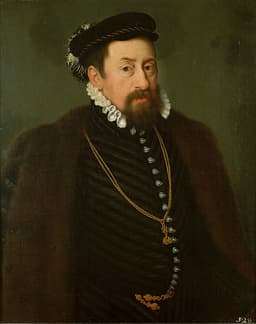
Maximilian II
Emperor · Modern
51.6Total

Sekonyela
Emperor · Modern
44.9Total
Basic Information
Born
1527
1804
Died
1576
1856
Era
Modern
Modern
Nationality
Holy Roman Empire
Sotho
Occupation
Emperor
Emperor
Civilization
Western
Other
Score Comparison
Military (10%)
50.0
50.0
Political (20%)
72.0
32.2
Influence (20%)
54.1
49.4
Legacy (20%)
42.5
39.2
Leadership (15%)
53.2
58.8
Strategy (15%)
36.8
41.0
TOTAL
51.6
44.9
Maximilian II — Complete Timeline
1564 AD
Coronation as Holy Roman EmperorPolitical Action◆ Major
Maximilian II was crowned Holy Roman Emperor in Frankfurt, succeeding his father Ferdinand I. His coronation was marked by a conciliatory tone towards Protestants, reflecting his personal beliefs. Maximilian's reign was characterized by an attempt to maintain peace between the Catholic and Protestant factions in the Empire.
CoronationImperial AuthorityReligious Peace
Impact: globalconstructive
1566 AD
Conflict with the Ottoman EmpireWar◆ Major
Maximilian II led a campaign against the Ottoman Empire in Hungary, culminating in the Siege of Szigetv
Ottoman WarsSiege of SzigetvárHungary
Impact: regional
1568 AD
Religious Toleration PolicyReform◆ Major
Maximilian II issued a decree of religious toleration for the Protestant nobility in Austria, allowing them to practice their faith freely. This policy was influenced by his own Protestant sympathies and aimed to reduce religious tensions. However, it was opposed by the Catholic Church and his Spanish relatives.
Religious TolerationProtestantismAustria
Impact: regionalprogressive
1570 AD
Patronage of the Arts and SciencesCultural
Maximilian II was a patron of the arts and sciences, supporting scholars, musicians, and artists at his court in Vienna. He employed the botanist Carolus Clusius and the historian Johannes Sambucus. His court became a center of humanist learning and cultural exchange, though his patronage was less extravagant than that of his son Rudolf II.
PatronageHumanismCultural Center
Impact: regionalconstructive
Sekonyela — Complete Timeline
1830 AD
Conflict with Moshoeshoe IWar◆ Major
Sekonyela led the Tlokwa in a series of wars against Moshoeshoe I's Basotho. The conflict was over land and cattle, with Sekonyela's forces raiding Basotho settlements. The wars weakened both groups and allowed Boer expansion.
BasothoTlokwaWarfare
Impact: regionaldestructive
1840 AD
Conflict with BoersWar
Sekonyela engaged in conflicts with Boer trekkers who were encroaching on Tlokwa lands. The Boers, with superior firearms, defeated his forces and seized territory, contributing to Tlokwa decline.
Boer ExpansionTlokwaLand Conflict
Impact: regionaltragic
1853 AD
Loss of Stronghold to MoshoeshoeWar◆ Major
Moshoeshoe's forces captured Sekonyela's mountain stronghold, forcing the Tlokwa chief to flee. This defeat ended Sekonyela's power and led to the absorption of many Tlokwa into the Basotho nation.
BasothoDefeatTlokwa
Impact: regionaltragic
Expert Analysis
Origins
Maximilian II was born on July 31, 1527 in Vienna, the eldest son of Ferdinand I, Holy Roman Emperor, and Anna of Bohemia and Hungary. He grew up in the Habsburg court, receiving a humanist education that emphasized languages, history, and the arts. His upbringing exposed him to the religious tensions of the Reformation, and he developed sympathies for Protestantism despite his Catholic family. This background shaped his later policy of religious toleration.
Sekonyela, born around 1804 in what is now South Africa, was a Tlokwa chief. The Tlokwa were a Sotho-speaking people, and Sekonyela inherited leadership from his father. His early life was marked by the upheavals of the Mfecane, a period of widespread warfare and displacement in southern Africa. He learned military tactics and governance in a context of constant conflict over land and resources.
Rise to Power
Maximilian II was elected King of the Romans in 1562, ensuring his succession as Holy Roman Emperor. He was crowned Emperor in 1564 in Frankfurt, succeeding his father. His rise was smooth due to Habsburg dynastic politics, but he had to navigate the delicate balance between Catholic and Protestant princes. His tolerant stance gained him support from Protestants but suspicion from Catholic hardliners.
Sekonyela rose to prominence as the Tlokwa chief through a combination of inheritance and military prowess. He consolidated his power by raiding neighboring groups, including the Basotho under Moshoeshoe I. By the 1830s, he controlled a significant territory in the Caledon River valley. His stronghold at Joalaboholo (now in the Free State) became a center of Tlokwa power.
Leadership & Governance
Maximilian II's leadership was characterized by pragmatism and conciliation. He issued the Religious Toleration Policy in 1568, allowing Protestant nobles in Austria to practice their faith, a move that reduced internal strife. He also patronized the arts and sciences, employing figures like the botanist Carolus Clusius. However, his governance was constrained by the imperial structure; he lacked the authority to impose his will on the empire. His political score is 72.0, reflecting his ability to maintain stability amid religious divisions.
Sekonyela's leadership was more authoritarian and militaristic. He ruled the Tlokwa with a focus on expansion and defense. He organized raids for cattle and land, using traditional Sotho warfare tactics. His leadership score of 58.8 indicates effectiveness in mobilizing his people for conflict, but his political score of 32.2 shows a lack of diplomatic skill. He alienated potential allies, including Moshoeshoe and the Boers.
Triumph & Tragedy
Maximilian II's greatest success was maintaining peace in the Holy Roman Empire during a period of intense religious conflict. He avoided major wars, and his toleration policy prevented a Catholic-Protestant civil war in Austria. His patronage also fostered cultural flourishing. However, his failure was the inability to secure a lasting religious settlement; his successor Rudolf II reversed his policies. He also failed to halt Ottoman advances, though the Siege of Szigetvár in 1566 ended with the death of Sultan Suleiman, a strategic stalemate.
Sekonyela's triumph was his initial expansion of Tlokwa territory and his ability to resist Moshoeshoe for years. He captured cattle and land, building a formidable following. But his tragedy was his eventual defeat: Moshoeshoe captured his stronghold in 1853, and Sekonyela was forced to flee. He died in obscurity around 1856. His conflict with the Boers also resulted in losses, as their firearms overwhelmed his forces.
Character & Destiny
Maximilian II was known for his intellectual curiosity and tolerance, unusual for a 16th-century Catholic monarch. He corresponded with Protestants and employed scholars regardless of religion. His character led him to pursue peace, but his indecisiveness and lack of assertiveness limited his impact. He died in 1576, possibly from a stroke, leaving an ambiguous legacy.
Sekonyela was a determined and aggressive leader, but his stubbornness and poor diplomacy doomed him. He refused to ally with Moshoeshoe against the Boers, which might have preserved his power. His character was shaped by the Mfecane's brutal environment, making him resistant to compromise. His fate was sealed when he lost his stronghold.
Legacy
Maximilian II's legacy is mixed. He is remembered as a tolerant emperor, but his policies were short-lived. His patronage helped advance science and art in Central Europe. In history, he is often overshadowed by his father and son. His influence score is 54.1, reflecting moderate long-term impact.
Sekonyela's legacy is that of a defiant chief who resisted both Moshoeshoe and European encroachment. He is remembered in Tlokwa oral traditions as a warrior, but his defeat meant his name is less known than Moshoeshoe's. His legacy score is 39.2, indicating limited enduring influence.
Conclusion
Maximilian II had a greater overall impact due to his role in preserving peace in the Holy Roman Empire and his patronage of culture, which had wider European significance. Sekonyela's impact was local and transient. While Maximilian's total score is 51.6 against Sekonyela's 44.9, the gap is not enormous, but Maximilian's political and legacy scores (72.0 and 42.5) outweigh Sekonyela's (32.2 and 39.2). In terms of historical influence, Maximilian II clearly stands higher.
Rankings
🥇
Maximilian IILeader
Mil: 50.0Pol: 72.0Inf: 54.1
51.6
🥈
Sekonyela
Mil: 50.0Pol: 32.2Inf: 49.4
44.9
+6.7 behind
How This Comparison Works
Algorithm
Each figure is scored on 6 dimensions (0—100 scale) based on structured historical data: Military (10%), Political (20%), Influence (20%), Legacy (20%), Leadership (15%), Strategy (15%). The weighted total produces the final ranking.
Data Sources
Scores are computed from structured sub-indicators in the database. Scale factors adjust for era (Ancient ×0.85, Modern ×1.0) and civilization size (Eastern ×1.05, Other ×0.80) to account for differences in population and military scale.
Maximum 3 Figures
Comparisons are limited to 2—3 figures to ensure readability and statistical meaningfulness.
Error Margins
±5 points per dimension — Sub-scores are derived from historical records with inherent uncertainty. Two figures within 5 points on a dimension should be considered roughly equivalent in that area.
Total Score Accuracy
±3 points overall — The weighted combination of 6 dimensions produces a total score with approximately ±3 points of uncertainty. Differences of less than 3 points are not statistically significant— the figures are effectively tied.
Known Limitations
- Historical records are incomplete and uneven across civilizations
- Figures from oral-tradition societies may be underrepresented
- Occupation labels can misclassify multi-role figures
- Scores measure capability and impact, not moral character
- Quantitative scoring is a comparison tool, not absolute truth
Capability Radar
Military (10%) — Battles & Warfare
Battles
15
25
Win Rate
20
20
Expansion
10
20
Political (20%) — Governance & Reform
Reform
60
15
Diplomacy
65
20
Economy
50
15
Influence (20%) — Cultural & Global Reach
Cultural
40
25
Global
25
10
Legacy (20%) — Historical Impact
Historical
35
25
Longevity
30
20
Leadership (15%) — Power & Stability
Tenure
55
35
Stability
45
20
Strategy (15%) — Tactics & Innovation
Strategy
15
25
Tactics
10
30
Reform
20
10
Similar Comparisons
Comments & Discussion
No comments yet. Be the first to share your thoughts!