Loading...
Joseph I vs Maximilian II
Joseph I leads by 1.7 pts · 2 figures compared
…
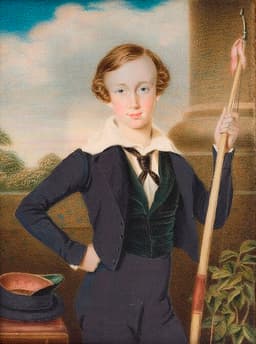
Joseph I
Emperor · Modern
53.3Total
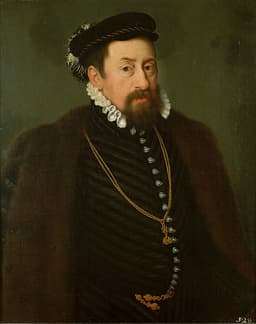
Maximilian II
Emperor · Modern
51.6Total
Basic Information
Born
1678
1527
Died
1711
1576
Era
Modern
Modern
Nationality
Holy Roman Empire
Holy Roman Empire
Occupation
Emperor
Emperor
Civilization
Western
Western
Score Comparison
Military (10%)
50.0
50.0
Political (20%)
72.0
72.0
Influence (20%)
51.8
54.1
Legacy (20%)
41.7
42.5
Leadership (15%)
67.0
53.2
Strategy (15%)
41.0
36.8
TOTAL
53.3
51.6
Joseph I — Complete Timeline
1701 AD
War of the Spanish SuccessionWar◆ Major
Joseph I, as King of the Romans and later Emperor, supported the Habsburg claim to the Spanish throne against the Bourbon candidate. The war, fought across Europe, ended with the Treaty of Utrecht in 1713, which recognized Philip V as king of Spain but ceded Spanish territories to Austria.
War of the Spanish SuccessionTreaty of UtrechtHabsburg
Impact: global
1705 AD
Reforms in HungaryReform
Joseph I, as Emperor, pursued a policy of reconciliation with the Hungarian nobility, ending the R
HungaryReformRákóczi
Impact: regionalconstructive
1711 AD
Died of smallpoxOther◆ Major
Joseph I died suddenly of smallpox at age 32, leaving no male heir. His death triggered the succession crisis that led to the Pragmatic Sanction and the eventual War of the Austrian Succession, as his brother Charles VI inherited the Habsburg domains.
DeathSuccession CrisisSmallpox
Impact: regionaltragic
Maximilian II — Complete Timeline
1564 AD
Coronation as Holy Roman EmperorPolitical Action◆ Major
Maximilian II was crowned Holy Roman Emperor in Frankfurt, succeeding his father Ferdinand I. His coronation was marked by a conciliatory tone towards Protestants, reflecting his personal beliefs. Maximilian's reign was characterized by an attempt to maintain peace between the Catholic and Protestant factions in the Empire.
CoronationImperial AuthorityReligious Peace
Impact: globalconstructive
1566 AD
Conflict with the Ottoman EmpireWar◆ Major
Maximilian II led a campaign against the Ottoman Empire in Hungary, culminating in the Siege of Szigetv
Ottoman WarsSiege of SzigetvárHungary
Impact: regional
1568 AD
Religious Toleration PolicyReform◆ Major
Maximilian II issued a decree of religious toleration for the Protestant nobility in Austria, allowing them to practice their faith freely. This policy was influenced by his own Protestant sympathies and aimed to reduce religious tensions. However, it was opposed by the Catholic Church and his Spanish relatives.
Religious TolerationProtestantismAustria
Impact: regionalprogressive
1570 AD
Patronage of the Arts and SciencesCultural
Maximilian II was a patron of the arts and sciences, supporting scholars, musicians, and artists at his court in Vienna. He employed the botanist Carolus Clusius and the historian Johannes Sambucus. His court became a center of humanist learning and cultural exchange, though his patronage was less extravagant than that of his son Rudolf II.
PatronageHumanismCultural Center
Impact: regionalconstructive
Expert Analysis
Origins
Joseph I was born on July 26, 1678, in Vienna, the eldest son of Emperor Leopold I and Eleonore Magdalene of Neuburg. He was educated by strict Jesuit tutors, receiving a thorough grounding in history, law, and languages. His early exposure to the complexities of the Habsburg monarchy, particularly the ongoing conflicts with the Ottoman Empire and the internal challenges in Hungary, shaped his pragmatic and reformist outlook.
Maximilian II was born on July 31, 1527, in Vienna, the eldest son of Emperor Ferdinand I and Anna of Bohemia and Hungary. Raised in a more tolerant court atmosphere, he was influenced by humanist scholars and exposed to Protestant ideas. His education emphasized diplomacy and religious coexistence, which later defined his reign.
Rise to Power
Joseph I was crowned King of the Romans in 1690, securing his succession. He became Holy Roman Emperor in 1705 upon Leopold's death. His rise coincided with the War of the Spanish Succession (1701–1714), where he vigorously supported the Habsburg claim to the Spanish throne. He worked closely with military commanders like Prince Eugene of Savoy, but his early death limited his long-term influence.
Maximilian II was elected King of the Romans in 1562 and crowned Holy Roman Emperor in 1564. His path to power was smoother, but he had to navigate the religious tensions of the Reformation. He maintained a conciliatory stance toward Protestant princes, which earned him both respect and suspicion from Catholic hardliners.
Leadership & Governance
Joseph I focused on centralizing authority and reforming the administration. In Hungary, he ended the Rákóczi's War of Independence (1703–1711) through a policy of amnesty and negotiation, granting concessions to the Hungarian nobility. This pragmatic approach stabilized the region but alienated some hardliners. His governance score of 72.0 reflects his political acumen, though his military score of 50.0 indicates limited direct involvement in campaigns.
Maximilian II is best known for his religious toleration policy. In 1568, he issued a decree allowing Protestant nobles in Austria to practice their faith, a radical move in an era of religious conflict. He also patronized the arts and sciences, employing the botanist Carolus Clusius. However, his political score of 72.0 is matched by a lower leadership score of 53.2, suggesting he lacked the assertiveness to impose lasting reforms.
Triumph & Tragedy
Joseph I's greatest triumph was the successful conclusion of the Rákóczi rebellion, securing Habsburg control over Hungary. He also strengthened the imperial army. His tragedy was his sudden death from smallpox in 1711 at age 32, leaving no male heir. This triggered the succession crisis that led to the Pragmatic Sanction, ultimately weakening the Habsburg position.
Maximilian II's triumph was his religious toleration policy, which reduced internal strife. He also achieved a temporary peace with the Ottoman Empire after the Siege of Szigetvár (1566), where Sultan Suleiman died. His tragedy was his failure to secure a lasting religious settlement; the Peace of Augsburg (1555) remained fragile, and his conciliatory approach did not prevent future conflicts.
Character & Destiny
Joseph I was energetic, reform-minded, and pragmatic. He showed decisiveness in ending the Hungarian rebellion through negotiation rather than force. His early death cut short his potential, leaving his reforms incomplete. Historians often view him as a lost opportunity for Habsburg modernization.
Maximilian II was intellectual, tolerant, and cautious. He sought to bridge the Catholic-Protestant divide but lacked the political will to enforce radical change. His character made him a beloved figure among humanists but a weak leader in the eyes of hardline Catholics. His influence score of 54.1 reflects his limited impact on subsequent events.
Legacy
Joseph I's legacy is tied to his Hungarian reforms and the succession crisis. His death directly led to the Pragmatic Sanction of 1713, which allowed female succession and later enabled Maria Theresa's reign. His administrative reforms also laid groundwork for future centralization. His legacy score of 41.7 is modest but significant in the context of Habsburg history.
Maximilian II is remembered for his religious tolerance and patronage. His court became a center of humanist learning, and his policies foreshadowed later Enlightenment ideals. However, his failure to secure a permanent religious peace meant that the Thirty Years' War (1618–1648) erupted two generations later. His legacy score of 42.5 is slightly higher than Joseph's, but his overall impact is more diffuse.
Conclusion
Joseph I achieved more concrete results in a shorter reign. He ended a major rebellion, stabilized Hungary, and his death inadvertently shaped European succession law. Maximilian II, while intellectually advanced, failed to implement lasting institutional reforms. Joseph's total score of 53.3 versus Maximilian's 51.6 reflects his greater effectiveness in governance and leadership. Therefore, Joseph I had a greater immediate impact on the Habsburg monarchy and European politics.
Rankings
🥇
Joseph ILeader
Mil: 50.0Pol: 72.0Inf: 51.8
53.3
🥈
Maximilian II
Mil: 50.0Pol: 72.0Inf: 54.1
51.6
+1.7 behind
How This Comparison Works
Algorithm
Each figure is scored on 6 dimensions (0—100 scale) based on structured historical data: Military (10%), Political (20%), Influence (20%), Legacy (20%), Leadership (15%), Strategy (15%). The weighted total produces the final ranking.
Data Sources
Scores are computed from structured sub-indicators in the database. Scale factors adjust for era (Ancient ×0.85, Modern ×1.0) and civilization size (Eastern ×1.05, Other ×0.80) to account for differences in population and military scale.
Maximum 3 Figures
Comparisons are limited to 2—3 figures to ensure readability and statistical meaningfulness.
Error Margins
±5 points per dimension — Sub-scores are derived from historical records with inherent uncertainty. Two figures within 5 points on a dimension should be considered roughly equivalent in that area.
Total Score Accuracy
±3 points overall — The weighted combination of 6 dimensions produces a total score with approximately ±3 points of uncertainty. Differences of less than 3 points are not statistically significant— the figures are effectively tied.
Known Limitations
- Historical records are incomplete and uneven across civilizations
- Figures from oral-tradition societies may be underrepresented
- Occupation labels can misclassify multi-role figures
- Scores measure capability and impact, not moral character
- Quantitative scoring is a comparison tool, not absolute truth
Capability Radar
Military (10%) — Battles & Warfare
Battles
20
15
Win Rate
25
20
Expansion
10
10
Political (20%) — Governance & Reform
Reform
70
60
Diplomacy
50
65
Economy
55
50
Influence (20%) — Cultural & Global Reach
Cultural
30
40
Global
20
25
Legacy (20%) — Historical Impact
Historical
40
35
Longevity
20
30
Leadership (15%) — Power & Stability
Tenure
30
55
Stability
40
45
Strategy (15%) — Tactics & Innovation
Strategy
20
15
Tactics
15
10
Reform
30
20
Similar Comparisons
Comments & Discussion
No comments yet. Be the first to share your thoughts!