Loading...
This comparison has not been analyzed yet.
One-time AI generation (~1 minute). Scores and timeline are already available below.
Chithira Thirunal vs Tahmasp I
Tahmasp I leads by 4.3 pts · 2 figures compared
…
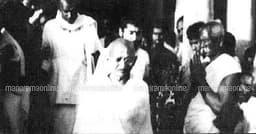
Chithira Thirunal
Emperor · Modern
57.5Total
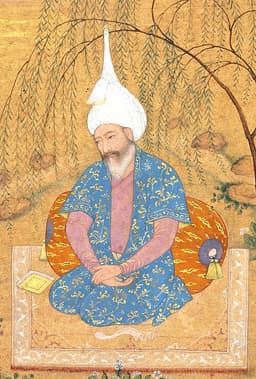
Tahmasp I
Emperor · Modern
61.8Total
Basic Information
Born
1912
1514
Died
1991
1576
Era
Modern
Modern
Nationality
India
Persia
Occupation
Emperor
Emperor
Civilization
Indian
Middle Eastern
Score Comparison
Military (10%)
44.3
70.0
Political (20%)
59.3
70.0
Influence (20%)
57.2
62.0
Legacy (20%)
47.5
52.0
Leadership (15%)
79.8
72.0
Strategy (15%)
60.0
50.0
TOTAL
57.5
61.8
Chithira Thirunal — Complete Timeline
1930 AD
Abolition of the Devadasi systemReform◆ Major
Chithira Thirunal abolished the Devadasi system in Travancore, which had involved the dedication of young girls to temples for ritualistic and often exploitative purposes. This reform was part of broader social legislation aimed at ending feudal practices and improving the status of women in the kingdom.
Social ReformWomen's RightsDevadasi
Impact: regionalprogressive
1936 AD
Temple Entry ProclamationReform
Chithira Thirunal issued the Temple Entry Proclamation, opening all government-controlled temples in Travancore to Hindus of all castes, including Dalits. This landmark reform abolished caste-based restrictions on temple entry, making Travancore the first princely state in India to do so. The proclamation was a major victory for the social reform movement.
Social ReformCaste DiscriminationTemple Entry
Impact: regionalprogressive
1937 AD
Establishment of the University of TravancoreReform◆ Major
Chithira Thirunal established the University of Travancore (now University of Kerala) in Thiruvananthapuram. The university was modeled on the University of Madras and offered courses in arts, sciences, and law. This institution became a center of higher education in the region, promoting research and learning.
Higher EducationUniversityThiruvananthapuram
Impact: regionalconstructive
1949 AD
Integration of Travancore into the Indian UnionPolitical Action◆ Major
Chithira Thirunal signed the Instrument of Accession, merging Travancore with the Indian Union. Initially hesitant, he agreed after negotiations with Sardar Patel. The merger ended the princely state's sovereignty and led to the formation of Travancore-Cochin, later part of Kerala state. He was allowed to retain his title and privy purse.
Indian IndependencePrincely StatesMerger
Impact: regional
Tahmasp I — Complete Timeline
1526 AD
Suppressed the Qizilbash RevoltsWar◆ Major
Tahmasp I faced multiple revolts by the Qizilbash tribal forces who had supported the Safavid rise. He suppressed these rebellions, executing several Qizilbash leaders and reducing their political influence, thereby consolidating royal authority and centralizing power.
Internal ConflictQizilbashCentralization
Impact: nationaldestructive
1544 AD
Hosted Humayun in ExilePolitical Action◆ Major
Tahmasp I provided refuge to the Mughal emperor Humayun after his defeat by Sher Shah Suri. Humayun stayed at the Safavid court for over a year, and Tahmasp provided military support for Humayun's reconquest of India, strengthening Safavid-Mughal relations.
DiplomacyMughal-Safavid RelationsExile
Impact: regionalconstructive
1548 AD
Relocated Capital to QazvinPolitical Action
Tahmasp I moved the Safavid capital from Tabriz to Qazvin to distance the court from Ottoman threats and to better control the northern provinces. This relocation shifted the political center of the empire and influenced subsequent Safavid administrative policies.
Capital RelocationAdministration
Impact: national
1555 AD
Treaty of AmasyaWar◆ Major
Tahmasp I signed the Treaty of Amasya with the Ottoman Empire, ending decades of war. The treaty established a border dividing Georgia and Armenia between the two empires, with the Ottomans gaining Iraq and the Safavids retaining Azerbaijan and the Caucasus. This peace lasted for over 20 years.
Ottoman-Safavid WarsTreatyPeace
Impact: regional
This comparison has not been analyzed yet.
One-time AI generation (~1 minute). Scores and timeline are already available below.
Rankings
🥇
Tahmasp ILeader
Mil: 70.0Pol: 70.0Inf: 62.0
61.8
🥈
Chithira Thirunal
Mil: 44.3Pol: 59.3Inf: 57.2
57.5
+4.3 behind
How This Comparison Works
Algorithm
Each figure is scored on 6 dimensions (0—100 scale) based on structured historical data: Military (10%), Political (20%), Influence (20%), Legacy (20%), Leadership (15%), Strategy (15%). The weighted total produces the final ranking.
Data Sources
Scores are computed from structured sub-indicators in the database. Scale factors adjust for era (Ancient ×0.85, Modern ×1.0) and civilization size (Eastern ×1.05, Other ×0.80) to account for differences in population and military scale.
Maximum 3 Figures
Comparisons are limited to 2—3 figures to ensure readability and statistical meaningfulness.
Error Margins
±5 points per dimension — Sub-scores are derived from historical records with inherent uncertainty. Two figures within 5 points on a dimension should be considered roughly equivalent in that area.
Total Score Accuracy
±3 points overall — The weighted combination of 6 dimensions produces a total score with approximately ±3 points of uncertainty. Differences of less than 3 points are not statistically significant— the figures are effectively tied.
Known Limitations
- Historical records are incomplete and uneven across civilizations
- Figures from oral-tradition societies may be underrepresented
- Occupation labels can misclassify multi-role figures
- Scores measure capability and impact, not moral character
- Quantitative scoring is a comparison tool, not absolute truth
Capability Radar
Military (10%) — Battles & Warfare
Battles
28
65
Win Rate
31
70
Expansion
38
50
Political (20%) — Governance & Reform
Reform
75
70
Diplomacy
65
75
Economy
55
60
Influence (20%) — Cultural & Global Reach
Cultural
50
60
Global
35
50
Legacy (20%) — Historical Impact
Historical
55
65
Longevity
40
55
Leadership (15%) — Power & Stability
Tenure
60
85
Stability
70
65
Strategy (15%) — Tactics & Innovation
Strategy
39
65
Tactics
44
60
Reform
42
55
Similar Comparisons
Comments & Discussion
No comments yet. Be the first to share your thoughts!