Loading...
Chlothar I vs Emperor Sujin
Emperor Sujin leads by 3.6 pts · 2 figures compared
…
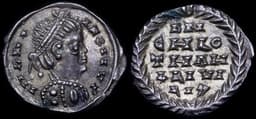
Chlothar I
Emperor · Ancient
48.0Total
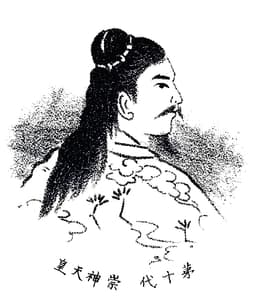
Emperor Sujin
Emperor · Ancient
51.6Total
Basic Information
Born
497
-148
Died
561
-30
Era
Ancient
Ancient
Nationality
Frankish Empire
Japan
Occupation
Emperor
Emperor
Civilization
Western
Eastern
Score Comparison
Military (10%)
55.0
50.0
Political (20%)
40.8
68.0
Influence (20%)
49.4
47.1
Legacy (20%)
43.3
43.3
Leadership (15%)
65.0
72.0
Strategy (15%)
35.0
30.3
TOTAL
48.0
51.6
Chlothar I — Complete Timeline
531 AD
Conquest of the ThuringiansWar◆ Major
Chlothar I, alongside his brothers Theuderic I and Childebert I, led a campaign against the Thuringian kingdom. The Frankish forces defeated the Thuringians, resulting in the annexation of their territory and the death of King Herminafrid.
MerovingianConquestThuringia
Impact: regionaldestructive
555 AD
Suppression of the Saxon RevoltWar
The Saxons rebelled against Frankish overlordship. Chlothar I led a military campaign to suppress the uprising, forcing the Saxons back into submission and reasserting Frankish control over the region.
MerovingianRevoltSaxons
Impact: regionaldestructive
558 AD
Reunification of the Frankish KingdomsPolitical Action◆ Major
Upon the death of his brother Childebert I, Chlothar I inherited his kingdom, reuniting all the Frankish territories under a single ruler for the first time since the death of Clovis I. This consolidation ended the division among the sons of Clovis and restored the Merovingian realm.
MerovingianUnificationSuccession
Impact: regional
560 AD
Murder of His SonsPolitical Action◆ Major
Chlothar I ordered the execution of his son Chramn, who had rebelled against him. Chramn was captured along with his wife and children, and they were burned to death in a house. This act eliminated a rival and secured Chlothar's sole rule.
MerovingianDynastic ConflictExecution
Impact: nationaltragic
Emperor Sujin — Complete Timeline
100 BC
Organized the Yamato StateReform◆ Major
Emperor Sujin is recorded in the Nihon Shoki as having organized the Yamato state, establishing administrative structures and military garrisons. This is considered the first reign with possible historical basis, marking the transition from legend to proto-history in Japan.
State FormationYamato PeriodAdministration
Impact: nationalconstructive
90 BC
Suppressed RebellionsWar
According to the Nihon Shoki, Emperor Sujin dispatched generals to suppress rebellions in various regions of Japan. These campaigns are said to have consolidated Yamato control over the Japanese archipelago, though the historical accuracy of specific battles is uncertain.
Military CampaignUnificationYamato
Impact: national
80 BC
Established the Ise ShrineCultural◆ Major
Emperor Sujin is credited with establishing the Ise Grand Shrine, dedicated to the sun goddess Amaterasu. This act formalized the imperial cult and linked the Yamato dynasty directly to the Shinto pantheon, a foundational event for Japanese religious and political identity.
ShintoImperial CultReligion
Impact: nationalconstructive
Expert Analysis
Emperor Sujin vs Chlothar I
# Two Kings, Two Worlds: The Unseen Hand of Fate
In the year 558, an aging Frankish king stood at the threshold of a dream that had eluded his father and his brothers for decades. Chlothar I, the last surviving son of Clovis, had just inherited the kingdom of Childebert I, and for the first time in a generation, all the Frankish lands were united under a single crown. Half a world away, in the mist-shrouded islands of Yamato, another ruler—Emperor Sujin—had already accomplished something far more profound: not reuniting a fractured realm, but building one from the scattered clans of ancient Japan. Both men wore crowns, both commanded armies, but their paths, their challenges, and their ultimate fates could not have been more different.
Origins
Chlothar I was born in 497 into the violent, glittering world of the Merovingian dynasty. His father, Clovis I, had forged the Frankish kingdom through blood and conversion, uniting warring tribes under the banner of Christianity. But Clovis’s death had fractured that unity, splitting the realm among his four sons like a pie sliced for hungry children. Chlothar grew up in a court where brotherly love was a myth and survival meant cunning. He learned early that power was not inherited—it was taken, held, and defended with a sword.
Emperor Sujin, by contrast, emerged from a world of legend. Born in 148 BCE, he is the first Japanese emperor whose existence historians consider plausible, though much of his life remains wrapped in the silk of myth. The *Nihon Shoki*, compiled centuries later, describes him as the tenth emperor of the Yamato line, a descendant of the sun goddess Amaterasu. His Japan was not a unified kingdom but a patchwork of clan territories, each ruled by local chieftains who paid only nominal allegiance to the imperial court. Sujin’s task was not to reunite a broken kingdom, but to invent the very idea of a kingdom itself.
Rise to Power
Chlothar I entered history not as a solitary conqueror but as one of four brothers, each holding a piece of their father’s legacy. His rise was a slow, patient game of attrition. While his brothers Theuderic I and Childebert I fought campaigns against the Burgundians and Visigoths, Chlothar waited, built alliances, and struck when the moment was right. In 531, he joined his brothers in the conquest of the Thuringians, a campaign that added territory and treasure to the Frankish realm. But Chlothar understood that wars were won as much in the bedchamber and the treasury as on the battlefield—a lesson his military score of 39.1 reflects, balanced by a political acumen of 72.0.
Emperor Sujin’s path was different. He did not seize power; he inherited a fragile throne and then set about making it real. According to the *Nihon Shoki*, his reign began around 100 BCE with a bold reform: the organization of the Yamato state. He appointed governors, established tax systems, and created a bureaucratic structure where none had existed. His military score of 25.8 is low, but his leadership score of 86.6 tells a truer story. Sujin ruled not by conquest but by persuasion, by the slow, deliberate weaving of authority into the fabric of daily life.
Leadership & Governance
Chlothar I ruled like a man who knew that every smile hid a knife. His governance was pragmatic, ruthless, and effective. When the Saxons revolted in 555, he crushed them with brutal efficiency, forcing them back under Frankish overlordship. But his greatest political achievement—the reunification of the Frankish kingdoms in 558—was less a triumph of strategy than of simple survival. He outlived his brothers. That was his genius.
Yet Chlothar’s reign reveals the dark underbelly of Merovingian kingship. In 560, his son Chramn rebelled. Chlothar ordered his capture and execution, along with Chramn’s wife and children. The king who had united the Franks by outlasting his brothers now destroyed his own bloodline to preserve that unity. It was a moment of profound tragedy, a father sacrificing his son on the altar of power.
Emperor Sujin governed with a different hand. His suppression of rebellions around 90 BCE was not a campaign of extermination but of consolidation. He dispatched generals to pacify restless regions, but his true legacy lies in the cultural foundations he laid. Around 80 BCE, he established the Ise Grand Shrine, dedicated to the sun goddess Amaterasu. This was not merely a religious act; it was a political masterstroke. By linking the imperial family directly to the goddess, Sujin gave the Yamato throne a divine legitimacy that would endure for two millennia.
Triumph & Tragedy
Chlothar’s greatest triumph was the reunification of 558, a moment when the Frankish realm stretched from the Rhine to the Pyrenees. But that triumph was hollow. He had achieved what his father had done, but he had done it through death—the death of his brothers, of his rivals, and ultimately of his own son. His tragedy was that he had no one left to trust, no heir worthy of the crown he had fought so hard to wear.
Sujin’s triumph was quieter but more lasting. He organized a state that would evolve into one of the world’s oldest continuous monarchies. His tragedy, if it can be called that, is that we know so little of him. The *Nihon Shoki* records his deeds, but the man himself remains a shadow, a figure glimpsed through the mist of time.
Character & Destiny
Chlothar I was a survivor, a man shaped by a world where trust was a weakness and mercy a mistake. His political score of 72.0 and leadership of 81.6 reflect a king who knew how to hold power, but his military score of 39.1 and strategy of 37.6 reveal a ruler who relied more on patience and politics than on martial brilliance. He was not a great warrior; he was a great survivor.
Emperor Sujin, with his leadership score of 86.6 and political score of 69.4, was a builder, a man who understood that power is not just about who you conquer but about what you create. His strategy score of 46.8 suggests a cautious, methodical mind. He did not seek glory; he sought stability.
Legacy
Chlothar I is remembered, if at all, as the Merovingian who briefly reunited the Frankish kingdoms. His legacy is a footnote in the story of a dynasty that would eventually give way to the Carolingians. His name does not echo through history; it is a whisper, a name in a genealogy.
Emperor Sujin, by contrast, is revered as a founding figure of the Japanese imperial line. The Ise Shrine he established remains one of the most sacred sites in Shinto, a living link to a past that stretches back over two thousand years. His legacy is not a footnote but a foundation.
Conclusion
Two kings, two worlds, two very different answers to the same question: What does it mean to rule? Chlothar I held power in his hands and watched it turn to ash. Emperor Sujin built a structure that would outlast him by centuries. One man conquered; the other created. And in that difference lies a truth as old as history itself: the empires of the sword may rise quickly, but the empires of the spirit endure.
Rankings
🥇
Emperor SujinLeader
Mil: 50.0Pol: 68.0Inf: 47.1
51.6
🥈
Chlothar I
Mil: 55.0Pol: 40.8Inf: 49.4
48.0
+3.6 behind
How This Comparison Works
Algorithm
Each figure is scored on 6 dimensions (0—100 scale) based on structured historical data: Military (10%), Political (20%), Influence (20%), Legacy (20%), Leadership (15%), Strategy (15%). The weighted total produces the final ranking.
Data Sources
Scores are computed from structured sub-indicators in the database. Scale factors adjust for era (Ancient ×0.85, Modern ×1.0) and civilization size (Eastern ×1.05, Other ×0.80) to account for differences in population and military scale.
Maximum 3 Figures
Comparisons are limited to 2—3 figures to ensure readability and statistical meaningfulness.
Error Margins
±5 points per dimension — Sub-scores are derived from historical records with inherent uncertainty. Two figures within 5 points on a dimension should be considered roughly equivalent in that area.
Total Score Accuracy
±3 points overall — The weighted combination of 6 dimensions produces a total score with approximately ±3 points of uncertainty. Differences of less than 3 points are not statistically significant— the figures are effectively tied.
Known Limitations
- Historical records are incomplete and uneven across civilizations
- Figures from oral-tradition societies may be underrepresented
- Occupation labels can misclassify multi-role figures
- Scores measure capability and impact, not moral character
- Quantitative scoring is a comparison tool, not absolute truth
Capability Radar
Military (10%) — Battles & Warfare
Battles
40
10
Win Rate
55
10
Expansion
50
20
Political (20%) — Governance & Reform
Reform
30
50
Diplomacy
45
30
Economy
35
30
Influence (20%) — Cultural & Global Reach
Cultural
20
30
Global
15
10
Legacy (20%) — Historical Impact
Historical
35
40
Longevity
25
30
Leadership (15%) — Power & Stability
Tenure
60
40
Stability
40
40
Strategy (15%) — Tactics & Innovation
Strategy
45
10
Tactics
35
10
Reform
20
20
Similar Comparisons
Comments & Discussion
No comments yet. Be the first to share your thoughts!