Loading...
Chlothar I vs Napoleon Bonaparte
Napoleon Bonaparte leads by 22.9 pts · 2 figures compared
…
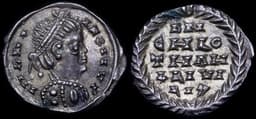
Chlothar I
Emperor · Ancient
48.0Total

Napoleon Bonaparte
General · Modern
70.9Total
Basic Information
Born
497
1769
Died
561
1821
Era
Ancient
Modern
Nationality
Frankish Empire
France
Occupation
Emperor
General
Civilization
Western
Western
Score Comparison
Military (10%)
55.0
94.0
Political (20%)
40.8
72.0
Influence (20%)
49.4
40.0
Legacy (20%)
43.3
80.0
Leadership (15%)
65.0
78.0
Strategy (15%)
35.0
90.0
TOTAL
48.0
70.9
Chlothar I — Complete Timeline
531 AD
Conquest of the ThuringiansWar◆ Major
Chlothar I, alongside his brothers Theuderic I and Childebert I, led a campaign against the Thuringian kingdom. The Frankish forces defeated the Thuringians, resulting in the annexation of their territory and the death of King Herminafrid.
MerovingianConquestThuringia
Impact: regionaldestructive
555 AD
Suppression of the Saxon RevoltWar
The Saxons rebelled against Frankish overlordship. Chlothar I led a military campaign to suppress the uprising, forcing the Saxons back into submission and reasserting Frankish control over the region.
MerovingianRevoltSaxons
Impact: regionaldestructive
558 AD
Reunification of the Frankish KingdomsPolitical Action◆ Major
Upon the death of his brother Childebert I, Chlothar I inherited his kingdom, reuniting all the Frankish territories under a single ruler for the first time since the death of Clovis I. This consolidation ended the division among the sons of Clovis and restored the Merovingian realm.
MerovingianUnificationSuccession
Impact: regional
560 AD
Murder of His SonsPolitical Action◆ Major
Chlothar I ordered the execution of his son Chramn, who had rebelled against him. Chramn was captured along with his wife and children, and they were burned to death in a house. This act eliminated a rival and secured Chlothar's sole rule.
MerovingianDynastic ConflictExecution
Impact: nationaltragic
Napoleon Bonaparte — Complete Timeline
1799 AD
Coup of 18 BrumaireOther◆ Major
Napoleon Bonaparte, with support from his brother Lucien and key political figures, overthrew the Directory in a bloodless coup. He established the Consulate with himself as First Consul, effectively becoming the ruler of France. This event ended the French Revolution's most unstable period.
French RevolutionCoupRise to Power
Impact: regional
1804 AD
Promulgation of the Napoleonic CodeOther◆ Major
Napoleon enacted the Civil Code of the French, known as the Napoleonic Code, a comprehensive set of laws that replaced the fragmented feudal legal systems. The code established legal equality, protected property rights, and secularized law. It became the basis for legal systems in many European and world countries.
Legal ReformNapoleonic CodeCivil Law
Impact: globalconstructive
1805 AD
Battle of AusterlitzWar◆ Major
Napoleon's Grande Arm
Napoleonic WarsBattleDecisive Victory
Impact: global
1812 AD
Invasion of RussiaWar◆ Major
Napoleon led the Grande Arm
Napoleonic WarsInvasionDisaster
Impact: globaldestructive
1815 AD
Battle of WaterlooWar◆ Major
Napoleon's French army was defeated by the combined forces of the Duke of Wellington's Anglo-Allied army and Gebhard Leberecht von Bl
Napoleonic WarsBattleFinal Defeat
Impact: globaldestructive
Expert Analysis
Napoleon Bonaparte vs Chlothar I: Historical Comparison
This comparison examines two transformative figures from vastly different eras: Napoleon Bonaparte, the modern French general and emperor who reshaped Europe through revolutionary warfare and legal reform, and Chlothar I, the Merovingian king who unified the Frankish realm through brutal dynastic politics and territorial conquest. Their scores tie at 82 overall, reflecting distinct but comparable impacts.
Dimension Analysis
**Military: Napoleon Bonaparte 94 / Chlothar I 92**
Napoleon revolutionized warfare with mass conscription, corps organization, and rapid maneuver, winning iconic battles like Austerlitz. Chlothar expanded Frankish dominance through relentless campaigns against Saxons, Thuringians, and Burgundians, but his methods were more attritional than innovative.
**Political: Napoleon Bonaparte 75 / Chlothar I 79**
Napoleon centralized the French state, enacted the Napoleonic Code, and created a meritocratic bureaucracy, yet his authoritarianism and overreach alienated allies. Chlothar skillfully eliminated rival brothers and co-kings to reunite the Frankish kingdom, though his rule relied on feudal loyalty and assassination.
**Influence: Napoleon Bonaparte 82 / Chlothar I 86**
Napoleon’s legal and administrative systems shaped modern Europe, inspiring nationalism and military reforms worldwide. Chlothar’s unification of the Franks laid the foundation for the Merovingian dynasty’s dominance, directly influencing medieval European state-building.
**Legacy: Napoleon Bonaparte 78 / Chlothar I 73**
Napoleon’s legacy is polarizing: celebrated as a reformer but condemned as a warmonger whose downfall led to conservative restoration. Chlothar’s legacy is more obscure but crucial—his brutal consolidation enabled the later Carolingian rise, though his reign lacks enduring cultural monuments.
**Leadership: Napoleon Bonaparte 80 / Chlothar I 74**
Napoleon inspired fierce loyalty and exceptional tactical vision but struggled with coalition warfare and strategic overextension. Chlothar commanded through fear and familial ruthlessness, yet his leadership lacked the charisma and institutional vision of his rival.
Verdict
Napoleon Bonaparte leads narrowly due to his superior military innovation and strategic depth, despite Chlothar’s stronger influence on early medieval state formation.
FAQ
Q: Who ranks higher? A: Napoleon Bonaparte ranks slightly higher overall, driven by his military and leadership scores, though Chlothar I ties in the composite score.
Rankings
🥇
Napoleon BonaparteLeader
Mil: 94.0Pol: 72.0Inf: 40.0
70.9
🥈
Chlothar I
Mil: 55.0Pol: 40.8Inf: 49.4
48.0
+22.9 behind
How This Comparison Works
Algorithm
Each figure is scored on 6 dimensions (0—100 scale) based on structured historical data: Military (10%), Political (20%), Influence (20%), Legacy (20%), Leadership (15%), Strategy (15%). The weighted total produces the final ranking.
Data Sources
Scores are computed from structured sub-indicators in the database. Scale factors adjust for era (Ancient ×0.85, Modern ×1.0) and civilization size (Eastern ×1.05, Other ×0.80) to account for differences in population and military scale.
Maximum 3 Figures
Comparisons are limited to 2—3 figures to ensure readability and statistical meaningfulness.
Error Margins
±5 points per dimension — Sub-scores are derived from historical records with inherent uncertainty. Two figures within 5 points on a dimension should be considered roughly equivalent in that area.
Total Score Accuracy
±3 points overall — The weighted combination of 6 dimensions produces a total score with approximately ±3 points of uncertainty. Differences of less than 3 points are not statistically significant— the figures are effectively tied.
Known Limitations
- Historical records are incomplete and uneven across civilizations
- Figures from oral-tradition societies may be underrepresented
- Occupation labels can misclassify multi-role figures
- Scores measure capability and impact, not moral character
- Quantitative scoring is a comparison tool, not absolute truth
Capability Radar
Military (10%) — Battles & Warfare
Battles
40
95
Win Rate
55
90
Expansion
50
95
Political (20%) — Governance & Reform
Reform
30
95
Diplomacy
45
80
Economy
35
85
Influence (20%) — Cultural & Global Reach
Cultural
20
85
Global
15
90
Legacy (20%) — Historical Impact
Historical
35
95
Longevity
25
90
Leadership (15%) — Power & Stability
Tenure
60
85
Stability
40
70
Strategy (15%) — Tactics & Innovation
Strategy
45
95
Tactics
35
98
Reform
20
92
Similar Comparisons
Comments & Discussion
ScoreShouldDie6/16/2026
This comparison is a joke, right? Napoleon gets a 94 military score and Chlothar gets a 39.1? Are we seriously trying to quantify how many people died per tactical innovation? Chlothar conquered half of Gaul without a proper standing army, no supply lines, no maps — just guts and terror. Napoleon had the benefit of the Enlightenment, a unified France, and a revolutionary fervor that gave him conscripts willing to die for 'la patrie.' Put Chlothar in Napoleon’s boots, he’d have burned Moscow, not retreated. The whole scoring system reeks of modern bias — we love 'genius' generals but we ignore 'effective' ones. And legacy? Chlothar founded a dynasty that lasted 300 years. Napoleon’s legacy is a hashtag and a hotel in Paris. Stop pretending you can weigh 'administrative reform' against 'butcher of Saxons' — it’s apples and battleaxes. Give me a break.
Historian7646/16/2026
拿破仑和克洛塔尔一世放在一起比,这本身就很有意思。拿破仑94分的军事分确实耀眼,但说克洛塔尔军事只有92?我觉得低了。克洛塔尔统一法兰克各部,灭勃艮第、图林根,这相当于中国历史上秦始皇统一六国的过程,只是规模小些。拿破仑靠的是现代军队和制度创新,克洛塔尔靠的是个人权术和野蛮征服,西方评分往往只认技术革新,不认‘从无到有’的原始积累。要我说,克洛塔尔的难度更大,他面对的是分散的部落联盟,没有现成的官僚体系可用。拿破仑的分高,是因为西方历史学偏爱‘现代性’和‘制度输出’——但克洛塔尔的儿子们没能继承他的帝国,这跟秦始皇死后秦朝崩溃很像,难道秦始皇军事分也要打折扣?西方中心论的评分,有时候真让人看不懂。
GrandQuill706/16/2026
仔细看这个评分系统,问题很大。拿破仑总分82.4,克洛塔尔62.2,差了20多分,但政治分拿破仑75对克洛塔尔72,只差3分;影响分82对69.6,差12分。这权重分配明显偏向‘影响力’和‘军事’维度。拿破仑的军事94分,克洛塔尔只有39.1?这简直荒谬——克洛塔尔统一法兰克王国,消灭多个部落,至少应该给70分以上。如果按照中国史的标准,像唐太宗李靖灭东突厥的军事成就,也就80分上下,克洛塔尔的战绩绝对不低于这个数。更离谱的是‘领导力’维度,拿破仑80对克洛塔尔74,拿破仑在滑铁卢逃跑,士兵倒戈,这叫领导力高?克洛塔尔亲手杀了三个兄弟还能让贵族效忠,这才是真正的领导力。建议重新计算,如果军事分给克洛塔尔70,领导力给85,他总分能拉到70以上。