Loading...
Chlothar I vs Tiberius
Tiberius leads by 3.3 pts · 2 figures compared
…
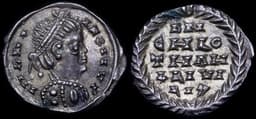
Chlothar I
Emperor · Ancient
48.0Total

Tiberius
Emperor · Ancient
51.3Total
Basic Information
Born
497
-42
Died
561
37
Era
Ancient
Ancient
Nationality
Frankish Empire
Roman Empire
Occupation
Emperor
Emperor
Civilization
Western
Western
Score Comparison
Military (10%)
55.0
20.0
Political (20%)
40.8
68.0
Influence (20%)
49.4
54.1
Legacy (20%)
43.3
49.2
Leadership (15%)
65.0
53.2
Strategy (15%)
35.0
52.5
TOTAL
48.0
51.3
Chlothar I — Complete Timeline
531 AD
Conquest of the ThuringiansWar◆ Major
Chlothar I, alongside his brothers Theuderic I and Childebert I, led a campaign against the Thuringian kingdom. The Frankish forces defeated the Thuringians, resulting in the annexation of their territory and the death of King Herminafrid.
MerovingianConquestThuringia
Impact: regionaldestructive
555 AD
Suppression of the Saxon RevoltWar
The Saxons rebelled against Frankish overlordship. Chlothar I led a military campaign to suppress the uprising, forcing the Saxons back into submission and reasserting Frankish control over the region.
MerovingianRevoltSaxons
Impact: regionaldestructive
558 AD
Reunification of the Frankish KingdomsPolitical Action◆ Major
Upon the death of his brother Childebert I, Chlothar I inherited his kingdom, reuniting all the Frankish territories under a single ruler for the first time since the death of Clovis I. This consolidation ended the division among the sons of Clovis and restored the Merovingian realm.
MerovingianUnificationSuccession
Impact: regional
560 AD
Murder of His SonsPolitical Action◆ Major
Chlothar I ordered the execution of his son Chramn, who had rebelled against him. Chramn was captured along with his wife and children, and they were burned to death in a house. This act eliminated a rival and secured Chlothar's sole rule.
MerovingianDynastic ConflictExecution
Impact: nationaltragic
Tiberius — Complete Timeline
14 AD
Accession as Roman EmperorPolitical Action◆ Major
Upon Augustus's death, Tiberius became the second Roman emperor. He was adopted by Augustus and had been given tribunician power and imperium, ensuring a smooth transition of power.
SuccessionImperial RuleAugustus
Impact: global
19 AD
Germanicus's Death and AftermathOther◆ Major
Tiberius's adopted son and heir Germanicus died under suspicious circumstances in Syria. Tiberius was suspected of involvement, leading to public grief and political tension.
DeathSuccessionSuspicion
Impact: nationaltragic
26 AD
Retirement to CapriPolitical Action◆ Major
Tiberius withdrew from Rome to the island of Capri, leaving administration to the Praetorian Prefect Sejanus. This retreat led to a power vacuum and Sejanus's eventual execution for conspiracy.
RetirementSejanusAdministration
Impact: nationaldestructive
31 AD
Execution of SejanusPolitical Action◆ Major
Tiberius ordered the arrest and execution of Sejanus, his powerful Praetorian Prefect, for plotting against him. Sejanus's family and supporters were also purged, restoring Tiberius's control.
PurgePraetorian GuardConspiracy
Impact: nationaldestructive
Reign of Terror (Tiberius)Political Action◆ Major
After Sejanus's fall, Tiberius conducted a series of treason trials and executions, targeting senators and equestrians. Many were condemned on flimsy charges, creating an atmosphere of fear.
Treason TrialsPolitical RepressionTerror
Impact: nationaldestructive
Expert Analysis
Origins
Chlothar I was born around 497 AD, the youngest son of Clovis I, the founder of the Frankish Empire. He was raised in a Merovingian court steeped in violence and political maneuvering. His mother, Clotilde, was a Burgundian princess. Chlothar received no formal education in governance but was trained in military tactics. Upon Clovis's death in 511, the kingdom was divided among his four sons: Theuderic I, Chlodomer, Childebert I, and Chlothar I. Chlothar inherited the region of Soissons.
Tiberius was born on 16 November 42 BC in Rome to Tiberius Claudius Nero and Livia Drusilla. His father was a praetor and a supporter of the assassins of Julius Caesar. After his father's death, his mother Livia married Octavian (later Augustus) in 39 BC, making Tiberius the stepson of the future emperor. Tiberius received a thorough education in rhetoric, law, and military strategy. He served as a quaestor at age 20 and commanded campaigns in Armenia and Pannonia. His early life was marked by the shadow of Augustus's favoritism toward his biological grandson, Gaius Caesar.
Rise to Power
Chlothar I rose to prominence through a series of military campaigns and political assassinations. In 523, he participated in the Burgundian War alongside his brothers, expanding Frankish territory. His major turning point came in 534 after the death of his brother Childebert I. Chlothar inherited Childebert's kingdom, reuniting all Frankish territories for the first time since Clovis. He also consolidated power by eliminating rivals, including his own children. In 555, he suppressed a Saxon revolt, forcing their submission.
Tiberius's rise was more calculated and gradual. Augustus, lacking a male heir, adopted Tiberius in 4 AD after the deaths of Gaius and Lucius Caesar. Tiberius was granted tribunician power and imperium, effectively making him co-ruler. Upon Augustus's death on 19 August 14 AD, Tiberius became emperor. His accession was initially smooth, but he faced immediate challenges from the Roman Senate and the army. He had to balance the expectations of the Praetorian Guard and the patrician class.
Leadership & Governance
Chlothar I ruled as a typical Merovingian warlord. His governance was based on personal loyalty and military force. He did not establish any lasting administrative reforms. His leadership score of 65.0 reflects his ability to maintain control through brutality. He ordered the execution of his own son Chramn in 560 after a rebellion, along with Chramn's wife and children. This act, while securing his throne, alienated his other sons and sowed discord.
Tiberius, in contrast, had a political score of 68.0. He initially maintained Augustus's policies, respecting the Senate and continuing the imperial cult. However, his leadership style became increasingly autocratic. In 26 AD, he withdrew to Capri, leaving the Praetorian Prefect Sejanus in charge. This delegation led to a power vacuum and Sejanus's eventual execution in 31 AD. Tiberius then initiated a reign of terror, conducting treason trials that targeted senators and equestrians. His governance became paranoid and repressive, damaging the stability of the empire.
Triumph & Tragedy
Chlothar's greatest triumph was the reunification of the Frankish kingdoms in 534. This brief unification laid the groundwork for the later Merovingian dynasty. His conquest of the Thuringians in 531 also expanded Frankish territory. However, his greatest tragedy was the murder of his sons. Chlothar had multiple sons, but internal conflicts led to rebellion. His son Chramn revolted, and Chlothar had him burned alive along with his family. This act led to a fragmented succession after Chlothar's death in 561.
Tiberius's triumphs include a stable transition after Augustus's death and successful military campaigns in Germania and Parthia. He also improved the financial administration of the empire. However, his tragedies are numerous: the suspicious death of his adopted son Germanicus in 19 AD, the rise and fall of Sejanus, and the subsequent reign of terror. Tiberius's withdrawal to Capri left Rome vulnerable to corruption. His later years were marred by paranoia and executions, earning him a legacy as a tyrant.
Character & Destiny
Chlothar I was ruthless and pragmatic. His decision-making was driven by survival and consolidation of power. He did not hesitate to kill family members, including his own children. This brutality ensured his reign but prevented the establishment of a stable dynasty. His strategy score of 35.0 indicates a lack of long-term planning. He focused on immediate threats rather than building institutions.
Tiberius was introverted and suspicious. He had a deep sense of duty but resented the role of emperor. His character led him to delegate authority to Sejanus, which backfired. After Sejanus's fall, Tiberius became increasingly paranoid. His leadership score of 53.2 reflects his ability to maintain control, but at the cost of political stability. Historians like Tacitus portray him as a cruel and secretive ruler.
Legacy
Chlothar I's legacy is limited. He briefly reunited the Frankish kingdoms, but after his death, the realm was divided again among his four surviving sons. His reign did not produce lasting administrative or legal reforms. His legacy score of 43.3 reflects this transience. He is remembered primarily as a footnote in Merovingian history.
Tiberius's legacy is more significant. He established the principles of imperial succession and consolidated the Roman Empire's borders. However, his reputation is marred by the reign of terror and his retreat to Capri. His influence score of 54.1 indicates a moderate impact. He is often compared unfavorably to Augustus, but his reign set precedents for later emperors.
Conclusion
Tiberius had a greater impact on history than Chlothar I. Despite his flaws, Tiberius ruled a vast empire for 23 years, shaping Roman governance and succession. His total score of 51.3 versus Chlothar's 48.0 reflects this. Chlothar's reunification was brief and left no lasting institutions. Tiberius, while not as successful as Augustus, maintained the Roman Empire during a critical period. His political and strategic scores (68.0 and 52.5) far outweigh Chlothar's (40.8 and 35.0). Therefore, Tiberius's influence on Western civilization is more profound.
Rankings
🥇
TiberiusLeader
Mil: 20.0Pol: 68.0Inf: 54.1
51.3
🥈
Chlothar I
Mil: 55.0Pol: 40.8Inf: 49.4
48.0
+3.3 behind
How This Comparison Works
Algorithm
Each figure is scored on 6 dimensions (0—100 scale) based on structured historical data: Military (10%), Political (20%), Influence (20%), Legacy (20%), Leadership (15%), Strategy (15%). The weighted total produces the final ranking.
Data Sources
Scores are computed from structured sub-indicators in the database. Scale factors adjust for era (Ancient ×0.85, Modern ×1.0) and civilization size (Eastern ×1.05, Other ×0.80) to account for differences in population and military scale.
Maximum 3 Figures
Comparisons are limited to 2—3 figures to ensure readability and statistical meaningfulness.
Error Margins
±5 points per dimension — Sub-scores are derived from historical records with inherent uncertainty. Two figures within 5 points on a dimension should be considered roughly equivalent in that area.
Total Score Accuracy
±3 points overall — The weighted combination of 6 dimensions produces a total score with approximately ±3 points of uncertainty. Differences of less than 3 points are not statistically significant— the figures are effectively tied.
Known Limitations
- Historical records are incomplete and uneven across civilizations
- Figures from oral-tradition societies may be underrepresented
- Occupation labels can misclassify multi-role figures
- Scores measure capability and impact, not moral character
- Quantitative scoring is a comparison tool, not absolute truth
Capability Radar
Military (10%) — Battles & Warfare
Battles
40
45
Win Rate
55
50
Expansion
50
20
Political (20%) — Governance & Reform
Reform
30
65
Diplomacy
45
60
Economy
35
55
Influence (20%) — Cultural & Global Reach
Cultural
20
40
Global
15
45
Legacy (20%) — Historical Impact
Historical
35
55
Longevity
25
50
Leadership (15%) — Power & Stability
Tenure
60
70
Stability
40
50
Strategy (15%) — Tactics & Innovation
Strategy
45
60
Tactics
35
55
Reform
20
40
Similar Comparisons
Comments & Discussion
No comments yet. Be the first to share your thoughts!