Loading...
This comparison has not been analyzed yet.
One-time AI generation (~1 minute). Scores and timeline are already available below.
Choe Ryong-hae vs Christopher Hatton
Choe Ryong-hae leads by 2.7 pts · 2 figures compared
…

Choe Ryong-hae
Politician · Modern
45.8Total
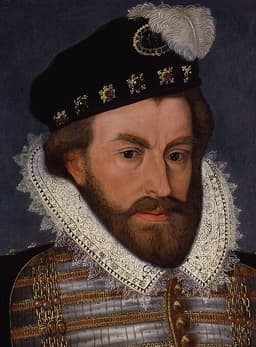
Christopher Hatton
Politician · Modern
43.1Total
Basic Information
Born
1950
1540
Died
—
1591
Era
Modern
Modern
Nationality
North Korea
England
Occupation
Politician
Politician
Civilization
Eastern
Western
Score Comparison
Military (10%)
36.6
50.0
Political (20%)
25.0
30.8
Influence (20%)
48.6
48.6
Legacy (20%)
40.0
39.2
Leadership (15%)
72.0
48.4
Strategy (15%)
54.1
43.1
TOTAL
45.8
43.1
Choe Ryong-hae — Complete Timeline
2012 AD
Appointment as Vice Marshal of the Korean People's ArmyPolitical Action◆ Major
Choe Ryong-hae was appointed Vice Marshal of the Korean People's Army, one of the highest military ranks in North Korea. This appointment solidified his position as a top military and party official under Kim Jong-un.
MilitaryPromotionLeadership
Impact: national
Appointment as Director of the General Political BureauPolitical Action◆ Major
Choe Ryong-hae was appointed Director of the General Political Bureau of the Korean People's Army, a key position responsible for political indoctrination and loyalty within the military.
MilitaryPolitical BureauIndoctrination
Impact: national
2013 AD
Role in the Execution of Jang Song-thaekPolitical Action◆ Major
Choe Ryong-hae was reportedly involved in the purge and execution of Jang Song-thaek, Kim Jong-un's uncle. He oversaw the investigation and trial, demonstrating his loyalty to Kim Jong-un.
PurgeExecutionLoyalty
Impact: nationaldestructive
2016 AD
Election to the Presidium of the PolitburoPolitical Action◆ Major
Choe Ryong-hae was elected to the Presidium of the Politburo of the Workers' Party of Korea, the highest decision-making body in North Korea. This made him one of the top five leaders in the country.
Party LeadershipPolitburoPower
Impact: national
Christopher Hatton — Complete Timeline
1577 AD
Knighted by Queen Elizabeth IPolitical Action
Queen Elizabeth I knighted Christopher Hatton, recognizing his service as a courtier and member of Parliament. The knighthood elevated his status and solidified his position within the Elizabethan court.
KnighthoodCourtierElizabeth I
Impact: nationalconstructive
1586 AD
Presided over the trial of Mary, Queen of ScotsPolitical Action◆ Major
As a member of the commission, Hatton participated in the trial of Mary, Queen of Scots at Fotheringhay Castle. He argued strongly for her execution, contributing to the verdict that led to Mary's beheading in 1587.
Mary Queen of ScotsTrialExecution
Impact: nationaldestructive
1587 AD
Appointed Lord Chancellor of EnglandPolitical Action◆ Major
Queen Elizabeth I appointed Christopher Hatton as Lord Chancellor, a position he held until his death. Despite lacking legal training, Hatton presided over the Court of Chancery and was known for his administrative competence and loyalty to the queen.
Elizabethan governmentLord ChancellorAdministration
Impact: nationalconstructive
This comparison has not been analyzed yet.
One-time AI generation (~1 minute). Scores and timeline are already available below.
Rankings
🥇
Choe Ryong-haeLeader
Mil: 36.6Pol: 25.0Inf: 48.6
45.8
🥈
Christopher Hatton
Mil: 50.0Pol: 30.8Inf: 48.6
43.1
+2.7 behind
How This Comparison Works
Algorithm
Each figure is scored on 6 dimensions (0—100 scale) based on structured historical data: Military (10%), Political (20%), Influence (20%), Legacy (20%), Leadership (15%), Strategy (15%). The weighted total produces the final ranking.
Data Sources
Scores are computed from structured sub-indicators in the database. Scale factors adjust for era (Ancient ×0.85, Modern ×1.0) and civilization size (Eastern ×1.05, Other ×0.80) to account for differences in population and military scale.
Maximum 3 Figures
Comparisons are limited to 2—3 figures to ensure readability and statistical meaningfulness.
Error Margins
±5 points per dimension — Sub-scores are derived from historical records with inherent uncertainty. Two figures within 5 points on a dimension should be considered roughly equivalent in that area.
Total Score Accuracy
±3 points overall — The weighted combination of 6 dimensions produces a total score with approximately ±3 points of uncertainty. Differences of less than 3 points are not statistically significant— the figures are effectively tied.
Known Limitations
- Historical records are incomplete and uneven across civilizations
- Figures from oral-tradition societies may be underrepresented
- Occupation labels can misclassify multi-role figures
- Scores measure capability and impact, not moral character
- Quantitative scoring is a comparison tool, not absolute truth
Capability Radar
Military (10%) — Battles & Warfare
Battles
5
29
Win Rate
5
32
Expansion
5
32
Political (20%) — Governance & Reform
Reform
10
15
Diplomacy
20
30
Economy
10
15
Influence (20%) — Cultural & Global Reach
Cultural
10
15
Global
10
5
Legacy (20%) — Historical Impact
Historical
10
15
Longevity
20
10
Leadership (15%) — Power & Stability
Tenure
70
20
Stability
40
20
Strategy (15%) — Tactics & Innovation
Strategy
10
38
Tactics
10
42
Reform
5
44
Similar Comparisons
Comments & Discussion
No comments yet. Be the first to share your thoughts!