Loading...
Christopher Hatton vs Napoleon Bonaparte
Napoleon Bonaparte leads by 27.8 pts · 2 figures compared
…
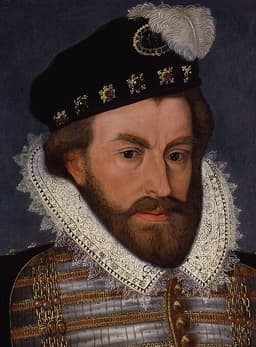
Christopher Hatton
Politician · Modern
43.1Total

Napoleon Bonaparte
General · Modern
70.9Total
Basic Information
Born
1540
1769
Died
1591
1821
Era
Modern
Modern
Nationality
England
France
Occupation
Politician
General
Civilization
Western
Western
Score Comparison
Military (10%)
50.0
94.0
Political (20%)
30.8
72.0
Influence (20%)
48.6
40.0
Legacy (20%)
39.2
80.0
Leadership (15%)
48.4
78.0
Strategy (15%)
43.1
90.0
TOTAL
43.1
70.9
Christopher Hatton — Complete Timeline
1577 AD
Knighted by Queen Elizabeth IPolitical Action
Queen Elizabeth I knighted Christopher Hatton, recognizing his service as a courtier and member of Parliament. The knighthood elevated his status and solidified his position within the Elizabethan court.
KnighthoodCourtierElizabeth I
Impact: nationalconstructive
1586 AD
Presided over the trial of Mary, Queen of ScotsPolitical Action◆ Major
As a member of the commission, Hatton participated in the trial of Mary, Queen of Scots at Fotheringhay Castle. He argued strongly for her execution, contributing to the verdict that led to Mary's beheading in 1587.
Mary Queen of ScotsTrialExecution
Impact: nationaldestructive
1587 AD
Appointed Lord Chancellor of EnglandPolitical Action◆ Major
Queen Elizabeth I appointed Christopher Hatton as Lord Chancellor, a position he held until his death. Despite lacking legal training, Hatton presided over the Court of Chancery and was known for his administrative competence and loyalty to the queen.
Elizabethan governmentLord ChancellorAdministration
Impact: nationalconstructive
Napoleon Bonaparte — Complete Timeline
1799 AD
Coup of 18 BrumaireOther◆ Major
Napoleon Bonaparte, with support from his brother Lucien and key political figures, overthrew the Directory in a bloodless coup. He established the Consulate with himself as First Consul, effectively becoming the ruler of France. This event ended the French Revolution's most unstable period.
French RevolutionCoupRise to Power
Impact: regional
1804 AD
Promulgation of the Napoleonic CodeOther◆ Major
Napoleon enacted the Civil Code of the French, known as the Napoleonic Code, a comprehensive set of laws that replaced the fragmented feudal legal systems. The code established legal equality, protected property rights, and secularized law. It became the basis for legal systems in many European and world countries.
Legal ReformNapoleonic CodeCivil Law
Impact: globalconstructive
1805 AD
Battle of AusterlitzWar◆ Major
Napoleon's Grande Arm
Napoleonic WarsBattleDecisive Victory
Impact: global
1812 AD
Invasion of RussiaWar◆ Major
Napoleon led the Grande Arm
Napoleonic WarsInvasionDisaster
Impact: globaldestructive
1815 AD
Battle of WaterlooWar◆ Major
Napoleon's French army was defeated by the combined forces of the Duke of Wellington's Anglo-Allied army and Gebhard Leberecht von Bl
Napoleonic WarsBattleFinal Defeat
Impact: globaldestructive
Expert Analysis
christopher-hatton-vs-napoleon-bonaparte
# The Dancing Chancellor and the Eagle: Two Paths to Power in an Age of Giants
On a spring morning in 1587, Christopher Hatton, a man who had never studied law, sat upon the woolsack as Lord Chancellor of England, the highest legal office in the realm. Fewer than two hundred years later, on a December day in 1805, Napoleon Bonaparte watched from a hilltop as his fleet was destroyed at Trafalgar, yet within weeks he would crush the armies of Austria and Russia at Austerlitz. One man danced his way into history; the other conquered it. What separated them was not merely talent, but the very nature of the worlds they inhabited.
Origins
Christopher Hatton was born in 1540, the son of a Northamptonshire gentleman, into a England still recovering from the religious convulsions of Henry VIII. He studied law at the Inner Temple, but his true education came on the dance floor of the Elizabethan court. Tall, handsome, and graceful, Hatton caught the eye of Queen Elizabeth I at a masque in 1561. His rise depended entirely on royal favor in a world where birth and patronage mattered more than martial prowess.
Napoleon Bonaparte, born in 1769 on the island of Corsica, entered a France convulsed by revolution. His family were minor Corsican nobility, but the revolution had swept away the old order. A young artillery officer with a gift for mathematics and a hunger for glory, Napoleon belonged to a generation that could rise—or fall—on merit alone. "The tools to him that can handle them," he would later say, and the French Revolution had scattered those tools across a battlefield of opportunity.
Rise to Power
Hatton’s ascent was a careful, courtly dance. He entered Parliament in 1571, became Vice-Chamberlain of the Royal Household in 1577, and was knighted the same year. His power derived from proximity to the queen—he was her favorite, her confidant, her "sheep" as she called him. He accumulated wealth through royal grants, not conquest. When Elizabeth needed a man to preside over the trial of Mary, Queen of Scots in 1586, Hatton was there, arguing passionately for execution. His reward came in 1587: the Lord Chancellorship, despite having no legal training. He had risen through charm, loyalty, and the careful navigation of a court where a misstep meant ruin.
Napoleon’s rise was a cannonade. At twenty-four, he drove the British from Toulon. At twenty-six, he saved the Directory from a royalist uprising with a "whiff of grapeshot." At thirty, he was in command of the Army of Italy, where he turned starving, mutinous troops into a conquering force. "I saw the crown of France lying on the ground," he later claimed, "and I picked it up with my sword." His rise was not through favor but through victory—each battle, each campaign, each treaty added to his legend. By 1799, he overthrew the Directory and became First Consul. Five years later, he crowned himself Emperor.
Leadership & Governance
Hatton governed as Elizabeth’s instrument. As Lord Chancellor, he presided over the Court of Chancery, dispensing equity rather than common law. His judgments were reportedly fair, though he relied heavily on legal advisors. His political wisdom lay in knowing his limits: he never challenged the queen, never built an independent power base, and never forgot that his authority was borrowed. He was, in essence, a brilliant administrator of a system he did not create.
Napoleon governed as a conqueror and reformer. He reorganized France into departments, centralized the administration, and created the Bank of France. His Napoleonic Code swept away feudal privileges and established legal equality—at least for men. He built roads, canals, and schools, but he also suppressed dissent, censored the press, and restored slavery in the colonies. His military genius—rated 94 in strategy—was matched by his political blindness. He could win battles but could not secure peace. "Power is my mistress," he admitted, and he pursued her across Europe until she destroyed him.
Triumph & Tragedy
Hatton’s greatest moment was also his most controversial: the trial of Mary, Queen of Scots. He argued that "the safety of the queen and the realm" required her execution, and his eloquence helped seal Mary’s fate. His tragedy was subtler—a man who rose through grace and charm, whose very success depended on the favor of a woman he could never marry, and who died in 1591, at fifty-one, worn out by service and perhaps by love.
Napoleon’s triumph was Austerlitz in 1805, where he destroyed a larger Russo-Austrian army with a masterpiece of deception and speed. His tragedy was Waterloo in 1815, where he made uncharacteristic errors—delaying his attack, misreading the ground, trusting subordinates who failed him. He died in exile on Saint Helena in 1821, a prisoner of the British, his empire reduced to memory. "There is no such thing as accident," he once said. "It is fate misnamed." But his fate was carved by his own ambition.
Character & Destiny
Hatton was cautious, graceful, and loyal. He understood that in Elizabeth’s England, power was a gift, not a right. He never overreached, never provoked envy beyond what he could manage, and died in his bed, still in the queen’s favor. His character matched his destiny: a courtier in a courtly age.
Napoleon was restless, brilliant, and insatiable. He could not stop, could not compromise, could not share power. "I have no desire to be a king," he said before becoming emperor. "I want to be the master of the world." His character drove him to conquer Europe, but it also drove him to invade Russia, to reject peace terms, to fight until there was nothing left to fight with. His destiny was as vast as his ambition—and as fragile.
Legacy
Hatton is remembered, if at all, as the "Dancing Chancellor," a footnote in Elizabethan history. He left no laws, no institutions, no legend. His legacy is the story of how a man could rise through charm in an age of giants—and be forgotten by the next generation.
Napoleon remade the world. His legal code, his administrative reforms, his military tactics, his very concept of meritocracy shaped modern Europe. He is studied in every war college, quoted in every political debate, remembered in every street named after his battles. But his legacy is also one of warning: that genius without restraint becomes tyranny, and that even the eagle must eventually fall.
Conclusion
Standing at the edge of history, Hatton and Napoleon represent two poles of human ambition. One danced in the shadow of a queen; the other strode across a continent in flames. Both rose from modest beginnings to the heights of power. But Hatton’s world was a closed circle of favor and patronage, where a man could rise only as high as the monarch allowed. Napoleon’s world was an open battlefield, where a man could rise as high as his sword could reach—and fall just as far. In the end, the Dancing Chancellor died in comfort, beloved by his queen. The Eagle died alone, on a rock in the Atlantic, still dreaming of glory. Which was the wiser path? History leaves that question unanswered, hanging in the silence between their two very different fates.
Rankings
🥇
Napoleon BonaparteLeader
Mil: 94.0Pol: 72.0Inf: 40.0
70.9
🥈
Christopher Hatton
Mil: 50.0Pol: 30.8Inf: 48.6
43.1
+27.8 behind
How This Comparison Works
Algorithm
Each figure is scored on 6 dimensions (0—100 scale) based on structured historical data: Military (10%), Political (20%), Influence (20%), Legacy (20%), Leadership (15%), Strategy (15%). The weighted total produces the final ranking.
Data Sources
Scores are computed from structured sub-indicators in the database. Scale factors adjust for era (Ancient ×0.85, Modern ×1.0) and civilization size (Eastern ×1.05, Other ×0.80) to account for differences in population and military scale.
Maximum 3 Figures
Comparisons are limited to 2—3 figures to ensure readability and statistical meaningfulness.
Error Margins
±5 points per dimension — Sub-scores are derived from historical records with inherent uncertainty. Two figures within 5 points on a dimension should be considered roughly equivalent in that area.
Total Score Accuracy
±3 points overall — The weighted combination of 6 dimensions produces a total score with approximately ±3 points of uncertainty. Differences of less than 3 points are not statistically significant— the figures are effectively tied.
Known Limitations
- Historical records are incomplete and uneven across civilizations
- Figures from oral-tradition societies may be underrepresented
- Occupation labels can misclassify multi-role figures
- Scores measure capability and impact, not moral character
- Quantitative scoring is a comparison tool, not absolute truth
Capability Radar
Military (10%) — Battles & Warfare
Battles
29
95
Win Rate
32
90
Expansion
32
95
Political (20%) — Governance & Reform
Reform
15
95
Diplomacy
30
80
Economy
15
85
Influence (20%) — Cultural & Global Reach
Cultural
15
85
Global
5
90
Legacy (20%) — Historical Impact
Historical
15
95
Longevity
10
90
Leadership (15%) — Power & Stability
Tenure
20
85
Stability
20
70
Strategy (15%) — Tactics & Innovation
Strategy
38
95
Tactics
42
98
Reform
44
92
Similar Comparisons
Comments & Discussion
No comments yet. Be the first to share your thoughts!