Loading...
This comparison has not been analyzed yet.
One-time AI generation (~1 minute). Scores and timeline are already available below.
Choi Kyu-hah vs Rashidi Kawawa
Rashidi Kawawa leads by 11.0 pts · 2 figures compared
…
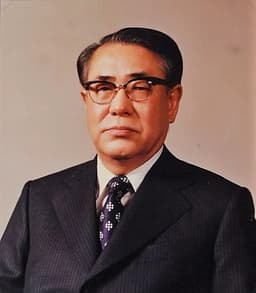
Choi Kyu-hah
Politician · Modern
39.9Total

Rashidi Kawawa
Politician · Modern
50.9Total
Basic Information
Born
1919
1926
Died
2006
—
Era
Modern
Modern
Nationality
South Korea
Tanzania
Occupation
Politician
Politician
Civilization
Eastern
Other
Score Comparison
Military (10%)
14.2
40.4
Political (20%)
30.8
68.0
Influence (20%)
48.6
49.4
Legacy (20%)
39.2
40.8
Leadership (15%)
55.3
66.0
Strategy (15%)
35.8
42.3
TOTAL
39.9
50.9
Choi Kyu-hah — Complete Timeline
1979 AD
Appointment as Acting President after Park Chung-hee's AssassinationPolitical Action◆ Major
Choi Kyu-hah, as Prime Minister, became Acting President following the assassination of Park Chung-hee on October 26, 1979. He oversaw a brief period of political liberalization known as the 'Seoul Spring'.
SuccessionPark Chung-heePolitical Transition
Impact: national
Election as President of South KoreaPolitical Action◆ Major
Choi Kyu-hah was elected as the fourth President of South Korea in December 1979 under the Yushin Constitution. His presidency was marked by efforts to democratize, but he faced pressure from the military.
ElectionFourth RepublicDemocratization
Impact: national
1980 AD
Overthrow by Chun Doo-hwan's CoupPolitical Action◆ Major
Choi Kyu-hah was forced to resign on August 16, 1980, after General Chun Doo-hwan seized power through a military coup. This ended the brief democratic interlude and led to the establishment of the Fifth Republic under Chun.
Military CoupChun Doo-hwanEnd of Democracy
Impact: nationaldestructive
Rashidi Kawawa — Complete Timeline
1962 AD
Appointed Prime Minister of TanganyikaPolitical Action◆ Major
Rashidi Kawawa was appointed Prime Minister of Tanganyika by President Julius Nyerere, serving from 1962 to 1964. He was a close ally of Nyerere and played a key role in implementing the government's policies.
AppointmentGovernmentTanganyika
Impact: nationalconstructive
1967 AD
Led Implementation of Ujamaa PoliciesReform◆ Major
As a senior minister, Kawawa was instrumental in implementing Nyerere's Ujamaa (African socialism) policies, including the Arusha Declaration. He oversaw the nationalization of key industries and the creation of collective villages.
UjamaaSocialismArusha Declaration
Impact: nationalconstructive
1972 AD
Served as Prime Minister of TanzaniaPolitical Action◆ Major
Kawawa was appointed Prime Minister of Tanzania (after the union with Zanzibar) from 1972 to 1977. He continued to be Nyerere's right-hand man, managing the day-to-day operations of the government.
AppointmentGovernmentTanzania
Impact: nationalconstructive
1973 AD
Oversaw Villagization ProgramReform◆ Major
Kawawa oversaw the forced villagization program, which relocated millions of rural Tanzanians into collective villages (ujamaa villages). The program aimed to improve agricultural productivity but caused significant disruption and hardship.
VillagizationUjamaaSocial Engineering
Impact: nationaldestructive
This comparison has not been analyzed yet.
One-time AI generation (~1 minute). Scores and timeline are already available below.
Rankings
🥇
Rashidi KawawaLeader
Mil: 40.4Pol: 68.0Inf: 49.4
50.9
🥈
Choi Kyu-hah
Mil: 14.2Pol: 30.8Inf: 48.6
39.9
+11.0 behind
How This Comparison Works
Algorithm
Each figure is scored on 6 dimensions (0—100 scale) based on structured historical data: Military (10%), Political (20%), Influence (20%), Legacy (20%), Leadership (15%), Strategy (15%). The weighted total produces the final ranking.
Data Sources
Scores are computed from structured sub-indicators in the database. Scale factors adjust for era (Ancient ×0.85, Modern ×1.0) and civilization size (Eastern ×1.05, Other ×0.80) to account for differences in population and military scale.
Maximum 3 Figures
Comparisons are limited to 2—3 figures to ensure readability and statistical meaningfulness.
Error Margins
±5 points per dimension — Sub-scores are derived from historical records with inherent uncertainty. Two figures within 5 points on a dimension should be considered roughly equivalent in that area.
Total Score Accuracy
±3 points overall — The weighted combination of 6 dimensions produces a total score with approximately ±3 points of uncertainty. Differences of less than 3 points are not statistically significant— the figures are effectively tied.
Known Limitations
- Historical records are incomplete and uneven across civilizations
- Figures from oral-tradition societies may be underrepresented
- Occupation labels can misclassify multi-role figures
- Scores measure capability and impact, not moral character
- Quantitative scoring is a comparison tool, not absolute truth
Capability Radar
Military (10%) — Battles & Warfare
Battles
13
24
Win Rate
19
23
Expansion
19
26
Political (20%) — Governance & Reform
Reform
15
55
Diplomacy
25
50
Economy
20
45
Influence (20%) — Cultural & Global Reach
Cultural
10
20
Global
10
15
Legacy (20%) — Historical Impact
Historical
15
25
Longevity
10
20
Leadership (15%) — Power & Stability
Tenure
20
60
Stability
30
55
Strategy (15%) — Tactics & Innovation
Strategy
22
32
Tactics
25
36
Reform
31
34
Similar Comparisons
Comments & Discussion
No comments yet. Be the first to share your thoughts!