Loading...
Choi Kyu-hah vs Napoleon Bonaparte
Napoleon Bonaparte leads by 31.0 pts · 2 figures compared
…
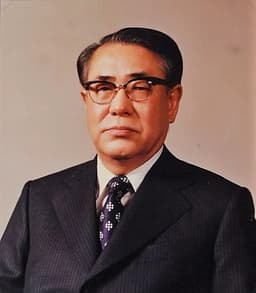
Choi Kyu-hah
Politician · Modern
39.9Total

Napoleon Bonaparte
General · Modern
70.9Total
Basic Information
Born
1919
1769
Died
2006
1821
Era
Modern
Modern
Nationality
South Korea
France
Occupation
Politician
General
Civilization
Eastern
Western
Score Comparison
Military (10%)
14.2
94.0
Political (20%)
30.8
72.0
Influence (20%)
48.6
40.0
Legacy (20%)
39.2
80.0
Leadership (15%)
55.3
78.0
Strategy (15%)
35.8
90.0
TOTAL
39.9
70.9
Choi Kyu-hah — Complete Timeline
1979 AD
Appointment as Acting President after Park Chung-hee's AssassinationPolitical Action◆ Major
Choi Kyu-hah, as Prime Minister, became Acting President following the assassination of Park Chung-hee on October 26, 1979. He oversaw a brief period of political liberalization known as the 'Seoul Spring'.
SuccessionPark Chung-heePolitical Transition
Impact: national
Election as President of South KoreaPolitical Action◆ Major
Choi Kyu-hah was elected as the fourth President of South Korea in December 1979 under the Yushin Constitution. His presidency was marked by efforts to democratize, but he faced pressure from the military.
ElectionFourth RepublicDemocratization
Impact: national
1980 AD
Overthrow by Chun Doo-hwan's CoupPolitical Action◆ Major
Choi Kyu-hah was forced to resign on August 16, 1980, after General Chun Doo-hwan seized power through a military coup. This ended the brief democratic interlude and led to the establishment of the Fifth Republic under Chun.
Military CoupChun Doo-hwanEnd of Democracy
Impact: nationaldestructive
Napoleon Bonaparte — Complete Timeline
1799 AD
Coup of 18 BrumaireOther◆ Major
Napoleon Bonaparte, with support from his brother Lucien and key political figures, overthrew the Directory in a bloodless coup. He established the Consulate with himself as First Consul, effectively becoming the ruler of France. This event ended the French Revolution's most unstable period.
French RevolutionCoupRise to Power
Impact: regional
1804 AD
Promulgation of the Napoleonic CodeOther◆ Major
Napoleon enacted the Civil Code of the French, known as the Napoleonic Code, a comprehensive set of laws that replaced the fragmented feudal legal systems. The code established legal equality, protected property rights, and secularized law. It became the basis for legal systems in many European and world countries.
Legal ReformNapoleonic CodeCivil Law
Impact: globalconstructive
1805 AD
Battle of AusterlitzWar◆ Major
Napoleon's Grande Arm
Napoleonic WarsBattleDecisive Victory
Impact: global
1812 AD
Invasion of RussiaWar◆ Major
Napoleon led the Grande Arm
Napoleonic WarsInvasionDisaster
Impact: globaldestructive
1815 AD
Battle of WaterlooWar◆ Major
Napoleon's French army was defeated by the combined forces of the Duke of Wellington's Anglo-Allied army and Gebhard Leberecht von Bl
Napoleonic WarsBattleFinal Defeat
Impact: globaldestructive
Expert Analysis
choi-kyu-hah-vs-napoleon-bonaparte
# The Emperor and the Caretaker
On a June evening in 1815, Napoleon Bonaparte stood on a muddy field near Waterloo, watching his Imperial Guard—the finest soldiers in Europe—crumble before Prussian bayonets. One hundred and sixty-four years later, on an October night in Seoul, a soft-spoken diplomat named Choi Kyu-hah received a telephone call that would change his life: President Park Chung-hee had been shot dead at a dinner party. One man had conquered Europe; the other had never commanded a battalion. Yet both stepped into history’s spotlight at the exact moment their nations held their breath. What separates a titan from a transitional figure? The answer lies not in their times, but in the fire—or the absence of it—within.
Origins
Napoleon Bonaparte was born in 1769 on the island of Corsica, a place that had just become French by treaty. His family was minor nobility, poor enough to feel the sting of hunger but proud enough to nurse grievances. At nine, he entered a French military academy, where classmates mocked his accent and his island manners. He responded by devouring books on artillery, history, and military strategy—a lonely boy armoring himself with knowledge. Corsica taught him that power was something to be seized; the French Revolution taught him that a man of talent could rise higher than a king.
Choi Kyu-hah was born in 1919 in Wonju, Korea, then under Japanese colonial rule. His father was a local official, his family comfortable but not powerful. Choi studied at the elite Keijō Imperial University in Seoul, then taught at a teachers’ college before entering government service. Where Napoleon’s youth was shaped by revolution and war, Choi’s was shaped by occupation and bureaucracy. He learned to navigate systems, not to smash them. When Korea was liberated in 1945, Choi was already a civil servant—competent, cautious, and impeccably polite.
Rise to Power
Napoleon’s ascent was a series of explosions. In 1793, at 24, he drove British forces from Toulon with a brilliant artillery plan. By 1796, he commanded the Army of Italy, turning starving soldiers into a conquering force. He won battles—Lodi, Arcole, Rivoli—not by following orders but by rewriting them. In 1799, he returned from Egypt to a France exhausted by chaos, and with a handful of supporters, overthrew the government in the Coup of 18 Brumaire. He was 30 years old.
Choi’s rise was a slow climb up a ladder. He served as a diplomat, then as minister of foreign affairs, then as prime minister in 1975 under Park Chung-hee’s authoritarian Yushin Constitution. He was not a revolutionary; he was a technocrat. When Park was assassinated on October 26, 1979, Choi became acting president by constitutional succession, not by ambition. In December 1979, he was formally elected president—but the election was controlled, the constitution rigged. He inherited a system he had never challenged, and a military that had never feared him.
Leadership & Governance
Napoleon governed as he fought: with speed, clarity, and total control. He centralized the French state, created the Napoleonic Code—a legal framework that still influences half the world—and reformed education, banking, and infrastructure. He was a military genius with a political score of 75, but his leadership score of 80 reflects a man who inspired devotion and terror in equal measure. He could dictate dispatches while riding, reorganize an army in an hour, and charm a room of hostile diplomats into submission. Yet his ambition had no governor. He crowned himself emperor in 1804, placed his brothers on European thrones, and invaded Russia in 1812 with 600,000 men—a decision that destroyed his Grand Army.
Choi governed as he had always lived: cautiously, constitutionally, and ineffectively. His political score of 72.1 is respectable, but his military score of 22.8 reveals his fundamental weakness: he had no armed force loyal to him. He tried to steer South Korea toward democracy, relaxing press controls and promising constitutional reform. But General Chun Doo-hwan, who had commanded the martial law forces after Park’s death, watched and waited. In May 1980, Chun expanded martial law, crushed the Gwangju Uprising, and by August had forced Choi to resign. Choi’s strategy score of 59.6 suggests a man who understood politics but not power.
Triumph & Tragedy
Napoleon’s greatest moment was Austerlitz, December 2, 1805. He lured the combined Russian and Austrian armies into a trap, then destroyed them as the sun rose over the frozen battlefield. It was a masterpiece of deception, timing, and nerve. His greatest tragedy was the invasion of Russia in 1812—a campaign that bled his army white, cost him half a million men, and shattered the myth of invincibility. Exiled to Elba in 1814, he escaped, returned to France, and ruled for 100 days before Waterloo ended everything.
Choi’s greatest moment was his election as president in December 1979—a fragile victory that gave hope to Korean democrats. His greatest tragedy was the Gwangju Uprising of May 1980, when Chun’s troops killed hundreds of civilians while Choi, still nominally president, could do nothing but resign. He was overthrown on August 16, 1980, and spent the rest of his life in quiet retirement—a footnote in a story written by generals.
Character & Destiny
Napoleon once said, “Impossible is a word to be found only in the dictionary of fools.” He believed that will could bend reality. That conviction made him a conqueror—and a prisoner on St. Helena, dying at 51, his empire dissolved. His character was his destiny: restless, brilliant, and incapable of stopping.
Choi once said, “I tried to do my best under difficult circumstances.” He believed that duty meant enduring. That conviction made him a caretaker—and a casualty of history, dying at 87 in relative obscurity. His character was also his destiny: decent, cautious, and incapable of resisting.
Legacy
Napoleon’s legacy score of 78 is a paradox. He caused the deaths of millions, yet his legal code, his administrative reforms, and his myth of the self-made man endure. He is remembered as both a tyrant and a genius—a figure who reshaped Europe and the modern state.
Choi’s legacy score of 54.8 is modest but not meaningless. He was the last president of the Yushin era, the bridge between dictatorship and the chaos that followed. In South Korea, he is remembered—if at all—as a decent man who was outmatched. His failure was not villainy but timidity.
Conclusion
Napoleon and Choi never met, never shared a continent, never faced the same choices. Yet their stories illuminate the same truth: history does not reward decency alone. It rewards the will to act, the nerve to seize, the fire to burn. Napoleon had that fire; Choi did not. One changed the world; the other was changed by it. In the end, the difference between a titan and a caretaker is not talent or luck—it is the willingness to risk everything for something more than survival. And that, perhaps, is the most unforgiving lesson of all.
Rankings
🥇
Napoleon BonaparteLeader
Mil: 94.0Pol: 72.0Inf: 40.0
70.9
🥈
Choi Kyu-hah
Mil: 14.2Pol: 30.8Inf: 48.6
39.9
+31.0 behind
How This Comparison Works
Algorithm
Each figure is scored on 6 dimensions (0—100 scale) based on structured historical data: Military (10%), Political (20%), Influence (20%), Legacy (20%), Leadership (15%), Strategy (15%). The weighted total produces the final ranking.
Data Sources
Scores are computed from structured sub-indicators in the database. Scale factors adjust for era (Ancient ×0.85, Modern ×1.0) and civilization size (Eastern ×1.05, Other ×0.80) to account for differences in population and military scale.
Maximum 3 Figures
Comparisons are limited to 2—3 figures to ensure readability and statistical meaningfulness.
Error Margins
±5 points per dimension — Sub-scores are derived from historical records with inherent uncertainty. Two figures within 5 points on a dimension should be considered roughly equivalent in that area.
Total Score Accuracy
±3 points overall — The weighted combination of 6 dimensions produces a total score with approximately ±3 points of uncertainty. Differences of less than 3 points are not statistically significant— the figures are effectively tied.
Known Limitations
- Historical records are incomplete and uneven across civilizations
- Figures from oral-tradition societies may be underrepresented
- Occupation labels can misclassify multi-role figures
- Scores measure capability and impact, not moral character
- Quantitative scoring is a comparison tool, not absolute truth
Capability Radar
Military (10%) — Battles & Warfare
Battles
13
95
Win Rate
19
90
Expansion
19
95
Political (20%) — Governance & Reform
Reform
15
95
Diplomacy
25
80
Economy
20
85
Influence (20%) — Cultural & Global Reach
Cultural
10
85
Global
10
90
Legacy (20%) — Historical Impact
Historical
15
95
Longevity
10
90
Leadership (15%) — Power & Stability
Tenure
20
85
Stability
30
70
Strategy (15%) — Tactics & Innovation
Strategy
22
95
Tactics
25
98
Reform
31
92
Similar Comparisons
Comments & Discussion
WATERLOO WATCHER6/17/2026
Comparing Choi to Napoleon is like comparing a pawn to a queen. Napoleon didn't just lead armies; he rewrote the rules of warfare itself—speed, mass, and decisive battle. At Austerlitz, he crushed a larger Russo-Austrian force with tactical genius. Choi spent his brief presidency trying not to rock the boat after Park’s assassination. One was a hurricane, the other a placeholder.
数据侦探家6/17/2026
这份比较太抒情了,缺硬数字。拿破仑打了超过60场战役,水滑铁卢时指挥7.2万人;崔圭夏总统任期仅8个月,1979年GDP增长率是-2.5%──其实韩国经济在他手里短暂下跌。说“外交官”是好听,他就是朴正熙体制的延续人,连民主化都没推进。两个完全不同量级,不要强行对称。
CLASSICIST CHRONICLER6/17/2026
We’re told both stepped into history at a moment of national crisis, but that’s like saying a thunderstorm and a drizzle are both rain. Napoleon was a Caesar figure—a man who redrew borders, installed kings, and codified laws. The Napoleonic Code still shapes European law today. Choi was an interim president who oversaw a transition and then disappeared. One built a legacy of clay and iron; the other left a paper trail in a dusty archive.
历史重演迷6/17/2026
拿破仑的一生是悲剧史诗:从土伦到滑铁卢,坠落得壮烈。崔圭夏更像个技术官僚的哀歌──被全斗焕的政变一夜推翻,连反抗都没组织。历史不是要你“指挥多少军队”,但领袖的气场就是不同。拿破仑在埃及打仗时还带学者搞研究,崔在任内做了什么?唯一的新闻是辞职。没火的人,就是没火。
REVISIONIST SHOT6/17/2026
Everyone romanticizes Napoleon as some titan, but let's be clear: he was a power addict who bled Europe white for his ego. Waterloo wasn't some tragic fall—it was the logical end of a man who couldn't stop. Choi, by contrast, actually stepped down when power was offered. In a world of naked ambition, his quiet decency is almost revolutionary. Sometimes the fire within is better left unlit.