Loading...
Christian I of Denmark vs Julius Caesar
Julius Caesar leads by 29.0 pts · 2 figures compared
…
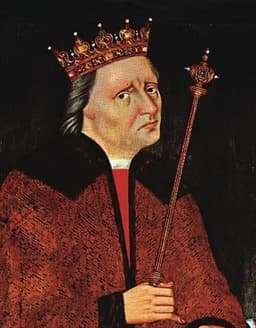
Christian I of Denmark
Emperor · Medieval
53.8Total

Julius Caesar
General · Ancient
82.8Total
Basic Information
Born
1426
-100
Died
1481
-44
Era
Medieval
Ancient
Nationality
Denmark
Roman Republic
Occupation
Emperor
General
Civilization
Western
Western
Score Comparison
Military (10%)
55.0
88.0
Political (20%)
54.7
78.0
Influence (20%)
55.7
85.0
Legacy (20%)
49.2
82.0
Leadership (15%)
67.0
80.0
Strategy (15%)
38.6
85.0
TOTAL
53.8
82.8
Christian I of Denmark — Complete Timeline
1448 AD
Election as King of DenmarkPolitical Action◆ Major
Following the death of King Christopher III, the Danish Council elected Christian of Oldenburg as king. This established the Oldenburg dynasty, which would rule Denmark for over four centuries.
AccessionDynasty Foundation
Impact: nationalconstructive
1450 AD
Union of Norway with DenmarkPolitical Action◆ Major
Christian I was crowned King of Norway in Trondheim, formalizing the union between Denmark and Norway. This union lasted until 1814, making Norway a Danish dominion for centuries.
UnionScandinavia
Impact: regional
1457 AD
Election as King of SwedenPolitical Action◆ Major
Christian I was elected King of Sweden, briefly restoring the Kalmar Union. His rule in Sweden was contested, leading to rebellion and his eventual deposition in 1464.
Kalmar UnionSweden
Impact: regional
1468 AD
Pledge of Orkney and ShetlandPolitical Action◆ Major
To secure a dowry for his daughter Margaret's marriage to James III of Scotland, Christian I pledged the Orkney and Shetland islands. The pledge was never redeemed, and the islands became permanently part of Scotland.
Territorial LossScotland
Impact: regionaltragic
1479 AD
Foundation of the University of CopenhagenCultural◆ Major
Christian I issued a charter establishing the University of Copenhagen, the first university in Denmark. Modeled on the University of Cologne, it became a center of learning and the oldest university in the country.
EducationUniversity
Impact: nationalconstructive
Julius Caesar — Complete Timeline
58 BC
Gallic WarsWar◆ Major
Caesar, as proconsul of Gaul, launched a series of campaigns that conquered all of Gaul (modern France, Belgium, and parts of Switzerland). He fought numerous battles, including against the Helvetii, the Belgae, and the Gallic chieftain Vercingetorix. The wars brought immense wealth and a loyal army to Caesar.
Gallic WarsConquestRoman Expansion
Impact: regional
49 BC
Crossing the RubiconPolitical Action◆ Major
Caesar led Legio XIII across the Rubicon River into Italy, defying the Roman Senate's order to disband his army. This act triggered a civil war against Pompey and the Optimates, ultimately leading to Caesar's dictatorship and the end of the Roman Republic.
Roman Civil WarEnd of RepublicPower Struggle
Impact: global
48 BC
Battle of PharsalusWar◆ Major
Caesar's outnumbered army defeated the larger forces of Pompey the Great at Pharsalus in Greece. Caesar's tactical use of a reserve line to counter Pompey's cavalry charge proved decisive. Pompey fled to Egypt, where he was assassinated, leaving Caesar as the undisputed master of the Roman world.
Roman Civil WarBattleDecisive Victory
Impact: regional
44 BC
Appointment as Dictator for LifePolitical Action◆ Major
The Roman Senate appointed Caesar dictator perpetuo (dictator for life), granting him unprecedented personal power. This move concentrated military, legislative, and judicial authority in one person, effectively ending the Roman Republic's traditional system of checks and balances and alarming many senators.
DictatorshipEnd of RepublicPower Consolidation
Impact: regionaldestructive
Assassination on the Ides of MarchPolitical Action◆ Major
A group of Roman senators, led by Marcus Junius Brutus and Gaius Cassius Longinus, stabbed Caesar to death at a meeting of the Senate in the Theatre of Pompey. The assassination was intended to restore the Republic, but instead triggered another civil war that led to the rise of the Roman Empire.
AssassinationRoman PoliticsEnd of Republic
Impact: globaldestructive
Expert Analysis
Origins
Christian I (1426–1481) was born into the House of Oldenburg, a German noble family. His father, Count Dietrich of Oldenburg, was a minor prince, and Christian's early life was shaped by the politics of the Holy Roman Empire. He received a knightly education and was not initially destined for kingship. In contrast, Gaius Julius Caesar (100–44 BCE) was born into the patrician Julian clan in Rome, claiming descent from the goddess Venus. His father, Gaius Julius Caesar the Elder, was a praetor, and his mother, Aurelia Cotta, came from a prominent family. Caesar's early education emphasized rhetoric and military skills, and he was exposed to the turbulent politics of the late Republic, including the Social War and the rise of Sulla.
Rise to Power
Christian I's rise began with the death of King Christopher III of Denmark, Sweden, and Norway in 1448. The Danish Council elected Christian as king in 1448, and he was crowned in Copenhagen. He then secured the Norwegian throne in 1450, and later, after negotiations, was elected King of Sweden in 1457, briefly restoring the Kalmar Union. However, his rule in Sweden was contested, leading to rebellion and his eventual expulsion in 1464. Caesar's rise was more dramatic. He served as a military tribune, quaestor, and aedile, gaining popularity through lavish games. In 60 BCE, he formed the First Triumvirate with Pompey and Crassus, securing the consulship in 59 BCE. As proconsul of Gaul from 58 BCE, he launched the Gallic Wars, conquering modern France and Belgium, and even invaded Britain. His victories made him immensely wealthy and popular with his legions, but also created enemies in the Senate.
Leadership & Governance
Christian I ruled as a medieval monarch, relying on noble councils and the Church. He focused on consolidating the Oldenburg dynasty, securing the union of Denmark and Norway, and expanding royal authority. His major domestic achievement was founding the University of Copenhagen in 1479, modeled on the University of Cologne, which became a center of learning. However, his financial mismanagement, including pledging Orkney and Shetland to Scotland for a dowry (later forfeited), weakened the crown. Caesar, in contrast, transformed the Roman state. As dictator, he implemented sweeping reforms: centralizing administration, reforming the calendar (the Julian calendar), granting citizenship to provincials, and initiating public works. He also reduced debt and reformed land distribution. His leadership style was autocratic, bypassing the Senate, which ultimately led to his assassination.
Triumph & Tragedy
Christian I's greatest success was establishing the Oldenburg dynasty, which ruled Denmark until 1863 and Norway until 1814. The University of Copenhagen remains a lasting legacy. His greatest failure was losing the Swedish throne and the Orkney and Shetland islands, which impoverished the crown. Caesar's triumphs are legendary: he conquered Gaul in a series of brilliant campaigns (scoring 88.0 in military), defeated Pompey at Pharsalus (48 BCE), and became dictator for life. His tragedy was his assassination on the Ides of March (44 BCE) by senators who feared his power, plunging Rome into civil war. His death ended the Republic and paved the way for the Empire.
Character & Destiny
Christian I was pragmatic and diplomatic but lacked strategic vision (scoring 38.6 in strategy). He often compromised with nobles and made short-term decisions that hurt long-term goals. His character was cautious, and he died of natural causes in 1481. Caesar was ambitious, charismatic, and ruthless. His decision to cross the Rubicon in 49 BCE was a calculated gamble that led to civil war. His clemency toward former enemies (e.g., Cicero) was a political tool. His destiny was shaped by his belief in his own invincibility, which led him to ignore warnings of the conspiracy against him. Historians assess him as a military genius and a pivotal figure in the fall of the Republic.
Legacy
Christian I's legacy is primarily dynastic: the Oldenburgs ruled for centuries, and the union with Norway lasted until 1814. The University of Copenhagen remains a top institution. However, his impact outside Scandinavia is minimal. Caesar's legacy is immense: he ended the Roman Republic and initiated the Roman Empire, influencing Western civilization for millennia. His military tactics are still studied, and his writings (Commentaries) are classics. The Julian calendar was used for over 1500 years. In terms of scores, Caesar's total of 82.8 dwarfs Christian I's 53.8, with a gap of 29.0 points. Caesar's military (88.0), influence (85.0), and legacy (82.0) far exceed Christian's scores.
Conclusion
While Christian I was a competent medieval king who founded a university and a dynasty, Julius Caesar was a transformative figure who reshaped the ancient world. Caesar's military conquests, political reforms, and lasting impact on governance and culture are on a different scale. The score gap of 29.0 points reflects this disparity. Caesar's total of 82.8 versus Christian I's 53.8 makes clear that Caesar had far greater impact. In the contest of historical significance, Julius Caesar is the clear victor.
Rankings
🥇
Julius CaesarLeader
Mil: 88.0Pol: 78.0Inf: 85.0
82.8
🥈
Christian I of Denmark
Mil: 55.0Pol: 54.7Inf: 55.7
53.8
+29.0 behind
How This Comparison Works
Algorithm
Each figure is scored on 6 dimensions (0—100 scale) based on structured historical data: Military (10%), Political (20%), Influence (20%), Legacy (20%), Leadership (15%), Strategy (15%). The weighted total produces the final ranking.
Data Sources
Scores are computed from structured sub-indicators in the database. Scale factors adjust for era (Ancient ×0.85, Modern ×1.0) and civilization size (Eastern ×1.05, Other ×0.80) to account for differences in population and military scale.
Maximum 3 Figures
Comparisons are limited to 2—3 figures to ensure readability and statistical meaningfulness.
Error Margins
±5 points per dimension — Sub-scores are derived from historical records with inherent uncertainty. Two figures within 5 points on a dimension should be considered roughly equivalent in that area.
Total Score Accuracy
±3 points overall — The weighted combination of 6 dimensions produces a total score with approximately ±3 points of uncertainty. Differences of less than 3 points are not statistically significant— the figures are effectively tied.
Known Limitations
- Historical records are incomplete and uneven across civilizations
- Figures from oral-tradition societies may be underrepresented
- Occupation labels can misclassify multi-role figures
- Scores measure capability and impact, not moral character
- Quantitative scoring is a comparison tool, not absolute truth
Capability Radar
Military (10%) — Battles & Warfare
Battles
25
95
Win Rate
30
92
Expansion
35
97
Political (20%) — Governance & Reform
Reform
40
90
Diplomacy
55
85
Economy
45
82
Influence (20%) — Cultural & Global Reach
Cultural
40
88
Global
35
94
Legacy (20%) — Historical Impact
Historical
50
95
Longevity
45
96
Leadership (15%) — Power & Stability
Tenure
60
75
Stability
30
60
Strategy (15%) — Tactics & Innovation
Strategy
25
94
Tactics
20
96
Reform
15
88
Similar Comparisons
Comments & Discussion
No comments yet. Be the first to share your thoughts!