Loading...
Christian II of Denmark vs Julius Caesar
Julius Caesar leads by 28.7 pts · 2 figures compared
…
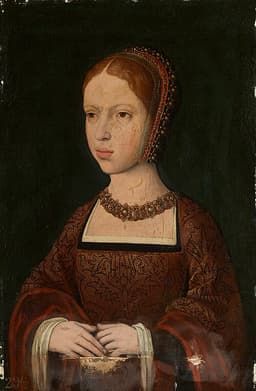
Christian II of Denmark
Emperor · Medieval
54.1Total

Julius Caesar
General · Ancient
82.8Total
Basic Information
Born
1481
-100
Died
1559
-44
Era
Medieval
Ancient
Nationality
Denmark
Roman Republic
Occupation
Emperor
General
Civilization
Western
Western
Score Comparison
Military (10%)
45.0
88.0
Political (20%)
68.0
78.0
Influence (20%)
54.9
85.0
Legacy (20%)
45.8
82.0
Leadership (15%)
65.7
80.0
Strategy (15%)
43.3
85.0
TOTAL
54.1
82.8
Christian II of Denmark — Complete Timeline
1520 AD
Stockholm BloodbathPolitical Action
After conquering Sweden, Christian II invited Swedish nobles to a coronation banquet in Stockholm, then arrested and executed about 80-90 people, including bishops and leading figures of the Swedish independence party. This massacre aimed to crush Swedish resistance but instead galvanized opposition.
MassacreSwedish IndependenceUnion of Kalmar
Impact: regionaldestructive
1523 AD
Deposition and exilePolitical Action◆ Major
Following the Stockholm Bloodbath, a Swedish rebellion led by Gustav Vasa succeeded in driving out Danish forces. Christian II was deposed in Denmark by his uncle Frederick I, who took the throne. Christian fled to the Netherlands, seeking support from his brother-in-law, Emperor Charles V.
DepositionExileUnion of Kalmar Collapse
Impact: regionaltragic
1526 AD
Introduction of the Reformation in DenmarkReform◆ Major
During his reign, Christian II showed early support for Lutheran ideas, inviting reformers and translating the New Testament into Danish. Though his deposition interrupted this, his actions laid groundwork for the official Reformation under his successor, Christian III.
ReformationLutheranismReligious Change
Impact: regionalprogressive
1531 AD
Attempted reconquest of NorwayWar◆ Major
Christian II launched a military expedition from the Netherlands to reclaim his thrones, landing in Norway. He failed to gain sufficient support and was captured by his rival, Frederick I. He was imprisoned for the rest of his life, first at S
Military CampaignImprisonmentFailed Restoration
Impact: regionaltragic
Julius Caesar — Complete Timeline
58 BC
Gallic WarsWar◆ Major
Caesar, as proconsul of Gaul, launched a series of campaigns that conquered all of Gaul (modern France, Belgium, and parts of Switzerland). He fought numerous battles, including against the Helvetii, the Belgae, and the Gallic chieftain Vercingetorix. The wars brought immense wealth and a loyal army to Caesar.
Gallic WarsConquestRoman Expansion
Impact: regional
49 BC
Crossing the RubiconPolitical Action◆ Major
Caesar led Legio XIII across the Rubicon River into Italy, defying the Roman Senate's order to disband his army. This act triggered a civil war against Pompey and the Optimates, ultimately leading to Caesar's dictatorship and the end of the Roman Republic.
Roman Civil WarEnd of RepublicPower Struggle
Impact: global
48 BC
Battle of PharsalusWar◆ Major
Caesar's outnumbered army defeated the larger forces of Pompey the Great at Pharsalus in Greece. Caesar's tactical use of a reserve line to counter Pompey's cavalry charge proved decisive. Pompey fled to Egypt, where he was assassinated, leaving Caesar as the undisputed master of the Roman world.
Roman Civil WarBattleDecisive Victory
Impact: regional
44 BC
Appointment as Dictator for LifePolitical Action◆ Major
The Roman Senate appointed Caesar dictator perpetuo (dictator for life), granting him unprecedented personal power. This move concentrated military, legislative, and judicial authority in one person, effectively ending the Roman Republic's traditional system of checks and balances and alarming many senators.
DictatorshipEnd of RepublicPower Consolidation
Impact: regionaldestructive
Assassination on the Ides of MarchPolitical Action◆ Major
A group of Roman senators, led by Marcus Junius Brutus and Gaius Cassius Longinus, stabbed Caesar to death at a meeting of the Senate in the Theatre of Pompey. The assassination was intended to restore the Republic, but instead triggered another civil war that led to the rise of the Roman Empire.
AssassinationRoman PoliticsEnd of Republic
Impact: globaldestructive
Expert Analysis
christian-ii-of-denmark-vs-julius-caesar
# The Dictator and the Doomed King: Caesar and Christian II
On the Ides of March, 44 BCE, a conspiracy of Roman senators stabbed Julius Caesar twenty-three times, ending the life of the most powerful man in the Mediterranean. Fourteen centuries later, in April 1523, another ruler—Christian II of Denmark—fled his own capital in a fishing boat as his kingdom crumbled around him. Both men reached for absolute power. One built an empire that would shape Western civilization for millennia; the other left behind a legacy of blood and failure. The difference between them is not merely one of ability, but of the relationship between ambition and the age that receives it.
Origins
Julius Caesar was born into a patrician family that had fallen from prominence. His mother, Aurelia, raised him with discipline and ambition, and his aunt Julia had married the great populist general Gaius Marius. From childhood, Caesar breathed the air of Roman civil war and understood that the Republic was a stage for ruthless competition. He was not born to power—he clawed his way toward it through oratory, bribery, and military service.
Christian II was born a prince of the Oldenburg dynasty, heir to the thrones of Denmark, Norway, and Sweden. His father, King Hans, spent his reign trying to hold together the Kalmar Union—a fragile political union of the three Scandinavian kingdoms. Christian inherited a structure already rotting from within. He was educated by humanist scholars and showed early interest in reforming the Church, but he also learned that kingship meant crushing opposition without hesitation.
Rise to Power
Caesar’s path was a masterclass in strategic patience. He served as a military tribune, then quaestor in Spain, then aedile, spending enormous sums on public spectacles to win popularity. By 63 BCE, he had become pontifex maximus, chief priest of Rome. His real breakthrough came with the First Triumvirate in 60 BCE, an alliance with Pompey and Crassus that gave him command of Gaul. Over the next eight years, he conquered a territory larger than Italy itself, winning 88.0 in military and 88.0 in strategy—scores that reflect his ability to combine tactical brilliance with logistical genius.
Christian II’s rise was more straightforward but no less ambitious. He became king of Denmark and Norway in 1513 and immediately set his sights on Sweden, which had effectively broken away from the Kalmar Union. In 1520, after years of war, he finally conquered Stockholm. To cement his rule, he invited Swedish nobles to a coronation banquet—and then arrested and executed eighty of them in what became known as the Stockholm Bloodbath. It was a political action of terrifying brutality, but it achieved the opposite of its intent. Instead of cowing Sweden, it united the country against him.
Leadership & Governance
Caesar governed with a blend of clemency and calculation. He pardoned former enemies like Brutus and Cassius, reformed the calendar, granted citizenship to provincials, and initiated massive public works. His political score of 78.0 captures a man who understood that power required not just force, but institutions that outlasted him. When he crossed the Rubicon in 49 BCE, he knew the Republic could not survive his victory—and he was willing to destroy it to save his own life and legacy.
Christian II, by contrast, governed with a reformist zeal that outpaced his political reality. He supported Lutheran ideas and invited reformers to Denmark, translating the New Testament into Danish and challenging the Catholic Church’s authority. His leadership score of 78.3 suggests genuine vision, but he lacked the subtlety to implement change without inflaming the nobility and clergy who saw him as a tyrant. He was a king who wanted to modernize his kingdom but could not secure the loyalty of those who held the real power.
Triumph & Tragedy
Caesar’s greatest moment was his victory at the Battle of Alesia in 52 BCE, where he defeated the Gallic chieftain Vercingetorix and completed the conquest of Gaul. It was a triumph of engineering, patience, and tactical genius. His tragedy came on the Ides of March, when he was assassinated by men he had trusted. His last words—"Et tu, Brute?"—echo through history as the ultimate betrayal.
Christian II’s triumph was his conquest of Sweden in 1520. But it lasted less than three years. The Stockholm Bloodbath turned his victory into a curse. By 1523, a Swedish rebellion led by Gustav Vasa drove Danish forces out, and Christian was deposed and exiled to the Netherlands. In 1531, he attempted to reclaim Norway by force, landing with a small army. He failed, was captured, and spent the remaining twenty-seven years of his life as a prisoner in a castle cell.
Character & Destiny
Caesar was audacious, charismatic, and relentlessly calculating. He knew when to be merciful and when to be ruthless. His personality—the gambler who trusted his luck, the aristocrat who courted the mob—drove him to take risks that would have destroyed lesser men. But his fatal flaw was his belief that he could control the forces he unleashed. He underestimated how deeply the Roman elite hated monarchy.
Christian II was equally ambitious but less perceptive. He believed that terror could substitute for legitimacy. The Stockholm Bloodbath was not a miscalculation—it was a revelation of his character. He saw his enemies as obstacles to be eliminated, not as constituencies to be managed. And so he ended his days not as a martyr or a reformer, but as a cautionary tale.
Legacy
Caesar’s legacy is immeasurable. His conquests spread Roman civilization across Europe. His reforms laid the foundation for the Roman Empire. His name became a title—Kaiser, Tsar—and his writings, the *Commentarii*, remain military classics. His influence score of 85.0 and legacy of 82.0 are perhaps even understated.
Christian II’s legacy is far smaller. He is remembered in Denmark as a failed king, in Sweden as a butcher. His reforms did not survive his deposition. His attempt to introduce the Reformation was completed by his successor, Christian III. He left behind a reputation for cruelty and incompetence, a 60.7 legacy that reflects a ruler who aimed high but fell catastrophically short.
Conclusion
The difference between Caesar and Christian II is not simply that one was a genius and the other a fool. Both were ambitious. Both were ruthless. Both wanted to reshape their worlds. But Caesar understood that power must be built on foundations of loyalty, institutions, and careful timing. Christian II believed that violence alone could sustain a throne. One crossed the Rubicon and changed history. The other crossed a banquet hall with a list of names and sealed his own doom. In the end, the dictator who was killed by his friends left a greater mark than the king who was killed by his own mistakes.
Rankings
🥇
Julius CaesarLeader
Mil: 88.0Pol: 78.0Inf: 85.0
82.8
🥈
Christian II of Denmark
Mil: 45.0Pol: 68.0Inf: 54.9
54.1
+28.7 behind
How This Comparison Works
Algorithm
Each figure is scored on 6 dimensions (0—100 scale) based on structured historical data: Military (10%), Political (20%), Influence (20%), Legacy (20%), Leadership (15%), Strategy (15%). The weighted total produces the final ranking.
Data Sources
Scores are computed from structured sub-indicators in the database. Scale factors adjust for era (Ancient ×0.85, Modern ×1.0) and civilization size (Eastern ×1.05, Other ×0.80) to account for differences in population and military scale.
Maximum 3 Figures
Comparisons are limited to 2—3 figures to ensure readability and statistical meaningfulness.
Error Margins
±5 points per dimension — Sub-scores are derived from historical records with inherent uncertainty. Two figures within 5 points on a dimension should be considered roughly equivalent in that area.
Total Score Accuracy
±3 points overall — The weighted combination of 6 dimensions produces a total score with approximately ±3 points of uncertainty. Differences of less than 3 points are not statistically significant— the figures are effectively tied.
Known Limitations
- Historical records are incomplete and uneven across civilizations
- Figures from oral-tradition societies may be underrepresented
- Occupation labels can misclassify multi-role figures
- Scores measure capability and impact, not moral character
- Quantitative scoring is a comparison tool, not absolute truth
Capability Radar
Military (10%) — Battles & Warfare
Battles
30
95
Win Rate
25
92
Expansion
30
97
Political (20%) — Governance & Reform
Reform
55
90
Diplomacy
30
85
Economy
40
82
Influence (20%) — Cultural & Global Reach
Cultural
40
88
Global
30
94
Legacy (20%) — Historical Impact
Historical
50
95
Longevity
35
96
Leadership (15%) — Power & Stability
Tenure
45
75
Stability
20
60
Strategy (15%) — Tactics & Innovation
Strategy
35
94
Tactics
30
96
Reform
40
88
Similar Comparisons
Comments & Discussion
历史骰子手6/17/2026
别拿战神跟客栈老板比。凯撒在高卢杀了百万蛮族,两万部队打过英吉利海峡,连海盗都怕他三分。克里斯蒂安二世干了啥?1520年骗瑞典贵族来宴会,灌醉后全砍了——这不叫政治手腕,叫"得罪完所有人"的教科书操作。凯撒死后还有人打架抢罗马,克里斯蒂安跑路时连条狗都不想跟他走。输的方式更显本事。
IronBrigade6/17/2026
Comparing Christian II to Caesar is like comparing a bonfire to the sun. Caesar wasn't just a conqueror—he was a political genius who rewrote the DNA of the Roman Republic. The Rubicon crossing alone shows strategic audacity that Christian couldn't match in a lifetime. Caesar's reforms, from the Julian calendar to land redistribution, lasted millennia. Christian II? He's remembered for the Stockholm Bloodbath. That's not a legacy, that's a crime scene. One built an empire, the other couldn't eve