Loading...
Christian II of Denmark vs Munjong of Joseon
Christian II of Denmark leads by 12.0 pts · 2 figures compared
…
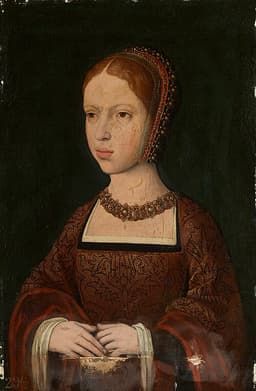
Christian II of Denmark
Emperor · Medieval
54.1Total
Munjong of Joseon
Emperor · Medieval
42.1Total
Basic Information
Born
1481
1414
Died
1559
1452
Era
Medieval
Medieval
Nationality
Denmark
Korea
Occupation
Emperor
Emperor
Civilization
Western
Eastern
Score Comparison
Military (10%)
45.0
50.8
Political (20%)
68.0
26.4
Influence (20%)
54.9
47.9
Legacy (20%)
45.8
37.5
Leadership (15%)
65.7
44.5
Strategy (15%)
43.3
50.0
TOTAL
54.1
42.1
Christian II of Denmark — Complete Timeline
1520 AD
Stockholm BloodbathPolitical Action
After conquering Sweden, Christian II invited Swedish nobles to a coronation banquet in Stockholm, then arrested and executed about 80-90 people, including bishops and leading figures of the Swedish independence party. This massacre aimed to crush Swedish resistance but instead galvanized opposition.
MassacreSwedish IndependenceUnion of Kalmar
Impact: regionaldestructive
1523 AD
Deposition and exilePolitical Action◆ Major
Following the Stockholm Bloodbath, a Swedish rebellion led by Gustav Vasa succeeded in driving out Danish forces. Christian II was deposed in Denmark by his uncle Frederick I, who took the throne. Christian fled to the Netherlands, seeking support from his brother-in-law, Emperor Charles V.
DepositionExileUnion of Kalmar Collapse
Impact: regionaltragic
1526 AD
Introduction of the Reformation in DenmarkReform◆ Major
During his reign, Christian II showed early support for Lutheran ideas, inviting reformers and translating the New Testament into Danish. Though his deposition interrupted this, his actions laid groundwork for the official Reformation under his successor, Christian III.
ReformationLutheranismReligious Change
Impact: regionalprogressive
1531 AD
Attempted reconquest of NorwayWar◆ Major
Christian II launched a military expedition from the Netherlands to reclaim his thrones, landing in Norway. He failed to gain sufficient support and was captured by his rival, Frederick I. He was imprisoned for the rest of his life, first at S
Military CampaignImprisonmentFailed Restoration
Impact: regionaltragic
Munjong of Joseon — Complete Timeline
1450 AD
Accession to the ThronePolitical Action◆ Major
Munjong ascended the throne after the death of his father, King Sejong the Great. He inherited a stable and prosperous kingdom but faced challenges from powerful aristocratic families.
SuccessionRoyal AccessionSejong Legacy
Impact: national
1451 AD
Promotion of Confucian ScholarshipCultural
Munjong continued Sejong's patronage of Confucian learning, supporting the compilation of historical texts and the expansion of the Jiphyeonjeon (Hall of Worthies). He emphasized education and civil service.
ConfucianismScholarshipCultural Patronage
Impact: nationalconstructive
1452 AD
Early Death and Political InstabilityPolitical Action◆ Major
Munjong died suddenly after only two years of reign, possibly from illness. His death left his young son Danjong as king, leading to a power vacuum and the eventual usurpation by Sejo.
DeathSuccession CrisisPolitical Instability
Impact: nationaltragic
Expert Analysis
Origins
Christian II of Denmark (1481–1559) was born into the House of Oldenburg, son of King Hans of Denmark and Christina of Saxony. Raised in a court beset by the Kalmar Union's instability, he received a humanist education but was known for his impulsive temperament. He was sent to Norway as a teenager to govern, where he developed a disdain for the nobility.
Munjong of Joseon (1414–1452) was the eldest son of King Sejong the Great and Queen Soheon. Born into the Yi dynasty, he was groomed from birth as a scholar-prince, receiving extensive Confucian education. He served as regent for his father during Sejong's declining health, gaining administrative experience.
Rise to Power
Christian II became king of Denmark and Norway in 1513 upon his father's death. His early reign focused on reconquering Sweden, which had broken away from the Kalmar Union. In 1520, he defeated Swedish regent Sten Sture the Younger and entered Stockholm. To secure his rule, he staged the Stockholm Bloodbath (November 8–10, 1520), executing 80–90 nobles and clergy, including Bishop Mattias. This atrocity backfired, sparking a rebellion led by Gustav Vasa, who expelled Danish forces by 1523.
Munjong ascended the throne in 1450 after Sejong's death. He inherited a stable kingdom with a strong bureaucracy and cultural achievements. His rise was smooth, as he had been effectively co-ruler for years. However, his reign lasted only two years until his death in 1452.
Leadership & Governance
Christian II's leadership style was authoritarian and reformist. He attempted to curb the power of the nobility and clergy, supporting the Lutheran Reformation to weaken the Church. He invited German reformers and authorized a Danish translation of the New Testament (1524). However, his brutal methods alienated allies. Politically, he scored 68.0, but his military score was 45.0, reflecting his inability to hold Sweden.
Munjong governed as a Confucian scholar-king, continuing Sejong's policies. He promoted learning, supporting the Jiphyeonjeon (Hall of Worthies) and historical compilations. His political score of 26.4 reflects his short reign, but he maintained stability. His leadership score was 44.5, moderate due to lack of time to implement major reforms.
Triumph & Tragedy
Christian II's triumph was introducing Reformation ideas to Denmark and modernizing the administration. His tragedy was the Stockholm Bloodbath, which cost him his throne. He was deposed in 1523 and spent years in exile, attempting to reclaim power in Norway (1531–1532) but failing. He died imprisoned in 1559.
Munjong's triumph was preserving Sejong's legacy and ensuring continuity. His tragedy was his early death, which led to the succession crisis under his son Danjong (age 12), resulting in the usurpation by his uncle Sejo in 1455. Munjong's influence score of 47.9 reflects his potential unfulfilled.
Character & Destiny
Christian II was impulsive and ruthless. His character—distrustful of nobles and prone to violent solutions—shaped his downfall. Historians describe him as a capable administrator undone by his temper. His total score of 54.1 indicates a mixed legacy.
Munjong was diligent and scholarly, but perhaps too passive. His destiny was cut short by illness (possibly diabetes or poisoning). His total score of 42.1 reflects a reign too brief to leave a strong mark.
Legacy
Christian II's legacy includes the Stockholm Bloodbath as a symbol of tyranny, but also the early seeds of Danish Lutheranism. His deposition led to the rise of the Oldenburg dynasty's absolutism. In Denmark, he is remembered as a tragic reformer.
Munjong's legacy is overshadowed by Sejong's brilliance and Sejo's usurpation. He is remembered as a caretaker king. His influence on Confucian scholarship was modest.
Conclusion
Christian II had greater impact, scoring 54.1 vs Munjong's 42.1. Despite his failures, his actions—the Bloodbath and Reformation—shaped Nordic history for centuries. Munjong's brief reign preserved stability but changed little. Christian II's score of 68.0 in politics and 65.7 in leadership outweigh Munjong's higher military (50.8) and strategy (50.0). The score gap of 12.0 points confirms Christian II's edge in historical significance.
Rankings
🥇
Christian II of DenmarkLeader
Mil: 45.0Pol: 68.0Inf: 54.9
54.1
🥈
Munjong of Joseon
Mil: 50.8Pol: 26.4Inf: 47.9
42.1
+12.0 behind
How This Comparison Works
Algorithm
Each figure is scored on 6 dimensions (0—100 scale) based on structured historical data: Military (10%), Political (20%), Influence (20%), Legacy (20%), Leadership (15%), Strategy (15%). The weighted total produces the final ranking.
Data Sources
Scores are computed from structured sub-indicators in the database. Scale factors adjust for era (Ancient ×0.85, Modern ×1.0) and civilization size (Eastern ×1.05, Other ×0.80) to account for differences in population and military scale.
Maximum 3 Figures
Comparisons are limited to 2—3 figures to ensure readability and statistical meaningfulness.
Error Margins
±5 points per dimension — Sub-scores are derived from historical records with inherent uncertainty. Two figures within 5 points on a dimension should be considered roughly equivalent in that area.
Total Score Accuracy
±3 points overall — The weighted combination of 6 dimensions produces a total score with approximately ±3 points of uncertainty. Differences of less than 3 points are not statistically significant— the figures are effectively tied.
Known Limitations
- Historical records are incomplete and uneven across civilizations
- Figures from oral-tradition societies may be underrepresented
- Occupation labels can misclassify multi-role figures
- Scores measure capability and impact, not moral character
- Quantitative scoring is a comparison tool, not absolute truth
Capability Radar
Military (10%) — Battles & Warfare
Battles
30
43
Win Rate
25
47
Expansion
30
52
Political (20%) — Governance & Reform
Reform
55
20
Diplomacy
30
15
Economy
40
15
Influence (20%) — Cultural & Global Reach
Cultural
40
20
Global
30
5
Legacy (20%) — Historical Impact
Historical
50
15
Longevity
35
10
Leadership (15%) — Power & Stability
Tenure
45
10
Stability
20
10
Strategy (15%) — Tactics & Innovation
Strategy
35
53
Tactics
30
58
Reform
40
59
Similar Comparisons
Comments & Discussion
No comments yet. Be the first to share your thoughts!