Loading...
Christian II of Denmark vs King Taejo of Goryeo
King Taejo of Goryeo leads by 16.0 pts · 2 figures compared
…

Christian II of Denmark
Emperor · Medieval
54.1Total
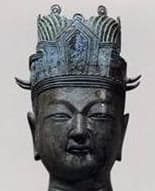
King Taejo of Goryeo
Emperor · Medieval
70.1Total
Basic Information
Born
1481
877
Died
1559
943
Era
Medieval
Medieval
Nationality
Denmark
Korea
Occupation
Emperor
Emperor
Civilization
Western
Eastern
Score Comparison
Military (10%)
45.0
78.0
Political (20%)
68.0
72.0
Influence (20%)
54.9
65.0
Legacy (20%)
45.8
65.0
Leadership (15%)
65.7
82.0
Strategy (15%)
43.3
67.2
TOTAL
54.1
70.1
Christian II of Denmark — Complete Timeline
1520 AD
Stockholm BloodbathPolitical Action
After conquering Sweden, Christian II invited Swedish nobles to a coronation banquet in Stockholm, then arrested and executed about 80-90 people, including bishops and leading figures of the Swedish independence party. This massacre aimed to crush Swedish resistance but instead galvanized opposition.
MassacreSwedish IndependenceUnion of Kalmar
Impact: regionaldestructive
1523 AD
Deposition and exilePolitical Action◆ Major
Following the Stockholm Bloodbath, a Swedish rebellion led by Gustav Vasa succeeded in driving out Danish forces. Christian II was deposed in Denmark by his uncle Frederick I, who took the throne. Christian fled to the Netherlands, seeking support from his brother-in-law, Emperor Charles V.
DepositionExileUnion of Kalmar Collapse
Impact: regionaltragic
1526 AD
Introduction of the Reformation in DenmarkReform◆ Major
During his reign, Christian II showed early support for Lutheran ideas, inviting reformers and translating the New Testament into Danish. Though his deposition interrupted this, his actions laid groundwork for the official Reformation under his successor, Christian III.
ReformationLutheranismReligious Change
Impact: regionalprogressive
1531 AD
Attempted reconquest of NorwayWar◆ Major
Christian II launched a military expedition from the Netherlands to reclaim his thrones, landing in Norway. He failed to gain sufficient support and was captured by his rival, Frederick I. He was imprisoned for the rest of his life, first at S
Military CampaignImprisonmentFailed Restoration
Impact: regionaltragic
King Taejo of Goryeo — Complete Timeline
918 AD
Founded the Goryeo DynastyPolitical Action
Wang Geon (Taejo) overthrew the Later Goguryeo state and established the Goryeo dynasty, with its capital at Songak (Kaesong). This marked the beginning of a new era in Korean history.
Dynasty FoundingGoryeoKorea
Impact: regionalconstructive
920 AD
Adopted a Policy of Marrying Local ElitesPolitical Action◆ Major
Taejo married women from powerful local clans to secure their loyalty and integrate regional powers into the Goryeo state. This policy helped stabilize the new dynasty.
Marriage PolicyGoryeoUnification
Impact: regionalconstructive
936 AD
Unified the Later Three KingdomsWar
Taejo completed the unification of the Later Three Kingdoms (Later Goguryeo, Later Baekje, and Silla) under Goryeo rule. This ended the period of division and established a unified Korean state.
UnificationLater Three KingdomsGoryeo
Impact: regionalconstructive
943 AD
Implemented Ten InjunctionsPolitical Action◆ Major
Taejo issued the Ten Injunctions, a set of political guidelines for his successors. These stressed the importance of Buddhism, diplomacy with China, and avoiding internal conflict.
GovernanceGoryeoPolicy
Impact: regionalconstructive
Expert Analysis
Origins
Christian II of Denmark (1481–1559) was born into the Oldenburg dynasty, the son of King Hans and Christina of Saxony. He received a humanist education but was marked by a harsh upbringing. His early exposure to low German culture and his mother's death shaped a temperament that was both intellectually curious and ruthlessly pragmatic. He ascended the throne in 1513, inheriting the Kalmar Union—a fragile union of Denmark, Norway, and Sweden.
Wang Geon, later King Taejo of Goryeo (877–943), was born into a powerful maritime trading family in Songak (modern Kaesong). His father, Wang Ryung, was a local lord who served the Later Goguryeo state. Taejo grew up in a period of chaos known as the Later Three Kingdoms period, where the unified Silla kingdom had collapsed into rival states. He joined the military under the Later Goguryeo ruler Gung Ye and quickly distinguished himself through naval campaigns and strategic marriages.
Rise to Power
Christian II became king of Denmark and Norway in 1513, but his ambition to restore the Kalmar Union under Danish hegemony drove him to conquer Sweden. In 1520, he invaded Sweden and defeated the regent Sten Sture the Younger. After a brief siege of Stockholm, he was crowned king of Sweden. To consolidate power, he invited Swedish nobles to a coronation banquet, then arrested and executed 80–90 people in the Stockholm Bloodbath (November 1520), including bishops and nobles. This act of terror backfired, sparking a rebellion led by Gustav Vasa, who drove out Danish forces by 1523.
Taejo's rise began under Gung Ye, the ruler of Later Goguryeo. But Gung Ye became paranoid and tyrannical, executing many officials. In 918, Wang Geon led a coup with support from key generals and replaced Gung Ye, founding the Goryeo dynasty. He immediately set out to unify the Later Three Kingdoms. Through a combination of military campaigns and diplomatic marriages, he absorbed the Later Baekje kingdom in 936 and peacefully integrated the remnants of Silla. His political acumen scored 72.0, while Christian's political score is 68.0.
Leadership & Governance
Christian II introduced early Reformation ideas, inviting Lutheran reformers and translating the New Testament into Danish. He also sought to centralize royal power by curbing the nobility and promoting commoners. However, his reliance on force and his brutal suppression of opposition alienated the very elites he needed. His leadership score of 65.7 reflects his authoritarian style, which ultimately led to his deposition in 1523 when the Danish nobility rebelled.
Taejo's governance was the opposite: he built consensus through marriage alliances, integrating 29 wives from powerful local clans. His Ten Injunctions (written in 943) provided a political blueprint, emphasizing Buddhism, diplomacy with China, and the importance of local elites. He avoided centralization by allowing regional lords to maintain power, fostering loyalty. His leadership score of 82.0 reflects his inclusive approach, which stabilized the new dynasty for 474 years.
Triumph & Tragedy
Christian's greatest triumph was briefly reuniting the Kalmar Union and introducing reformist ideas. His tragedy was the Stockholm Bloodbath, which turned Sweden into a permanent enemy and led to his exile. He later attempted to regain his throne with a failed invasion of Norway in 1531, ending his days as a prisoner in Denmark. His legacy score is 45.8, as his reign is remembered as a cautionary tale of overreach.
Taejo's triumph was the unification of Korea under Goryeo, ending decades of war. His tragedy is less personal: his dynasty faced later invasions, but his foundation was solid. His influence score of 65.0 and legacy score of 65.0 reflect his enduring impact. The name 'Korea' derives from 'Goryeo'.
Character & Destiny
Christian II was intelligent but impulsive and vengeful. His inability to forgive or build alliances doomed him. He scored 43.3 in strategy, favoring brute force over diplomacy. Taejo was patient and calculating, using marriage and policy to secure loyalty. His strategy score of 67.2 shows a long-term thinker who understood the value of soft power.
Legacy
Christian II's legacy is largely negative in Scandinavia—the Stockholm Bloodbath remains a symbol of tyranny. However, his early support for Lutheranism paved the way for the Reformation in Denmark. Taejo's legacy is foundational: the Goryeo dynasty lasted until 1392, and his policies shaped Korean statecraft for centuries. The Ten Injunctions influenced later dynasties, and his unification set the stage for a unified Korean identity.
Conclusion
King Taejo of Goryeo had a greater impact. His total score of 70.1 compared to Christian II's 54.1 reflects not just better military and political skills, but a legacy that lasted nearly five centuries. Christian II's reign was a disaster that ended the Kalmar Union and brought chaos to Scandinavia. Taejo's reign ended civil war and established a stable dynasty. While Christian's influence on the Reformation is notable, Taejo's foundation of a unified Korea is historically more significant.
Rankings
🥇
King Taejo of GoryeoLeader
Mil: 78.0Pol: 72.0Inf: 65.0
70.1
🥈
Christian II of Denmark
Mil: 45.0Pol: 68.0Inf: 54.9
54.1
+16.0 behind
How This Comparison Works
Algorithm
Each figure is scored on 6 dimensions (0—100 scale) based on structured historical data: Military (10%), Political (20%), Influence (20%), Legacy (20%), Leadership (15%), Strategy (15%). The weighted total produces the final ranking.
Data Sources
Scores are computed from structured sub-indicators in the database. Scale factors adjust for era (Ancient ×0.85, Modern ×1.0) and civilization size (Eastern ×1.05, Other ×0.80) to account for differences in population and military scale.
Maximum 3 Figures
Comparisons are limited to 2—3 figures to ensure readability and statistical meaningfulness.
Error Margins
±5 points per dimension — Sub-scores are derived from historical records with inherent uncertainty. Two figures within 5 points on a dimension should be considered roughly equivalent in that area.
Total Score Accuracy
±3 points overall — The weighted combination of 6 dimensions produces a total score with approximately ±3 points of uncertainty. Differences of less than 3 points are not statistically significant— the figures are effectively tied.
Known Limitations
- Historical records are incomplete and uneven across civilizations
- Figures from oral-tradition societies may be underrepresented
- Occupation labels can misclassify multi-role figures
- Scores measure capability and impact, not moral character
- Quantitative scoring is a comparison tool, not absolute truth
Capability Radar
Military (10%) — Battles & Warfare
Battles
30
75
Win Rate
25
80
Expansion
30
80
Political (20%) — Governance & Reform
Reform
55
80
Diplomacy
30
75
Economy
40
70
Influence (20%) — Cultural & Global Reach
Cultural
40
70
Global
30
60
Legacy (20%) — Historical Impact
Historical
50
80
Longevity
35
75
Leadership (15%) — Power & Stability
Tenure
45
85
Stability
20
75
Strategy (15%) — Tactics & Innovation
Strategy
35
85
Tactics
30
70
Reform
40
65
Similar Comparisons
Comments & Discussion
No comments yet. Be the first to share your thoughts!