Loading...
Christian VI of Denmark vs Henri of Luxembourg
Christian VI of Denmark leads by 8.0 pts · 2 figures compared
…
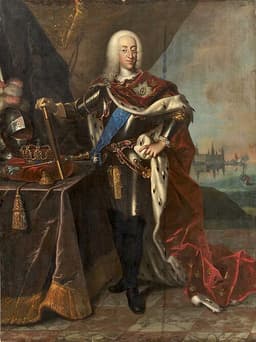
Christian VI of Denmark
Emperor · Modern
53.2Total
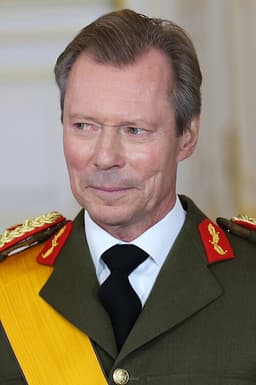
Henri of Luxembourg
Emperor · Modern
45.2Total
Basic Information
Born
1699
1955
Died
1746
—
Era
Modern
Modern
Nationality
Denmark
Luxembourg
Occupation
Emperor
Emperor
Civilization
Western
Western
Score Comparison
Military (10%)
22.6
46.2
Political (20%)
68.0
33.6
Influence (20%)
53.3
47.9
Legacy (20%)
42.5
35.0
Leadership (15%)
72.0
61.6
Strategy (15%)
60.0
55.5
TOTAL
53.2
45.2
Christian VI of Denmark — Complete Timeline
1705 AD
Establishment of the Danish Missionary SocietyCultural
Christian VI supported the founding of the Danish Missionary Society, which sent missionaries to India and Greenland. This expanded Danish colonial influence and spread Lutheranism abroad.
MissionColonialismLutheranism
Impact: global
1730 AD
Introduction of Pietism as State ReligionReform◆ Major
Christian VI promoted Pietism, a strict Lutheran movement, as the official religious policy. He enforced religious observance, banned secular entertainment, and established missionary work, deeply influencing Danish society.
PietismReligionReform
Impact: national
1733 AD
Construction of Christiansborg PalaceCultural◆ Major
Christian VI commissioned the construction of Christiansborg Palace in Copenhagen, a grand Baroque palace that became the royal residence. It symbolized the absolute monarchy and remained the seat of government.
ArchitectureChristiansborgRoyal Palace
Impact: nationalconstructive
1735 AD
Economic Reforms and MercantilismReform
Christian VI implemented mercantilist economic policies, including state monopolies and trade regulations. These reforms aimed to boost Danish industry and reduce imports, but they also stifled private enterprise.
EconomyMercantilismReform
Impact: national
Henri of Luxembourg — Complete Timeline
2000 AD
Accession to the thronePolitical Action◆ Major
Henri became Grand Duke of Luxembourg on October 7, 2000, following the abdication of his father, Grand Duke Jean. He inherited a constitutional monarchy with limited powers, serving as head of state and symbol of national unity.
AccessionMonarchyLuxembourg
Impact: national
Representation of Luxembourg internationallyCultural
As Grand Duke, Henri represented Luxembourg in numerous international events, including state visits, EU summits, and cultural exchanges. He promoted Luxembourg's role as a founding member of the EU and its financial center, strengthening diplomatic ties.
DiplomacyEUInternational Relations
Impact: regionalconstructive
2008 AD
Constitutional role in legislative processPolitical Action◆ Major
In 2008, Henri refused to sign a law legalizing euthanasia on moral grounds, leading to a constitutional crisis. The parliament subsequently amended the constitution to remove the Grand Duke's formal role in the legislative process, reducing his powers to a purely ceremonial function.
Constitutional CrisisEuthanasiaMonarchy
Impact: national
Expert Analysis
Origins
Christian VI of Denmark was born in 1699, the son of King Frederik IV and Louise of Mecklenburg-Güstrow. He received a strict Lutheran education and was heavily influenced by Pietism, a movement emphasizing personal piety and moral rigor. His upbringing in the Danish court exposed him to the demands of absolute monarchy, as Denmark had become an absolute monarchy in 1660. Henri of Luxembourg was born in 1955, the eldest son of Grand Duke Jean and Princess Joséphine-Charlotte of Belgium. He was educated in Luxembourg, France, and Switzerland, studying political science at the University of Geneva. Henri's upbringing was within a constitutional monarchy, where his role was largely ceremonial. His family had reigned since 1890, following the Nassau-Weilburg dynasty.
Rise to Power
Christian VI ascended the throne in 1730 upon his father's death. His reign was marked by a lack of significant military conflict, as Denmark had been weakened by the Great Northern War (1700-1721). He focused on consolidating royal authority and promoting Pietism. Henri became Grand Duke in 2000 after his father's abdication. His rise was smooth, reflecting the stability of Luxembourg's constitutional monarchy. He had no major opponents, as his role was largely symbolic. In 2008, he exercised his constitutional right to refuse royal assent to a euthanasia law, which led to a constitutional amendment removing that power. This event defined his reign.
Leadership & Governance
Christian VI governed as an absolute monarch, implementing Pietist reforms. He banned secular entertainment, enforced church attendance, and established the Danish Missionary Society in 1732. His economic policies were mercantilist, including state monopolies on trade and manufacturing. He built Christiansborg Palace (1733-1745), a symbol of royal power costing over 10% of state revenue. His political score of 68.0 reflects his effective control, but his military score of 22.6 indicates neglect of defense. Henri's governance is limited by Luxembourg's constitution. He represents the state but has no executive power. In 2008, he refused to sign the euthanasia bill on moral grounds, scoring 33.6 in political influence. His leadership score of 61.6 reflects his popularity and diplomatic role, but his strategic score of 55.5 suggests limited impact. Henri's approach contrasts sharply with Christian VI's authoritarianism.
Triumph & Tragedy
Christian VI's greatest success was the construction of Christiansborg Palace, which became a lasting symbol of Danish monarchy. His Pietist reforms created a unified religious culture, though they were unpopular. His tragedy was the economic stagnation caused by mercantilism and the alienation of the nobility. The palace burned down in 1794, a metaphor for his fragile legacy. Henri's triumph was maintaining stability during constitutional change; his refusal to sign the euthanasia law led to a peaceful amendment. His tragedy is the reduction of his constitutional power, leaving him with even less influence. His legacy score of 35.0 reflects this diminished role.
Character & Destiny
Christian VI was devout, stubborn, and introverted. His piety drove his reforms but also isolated him from the aristocracy. He died in 1746, leaving a rigid state. Henri is pragmatic and diplomatic, but his moral stand on euthanasia showed conviction. His destiny as a constitutional monarch limits his impact; he is a figurehead rather than a ruler. Christian VI's character shaped an absolute monarchy, while Henri's character adapted to a limited role.
Legacy
Christian VI's legacy is mixed: Christiansborg Palace remains a landmark, but his Pietist policies were reversed after his death. The Danish Missionary Society lasted, but his economic policies failed. He is remembered as a religious zealot rather than a reformer. Henri's legacy is the constitutional precedent of royal assent removal. He is seen as a modern, benign monarch. In terms of impact, Christian VI scored 53.2 overall, higher than Henri's 45.2. Christian VI's influence on Danish state and religion was tangible, while Henri's role is symbolic.
Conclusion
Christian VI had greater impact than Henri. His absolute rule allowed him to shape Danish society, religion, and architecture. Despite unpopularity, his policies left a mark on Danish history. Henri, constrained by constitutional limits, had minimal influence beyond a single legislative crisis. Christian VI's total score of 53.2 versus Henri's 45.2 reflects this. The difference is clear: one was a ruler who changed his nation, the other a symbol who preserved tradition.
Rankings
🥇
Christian VI of DenmarkLeader
Mil: 22.6Pol: 68.0Inf: 53.3
53.2
🥈
Henri of Luxembourg
Mil: 46.2Pol: 33.6Inf: 47.9
45.2
+8.0 behind
How This Comparison Works
Algorithm
Each figure is scored on 6 dimensions (0—100 scale) based on structured historical data: Military (10%), Political (20%), Influence (20%), Legacy (20%), Leadership (15%), Strategy (15%). The weighted total produces the final ranking.
Data Sources
Scores are computed from structured sub-indicators in the database. Scale factors adjust for era (Ancient ×0.85, Modern ×1.0) and civilization size (Eastern ×1.05, Other ×0.80) to account for differences in population and military scale.
Maximum 3 Figures
Comparisons are limited to 2—3 figures to ensure readability and statistical meaningfulness.
Error Margins
±5 points per dimension — Sub-scores are derived from historical records with inherent uncertainty. Two figures within 5 points on a dimension should be considered roughly equivalent in that area.
Total Score Accuracy
±3 points overall — The weighted combination of 6 dimensions produces a total score with approximately ±3 points of uncertainty. Differences of less than 3 points are not statistically significant— the figures are effectively tied.
Known Limitations
- Historical records are incomplete and uneven across civilizations
- Figures from oral-tradition societies may be underrepresented
- Occupation labels can misclassify multi-role figures
- Scores measure capability and impact, not moral character
- Quantitative scoring is a comparison tool, not absolute truth
Capability Radar
Military (10%) — Battles & Warfare
Battles
34
26
Win Rate
40
28
Expansion
42
28
Political (20%) — Governance & Reform
Reform
55
15
Diplomacy
50
30
Economy
45
25
Influence (20%) — Cultural & Global Reach
Cultural
40
15
Global
20
10
Legacy (20%) — Historical Impact
Historical
35
10
Longevity
30
10
Leadership (15%) — Power & Stability
Tenure
60
24
Stability
65
35
Strategy (15%) — Tactics & Innovation
Strategy
47
35
Tactics
51
38
Reform
53
38
Similar Comparisons
Comments & Discussion
No comments yet. Be the first to share your thoughts!