Loading...
Christian VI of Denmark vs Salote Tupou III
Salote Tupou III leads by 1.2 pts · 2 figures compared
…
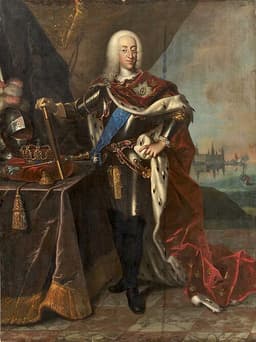
Christian VI of Denmark
Emperor · Modern
53.2Total
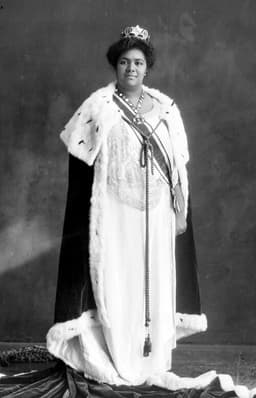
Salote Tupou III
Emperor · Modern
54.4Total
Basic Information
Born
1699
1900
Died
1746
1965
Era
Modern
Modern
Nationality
Denmark
Tonga
Occupation
Emperor
Emperor
Civilization
Western
Other
Score Comparison
Military (10%)
22.6
12.0
Political (20%)
68.0
70.3
Influence (20%)
53.3
55.0
Legacy (20%)
42.5
54.0
Leadership (15%)
72.0
81.7
Strategy (15%)
60.0
31.8
TOTAL
53.2
54.4
Christian VI of Denmark — Complete Timeline
1705 AD
Establishment of the Danish Missionary SocietyCultural
Christian VI supported the founding of the Danish Missionary Society, which sent missionaries to India and Greenland. This expanded Danish colonial influence and spread Lutheranism abroad.
MissionColonialismLutheranism
Impact: global
1730 AD
Introduction of Pietism as State ReligionReform◆ Major
Christian VI promoted Pietism, a strict Lutheran movement, as the official religious policy. He enforced religious observance, banned secular entertainment, and established missionary work, deeply influencing Danish society.
PietismReligionReform
Impact: national
1733 AD
Construction of Christiansborg PalaceCultural◆ Major
Christian VI commissioned the construction of Christiansborg Palace in Copenhagen, a grand Baroque palace that became the royal residence. It symbolized the absolute monarchy and remained the seat of government.
ArchitectureChristiansborgRoyal Palace
Impact: nationalconstructive
1735 AD
Economic Reforms and MercantilismReform
Christian VI implemented mercantilist economic policies, including state monopolies and trade regulations. These reforms aimed to boost Danish industry and reduce imports, but they also stifled private enterprise.
EconomyMercantilismReform
Impact: national
Salote Tupou III — Complete Timeline
1918 AD
Ascended to the throne as Queen of TongaPolitical Action◆ Major
Salote Tupou III became Queen of Tonga on 5 April 1918, following the death of her father King George Tupou II. She was the first queen regnant of Tonga and reigned for 47 years.
TongaMonarchySuccession
Impact: regional
1920 AD
Modernized Tonga's education and health systemsReform◆ Major
Salote Tupou III oversaw the expansion of education and healthcare in Tonga. She established schools, improved public health infrastructure, and promoted literacy, significantly raising living standards in the kingdom.
TongaEducationHealth
Impact: regionalconstructive
1939 AD
Maintained Tonga's independence during World War IIPolitical Action◆ Major
During World War II, Salote Tupou III kept Tonga neutral while allowing Allied forces to use Tongan territory. She also contributed troops and resources to the Allied war effort, strengthening Tonga's relationship with Western powers.
TongaWorld War IIDiplomacy
Impact: regionalconstructive
1953 AD
Attended the coronation of Queen Elizabeth IICultural◆ Major
Salote Tupou III attended the coronation of Queen Elizabeth II in London in 1953. Her open carriage ride in the rain, smiling and waving, won her widespread admiration and made her a beloved figure internationally.
TongaRoyaltyInternational
Impact: globalconstructive
Expert Analysis
Origins
Christian VI of Denmark was born on 30 November 1699 in Copenhagen, the son of King Frederick IV and Queen Louise of Mecklenburg-Güstrow. He received a strict Lutheran upbringing, heavily influenced by Pietism, a movement emphasizing personal piety and moral rigor. His education focused on theology and statecraft, but he was not groomed as a military leader. In contrast, Salote Tupou III was born on 13 March 1900 in Tonga, the daughter of King George Tupou II and Queen Lavinia Veiongo. She was educated at the Tonga Government School and later at the Anglican Church's Queen's College in Auckland, New Zealand. Her upbringing emphasized traditional Tongan values and modern education, preparing her for leadership in a changing world.
Rise to Power
Christian VI ascended the Danish throne on 12 October 1730 upon his father's death. His rise was unremarkable, as he inherited a stable kingdom. However, he quickly asserted his religious convictions, making Pietism the state religion in 1730. He enforced strict observance, banning secular entertainment and requiring church attendance. Salote Tupou III became queen on 5 April 1918 at age 18, following her father's death. She faced initial challenges due to her youth and gender, but she consolidated power by skillfully navigating Tonga's nobility and the colonial influence of the British. Her coronation in 1918 was a grand affair that reinforced her authority.
Leadership & Governance
Christian VI ruled as an absolute monarch with a focus on religious uniformity. He commissioned Christiansborg Palace (1733-1745) as a symbol of royal power, costing vast sums that strained the treasury. His mercantilist policies, including state monopolies, aimed to boost industry but often stifled private enterprise. He also established the Danish Missionary Society in 1732, sending missionaries to India and Greenland. His leadership score of 72.0 reflects his firm control, but his political score of 68.0 indicates mixed success. Salote Tupou III, with a leadership score of 81.7, governed as a constitutional monarch but wielded significant influence. She modernized Tonga's education and health systems, building schools and hospitals. She maintained Tonga's independence during World War II by allowing Allied use of Tongan territory while keeping the kingdom neutral, contributing troops and resources. Her political score of 70.3 shows her adeptness in diplomacy and governance.
Triumph & Tragedy
Christian VI's greatest success was the construction of Christiansborg Palace, which became a lasting symbol of Danish monarchy. His promotion of Pietism unified religious practice but alienated many subjects, leading to resentment. His economic reforms failed to produce long-term growth, and Denmark's power declined relative to other European states. His military score of 22.6 reflects his lack of martial achievements. Salote Tupou III's triumph was her attendance at Elizabeth II's coronation in 1953, where her open carriage ride in the rain endeared her to the British public and brought global attention to Tonga. She successfully modernized her country while preserving its culture. However, her strategy score of 31.8 suggests she was not a strategic military thinker. Her decision to remain neutral in WWII was wise, but she relied heavily on British protection.
Character & Destiny
Christian VI was deeply religious, austere, and introverted. His piety drove his policies, but his lack of charisma and flexibility limited his effectiveness. He was known as "the Pietist King" and his reign saw a cultural stagnation as the court became more solemn. His destiny was to be remembered as a builder but not a reformer. Salote Tupou III was warm, dignified, and beloved. Her height (1.91 m) made her the tallest queen in the world, and her presence at the coronation made her an international icon. Her character endeared her to her people and world leaders, allowing her to modernize Tonga with minimal opposition.
Legacy
Christian VI's legacy is mixed. Christiansborg Palace remains a key landmark, but his religious policies faded after his death. The Danish Missionary Society had lasting impact in Greenland and India. However, his reign is often seen as a period of stagnation. His total score is 53.2. Salote Tupou III's legacy is more positive. She is remembered as the mother of modern Tonga, having expanded education and healthcare. She strengthened Tonga's identity and independence. Her total score is 54.4, slightly higher.
Conclusion
While Christian VI had a higher military score (22.6 vs 12.0) and comparable political scores, Salote Tupou III's leadership (81.7 vs 72.0) and legacy (54.0 vs 42.5) give her the edge. Her ability to modernize a small kingdom while maintaining its independence and winning global admiration surpasses Christian VI's rigid religious reforms and costly building projects. Salote Tupou III had greater impact on her nation's trajectory and international standing.
Rankings
🥇
Salote Tupou IIILeader
Mil: 12.0Pol: 70.3Inf: 55.0
54.4
🥈
Christian VI of Denmark
Mil: 22.6Pol: 68.0Inf: 53.3
53.2
+1.2 behind
How This Comparison Works
Algorithm
Each figure is scored on 6 dimensions (0—100 scale) based on structured historical data: Military (10%), Political (20%), Influence (20%), Legacy (20%), Leadership (15%), Strategy (15%). The weighted total produces the final ranking.
Data Sources
Scores are computed from structured sub-indicators in the database. Scale factors adjust for era (Ancient ×0.85, Modern ×1.0) and civilization size (Eastern ×1.05, Other ×0.80) to account for differences in population and military scale.
Maximum 3 Figures
Comparisons are limited to 2—3 figures to ensure readability and statistical meaningfulness.
Error Margins
±5 points per dimension — Sub-scores are derived from historical records with inherent uncertainty. Two figures within 5 points on a dimension should be considered roughly equivalent in that area.
Total Score Accuracy
±3 points overall — The weighted combination of 6 dimensions produces a total score with approximately ±3 points of uncertainty. Differences of less than 3 points are not statistically significant— the figures are effectively tied.
Known Limitations
- Historical records are incomplete and uneven across civilizations
- Figures from oral-tradition societies may be underrepresented
- Occupation labels can misclassify multi-role figures
- Scores measure capability and impact, not moral character
- Quantitative scoring is a comparison tool, not absolute truth
Capability Radar
Military (10%) — Battles & Warfare
Battles
34
6
Win Rate
40
8
Expansion
42
9
Political (20%) — Governance & Reform
Reform
55
75
Diplomacy
50
80
Economy
45
70
Influence (20%) — Cultural & Global Reach
Cultural
40
65
Global
20
50
Legacy (20%) — Historical Impact
Historical
35
60
Longevity
30
55
Leadership (15%) — Power & Stability
Tenure
60
85
Stability
65
90
Strategy (15%) — Tactics & Innovation
Strategy
47
14
Tactics
51
19
Reform
53
23
Similar Comparisons
Comments & Discussion
No comments yet. Be the first to share your thoughts!