Loading...
Chungnyeol of Goryeo vs Sigismund
Sigismund leads by 6.0 pts · 2 figures compared
…

Chungnyeol of Goryeo
Emperor · Medieval
51.8Total
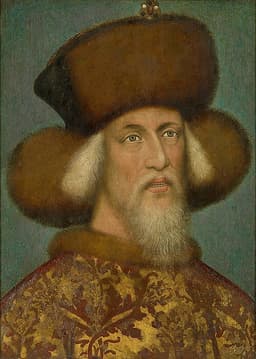
Sigismund
Emperor · Medieval
57.8Total
Basic Information
Born
1236
1368
Died
1308
1437
Era
Medieval
Medieval
Nationality
Korea
Holy Roman Empire
Occupation
Emperor
Emperor
Civilization
Eastern
Western
Score Comparison
Military (10%)
21.2
40.0
Political (20%)
54.7
62.7
Influence (20%)
56.4
60.0
Legacy (20%)
49.2
56.0
Leadership (15%)
74.0
74.0
Strategy (15%)
39.6
43.3
TOTAL
51.8
57.8
Chungnyeol of Goryeo — Complete Timeline
1271 AD
Suppression of Sambyeolcho RebellionWar◆ Major
Chungnyeol, with Mongol support, crushed the Sambyeolcho Rebellion, a military force resisting Mongol domination. The rebellion was defeated on Jeju Island, ending organized Goryeo resistance to Yuan control.
RebellionMongol AllianceMilitary Campaign
Impact: nationaldestructive
1274 AD
Participation in Mongol Invasions of JapanWar◆ Major
Chungnyeol provided Goryeo ships and troops for the Mongol invasions of Japan in 1274 and 1281. The invasions failed due to typhoons, but Goryeo suffered heavy losses in men and resources, straining the kingdom.
Mongol InvasionsJapanMilitary Campaign
Impact: regionaldestructive
Marriage to Mongol PrincessPolitical Action◆ Major
Chungnyeol married a Mongol princess, becoming the first Goryeo king to do so. This marriage solidified Goryeo's status as a vassal state of the Yuan dynasty, initiating a period of Mongol influence over Korean affairs.
Mongol InfluenceDiplomacyYuan Dynasty
Impact: national
1275 AD
Adoption of Mongol CustomsCultural
Chungnyeol adopted Mongol hairstyles, clothing, and court rituals, requiring Goryeo officials to follow suit. This cultural shift demonstrated Goryeo's subordination to the Yuan dynasty and altered Korean court traditions.
Cultural ChangeMongol InfluenceCourt Reform
Impact: national
Sigismund — Complete Timeline
1414 AD
Council of ConstancePolitical Action
Sigismund convened the Council of Constance to end the Western Schism, which had three rival popes. The council deposed all three and elected Pope Martin V, ending the schism. Sigismund played a key role in securing the council's success, though he failed to prevent the execution of Jan Hus.
Council of ConstanceWestern SchismChurch Reform
Impact: globalconstructive
1415 AD
Execution of Jan HusPolitical Action◆ Major
Despite Sigismund's promise of safe conduct to Jan Hus to attend the Council of Constance, Hus was arrested, tried for heresy, and burned at the stake. Sigismund's failure to protect Hus damaged his reputation and sparked the Hussite Wars in Bohemia, which would plague his reign.
Jan HusHeresyHussite Wars
Impact: regionaltragic
1419 AD
Hussite WarsWar◆ Major
Following the death of Wenceslaus IV, Sigismund claimed the throne of Bohemia, but the Hussites refused to accept him as king. This led to a series of military campaigns known as the Hussite Wars. Sigismund led several crusades against the Hussites but was repeatedly defeated by their innovative tactics under Jan
Hussite WarsCrusadeMilitary Conflict
Impact: regionaldestructive
1433 AD
Coronation as Holy Roman EmperorPolitical Action◆ Major
Sigismund was crowned Holy Roman Emperor by Pope Eugene IV in Rome, becoming the last emperor to be crowned in the city. This coronation marked the formal end of the Western Schism and solidified Sigismund's position as the leading secular ruler in Europe.
CoronationImperial AuthorityPapacy
Impact: globalconstructive
1436 AD
Compact of BaselPolitical Action◆ Major
Sigismund negotiated the Compact of Basel with the moderate Hussites (Utraquists), granting them the right to receive communion under both kinds. This agreement temporarily ended the Hussite Wars and allowed Sigismund to finally be recognized as King of Bohemia, though the peace was fragile.
Compact of BaselHussite WarsReligious Tolerance
Impact: regionalconstructive
Expert Analysis
Origins
Chungnyeol of Goryeo (born 1236) was the son of King Wonjong. His early life was shaped by the Mongol invasions of Korea, which began in 1231. He grew up in a period of intense pressure from the Yuan dynasty, which demanded submission. His education focused on Confucian classics but also Mongol customs. Sigismund (born 1368) was the son of Holy Roman Emperor Charles IV and Elizabeth of Pomerania. He was raised in the Luxembourg dynasty's court, educated in Latin, chivalry, and diplomacy. His early years involved managing the inheritance of Brandenburg and Hungary, where he became king in 1387.
Rise to Power
Chungnyeol became king in 1274 after his father's death. His rise was heavily dependent on Yuan support. The key turning point was his marriage to a Mongol princess, Kublai Khan's daughter, which secured his throne but reduced Goryeo to a vassal state. He quickly adopted Mongol customs to appease the Yuan. Sigismund rose through inheritance and marriage. He became King of Hungary in 1387 by marrying Mary of Hungary. His claim to Bohemia came after his brother Wenceslaus IV's death in 1419. The Council of Constance (1414-1418) was his major diplomatic achievement, where he orchestrated the end of the Western Schism.
Leadership & Governance
Chungnyeol ruled as a subordinate to the Yuan. He implemented Mongol-style administration, requiring officials to cut their hair and wear Mongol clothes. He suppressed the Sambyeolcho Rebellion (1270-1273) with Mongol help, crushing resistance on Jeju Island. His governance focused on maintaining stability through submission. Sigismund, on the other hand, was a central figure in European politics. He convened the Council of Constance, which resolved the papal schism. However, his promise of safe conduct to Jan Hus was broken, leading to Hus's execution in 1415. This sparked the Hussite Wars, which he fought for 15 years. His leadership was marked by diplomacy and betrayal, achieving the Compact of Basel in 1436.
Triumph & Tragedy
Chungnyeol's triumph was the suppression of the Sambyeolcho Rebellion, which ended major internal resistance. His tragedy was the failed Mongol invasions of Japan (1274, 1281), where Goryeo provided 30,000 troops and 900 ships. The invasions were destroyed by typhoons, causing massive losses. Chungnyeol's legacy is tarnished by his subservience. Sigismund's triumph was ending the Western Schism, a key achievement for church unity. His tragedy was the Hussite Wars, which devastated Bohemia and killed thousands. He was unable to fully defeat the Hussites, ultimately compromising with them. His broken promise to Hus damaged his reputation.
Character & Destiny
Chungnyeol was pragmatic and adaptable, prioritizing survival over independence. He adopted Mongol customs without resistance, earning Yuan trust but losing Korean identity. His character was shaped by necessity, leading to a score of 74.0 in leadership but 21.2 in military. Sigismund was ambitious and diplomatic, but also duplicitous. His betrayal of Hus showed a willingness to prioritize political ends over personal honor. He scored 62.7 in political and 74.0 in leadership. His destiny was to be a key figure in medieval church and state, but his actions fueled conflict.
Legacy
Chungnyeol's reign set a precedent for Goryeo's vassalage to the Yuan, lasting until the late 14th century. His adoption of Mongol customs left a cultural mark, but he is often seen as a weak king. His score of 49.2 in legacy reflects mixed views. Sigismund's legacy is more significant: the Council of Constance ended the schism, and his role in the Hussite Wars influenced Bohemian history. The Compact of Basel allowed Utraquist practices, a rare concession. He scored 56.0 in legacy. His impact on European politics was broader.
Conclusion
Sigismund had greater impact. His actions resolved a major church crisis and shaped religious conflicts in Bohemia. Chungnyeol, while politically adept, was a vassal ruler whose influence was limited to Korea's subjugation. Sigismund's total score of 57.8 vs. Chungnyeol's 51.8 reflects this. Sigismund's political maneuvering and legacy in European history outweigh Chungnyeol's localized rule.
Rankings
🥇
SigismundLeader
Mil: 40.0Pol: 62.7Inf: 60.0
57.8
🥈
Chungnyeol of Goryeo
Mil: 21.2Pol: 54.7Inf: 56.4
51.8
+6.0 behind
How This Comparison Works
Algorithm
Each figure is scored on 6 dimensions (0—100 scale) based on structured historical data: Military (10%), Political (20%), Influence (20%), Legacy (20%), Leadership (15%), Strategy (15%). The weighted total produces the final ranking.
Data Sources
Scores are computed from structured sub-indicators in the database. Scale factors adjust for era (Ancient ×0.85, Modern ×1.0) and civilization size (Eastern ×1.05, Other ×0.80) to account for differences in population and military scale.
Maximum 3 Figures
Comparisons are limited to 2—3 figures to ensure readability and statistical meaningfulness.
Error Margins
±5 points per dimension — Sub-scores are derived from historical records with inherent uncertainty. Two figures within 5 points on a dimension should be considered roughly equivalent in that area.
Total Score Accuracy
±3 points overall — The weighted combination of 6 dimensions produces a total score with approximately ±3 points of uncertainty. Differences of less than 3 points are not statistically significant— the figures are effectively tied.
Known Limitations
- Historical records are incomplete and uneven across civilizations
- Figures from oral-tradition societies may be underrepresented
- Occupation labels can misclassify multi-role figures
- Scores measure capability and impact, not moral character
- Quantitative scoring is a comparison tool, not absolute truth
Capability Radar
Military (10%) — Battles & Warfare
Battles
15
45
Win Rate
10
40
Expansion
5
25
Political (20%) — Governance & Reform
Reform
40
60
Diplomacy
70
75
Economy
30
50
Influence (20%) — Cultural & Global Reach
Cultural
40
50
Global
30
50
Legacy (20%) — Historical Impact
Historical
55
65
Longevity
40
55
Leadership (15%) — Power & Stability
Tenure
60
70
Stability
50
40
Strategy (15%) — Tactics & Innovation
Strategy
10
40
Tactics
10
35
Reform
5
30
Similar Comparisons
Comments & Discussion
No comments yet. Be the first to share your thoughts!