Loading...
Sarki Kanta Kotal vs Sigismund
Sigismund leads by 12.8 pts · 2 figures compared
…

Sarki Kanta Kotal
Emperor · Medieval
45.0Total
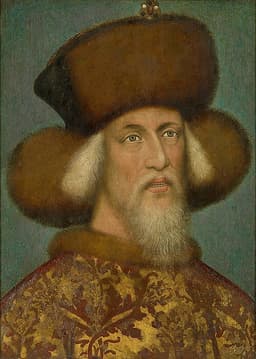
Sigismund
Emperor · Medieval
57.8Total
Basic Information
Born
1450
1368
Died
1500
1437
Era
Medieval
Medieval
Nationality
Kebbi
Holy Roman Empire
Occupation
Emperor
Emperor
Civilization
Other
Western
Score Comparison
Military (10%)
25.0
40.0
Political (20%)
35.1
62.7
Influence (20%)
52.5
60.0
Legacy (20%)
43.3
56.0
Leadership (15%)
58.8
74.0
Strategy (15%)
45.0
43.3
TOTAL
45.0
57.8
Sarki Kanta Kotal — Complete Timeline
1475 AD
Foundation of the Kebbi KingdomPolitical Action◆ Major
Sarki Kanta Kotal established the independent kingdom of Kebbi in what is now northwestern Nigeria. He unified various Hausa and other local groups under his rule, creating a state that would resist Songhai expansion for decades.
FoundationKebbi Kingdom
Impact: regionalconstructive
1490 AD
Resistance Against Songhai ExpansionWar◆ Major
Sarki Kanta Kotal led successful military campaigns to defend Kebbi against the expanding Songhai Empire under Askia Mohammed I. His resistance preserved Kebbi's independence and established it as a significant power in the region.
WarResistanceSonghai
Impact: regional
Sigismund — Complete Timeline
1414 AD
Council of ConstancePolitical Action
Sigismund convened the Council of Constance to end the Western Schism, which had three rival popes. The council deposed all three and elected Pope Martin V, ending the schism. Sigismund played a key role in securing the council's success, though he failed to prevent the execution of Jan Hus.
Council of ConstanceWestern SchismChurch Reform
Impact: globalconstructive
1415 AD
Execution of Jan HusPolitical Action◆ Major
Despite Sigismund's promise of safe conduct to Jan Hus to attend the Council of Constance, Hus was arrested, tried for heresy, and burned at the stake. Sigismund's failure to protect Hus damaged his reputation and sparked the Hussite Wars in Bohemia, which would plague his reign.
Jan HusHeresyHussite Wars
Impact: regionaltragic
1419 AD
Hussite WarsWar◆ Major
Following the death of Wenceslaus IV, Sigismund claimed the throne of Bohemia, but the Hussites refused to accept him as king. This led to a series of military campaigns known as the Hussite Wars. Sigismund led several crusades against the Hussites but was repeatedly defeated by their innovative tactics under Jan
Hussite WarsCrusadeMilitary Conflict
Impact: regionaldestructive
1433 AD
Coronation as Holy Roman EmperorPolitical Action◆ Major
Sigismund was crowned Holy Roman Emperor by Pope Eugene IV in Rome, becoming the last emperor to be crowned in the city. This coronation marked the formal end of the Western Schism and solidified Sigismund's position as the leading secular ruler in Europe.
CoronationImperial AuthorityPapacy
Impact: globalconstructive
1436 AD
Compact of BaselPolitical Action◆ Major
Sigismund negotiated the Compact of Basel with the moderate Hussites (Utraquists), granting them the right to receive communion under both kinds. This agreement temporarily ended the Hussite Wars and allowed Sigismund to finally be recognized as King of Bohemia, though the peace was fragile.
Compact of BaselHussite WarsReligious Tolerance
Impact: regionalconstructive
Expert Analysis
Origins
Sarki Kanta Kotal, born around 1460 in what is now northwestern Nigeria, emerged from the Hausa city-states. His early life is shrouded in oral tradition, but he was likely a warrior from the Kebbi region, a tributary of the Songhai Empire. He unified fragmented Hausa and other local groups, leveraging their shared resistance against external domination.
Sigismund, born in 1368 in Nuremberg, was the son of Holy Roman Emperor Charles IV and Elizabeth of Pomerania. As a member of the House of Luxembourg, he received a thorough education in politics and warfare. He was initially Margrave of Brandenburg and later became King of Hungary through marriage to Mary of Hungary. His early reign was marked by struggles to secure his Hungarian throne against internal nobles and Ottoman incursions.
Rise to Power
Kanta Kotal rose by exploiting the decline of the Songhai Empire after Askia Mohammed I. Around 1515, he led a rebellion against Songhai overlordship, successfully establishing the independent Kebbi kingdom. His military campaigns, scoring 25.0 in military, focused on guerrilla tactics and fortifying key positions along the Niger River. He forged alliances with local Hausa rulers, creating a confederation that resisted further Songhai expansion.
Sigismund's rise was more complex. He became King of Hungary in 1387, but faced constant challenges from rebellious nobles. His political acumen, scoring 62.7, was evident in his ability to navigate the complex web of European politics. He organized the Council of Constance (1414-1418) to end the Western Schism, a turning point that elevated his prestige. By securing the support of various European rulers, he was crowned Holy Roman Emperor in 1433, the last emperor to be crowned in Rome.
Leadership & Governance
Kanta Kotal governed Kebbi as a military monarch, consolidating power through a centralized administration. He implemented a system of tribute from conquered territories and promoted trade along the Niger. His leadership score of 58.8 reflects his ability to maintain unity among diverse ethnic groups. However, his governance lacked institutional depth, relying heavily on his personal authority.
Sigismund's leadership style was diplomatic and conciliatory. He convened the Council of Constance to resolve the papal schism, demonstrating a preference for negotiation over force. His governance involved constant travel across his domains to enforce loyalty. He negotiated the Compact of Basel (1436) with moderate Hussites, granting them communion under both kinds. This compromise, while pragmatic, also showed his willingness to engage with heretics to maintain peace.
Triumph & Tragedy
Kanta Kotal's greatest triumph was founding the Kebbi kingdom and preserving it against Songhai. His resistance prevented Songhai from absorbing the region, allowing Kebbi to thrive as an independent state until the 19th century. However, his failure to establish a stable succession led to internal strife after his death, weakening the kingdom. His military score of 25.0 indicates limited direct conquest, but his influence score of 52.5 shows his impact on regional politics.
Sigismund's triumphs include ending the Western Schism and his role in the Council of Constance, which restored unity to the Catholic Church. His political score of 62.7 and leadership score of 74.0 highlight his effectiveness. However, his greatest tragedy was the execution of Jan Hus in 1415, despite a safe conduct promise. This betrayal sparked the Hussite Wars, costing thousands of lives and damaging his reputation. His strategy score of 43.3 reflects his inability to foresee the consequences.
Character & Destiny
Kanta Kotal was a pragmatist, focused on survival and consolidation. His character was shaped by the need to resist larger empires, making him cautious yet decisive. His destiny was tied to the founding of a kingdom that endured for centuries, though his legacy was limited by the lack of written records.
Sigismund was a visionary but flawed leader. He believed in the unity of Christendom and worked tirelessly for it, but his betrayal of Hus showed a willingness to sacrifice individuals for political ends. His character, combining idealism with ruthlessness, led to both his greatest achievements and his most significant failures. His legacy score of 56.0 reflects his lasting impact on church unity and Bohemian history.
Legacy
Kanta Kotal's legacy is the Kebbi kingdom, which survived until the Fulani jihad in the 1800s. He is remembered as a national hero in Nigerian history, symbolizing resistance against empire. His influence score of 52.5 is modest but significant within the region.
Sigismund's legacy is more far-reaching. He is credited with ending the Western Schism, a pivotal event in church history. His actions contributed to the Hussite movement and the eventual Reformation. The Compact of Basel set a precedent for religious tolerance. His total score of 57.8 reflects his broader impact on European history.
Conclusion
While both leaders achieved notable successes, Sigismund had greater impact due to his role in resolving a major church crisis and his influence on subsequent European events. His political and leadership scores (62.7 and 74.0) significantly outpaced Kanta Kotal's (35.1 and 58.8). Despite the Hussite tragedy, Sigismund's actions shaped the course of Christendom, whereas Kanta Kotal's influence remained regional. Thus, Sigismund emerges as the more consequential historical figure.
Rankings
🥇
SigismundLeader
Mil: 40.0Pol: 62.7Inf: 60.0
57.8
🥈
Sarki Kanta Kotal
Mil: 25.0Pol: 35.1Inf: 52.5
45.0
+12.8 behind
How This Comparison Works
Algorithm
Each figure is scored on 6 dimensions (0—100 scale) based on structured historical data: Military (10%), Political (20%), Influence (20%), Legacy (20%), Leadership (15%), Strategy (15%). The weighted total produces the final ranking.
Data Sources
Scores are computed from structured sub-indicators in the database. Scale factors adjust for era (Ancient ×0.85, Modern ×1.0) and civilization size (Eastern ×1.05, Other ×0.80) to account for differences in population and military scale.
Maximum 3 Figures
Comparisons are limited to 2—3 figures to ensure readability and statistical meaningfulness.
Error Margins
±5 points per dimension — Sub-scores are derived from historical records with inherent uncertainty. Two figures within 5 points on a dimension should be considered roughly equivalent in that area.
Total Score Accuracy
±3 points overall — The weighted combination of 6 dimensions produces a total score with approximately ±3 points of uncertainty. Differences of less than 3 points are not statistically significant— the figures are effectively tied.
Known Limitations
- Historical records are incomplete and uneven across civilizations
- Figures from oral-tradition societies may be underrepresented
- Occupation labels can misclassify multi-role figures
- Scores measure capability and impact, not moral character
- Quantitative scoring is a comparison tool, not absolute truth
Capability Radar
Military (10%) — Battles & Warfare
Battles
35
45
Win Rate
40
40
Expansion
40
25
Political (20%) — Governance & Reform
Reform
30
60
Diplomacy
35
75
Economy
25
50
Influence (20%) — Cultural & Global Reach
Cultural
30
50
Global
15
50
Legacy (20%) — Historical Impact
Historical
35
65
Longevity
25
55
Leadership (15%) — Power & Stability
Tenure
45
70
Stability
30
40
Strategy (15%) — Tactics & Innovation
Strategy
35
40
Tactics
30
35
Reform
25
30
Similar Comparisons
Comments & Discussion
No comments yet. Be the first to share your thoughts!