Loading...
Sigismund vs Timur
Timur leads by 7.8 pts · 2 figures compared
…
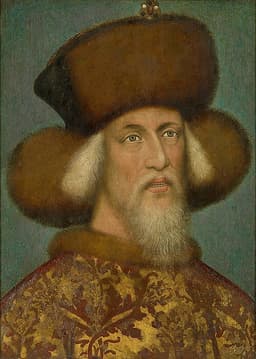
Sigismund
Emperor · Medieval
57.8Total
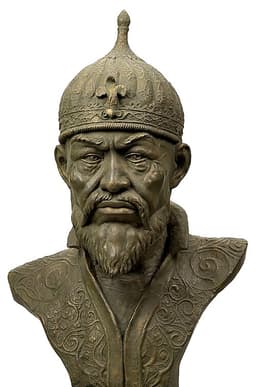
Timur
Emperor · Medieval
65.6Total
Basic Information
Born
1368
1336
Died
1437
1405
Era
Medieval
Medieval
Nationality
Holy Roman Empire
Timurid Empire
Occupation
Emperor
Emperor
Civilization
Western
Middle Eastern
Score Comparison
Military (10%)
40.0
79.0
Political (20%)
62.7
70.0
Influence (20%)
60.0
70.0
Legacy (20%)
56.0
40.0
Leadership (15%)
74.0
79.8
Strategy (15%)
43.3
77.6
TOTAL
57.8
65.6
Sigismund — Complete Timeline
1414 AD
Council of ConstancePolitical Action
Sigismund convened the Council of Constance to end the Western Schism, which had three rival popes. The council deposed all three and elected Pope Martin V, ending the schism. Sigismund played a key role in securing the council's success, though he failed to prevent the execution of Jan Hus.
Council of ConstanceWestern SchismChurch Reform
Impact: globalconstructive
1415 AD
Execution of Jan HusPolitical Action◆ Major
Despite Sigismund's promise of safe conduct to Jan Hus to attend the Council of Constance, Hus was arrested, tried for heresy, and burned at the stake. Sigismund's failure to protect Hus damaged his reputation and sparked the Hussite Wars in Bohemia, which would plague his reign.
Jan HusHeresyHussite Wars
Impact: regionaltragic
1419 AD
Hussite WarsWar◆ Major
Following the death of Wenceslaus IV, Sigismund claimed the throne of Bohemia, but the Hussites refused to accept him as king. This led to a series of military campaigns known as the Hussite Wars. Sigismund led several crusades against the Hussites but was repeatedly defeated by their innovative tactics under Jan
Hussite WarsCrusadeMilitary Conflict
Impact: regionaldestructive
1433 AD
Coronation as Holy Roman EmperorPolitical Action◆ Major
Sigismund was crowned Holy Roman Emperor by Pope Eugene IV in Rome, becoming the last emperor to be crowned in the city. This coronation marked the formal end of the Western Schism and solidified Sigismund's position as the leading secular ruler in Europe.
CoronationImperial AuthorityPapacy
Impact: globalconstructive
1436 AD
Compact of BaselPolitical Action◆ Major
Sigismund negotiated the Compact of Basel with the moderate Hussites (Utraquists), granting them the right to receive communion under both kinds. This agreement temporarily ended the Hussite Wars and allowed Sigismund to finally be recognized as King of Bohemia, though the peace was fragile.
Compact of BaselHussite WarsReligious Tolerance
Impact: regionalconstructive
Timur — Complete Timeline
1362 AD
Battle of the Terek RiverWar
Timur defeated the Mongol ruler of the Chagatai Khanate, establishing his control over Transoxiana. This victory marked the beginning of his rise to power, as he captured Samarkand and declared himself emir.
Rise to PowerBattleCentral Asia
Impact: regional
1387 AD
Conquest of PersiaWar◆ Major
Timur launched a campaign into Persia, capturing Isfahan and Shiraz. He suppressed a revolt in Isfahan by massacring tens of thousands of inhabitants, establishing his reputation for extreme brutality and consolidating control over the region.
ConquestMassacrePersia
Impact: regionaldestructive
1395 AD
Campaign against the Golden HordeWar◆ Major
Timur defeated the Golden Horde under Tokhtamysh at the Battle of the Terek River. He sacked Sarai, the Horde's capital, and destroyed its trade networks, permanently weakening the Mongol state and securing his northern frontier.
ConquestGolden HordeBattle
Impact: regionaldestructive
1398 AD
Sack of DelhiWar◆ Major
Timur invaded the Delhi Sultanate, defeating Sultan Nasir-ud-Din Mahmud Shah Tughluq. His army sacked Delhi, massacring tens of thousands of civilians and destroying the city's infrastructure, then withdrew with immense plunder.
ConquestMassacreIndia
Impact: regionaldestructive
1402 AD
Battle of AnkaraWar
Timur defeated the Ottoman Sultan Bayezid I at Ankara, capturing him. The victory shattered Ottoman power, leading to a civil war among Bayezid's sons and delaying Ottoman expansion into Europe for a decade.
BattleOttoman EmpireDecisive Victory
Impact: global
1404 AD
Construction of SamarkandCultural◆ Major
Timur invested heavily in transforming Samarkand into a cultural and architectural center. He brought artisans from conquered lands to build mosques, madrasas, and the Bibi-Khanym Mosque, making the city a showcase of Timurid art and learning.
ArchitecturePatronageCultural Center
Impact: regionalconstructive
1405 AD
Death during campaign against Ming ChinaWar◆ Major
Timur died of illness while leading a massive army toward the Ming dynasty's borders. His death ended the planned invasion of China and led to the fragmentation of his empire among his sons and grandsons.
DeathCampaignMing Dynasty
Impact: regional
Expert Analysis
Origins
Sigismund of Luxembourg was born on February 15, 1368, in Nuremberg, the son of Holy Roman Emperor Charles IV and Elizabeth of Pomerania. As a member of the House of Luxembourg, he was educated in the chivalric and political traditions of medieval Europe. His early years were marked by diplomatic marriages and territorial acquisitions, including his betrothal to Mary of Hungary, which later gave him claim to the Hungarian throne. In contrast, Timur was born in 1336 near Kesh (modern-day Shahrisabz, Uzbekistan) into the Barlas tribe, a Mongol clan that had adopted Turkic culture. His father, Taraghai, was a minor noble, and Timur grew up in the turbulent Chagatai Khanate. He sustained injuries to his right leg and hand in his youth, earning him the name 'Timur-e Lang' (Timur the Lame). His early life was shaped by banditry and local warfare, far from the structured courts of Europe.
Rise to Power
Sigismund's rise was gradual and diplomatic. He became King of Hungary in 1387 through marriage to Mary, but faced immediate challenges from the Croatian nobility and the Ottoman Empire. His turning point came in 1410 when he was elected King of the Romans, and later in 1414 when he convened the Council of Constance. This council ended the Western Schism by deposing three rival popes and electing Martin V, solidifying Sigismund's status as a leader of Christendom. Timur's rise was far more violent. In 1370, he defeated his rival Amir Husayn at the Battle of the Terek River, capturing Transoxiana. He then spent decades consolidating power, using a combination of military brilliance and ruthless alliances. By 1383, he had conquered Persia, and by 1395, he defeated the Golden Horde, sacking Sarai. His most dramatic victory came in 1402 at the Battle of Ankara, where he captured Ottoman Sultan Bayezid I, shattering Ottoman power and triggering a decade-long civil war.
Leadership & Governance
Sigismund's leadership style was diplomatic and conciliatory. He relied on councils, negotiations, and legal frameworks to achieve his goals. As Holy Roman Emperor, he attempted to reform the empire through the Imperial Diet and sought to centralize authority. However, his governance was hampered by the decentralized nature of the empire and his frequent financial troubles. He scored 62.7 in political ability, reflecting his skill in managing the complex web of European politics. Timur, by contrast, was a centralized autocrat. His governance was based on a combination of fear and patronage. He appointed loyal family members as governors but allowed local rulers to remain in place as tributaries. He invested heavily in Samarkand, making it a cultural capital with grand mosques and madrasas. His military score of 79.0 and strategy score of 77.6 reflect his dominance on the battlefield, but his political score of 70.0 indicates a more coercive than collaborative approach.
Triumph & Tragedy
Sigismund's greatest triumph was the Council of Constance (1414-1418), which ended the Western Schism and restored a single pope to Christendom. However, his handling of Jan Hus was a major tragedy. Despite promising safe conduct, Hus was executed, leading to the Hussite Wars (1419-1434). Sigismund's claim to the Bohemian throne was rejected by the Hussites, and his military campaigns against them largely failed, with his forces suffering defeats at the hands of Hussite commander Jan Žižka. His political score of 62.7 reflects these mixed results. Timur's triumphs include the conquest of Delhi (1398), where his army massacred tens of thousands, and the defeat of the Ottoman Empire at Ankara (1402). His construction projects in Samarkand also stand as cultural achievements. Yet his greatest tragedy was the fragility of his empire. His death in 1405 while marching against Ming China led to a rapid disintegration of his realm, as his sons and grandsons fought for power. His legacy score of 40.0 reflects this short-lived impact.
Character & Destiny
Sigismund was known for his patience, diplomacy, and occasional indecisiveness. He often sought compromise, but his betrayal of Jan Hus stained his reputation for trustworthiness. His character was shaped by the need to balance multiple crowns (Hungary, Germany, Bohemia) and the constant threat of Ottoman expansion. He died in 1437, leaving a mixed legacy of ecclesiastical reform and political failure. Timur was a ruthless, strategic, and charismatic leader. He was known for his cruelty, particularly in the sacks of Delhi and Isfahan, but also for his patronage of arts and architecture. His disability did not hinder his military prowess. His destiny was to create a vast but unstable empire that collapsed soon after his death. Historians often compare him to Genghis Khan, but his lack of a durable administrative system limited his long-term influence.
Legacy
Sigismund's legacy is primarily ecclesiastical and political. The Council of Constance established the principle of conciliarism, which influenced later church governance. The Compact of Basel (1436) allowed moderate Hussites to practice their faith, a rare example of religious tolerance in medieval Europe. However, his empire dissolved after his death, and the Holy Roman Empire remained fragmented. He scores 56.0 in legacy and 60.0 in influence. Timur's legacy is more cultural and military. The Timurid Renaissance in Samarkand influenced Islamic art and architecture, and his descendants, including Babur, founded the Mughal Empire in India. However, his immediate empire collapsed, and his reputation as a mass murderer overshadows his contributions. His legacy score of 40.0 reflects this mixed assessment.
Conclusion
Sigismund and Timur represent two different types of power: diplomatic versus military. Sigismund's total score is 57.8, while Timur's is 65.6, a gap of 7.8 points. However, scores alone do not tell the full story. Sigismund's impact on European religious history was profound and lasting, while Timur's conquests were more ephemeral. In terms of lasting influence on global history, Sigismund's role in ending the Western Schism and fostering conciliarism had a more enduring effect on the structure of the Catholic Church and European politics. Timur's empire vanished, but his cultural legacy in the Timurid Renaissance and his genetic legacy in the Mughal Empire are significant. Nonetheless, given the brevity of his empire's existence and the lack of institutional reform, Sigismund's contributions to governance and religious unity outweigh Timur's military achievements. Sigismund had a greater long-term impact on the course of history.
Rankings
🥇
TimurLeader
Mil: 79.0Pol: 70.0Inf: 70.0
65.6
🥈
Sigismund
Mil: 40.0Pol: 62.7Inf: 60.0
57.8
+7.8 behind
How This Comparison Works
Algorithm
Each figure is scored on 6 dimensions (0—100 scale) based on structured historical data: Military (10%), Political (20%), Influence (20%), Legacy (20%), Leadership (15%), Strategy (15%). The weighted total produces the final ranking.
Data Sources
Scores are computed from structured sub-indicators in the database. Scale factors adjust for era (Ancient ×0.85, Modern ×1.0) and civilization size (Eastern ×1.05, Other ×0.80) to account for differences in population and military scale.
Maximum 3 Figures
Comparisons are limited to 2—3 figures to ensure readability and statistical meaningfulness.
Error Margins
±5 points per dimension — Sub-scores are derived from historical records with inherent uncertainty. Two figures within 5 points on a dimension should be considered roughly equivalent in that area.
Total Score Accuracy
±3 points overall — The weighted combination of 6 dimensions produces a total score with approximately ±3 points of uncertainty. Differences of less than 3 points are not statistically significant— the figures are effectively tied.
Known Limitations
- Historical records are incomplete and uneven across civilizations
- Figures from oral-tradition societies may be underrepresented
- Occupation labels can misclassify multi-role figures
- Scores measure capability and impact, not moral character
- Quantitative scoring is a comparison tool, not absolute truth
Capability Radar
Military (10%) — Battles & Warfare
Battles
45
95
Win Rate
40
92
Expansion
25
96
Political (20%) — Governance & Reform
Reform
60
78
Diplomacy
75
70
Economy
50
82
Influence (20%) — Cultural & Global Reach
Cultural
50
88
Global
50
85
Legacy (20%) — Historical Impact
Historical
65
90
Longevity
55
75
Leadership (15%) — Power & Stability
Tenure
70
85
Stability
40
65
Strategy (15%) — Tactics & Innovation
Strategy
40
93
Tactics
35
94
Reform
30
80
Similar Comparisons
Comments & Discussion
No comments yet. Be the first to share your thoughts!