Loading...
Cimon vs Yang Hu
Yang Hu leads by 1.7 pts · 2 figures compared
…

Cimon
General · Ancient
55.6Total
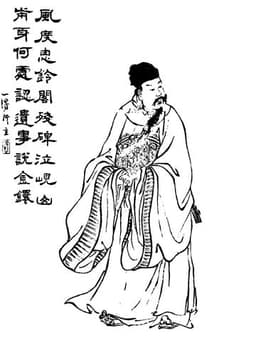
Yang Hu
General · Ancient
57.3Total
Basic Information
Born
-510
221
Died
-450
278
Era
Ancient
Ancient
Nationality
Greece
China
Occupation
General
General
Civilization
Western
Eastern
Score Comparison
Military (10%)
76.0
47.5
Political (20%)
40.8
61.3
Influence (20%)
56.4
56.4
Legacy (20%)
48.3
49.2
Leadership (15%)
68.0
68.0
Strategy (15%)
55.0
67.2
TOTAL
55.6
57.3
Cimon — Complete Timeline
476 BC
Siege of EionWar
Cimon captured the Persian-held fortress of Eion on the Strymon River in Thrace. The victory secured Athenian control over the region and opened up trade routes. It was one of the first major successes of the Delian League under Cimon's command.
Delian LeagueThracePersian Garrison
Impact: regionalconstructive
466 BC
Battle of the EurymedonWar◆ Major
Cimon led the Delian League fleet to a double victory over the Persians at the Eurymedon River in Pamphylia. He destroyed a Persian fleet and then defeated a land army on the same day, securing Greek control over the eastern Mediterranean.
Delian LeagueGreco-Persian WarsNaval Victory
Impact: regional
461 BC
Ostracism from AthensPolitical Action◆ Major
Cimon was ostracized from Athens for ten years due to political opposition from the democratic faction led by Ephialtes and Pericles. His pro-Spartan policies and the failure of his expedition to help Sparta during the helot revolt contributed to his exile.
OstracismAthenian PoliticsExile
Impact: nationaldestructive
450 BC
Battle of Salamis in CyprusWar◆ Major
Cimon was recalled from exile and led a Delian League expedition to Cyprus. He won a naval and land victory at Salamis in Cyprus against the Persians. However, he died during the siege of Citium, ending the campaign.
Delian LeagueCyprus CampaignDeath
Impact: regional
Yang Hu — Complete Timeline
269 AD
Implemented a policy of conciliation toward WuReform◆ Major
Yang Hu adopted a strategy of winning over Wu's border populations through fair treatment and economic incentives, rather than aggressive warfare. This reduced resistance and built goodwill for the eventual invasion.
Jin DynastyEastern WuDiplomacy
Impact: regionalconstructive
Appointed as commander of Jin forces against WuPolitical Action◆ Major
Yang Hu was appointed as the commander of Jin's forces in the Xiangyang region, tasked with preparing for the conquest of Eastern Wu. He focused on building up military strength and winning the loyalty of the local population.
Jin DynastyEastern WuMilitary Command
Impact: regionalconstructive
278 AD
Recommended Du Yu as his successorPolitical Action◆ Major
On his deathbed, Yang Hu recommended Du Yu to the Jin emperor as the commander to lead the final conquest of Wu. This recommendation was accepted and proved crucial to the campaign's success.
Jin DynastySuccessionDu Yu
Impact: nationalconstructive
Died without seeing the conquest of WuOther◆ Major
Yang Hu died of illness before the Jin invasion of Wu began. His preparations and policies laid the groundwork for the eventual unification of China under the Jin dynasty.
Jin DynastyDeathUnification
Impact: nationaltragic
Expert Analysis
Origins
Cimon was born around 510 BCE into the aristocratic Philaid clan of Athens. His father, Miltiades the Younger, was the hero of Marathon, but died in disgrace after a failed expedition to Paros. Cimon inherited both his father's military talents and his political liabilities. He grew up in the shadow of his father's fall, which likely drove his ambition to restore family honor.
Yang Hu was born in 221 CE in Nanyang, China, into a prominent family of the Wei state during the Three Kingdoms period. His father, Yang Da, served as a minor official. Yang Hu lost his father at age 11 and was raised by his mother. He showed early signs of wisdom and moral integrity, which later defined his career. Unlike Cimon, Yang Hu came from a stable bureaucratic tradition.
Rise to Power
Cimon's rise began after the Persian Wars. He was elected strategos (general) around 476 BCE and quickly distinguished himself. His first major success was the Siege of Eion (476 BCE), where he captured a Persian fortress on the Strymon River, securing Athenian control over Thrace. He then cleared the Aegean of Persian garrisons and pirates, winning popularity among the Delian League allies. By 470 BCE, he was the leading figure in Athens, championing a pro-Spartan and anti-Persian policy.
Yang Hu's rise was slower and more political. He initially served as a secretary to the Jin regent Sima Zhao, winning trust through his integrity. In 269 CE, he was appointed as commander of the Jin forces in Xiangyang, the frontline against Eastern Wu. His appointment was not due to battlefield heroics but because of his reputation for fairness and strategic thinking. He spent years building up infrastructure, training troops, and winning over Wu's border populations through conciliation.
Leadership & Governance
Cimon led by personal example and generosity. He used his wealth to sponsor public works, such as planting trees in the Agora and building the Long Walls to Piraeus. His leadership style was aristocratic: he believed in a strong, unified Greek alliance under Athens and Sparta. Militarily, he was aggressive and decisive, as seen at the Battle of the Eurymedon (466 BCE), where he destroyed a Persian fleet and land forces in a single day. However, his governance was partisan; he opposed the democratic reforms of Ephialtes and Pericles, which led to his ostracism in 461 BCE.
Yang Hu's leadership was the opposite: patient, moral, and strategic. He focused on building trust rather than winning battles. He treated Wu soldiers and civilians with respect, returning captives and providing aid. His governance was based on Confucian ideals of virtue. He reduced border raids by offering economic incentives to Wu defectors. While Cimon scored 76.0 in military, Yang Hu scored only 47.5, reflecting his preference for preparation over combat. But Yang Hu's political score (61.3) and strategy score (67.2) exceeded Cimon's (40.8 and 55.0 respectively).
Triumph & Tragedy
Cimon's greatest triumph was the Battle of the Eurymedon, where he won a double victory that crippled Persian naval power for years. He also captured the strategic city of Eion and successfully concluded the Delian League's campaigns in Thrace and the Aegean. His tragedy was his ostracism in 461 BCE, triggered by his support for Sparta during the helot revolt. He was recalled later but never regained full power. His final expedition to Cyprus (451 BCE) ended with his death from illness, though he won a victory at Salamis-in-Cyprus before dying.
Yang Hu's triumph was his successful preparation for the conquest of Wu. His policies of conciliation weakened Wu from within while strengthening Jin's economy and military. He also recommended Du Yu as his successor, who led the actual invasion. His tragedy was dying in 278 CE, two years before the conquest, without seeing his life's work completed. Unlike Cimon, Yang Hu never faced ostracism; his virtue was consistently recognized.
Character & Destiny
Cimon was bold, generous, but politically inflexible. His pro-Spartan stance alienated the growing democratic faction. His character was shaped by his father's disgrace and his own aristocratic values. He believed in personal valor and direct action, which suited military command but not political maneuvering. His destiny was to be a great general in an era of shifting alliances, ultimately outmaneuvered by Pericles.
Yang Hu was cautious, moral, and strategic. He embodied the Confucian ideal of the virtuous official. His decisions were guided by long-term goals rather than immediate glory. He famously said, "When I plan, I consider the big picture, not petty gains." His destiny was to be the architect of unification, not its hero. He died content, having laid the foundation for Jin's victory.
Legacy
Cimon's legacy is mixed. He is remembered as a capable general who expanded Athens' power, but his political failure allowed Pericles to dominate. His military achievements, especially the Eurymedon, were celebrated by contemporaries but overshadowed by later Athenian glory. His leadership score of 68.0 and legacy of 48.3 reflect this paradoxical status.
Yang Hu's legacy is more enduring. He is revered in Chinese history as a model of virtuous governance and strategic patience. His approach to border defense influenced later dynasties. The conquest of Wu, completed by Du Yu, is directly attributed to Yang Hu's groundwork. His influence score (56.4) and legacy (49.2) are slightly higher than Cimon's, though both are modest.
Conclusion
Yang Hu had a greater impact on history than Cimon. While Cimon's military score (76.0) far exceeds Yang Hu's (47.5), Yang Hu's overall strategy and political acumen (total 57.3 vs 55.6) enabled a lasting unification. Cimon's victories were short-lived; Athens fell to Sparta within decades. Yang Hu's preparations led to the unification of China under Jin, which, though brief, set a precedent for imperial unity. The score gap of 1.7 points in favor of Yang Hu is justified by his more sustainable approach. History favors the architect over the warrior.
Rankings
🥇
Yang HuLeader
Mil: 47.5Pol: 61.3Inf: 56.4
57.3
🥈
Cimon
Mil: 76.0Pol: 40.8Inf: 56.4
55.6
+1.7 behind
How This Comparison Works
Algorithm
Each figure is scored on 6 dimensions (0—100 scale) based on structured historical data: Military (10%), Political (20%), Influence (20%), Legacy (20%), Leadership (15%), Strategy (15%). The weighted total produces the final ranking.
Data Sources
Scores are computed from structured sub-indicators in the database. Scale factors adjust for era (Ancient ×0.85, Modern ×1.0) and civilization size (Eastern ×1.05, Other ×0.80) to account for differences in population and military scale.
Maximum 3 Figures
Comparisons are limited to 2—3 figures to ensure readability and statistical meaningfulness.
Error Margins
±5 points per dimension — Sub-scores are derived from historical records with inherent uncertainty. Two figures within 5 points on a dimension should be considered roughly equivalent in that area.
Total Score Accuracy
±3 points overall — The weighted combination of 6 dimensions produces a total score with approximately ±3 points of uncertainty. Differences of less than 3 points are not statistically significant— the figures are effectively tied.
Known Limitations
- Historical records are incomplete and uneven across civilizations
- Figures from oral-tradition societies may be underrepresented
- Occupation labels can misclassify multi-role figures
- Scores measure capability and impact, not moral character
- Quantitative scoring is a comparison tool, not absolute truth
Capability Radar
Military (10%) — Battles & Warfare
Battles
65
35
Win Rate
70
40
Expansion
55
30
Political (20%) — Governance & Reform
Reform
40
60
Diplomacy
65
75
Economy
50
55
Influence (20%) — Cultural & Global Reach
Cultural
45
60
Global
35
30
Legacy (20%) — Historical Impact
Historical
50
55
Longevity
40
50
Leadership (15%) — Power & Stability
Tenure
60
50
Stability
55
65
Strategy (15%) — Tactics & Innovation
Strategy
65
70
Tactics
60
55
Reform
30
65
Similar Comparisons
Comments & Discussion
No comments yet. Be the first to share your thoughts!