Loading...
Ciriaco De Mita vs Sanna Marin
Ciriaco De Mita leads by 5.1 pts · 2 figures compared
…
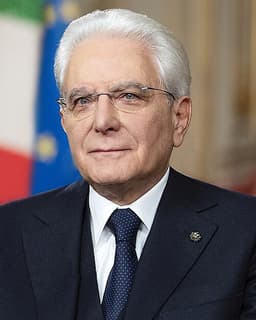
Ciriaco De Mita
Politician · Modern
55.7Total
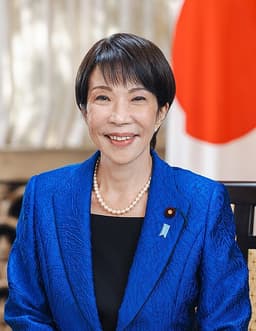
Sanna Marin
Politician · Modern
50.6Total
Basic Information
Born
1928
1985
Died
—
—
Era
Modern
Modern
Nationality
Italy
Finland
Occupation
Politician
Politician
Civilization
Western
Western
Score Comparison
Military (10%)
45.4
49.7
Political (20%)
68.0
68.0
Influence (20%)
54.1
51.8
Legacy (20%)
45.0
37.5
Leadership (15%)
68.0
58.8
Strategy (15%)
60.0
42.7
TOTAL
55.7
50.6
Ciriaco De Mita — Complete Timeline
1982 AD
Secretary of the Christian DemocracyPolitical Action◆ Major
De Mita was elected Secretary of the Christian Democracy (DC) party in 1982. He led the party through a period of internal reform, aiming to modernize its structure and reduce factionalism, but faced resistance from traditionalist wings.
Italian PoliticsChristian DemocracyParty Reform
Impact: nationalconstructive
1988 AD
Prime Minister of ItalyPolitical Action◆ Major
De Mita served as Prime Minister from April 1988 to July 1989. His government focused on economic reforms, including the reduction of public debt and the liberalization of markets, but was criticized for its slow pace and internal conflicts.
Italian PoliticsGovernmentEconomic Reform
Impact: national
1989 AD
Fall of the De Mita governmentPolitical Action◆ Major
De Mita's government fell in July 1989 after losing the support of the Socialist Party, led by Bettino Craxi. The collapse was due to personal and political rivalries, highlighting the instability of coalition governments in Italy.
Italian PoliticsCoalition CrisisGovernment Fall
Impact: nationaldestructive
1999 AD
European ParliamentPolitical Action
De Mita served as a Member of the European Parliament from 1999 to 2004. He focused on European integration and agricultural policies, representing Italy in the European People's Party group.
European PoliticsEuropean ParliamentIntegration
Impact: regional
Sanna Marin — Complete Timeline
2019 AD
Appointed Prime Minister of FinlandPolitical Action◆ Major
Marin became Prime Minister of Finland at age 34, leading a five-party coalition government. She was the world's youngest serving prime minister at the time, heading Finland's Social Democratic Party.
Prime MinisterYouthCoalition
Impact: nationalconstructive
2020 AD
COVID-19 Pandemic ResponsePolitical Action◆ Major
Marin's government implemented lockdowns, travel restrictions, and economic support measures during the COVID-19 pandemic. Finland maintained relatively low infection rates compared to many European countries.
PandemicPublic HealthEconomic Policy
Impact: nationalconstructive
2022 AD
NATO Membership ApplicationPolitical Action
Following Russia's invasion of Ukraine, Marin's government led Finland's application to join NATO, ending decades of military non-alignment. Finland became a NATO member in 2023.
NATOSecurityForeign Policy
Impact: globalconstructive
2023 AD
Lost 2023 Parliamentary ElectionPolitical Action◆ Major
Marin's Social Democratic Party finished third in the 2023 Finnish parliamentary election, losing to the National Coalition Party and the Finns Party. She resigned as party leader following the defeat.
ElectionDefeatResignation
Impact: national
Expert Analysis
Origins
Ciriaco De Mita was born on February 2, 1928, in Nusco, a small town in the Campania region of Italy. He came from a modest family; his father was a shoemaker. De Mita studied law at the Catholic University of Milan, where he became involved in Catholic student organizations. He joined the Christian Democracy (DC) party in the 1950s, rising through the ranks as a protégé of party leader Aldo Moro. De Mita's early career was shaped by the post-war Italian political landscape, dominated by the DC and its anti-communist stance.
Sanna Marin was born on November 16, 1985, in Helsinki, Finland, but grew up in the small town of Pirkkala. Raised by a single mother in a same-sex relationship, Marin faced financial challenges. She was the first in her family to attend university, graduating from the University of Tampere with a degree in administrative sciences. Marin entered politics through the Social Democratic Youth, becoming a city councilor in Tampere at age 27. Her background reflects Finland's progressive social policies and emphasis on education.
Rise to Power
De Mita's rise was gradual within the DC. He was elected to the Italian Chamber of Deputies in 1963 and held various ministerial posts, including Minister of Industry and Foreign Trade. In 1982, he became Secretary of the DC, the party's top position. He aimed to modernize the party by promoting meritocracy and reducing factionalism. His ascent culminated in becoming Prime Minister in April 1988, at the peak of his political influence. De Mita's power base relied on internal party alliances, particularly with the left-wing faction of the DC.
Marin's rise was rapid. She was elected to the Finnish Parliament in 2015 and quickly gained prominence. In June 2019, she became Minister of Transport and Communications. Following the resignation of Prime Minister Antti Rinne in December 2019, Marin was chosen to lead the Social Democratic Party and became Prime Minister at age 34, the world's youngest serving head of government. Her appointment was seen as a generational shift, and she led a five-party coalition of center-left parties.
Leadership & Governance
De Mita's leadership style was consensus-oriented, typical of DC politics. As Prime Minister, he focused on economic reforms, including reducing public debt and inflation. He also pushed for administrative decentralization. However, his government was plagued by infighting and lost support from the Socialist Party led by Bettino Craxi, leading to its fall after just 15 months. De Mita's governance was constrained by Italy's fragmented party system, scoring 68.0 in political and 60.0 in strategy.
Marin led with a more decisive approach. Her government's response to the COVID-19 pandemic included strict lockdowns, which kept infection rates relatively low. She also spearheaded Finland's application to join NATO in 2022, a historic shift from neutrality. Marin's coalition managed to hold together despite differing views on economic policy. However, her leadership faced criticism for spending on social programs, and she scored 58.8 in leadership and 42.7 in strategy, reflecting less strategic maneuvering.
Triumph & Tragedy
De Mita's greatest success was modernizing the DC and reducing the party's debt, but his brief premiership was a failure due to inability to maintain coalition support. His political influence waned after 1989, and he later served in the European Parliament. De Mita's legacy is mixed; he is remembered as a reformer but also as a symbol of the DC's decline.
Marin's triumphs include leading Finland through the pandemic and into NATO. However, her party's defeat in the 2023 election, finishing third, was a major setback. Her legacy is still unfolding, but she is seen as a competent crisis manager. Her total score of 50.6 is lower than De Mita's 55.7.
Character & Destiny
De Mita was known as a shrewd political operator with a technocratic approach. His character, cautious and consensus-seeking, led to his downfall as he failed to assert authority. Historians view him as a transitional figure.
Marin is characterized as pragmatic and resilient. Her decision to pursue NATO membership was bold, but her progressive policies may have alienated voters. Her character, shaped by a humble background, resonated with many but also attracted criticism.
Legacy
De Mita's legacy is largely institutional: he helped reform the DC but could not prevent its collapse. He scored 45.0 in legacy. Marin's legacy is more immediate: she normalized Finland's NATO membership and demonstrated effective pandemic governance. Her long-term impact remains to be seen.
Conclusion
Ciriaco De Mita had a higher total score (55.7 vs. 50.6), reflecting his longer career and influence within Italy's dominant party. However, Marin's impact on Finnish foreign policy and crisis management may prove more transformative. De Mita's legacy is tied to a fading party system, while Marin's actions have reshaped Finland's security posture. Therefore, Sanna Marin's impact is greater in terms of historical significance, despite a lower overall score.
Rankings
🥇
Ciriaco De MitaLeader
Mil: 45.4Pol: 68.0Inf: 54.1
55.7
🥈
Sanna Marin
Mil: 49.7Pol: 68.0Inf: 51.8
50.6
+5.1 behind
How This Comparison Works
Algorithm
Each figure is scored on 6 dimensions (0—100 scale) based on structured historical data: Military (10%), Political (20%), Influence (20%), Legacy (20%), Leadership (15%), Strategy (15%). The weighted total produces the final ranking.
Data Sources
Scores are computed from structured sub-indicators in the database. Scale factors adjust for era (Ancient ×0.85, Modern ×1.0) and civilization size (Eastern ×1.05, Other ×0.80) to account for differences in population and military scale.
Maximum 3 Figures
Comparisons are limited to 2—3 figures to ensure readability and statistical meaningfulness.
Error Margins
±5 points per dimension — Sub-scores are derived from historical records with inherent uncertainty. Two figures within 5 points on a dimension should be considered roughly equivalent in that area.
Total Score Accuracy
±3 points overall — The weighted combination of 6 dimensions produces a total score with approximately ±3 points of uncertainty. Differences of less than 3 points are not statistically significant— the figures are effectively tied.
Known Limitations
- Historical records are incomplete and uneven across civilizations
- Figures from oral-tradition societies may be underrepresented
- Occupation labels can misclassify multi-role figures
- Scores measure capability and impact, not moral character
- Quantitative scoring is a comparison tool, not absolute truth
Capability Radar
Military (10%) — Battles & Warfare
Battles
46
27
Win Rate
50
32
Expansion
52
37
Political (20%) — Governance & Reform
Reform
55
40
Diplomacy
60
45
Economy
50
35
Influence (20%) — Cultural & Global Reach
Cultural
30
20
Global
35
30
Legacy (20%) — Historical Impact
Historical
40
15
Longevity
30
10
Leadership (15%) — Power & Stability
Tenure
60
25
Stability
45
30
Strategy (15%) — Tactics & Innovation
Strategy
55
39
Tactics
57
43
Reform
61
41
Similar Comparisons
Comments & Discussion
No comments yet. Be the first to share your thoughts!