Loading...
Frederick Chiluba vs Sanna Marin
Frederick Chiluba leads by 2.9 pts · 2 figures compared
…

Frederick Chiluba
Politician · Modern
53.5Total
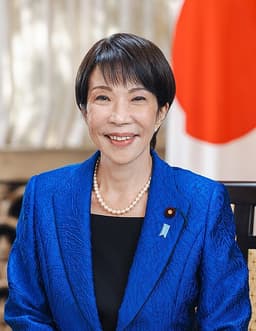
Sanna Marin
Politician · Modern
50.6Total
Basic Information
Born
1943
1985
Died
—
—
Era
Modern
Modern
Nationality
Zambia
Finland
Occupation
Politician
Politician
Civilization
Other
Western
Score Comparison
Military (10%)
39.9
49.7
Political (20%)
68.0
68.0
Influence (20%)
52.5
51.8
Legacy (20%)
42.5
37.5
Leadership (15%)
74.0
58.8
Strategy (15%)
44.3
42.7
TOTAL
53.5
50.6
Frederick Chiluba — Complete Timeline
1991 AD
Elected President of ZambiaPolitical Action◆ Major
Chiluba won the presidential election as the candidate of the Movement for Multiparty Democracy, defeating Kenneth Kaunda who had ruled since independence. This marked the first peaceful democratic transfer of power in Zambia.
ElectionZambiaDemocracy
Impact: nationalconstructive
1992 AD
Implemented Economic LiberalizationReform◆ Major
Chiluba's government adopted IMF and World Bank structural adjustment programs, including privatization of state enterprises, removal of subsidies, and currency devaluation. These reforms caused economic hardship but aimed to stabilize the economy.
Economic ReformIMFPrivatization
Impact: national
1996 AD
Re-elected President of ZambiaPolitical Action◆ Major
Chiluba won a second term in an election boycotted by the main opposition party and criticized by observers for irregularities. The election was marked by constitutional changes that barred Kaunda from running.
ElectionZambiaBoycott
Impact: national
2001 AD
Attempted Third Term BidPolitical Action◆ Major
Chiluba attempted to amend the constitution to allow a third term, sparking widespread protests and opposition from civil society and his own party. The bid failed, and he stepped down, but it damaged his legacy.
Third TermConstitutional CrisisZambia
Impact: nationaldestructive
2009 AD
Convicted of CorruptionPolitical Action◆ Major
Chiluba was convicted in a London court of stealing $46 million from Zambia during his presidency. The verdict was a landmark anti-corruption case, though Chiluba maintained his innocence and died before serving time.
CorruptionConvictionZambia
Impact: nationaldestructive
Sanna Marin — Complete Timeline
2019 AD
Appointed Prime Minister of FinlandPolitical Action◆ Major
Marin became Prime Minister of Finland at age 34, leading a five-party coalition government. She was the world's youngest serving prime minister at the time, heading Finland's Social Democratic Party.
Prime MinisterYouthCoalition
Impact: nationalconstructive
2020 AD
COVID-19 Pandemic ResponsePolitical Action◆ Major
Marin's government implemented lockdowns, travel restrictions, and economic support measures during the COVID-19 pandemic. Finland maintained relatively low infection rates compared to many European countries.
PandemicPublic HealthEconomic Policy
Impact: nationalconstructive
2022 AD
NATO Membership ApplicationPolitical Action
Following Russia's invasion of Ukraine, Marin's government led Finland's application to join NATO, ending decades of military non-alignment. Finland became a NATO member in 2023.
NATOSecurityForeign Policy
Impact: globalconstructive
2023 AD
Lost 2023 Parliamentary ElectionPolitical Action◆ Major
Marin's Social Democratic Party finished third in the 2023 Finnish parliamentary election, losing to the National Coalition Party and the Finns Party. She resigned as party leader following the defeat.
ElectionDefeatResignation
Impact: national
Expert Analysis
Origins
Frederick Chiluba was born on April 30, 1943, in Kitwe, Northern Rhodesia (now Zambia). He came from a poor family; his father was a miner. Chiluba left school early and worked various jobs before becoming a trade unionist. He rose through the ranks of the Zambia Congress of Trade Unions, becoming its chairman in 1974. His early life in the copperbelt shaped his understanding of labor issues.
Sanna Marin was born on November 16, 1985, in Helsinki, Finland, but grew up in Pirkkala. Raised by a single mother and her female partner, Marin experienced financial struggles. She worked as a cashier and studied administrative sciences at the University of Tampere, earning a bachelor's degree. Her background in a progressive family influenced her left-wing politics.
Rise to Power
Chiluba's rise began with the labor movement. In 1990, he co-founded the Movement for Multiparty Democracy (MMD) to oppose Kenneth Kaunda's one-party rule. After Kaunda allowed multi-party elections, Chiluba won the presidency on October 31, 1991, with 75% of the vote. This ended Kaunda's 27-year rule.
Marin entered politics through the Social Democratic Youth. She was elected to the Finnish Parliament in 2015. On December 8, 2019, at age 34, she became Prime Minister after Antti Rinne resigned, leading a five-party coalition. She was the world's youngest serving prime minister at the time.
Leadership & Governance
Chiluba's governance focused on economic liberalization. He implemented IMF structural adjustment programs, privatizing state enterprises, removing subsidies, and cutting public spending. This led to economic growth initially but also increased inequality and unemployment. Politically, he consolidated power, suppressing dissent and undermining democratic institutions. His attempt to amend the constitution for a third term in 2001 failed due to widespread protests.
Marin led a coalition government through the COVID-19 pandemic. Finland maintained low infection rates through lockdowns and testing. She supported social welfare programs and economic stimulus. In 2022, after Russia's invasion of Ukraine, she pushed for NATO membership, ending Finland's neutrality. Her leadership style was collaborative but decisive.
Triumph & Tragedy
Chiluba's triumph was ending Kaunda's authoritarian rule and transitioning Zambia to democracy. However, his economic policies harmed many, and his later years were marred by corruption. In 2007, a London court convicted him of stealing $46 million from the state, though he denied the charges. This conviction tarnished his legacy.
Marin's triumph includes successful pandemic management and steering Finland into NATO, a historic shift. However, her government faced criticism for high public spending. In the 2023 election, her party finished third, leading to her departure as PM. She scored 49.7 in military (due to NATO) and 68.0 in political.
Character & Destiny
Chiluba was charismatic and shrewd, using his labor background to connect with workers. However, his authoritarian tendencies emerged once in power. His attempt to stay in office showed a disregard for democratic norms, leading to his downfall.
Marin was pragmatic and resilient, often facing scrutiny over her age and personal life. She maintained composure under pressure. Her decision to pursue NATO membership was bold, but electoral defeat showed the limits of her coalition.
Legacy
Chiluba's legacy is mixed: he is remembered for democratizing Zambia but also for corruption and economic hardship. His conviction stands as a cautionary tale. He scored 42.5 in legacy.
Marin's legacy is still forming. She will be remembered as a young leader who modernized Finland's foreign policy and handled a pandemic. Her influence on global youth politics is notable. She scored 37.5 in legacy.
Conclusion
Frederick Chiluba had a greater impact on his nation's trajectory, transitioning Zambia from dictatorship to democracy, despite his later failures. His total score of 53.5 reflects a significant, albeit flawed, leadership. Sanna Marin, scoring 50.6, was effective but her tenure was shorter and less transformative. Chiluba's role in ending Kaunda's rule outweighs Marin's achievements, making him the more consequential figure.
Rankings
🥇
Frederick ChilubaLeader
Mil: 39.9Pol: 68.0Inf: 52.5
53.5
🥈
Sanna Marin
Mil: 49.7Pol: 68.0Inf: 51.8
50.6
+2.9 behind
How This Comparison Works
Algorithm
Each figure is scored on 6 dimensions (0—100 scale) based on structured historical data: Military (10%), Political (20%), Influence (20%), Legacy (20%), Leadership (15%), Strategy (15%). The weighted total produces the final ranking.
Data Sources
Scores are computed from structured sub-indicators in the database. Scale factors adjust for era (Ancient ×0.85, Modern ×1.0) and civilization size (Eastern ×1.05, Other ×0.80) to account for differences in population and military scale.
Maximum 3 Figures
Comparisons are limited to 2—3 figures to ensure readability and statistical meaningfulness.
Error Margins
±5 points per dimension — Sub-scores are derived from historical records with inherent uncertainty. Two figures within 5 points on a dimension should be considered roughly equivalent in that area.
Total Score Accuracy
±3 points overall — The weighted combination of 6 dimensions produces a total score with approximately ±3 points of uncertainty. Differences of less than 3 points are not statistically significant— the figures are effectively tied.
Known Limitations
- Historical records are incomplete and uneven across civilizations
- Figures from oral-tradition societies may be underrepresented
- Occupation labels can misclassify multi-role figures
- Scores measure capability and impact, not moral character
- Quantitative scoring is a comparison tool, not absolute truth
Capability Radar
Military (10%) — Battles & Warfare
Battles
21
27
Win Rate
25
32
Expansion
27
37
Political (20%) — Governance & Reform
Reform
55
40
Diplomacy
50
45
Economy
40
35
Influence (20%) — Cultural & Global Reach
Cultural
30
20
Global
25
30
Legacy (20%) — Historical Impact
Historical
35
15
Longevity
20
10
Leadership (15%) — Power & Stability
Tenure
60
25
Stability
30
30
Strategy (15%) — Tactics & Innovation
Strategy
32
39
Tactics
32
43
Reform
35
41
Similar Comparisons
Comments & Discussion
No comments yet. Be the first to share your thoughts!