Loading...
Claude Victor-Perrin vs Qin Shi Huang
Qin Shi Huang leads by 30.4 pts · 2 figures compared
…

Claude Victor-Perrin
General · Modern
54.8Total
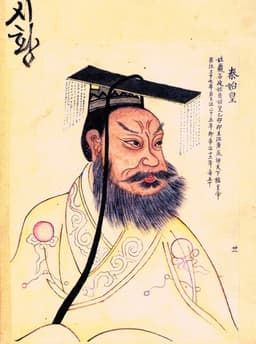
Qin Shi Huang
Emperor · Ancient
85.2Total
Basic Information
Born
1764
-259
Died
1841
-210
Era
Modern
Ancient
Nationality
France
China
Occupation
General
Emperor
Civilization
Western
Eastern
Score Comparison
Military (10%)
67.5
80.0
Political (20%)
48.0
90.0
Influence (20%)
54.9
85.0
Legacy (20%)
48.3
90.0
Leadership (15%)
62.0
78.0
Strategy (15%)
57.5
82.0
TOTAL
54.8
85.2
Claude Victor-Perrin — Complete Timeline
1806 AD
Battle of Jena-AuerstedtWar◆ Major
Victor commanded a division at Jena. His forces captured the Prussian heights and pursued the retreating army, contributing to the decisive French victory.
Napoleonic WarsBattleDivision Command
Impact: regional
1812 AD
Battle of the BerezinaWar◆ Major
Victor commanded the IX Corps at the Berezina. His corps fought a rearguard action against the Russians, allowing the main army to cross the river, but suffered heavy losses.
Napoleonic WarsRetreatBerezina
Impact: regional
1813 AD
Battle of DresdenWar◆ Major
Victor commanded a corps at Dresden. His forces held the French left flank against Allied attacks, contributing to Napoleon's tactical victory.
Napoleonic WarsBattleCorps Command
Impact: regional
Battle of LeipzigWar◆ Major
Victor commanded a corps at Leipzig. His forces were overwhelmed by Allied numbers, and he was wounded while trying to hold the French position.
Napoleonic WarsBattleDefeatWounded
Impact: global
1814 AD
Defection to the BourbonsPolitical Action◆ Major
Victor defected to the Bourbon monarchy after Napoleon's abdication. He was appointed a peer of France and served under Louis XVIII.
BetrayalBourbon RestorationPeerage
Impact: national
Qin Shi Huang — Complete Timeline
246 BC
Construction of the Mausoleum and Terracotta ArmyOther◆ Major
Qin Shi Huang commissioned a vast mausoleum complex near Xi'an, guarded by thousands of life-sized terracotta soldiers, horses, and chariots. The project employed hundreds of thousands of workers and reflected his obsession with immortality and imperial power.
Impact: global
230 BC
Conquest of the Six Warring StatesWar
From 230 to 221 BCE, Ying Zheng led the Qin state in a series of campaigns that conquered the Han, Zhao, Wei, Chu, Yan, and Qi states. This unified China under a single ruler for the first time, ending the Warring States period.
Impact: global
221 BC
Standardization of Writing, Currency, and MeasurementsReform◆ Major
Qin Shi Huang ordered the standardization of Chinese script, currency, and weights and measures across the unified empire. This facilitated administration, trade, and cultural integration, laying a foundation for future dynasties.
Impact: globalconstructive
Proclamation of the Qin DynastyPolitical Action
After conquering the last independent state, Ying Zheng declared himself Shi Huangdi (First Emperor), founding the Qin Dynasty. He adopted a new title to signify his supreme authority and initiated centralized imperial rule.
Impact: global
214 BC
Initiation of the Great Wall ConstructionOther◆ Major
Qin Shi Huang ordered the connection and extension of existing northern fortifications to create a unified defensive wall against nomadic Xiongnu raids. This project involved massive conscripted labor and became the precursor to the later Great Wall.
Impact: regional
213 BC
Burning of Books and Burying of ScholarsPolitical Action◆ Major
On the advice of Li Si, Qin Shi Huang ordered the burning of historical records and philosophical texts not aligned with Legalist doctrine. He also had 460 Confucian scholars buried alive to suppress dissent and consolidate ideological control.
Impact: nationaldestructive
Expert Analysis
claude-victor-perrin-vs-qin-shi-huang
# The First Emperor and the Last Marshal
On a winter morning in 1812, as Napoleon’s Grand Army disintegrated on the frozen banks of the Berezina River, a French general named Claude Victor-Perrin stood at the head of the IX Corps, buying time for the remnants of an empire to escape. Half a world away and two millennia earlier, another commander—Ying Zheng, soon to be Qin Shi Huang—had gazed across the warring states of ancient China and envisioned a single, unified realm. One man built an empire from scratch; the other fought to save one already crumbling. What separates a figure who reshapes the world from one who merely serves its tides? The answer lies not in talent alone, but in the collision of ambition, circumstance, and the sheer scale of historical stage.
Origins
Qin Shi Huang was born in 259 BC, a prince of the Qin state during the chaotic Warring States period. His father was a hostage in a neighboring kingdom, and his early years were marked by political instability and the constant threat of assassination. The young Ying Zheng learned early that trust was a luxury—and power, the only currency that mattered. China in his time was a patchwork of rival states, each with its own script, currency, and laws, locked in endless conflict. It was a world that demanded a unifier.
Claude Victor-Perrin, born in 1764, came from a vastly different world. He was the son of a notary in the French province of Lorraine, a region that had known its own wars but was now part of a stable monarchy. Victor rose through the ranks of the old royal army, then survived the French Revolution’s purges to serve the Republic. His France was a nation in upheaval—not fragmented like ancient China, but convulsed by revolution and foreign war. Where Qin Shi Huang inherited a throne and a mission, Victor inherited a uniform and a duty.
Rise to Power
Qin Shi Huang’s path was swift and brutal. At thirteen, he became king of Qin; by twenty-two, he had crushed a rebellion and begun consolidating power. From 230 to 221 BC, he led his armies in a series of campaigns that systematically conquered the six other warring states—Han, Zhao, Wei, Chu, Yan, and Qi. Each victory was a masterpiece of strategy and ruthlessness. When he declared himself Shi Huangdi—First Emperor—in 221 BC, he had achieved what no Chinese ruler had before: total unification.
Victor’s rise was slower, forged in the fires of revolutionary warfare. He fought in the early campaigns of the French Revolutionary Wars, earning promotion through courage and competence. By 1806, at the Battle of Jena-Auerstedt, he commanded a division that captured Prussian heights and pursued the retreating enemy. Napoleon, recognizing his grit, made him a Marshal of the Empire in 1807. But Victor was never a creator of empires—he was a builder of victories for someone else’s vision.
Leadership & Governance
Qin Shi Huang governed as he conquered: with absolute authority and sweeping reform. He standardized Chinese script, currency, and weights and measures across his vast domain, creating the administrative skeleton that would hold China together for two millennia. He ordered the connection of northern fortifications into what would become the Great Wall. His reign was a whirlwind of centralization—roads, canals, laws, all unified under one rule. Yet his methods were harsh: in 213 BC, on the advice of his minister Li Si, he ordered the burning of historical records and philosophical texts not aligned with his Legalist ideology, and the burying alive of scholars who resisted. It was order bought at a terrible price.
Victor’s leadership was narrower. He excelled on the battlefield, holding the French left flank at Dresden in 1813 and fighting a desperate rearguard at the Berezina. But he was not a reformer or a visionary. When Napoleon’s empire began to crack, Victor lacked the political instincts to steer events. At Leipzig in 1813, his corps was overwhelmed by Allied numbers, and he was wounded. After Napoleon’s abdication in 1814, Victor defected to the Bourbon monarchy, serving as Minister of War under Louis XVIII. It was a pragmatic choice, but one that defined him as a servant of power, not its source.
Triumph & Tragedy
Qin Shi Huang’s greatest triumph was the unification itself—a feat that reshaped the world’s largest civilization. His greatest tragedy was the fragility of his achievement. He died in 210 BC, and his dynasty collapsed within four years, undone by his own harshness and the rebellions it bred. His mausoleum, guarded by the Terracotta Army, remains a monument to his ambition and his isolation.
Victor’s triumph was the Berezina, where his rearguard action allowed thousands of French soldiers to escape the Russian winter. His tragedy was the war itself—a catastrophic campaign that bled France white. He lived to see Napoleon’s final defeat and served a restored monarchy, but his name is remembered only by military historians.
Character & Destiny
Qin Shi Huang was driven by a vision of unity so absolute that he believed he could conquer death itself, sending expeditions for the elixir of immortality. His paranoia and ruthlessness were the engines of his success and the seeds of his failure. Victor, by contrast, was a competent soldier in an age of giants. He lacked the spark of genius that might have made him a Napoleon—or the iron will that made Qin Shi Huang a First Emperor. Their different outcomes reflect not just ability, but the scale of their ambition and the eras that shaped them.
Legacy
Qin Shi Huang’s legacy is immeasurable. He gave China its name, its administrative structure, and the template for imperial rule that lasted until 1912. The Terracotta Army still stands, a silent army guarding a creator who remade the world. Victor’s legacy is more modest: a marshal’s baton, a footnote in Napoleon’s story, a defection that preserved his life but not his honor.
Conclusion
Standing before the Terracotta Warriors in Xi’an, one feels the weight of a single man’s will. Standing on the Berezina’s banks, one feels only the cold. Qin Shi Huang built an empire that outlasted him; Victor fought for an empire that was already dying. The difference between them is the difference between a man who shapes history and a man whom history shapes. One is remembered because he dared to remake the world; the other, because he was there when it fell.
Rankings
🥇
Qin Shi HuangLeader
Mil: 80.0Pol: 90.0Inf: 85.0
85.2
🥈
Claude Victor-Perrin
Mil: 67.5Pol: 48.0Inf: 54.9
54.8
+30.4 behind
How This Comparison Works
Algorithm
Each figure is scored on 6 dimensions (0—100 scale) based on structured historical data: Military (10%), Political (20%), Influence (20%), Legacy (20%), Leadership (15%), Strategy (15%). The weighted total produces the final ranking.
Data Sources
Scores are computed from structured sub-indicators in the database. Scale factors adjust for era (Ancient ×0.85, Modern ×1.0) and civilization size (Eastern ×1.05, Other ×0.80) to account for differences in population and military scale.
Maximum 3 Figures
Comparisons are limited to 2—3 figures to ensure readability and statistical meaningfulness.
Error Margins
±5 points per dimension — Sub-scores are derived from historical records with inherent uncertainty. Two figures within 5 points on a dimension should be considered roughly equivalent in that area.
Total Score Accuracy
±3 points overall — The weighted combination of 6 dimensions produces a total score with approximately ±3 points of uncertainty. Differences of less than 3 points are not statistically significant— the figures are effectively tied.
Known Limitations
- Historical records are incomplete and uneven across civilizations
- Figures from oral-tradition societies may be underrepresented
- Occupation labels can misclassify multi-role figures
- Scores measure capability and impact, not moral character
- Quantitative scoring is a comparison tool, not absolute truth
Capability Radar
Military (10%) — Battles & Warfare
Battles
65
85
Win Rate
55
90
Expansion
60
90
Political (20%) — Governance & Reform
Reform
30
95
Diplomacy
40
75
Economy
35
90
Influence (20%) — Cultural & Global Reach
Cultural
30
95
Global
30
85
Legacy (20%) — Historical Impact
Historical
45
95
Longevity
35
95
Leadership (15%) — Power & Stability
Tenure
45
70
Stability
40
65
Strategy (15%) — Tactics & Innovation
Strategy
55
85
Tactics
60
80
Reform
30
95
Similar Comparisons
Comments & Discussion
MarshalOfTheBerezina6/17/2026
Victor-Perrin is the real hero here, not some conqueror figure. Qin Shi Huang unified China through ruthless standardization—weights, measures, even thought itself? That’s control freakery, not genius. Victor held the line at the Berezina while Napoleon’s army collapsed; he lost 10,000 men buying three days for the wounded to escape. One guy built a state via genocide; the other saved lives with no illusions about glory. Give me the stoic rear-guard over the book-burner any day.
书同文狠人6/17/2026
嬴政才是真硬核变革者,维克托就是个高级炮灰。书同文车同轨,货币度量衡统一,这些是两千年前一个脑子想出来的,懂吗?秦军一天急行军五十公里,补给线靠的不是热血是系统。维克托在别列津纳河挡俄军三天?啧,他也就在拿破仑那个烂摊子里当块挡箭牌。真正的帝国建设者从不靠退守留名。
DeadMenScout6/17/2026
Okay, stats nerds, let’s crunch this. Victor’s IX Corps at Berezina: ~70% casualties, ~12,000 men gone in one winter campaign. Qin Shi Huang’s unification wars: likely over 200,000 dead across multiple campaigns? But here’s the kicker—absolute control metrics. Huang crushed six states, built a 5,000-km wall, and a 40-year-long mausoleum army. Victor held a bridge. Hard to compare unless you redefine "impact" as "lasted longest in a firefight." Precision versus scale, folks.
反独裁考古人6/17/2026
别被史书骗了,嬴政那种“统一”实质是文化清剿。焚书坑儒不是传说,史记记了四百六十多个方士儒生活埋,全国收缴民间藏书,烧掉诸子百家典籍。这叫建设?这叫灭口。维克托虽然是个武将,至少他没下令把对手的书烧光。中国统一不是靠秦始皇一人之功,商鞅变法、李斯制度都比他靠谱。别把暴君捧成国父。