Loading...
Oliver Cromwell vs Qin Shi Huang
Qin Shi Huang leads by 13.4 pts · 2 figures compared
…
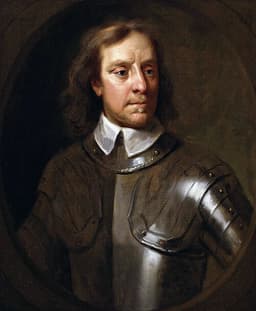
Oliver Cromwell
General · Modern
71.8Total
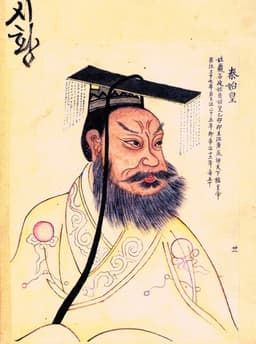
Qin Shi Huang
Emperor · Ancient
85.2Total
Basic Information
Born
1599
-259
Died
1658
-210
Era
Modern
Ancient
Nationality
England
China
Occupation
General
Emperor
Civilization
Western
Eastern
Score Comparison
Military (10%)
82.0
80.0
Political (20%)
55.0
90.0
Influence (20%)
82.0
85.0
Legacy (20%)
72.0
90.0
Leadership (15%)
62.0
78.0
Strategy (15%)
75.0
82.0
TOTAL
71.8
85.2
Oliver Cromwell — Complete Timeline
1644 AD
Battle of Marston MoorWar◆ Major
Cromwell, as a cavalry commander in the Parliamentarian army, played a key role in the decisive victory over Royalist forces at Marston Moor. This battle secured Parliament's control of northern England and boosted Cromwell's military reputation.
English Civil WarParliamentarianCavalry
Impact: national
1645 AD
Battle of NasebyWar
Cromwell led the New Model Army to a decisive victory over King Charles I's forces at Naseby. This battle effectively ended the First English Civil War, leading to the capture of the king and Parliament's supremacy.
English Civil WarNew Model ArmyRoyalist Defeat
Impact: national
1649 AD
Cromwellian Conquest of IrelandWar◆ Major
Cromwell led a brutal military campaign in Ireland to suppress the Irish Confederacy and Royalist alliance. His forces massacred garrisons at Drogheda and Wexford, resulting in widespread death and land confiscation, cementing English Protestant dominance.
IrelandConquestMassacre
Impact: regionaldestructive
Execution of King Charles IPolitical Action
Cromwell was a leading figure in the trial and execution of King Charles I for treason. This unprecedented act abolished the monarchy and established the Commonwealth of England, a republican government.
RegicideCommonwealthRepublic
Impact: globaldestructive
1653 AD
Appointment as Lord ProtectorPolitical Action◆ Major
Cromwell was installed as Lord Protector of the Commonwealth of England, Scotland, and Ireland, effectively becoming head of state. He ruled as a military dictator, dissolving parliaments and imposing Puritan moral laws.
Lord ProtectorCommonwealthDictatorship
Impact: national
Qin Shi Huang — Complete Timeline
246 BC
Construction of the Mausoleum and Terracotta ArmyOther◆ Major
Qin Shi Huang commissioned a vast mausoleum complex near Xi'an, guarded by thousands of life-sized terracotta soldiers, horses, and chariots. The project employed hundreds of thousands of workers and reflected his obsession with immortality and imperial power.
Impact: global
230 BC
Conquest of the Six Warring StatesWar
From 230 to 221 BCE, Ying Zheng led the Qin state in a series of campaigns that conquered the Han, Zhao, Wei, Chu, Yan, and Qi states. This unified China under a single ruler for the first time, ending the Warring States period.
Impact: global
221 BC
Standardization of Writing, Currency, and MeasurementsReform◆ Major
Qin Shi Huang ordered the standardization of Chinese script, currency, and weights and measures across the unified empire. This facilitated administration, trade, and cultural integration, laying a foundation for future dynasties.
Impact: globalconstructive
Proclamation of the Qin DynastyPolitical Action
After conquering the last independent state, Ying Zheng declared himself Shi Huangdi (First Emperor), founding the Qin Dynasty. He adopted a new title to signify his supreme authority and initiated centralized imperial rule.
Impact: global
214 BC
Initiation of the Great Wall ConstructionOther◆ Major
Qin Shi Huang ordered the connection and extension of existing northern fortifications to create a unified defensive wall against nomadic Xiongnu raids. This project involved massive conscripted labor and became the precursor to the later Great Wall.
Impact: regional
213 BC
Burning of Books and Burying of ScholarsPolitical Action◆ Major
On the advice of Li Si, Qin Shi Huang ordered the burning of historical records and philosophical texts not aligned with Legalist doctrine. He also had 460 Confucian scholars buried alive to suppress dissent and consolidate ideological control.
Impact: nationaldestructive
Expert Analysis
oliver-cromwell-vs-qin-shi-huang
### The Tyrant and the Reformer: Why Qin Shi Huang Built an Empire and Cromwell Built a Republic
In the winter of 221 BC, a king in the distant Chinese state of Qin proclaimed himself *Shi Huangdi*—the First Emperor. He had just conquered the last of the Six Warring States, a feat that ended centuries of bloody chaos. Nearly two millennia later, in the winter of 1649, an English general walked through a frost-bitten London to witness the beheading of his own king, Charles I. One man united a continent; the other beheaded a monarch. Both were hailed as saviors in their time, and both were later remembered as tyrants. But their paths—and their legacies—could not have been more different. The question is not just *what* they did, but *why* their worlds demanded such different answers.
### Origins: The Son of a King and the Son of a Brewer
Qin Shi Huang was born in 259 BC into the violent, competitive world of the Warring States period. His father was a king, his mother a former concubine, and his childhood was a web of court intrigue, hostage situations, and deadly power games. He learned early that trust was a weapon, and that the only way to survive was to control everything. The Chinese world was fragmented into seven rival kingdoms, each with its own script, currency, and laws. For a boy raised in a state that valued Legalist philosophy—a harsh doctrine of strict laws and absolute obedience—the answer to chaos was simple: total, centralized order.
Oliver Cromwell, born in 1599 in Huntingdon, England, came from a very different world. He was the son of a modest gentleman farmer and brewer, a man of Puritan faith and local standing. His England was a constitutional monarchy, a kingdom that had long struggled with the balance of power between Crown and Parliament. Cromwell was not born to rule; he was a backbencher in Parliament, a man of deep religious conviction who saw history as a divine drama. For him, the enemy was not fragmentation but tyranny—specifically, the tyranny of a king who believed he ruled by God's will alone. The Chinese emperor saw chaos in division; the English general saw sin in unchecked power.
### Rise to Power: Conquest and Conscience
Qin Shi Huang’s rise was a methodical military campaign. From 230 to 221 BC, he led the Qin state in a series of devastating wars, conquering the Han, Zhao, Wei, Chu, Yan, and Qi kingdoms one by one. He was not a charismatic warrior-king in the mold of Alexander; he was a cold strategist who used bribery, assassination, and overwhelming force. His key turning point was not a single battle but the cumulative annihilation of rival states. By the time he proclaimed the Qin Dynasty in 221 BC, he had no rivals left—only subjects.
Cromwell’s rise was far messier. He entered the English Civil Wars in 1642 as a cavalry commander, but his true moment came at the Battle of Marston Moor in 1644. There, his disciplined horsemen broke the Royalist lines, and he earned a reputation as a master of mobile warfare. The turning point was the Battle of Naseby in 1645, where his New Model Army—a professional, meritocratic force—smashed the king’s main army. But unlike Qin Shi Huang, Cromwell did not conquer a nation; he fought a civil war against his own countrymen. His victory was not a unification but a fracture, one that ended with the unprecedented execution of a king in 1649.
### Leadership & Governance: The First Emperor and the Lord Protector
As emperor, Qin Shi Huang was a revolutionary administrator. He standardized writing, currency, and weights and measures across his vast empire—a move that, for the first time, made China a single economic and cultural space. He ordered the connection of northern fortifications into what would become the Great Wall, a defensive line that symbolized his vision of a walled, protected realm. He also commissioned his mausoleum and the Terracotta Army, a silent legion meant to guard him in the afterlife. But his rule had a dark side: in 213 BC, on the advice of his minister Li Si, he ordered the burning of books and the burying of scholars alive, erasing history that did not align with his Legalist ideology. He believed that unity required uniformity—and that dissent was a crime.
Cromwell’s rule as Lord Protector from 1653 was a constant struggle to define legitimacy. He was a military dictator in all but name, yet he genuinely wanted a godly republic, not a monarchy. He tolerated a degree of religious freedom for Puritans but crushed Irish Catholics with brutal efficiency during his 1649 campaign in Ireland, a conquest marked by massacres at Drogheda and Wexford. His political wisdom was limited: he could win wars but could not build stable institutions. He dissolved Parliament repeatedly, ruling by decree, and died in 1658 exhausted by the contradictions of his own revolution. Qin Shi Huang built a system; Cromwell built a crisis.
### Triumph & Tragedy: The Peak and the Precipice
Qin Shi Huang’s greatest triumph was the unification itself—a feat no Chinese ruler had achieved before. He created the template for imperial China that would last for two thousand years. His tragedy was paranoia: he obsessed over immortality, consuming mercury-laced elixirs that likely hastened his death in 210 BC at age 49. Within three years, his dynasty collapsed, consumed by rebellion and the very harshness he had institutionalized.
Cromwell’s greatest moment was the victory at Naseby, which secured parliamentary supremacy over the crown. Yet his most devastating failure was his inability to create a lasting republic. After his death in 1658, his son Richard proved incapable of ruling, and by 1660, the monarchy was restored. Cromwell’s body was exhumed, hanged, and beheaded—a posthumous execution that mirrored the fate of the king he had killed.
### Character & Destiny: Iron and Fire
Qin Shi Huang was a man of iron will and cold logic. He believed that human nature was flawed and could only be controlled by laws and punishments. His personality drove him to seek absolute control, even over death itself. That same drive created the Terracotta Army but also destroyed the scholars who might have tempered his regime. His destiny was to be the unifier, but his methods ensured that his dynasty would not endure.
Cromwell was a man of fire—a Puritan who believed he was God’s instrument. He was impulsive, pious, and often indecisive when not on the battlefield. His personality drove him to execute a king, but his religious conviction could not build a secular state. His destiny was to be the destroyer of an old order, but he could not shape the new one. One man crushed history to create order; the other broke a crown to create freedom—and both saw their creations crumble.
### Legacy: The First Emperor and the Great Usurper
In China, Qin Shi Huang is a complex symbol: the brutal tyrant who burned books, and the visionary who gave China its first unified identity. His Terracotta Army still stands, a silent testament to his ambition. His name is synonymous with both greatness and terror.
Cromwell is equally contested. In Britain, he is remembered as a champion of parliamentary liberty and a religious bigot who massacred the Irish. His statue stands outside the Houses of Parliament, but his reputation is forever stained by the blood of Drogheda. He is the father of the English republic that failed, and the ghost that haunts British debates about power and authority.
### Conclusion: The Mirror of Time
Standing on opposite sides of the world and two thousand years apart, Qin Shi Huang and Oliver Cromwell faced a similar challenge: how to govern when the old order has shattered. One answered with absolute control, the other with a flawed republic. Neither succeeded in their own lifetimes, but both shaped the future. The First Emperor gave China the tools for unity; Cromwell gave England the question of liberty. In the end, their stories remind us that the most powerful rulers are not those who build the longest walls or behead the highest kings, but those who leave behind a question that no one can answer—and that everyone must still ask.
Rankings
🥇
Qin Shi HuangLeader
Mil: 80.0Pol: 90.0Inf: 85.0
85.2
🥈
Oliver Cromwell
Mil: 82.0Pol: 55.0Inf: 82.0
71.8
+13.4 behind
How This Comparison Works
Algorithm
Each figure is scored on 6 dimensions (0—100 scale) based on structured historical data: Military (10%), Political (20%), Influence (20%), Legacy (20%), Leadership (15%), Strategy (15%). The weighted total produces the final ranking.
Data Sources
Scores are computed from structured sub-indicators in the database. Scale factors adjust for era (Ancient ×0.85, Modern ×1.0) and civilization size (Eastern ×1.05, Other ×0.80) to account for differences in population and military scale.
Maximum 3 Figures
Comparisons are limited to 2—3 figures to ensure readability and statistical meaningfulness.
Error Margins
±5 points per dimension — Sub-scores are derived from historical records with inherent uncertainty. Two figures within 5 points on a dimension should be considered roughly equivalent in that area.
Total Score Accuracy
±3 points overall — The weighted combination of 6 dimensions produces a total score with approximately ±3 points of uncertainty. Differences of less than 3 points are not statistically significant— the figures are effectively tied.
Known Limitations
- Historical records are incomplete and uneven across civilizations
- Figures from oral-tradition societies may be underrepresented
- Occupation labels can misclassify multi-role figures
- Scores measure capability and impact, not moral character
- Quantitative scoring is a comparison tool, not absolute truth
Capability Radar
Military (10%) — Battles & Warfare
Battles
75
85
Win Rate
80
90
Expansion
60
90
Political (20%) — Governance & Reform
Reform
75
95
Diplomacy
60
75
Economy
65
90
Influence (20%) — Cultural & Global Reach
Cultural
65
95
Global
65
85
Legacy (20%) — Historical Impact
Historical
80
95
Longevity
70
95
Leadership (15%) — Power & Stability
Tenure
70
70
Stability
55
65
Strategy (15%) — Tactics & Innovation
Strategy
82
85
Tactics
78
80
Reform
85
95
Similar Comparisons
Comments & Discussion
史鉴铁面6/17/2026
拿克伦威尔跟始皇帝比,本身就是史观错位。一个是儒生掌权后拼命砍圣诞树、禁戏剧的原教旨清教徒;一个是消灭六国贵族、收天下兵器铸铜人的法家实践者。始皇帝至少留下一套两千年的官僚模板,克伦威尔把英国拆了又拼,死后不到两年君主制就复辟了。一个是被历史验证的强度,一个是雷声大雨点小的过渡期。
Quill-Counter6/17/2026
The problem with comparing Cromwell to Qin Shi Huang is conflating scale with significance. Qin imposed writing standardization across an entire civilization; Cromwell imposed Puritan morality on a single island. One shaped the intellectual framework of East Asia, the other banned bear-baiting on Sundays. Let's not pretend these are equivalent moments in world history just because both men had strong opinions about order.
铁血法统6/17/2026
你们都在谈统一和意识形态,却忽略了一个核心差异:始皇帝是彻底的理性主义者,用郡县制替代封建制,把权力从血缘手里夺过来交给文书和律令。克伦威尔倒好,解散议会靠的是刀剑,治国靠的是清教启示录。一个是冷峻的行政逻辑,一个是热病式的宗教狂热。前者建立体系,后者只会打破体系。高下立判。
Reign-Counter6/17/2026
Let's be blunt: Qin Shi Huang created the prototype for Chinese imperial governance that lasted until 1912. Cromwell's "republic" collapsed within a decade. The Napoleons, Hitlers, Stalins—they're all judged by durability of institutions. By that metric, the First Emperor dominated. Cromwell was a temporary disruption; Qin was a permanent foundation. Empire-building isn't about being nice—it's about making systems that outlast you.
Chronicler85946/17/2026
Qin Shi Huang's uniformity obsession wasn't tyranny—it was infrastructural genius. Try governing 30 million people across multiple language zones with pre-Qin scripts. His standardized axle widths alone suggest he prioritized logistics over control. Cromwell, meanwhile, couldn't even unify England with Scotland under a coherent tax system. Give me a man who standardizes roads and weights over one who bans Christmas.