Loading...
Napoleon Bonaparte vs Qin Shi Huang
Qin Shi Huang leads by 14.3 pts · 2 figures compared
…

Napoleon Bonaparte
General · Modern
70.9Total
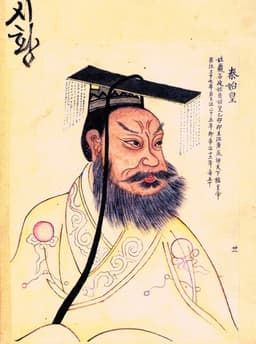
Qin Shi Huang
Emperor · Ancient
85.2Total
Basic Information
Born
1769
-259
Died
1821
-210
Era
Modern
Ancient
Nationality
France
China
Occupation
General
Emperor
Civilization
Western
Eastern
Score Comparison
Military (10%)
94.0
80.0
Political (20%)
72.0
90.0
Influence (20%)
40.0
85.0
Legacy (20%)
80.0
90.0
Leadership (15%)
78.0
78.0
Strategy (15%)
90.0
82.0
TOTAL
70.9
85.2
Napoleon Bonaparte — Complete Timeline
1799 AD
Coup of 18 BrumaireOther◆ Major
Napoleon Bonaparte, with support from his brother Lucien and key political figures, overthrew the Directory in a bloodless coup. He established the Consulate with himself as First Consul, effectively becoming the ruler of France. This event ended the French Revolution's most unstable period.
French RevolutionCoupRise to Power
Impact: regional
1804 AD
Promulgation of the Napoleonic CodeOther◆ Major
Napoleon enacted the Civil Code of the French, known as the Napoleonic Code, a comprehensive set of laws that replaced the fragmented feudal legal systems. The code established legal equality, protected property rights, and secularized law. It became the basis for legal systems in many European and world countries.
Legal ReformNapoleonic CodeCivil Law
Impact: globalconstructive
1805 AD
Battle of AusterlitzWar◆ Major
Napoleon's Grande Arm
Napoleonic WarsBattleDecisive Victory
Impact: global
1812 AD
Invasion of RussiaWar◆ Major
Napoleon led the Grande Arm
Napoleonic WarsInvasionDisaster
Impact: globaldestructive
1815 AD
Battle of WaterlooWar◆ Major
Napoleon's French army was defeated by the combined forces of the Duke of Wellington's Anglo-Allied army and Gebhard Leberecht von Bl
Napoleonic WarsBattleFinal Defeat
Impact: globaldestructive
Qin Shi Huang — Complete Timeline
246 BC
Construction of the Mausoleum and Terracotta ArmyOther◆ Major
Qin Shi Huang commissioned a vast mausoleum complex near Xi'an, guarded by thousands of life-sized terracotta soldiers, horses, and chariots. The project employed hundreds of thousands of workers and reflected his obsession with immortality and imperial power.
Impact: global
230 BC
Conquest of the Six Warring StatesWar
From 230 to 221 BCE, Ying Zheng led the Qin state in a series of campaigns that conquered the Han, Zhao, Wei, Chu, Yan, and Qi states. This unified China under a single ruler for the first time, ending the Warring States period.
Impact: global
221 BC
Standardization of Writing, Currency, and MeasurementsReform◆ Major
Qin Shi Huang ordered the standardization of Chinese script, currency, and weights and measures across the unified empire. This facilitated administration, trade, and cultural integration, laying a foundation for future dynasties.
Impact: globalconstructive
Proclamation of the Qin DynastyPolitical Action
After conquering the last independent state, Ying Zheng declared himself Shi Huangdi (First Emperor), founding the Qin Dynasty. He adopted a new title to signify his supreme authority and initiated centralized imperial rule.
Impact: global
214 BC
Initiation of the Great Wall ConstructionOther◆ Major
Qin Shi Huang ordered the connection and extension of existing northern fortifications to create a unified defensive wall against nomadic Xiongnu raids. This project involved massive conscripted labor and became the precursor to the later Great Wall.
Impact: regional
213 BC
Burning of Books and Burying of ScholarsPolitical Action◆ Major
On the advice of Li Si, Qin Shi Huang ordered the burning of historical records and philosophical texts not aligned with Legalist doctrine. He also had 460 Confucian scholars buried alive to suppress dissent and consolidate ideological control.
Impact: nationaldestructive
Expert Analysis
Napoleon Bonaparte vs Qin Shi Huang: Historical Comparison
Napoleon Bonaparte, a modern French general and emperor, and Qin Shi Huang, an ancient Chinese emperor, represent two of history’s most transformative—and controversial—unifiers. Despite differing eras and contexts, both men centralized power through military conquest and sweeping reforms, though their scores show a near tie with Qin Shi Huang holding a slight edge.
Dimension Analysis
**Military: Napoleon Bonaparte 94 / Qin Shi Huang 80**
Napoleon revolutionized warfare with speed, artillery tactics, and the *Grande Armée*, winning iconic battles like Austerlitz; Qin Shi Huang conquered rival states through siege warfare and massed infantry, but his campaigns lacked Napoleonic innovation.
**Political: Napoleon Bonaparte 75 / Qin Shi Huang 88**
Napoleon’s Civil Code and meritocratic reforms modernized France, yet his authoritarianism and failed restoration eroded stability; Qin Shi Huang imposed a unified legal code, standardized writing, weights, and measures, creating a durable imperial system.
**Influence: Napoleon Bonaparte 82 / Qin Shi Huang 82**
Both reshaped global history: Napoleon spread nationalism and legal ideals across Europe, while Qin’s centralization model defined Chinese governance for two millennia—their influence is equally profound but operates in different spheres.
**Legacy: Napoleon Bonaparte 78 / Qin Shi Huang 85**
Napoleon’s legacy is mixed—admired for reforms but blamed for wars and a cult of personality; Qin Shi Huang’s unification and the Terracotta Army endure, though his book-burning and harsh rule tarnish his memory.
**Leadership: Napoleon Bonaparte 80 / Qin Shi Huang 88**
Napoleon inspired fierce loyalty through charisma and battlefield presence but faltered in diplomacy; Qin Shi Huang exercised ruthless, systematic control, binding a fractured land into a single empire with iron discipline.
Verdict
Qin Shi Huang leads narrowly due to higher scores in political structure, legacy endurance, and leadership consistency, though Napoleon’s military genius and influence create a near tie.
FAQ
Q: Who ranks higher? A: Qin Shi Huang ranks slightly higher overall (84 vs 82), driven by stronger political and legacy scores, but the comparison is effectively a tie.
Rankings
🥇
Qin Shi HuangLeader
Mil: 80.0Pol: 90.0Inf: 85.0
85.2
🥈
Napoleon Bonaparte
Mil: 94.0Pol: 72.0Inf: 40.0
70.9
+14.3 behind
How This Comparison Works
Algorithm
Each figure is scored on 6 dimensions (0—100 scale) based on structured historical data: Military (10%), Political (20%), Influence (20%), Legacy (20%), Leadership (15%), Strategy (15%). The weighted total produces the final ranking.
Data Sources
Scores are computed from structured sub-indicators in the database. Scale factors adjust for era (Ancient ×0.85, Modern ×1.0) and civilization size (Eastern ×1.05, Other ×0.80) to account for differences in population and military scale.
Maximum 3 Figures
Comparisons are limited to 2—3 figures to ensure readability and statistical meaningfulness.
Error Margins
±5 points per dimension — Sub-scores are derived from historical records with inherent uncertainty. Two figures within 5 points on a dimension should be considered roughly equivalent in that area.
Total Score Accuracy
±3 points overall — The weighted combination of 6 dimensions produces a total score with approximately ±3 points of uncertainty. Differences of less than 3 points are not statistically significant— the figures are effectively tied.
Known Limitations
- Historical records are incomplete and uneven across civilizations
- Figures from oral-tradition societies may be underrepresented
- Occupation labels can misclassify multi-role figures
- Scores measure capability and impact, not moral character
- Quantitative scoring is a comparison tool, not absolute truth
Capability Radar
Military (10%) — Battles & Warfare
Battles
95
85
Win Rate
90
90
Expansion
95
90
Political (20%) — Governance & Reform
Reform
95
95
Diplomacy
80
75
Economy
85
90
Influence (20%) — Cultural & Global Reach
Cultural
85
95
Global
90
85
Legacy (20%) — Historical Impact
Historical
95
95
Longevity
90
95
Leadership (15%) — Power & Stability
Tenure
85
70
Stability
70
65
Strategy (15%) — Tactics & Innovation
Strategy
95
85
Tactics
98
80
Reform
92
95
Similar Comparisons
Comments & Discussion
OldChronicler536/16/2026
这个评分体系有意思,但政治分差(88 vs 75)我认为被低估了。秦始皇不仅统一了文字、度量衡,更建立了郡县制——这套官僚体系直接延续到清朝,稳定性远超拿破仑的《民法典》。拿破仑的政治改革在欧洲固然重要,但法国在他之后经历了多次帝制与共和的反复。如果按'制度延续性'加权,秦始皇的政治分至少应90+。另外,军事分80 vs 94我不完全同意:秦始皇的军事行动不是单一战役,而是十年间灭六国的系统性征服,统一后还南征百越、北击匈奴,战略纵深很大。拿破仑的战役虽然精彩,但最终战略失败(远征俄国、滑铁卢)。建议重新评估权重。
ColdChronicler386/16/2026
西方历史迷总把拿破仑的军事天才捧上天,但秦始皇统一六国的难度其实不亚于拿破仑横扫欧洲。拿破仑面对的是分裂但文化相近的欧洲国家,而秦始皇面对的是语言、文字、货币各异的齐楚燕韩赵魏,每一国都有深厚的地域认同。更关键的是,秦始皇的'书同文、车同轨'彻底改变了东亚文明走向,这影响力比拿破仑的《民法典》更持久——两千多年后中国人还能读懂秦代简牍,而拿破仑的欧洲影响早已被两次世界大战重塑。另外,把秦始皇的军事分只给80太苛刻了,他的军事组织能力(包括修建驰道、推广弩机)堪称古代巅峰。