Loading...
Claudius vs Julius Caesar
Julius Caesar leads by 28.4 pts · 2 figures compared
…
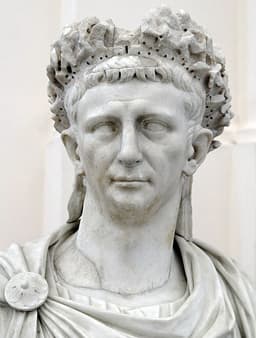
Claudius
Emperor · Ancient
54.4Total

Julius Caesar
General · Ancient
82.8Total
Basic Information
Born
-10
-100
Died
54
-44
Era
Ancient
Ancient
Nationality
Roman Empire
Roman Republic
Occupation
Emperor
General
Civilization
Western
Western
Score Comparison
Military (10%)
50.0
88.0
Political (20%)
68.0
78.0
Influence (20%)
54.9
85.0
Legacy (20%)
49.2
82.0
Leadership (15%)
53.2
80.0
Strategy (15%)
51.7
85.0
TOTAL
54.4
82.8
Claudius — Complete Timeline
41 AD
Accession as EmperorPolitical Action◆ Major
After Caligula's assassination, Claudius was found hiding and proclaimed emperor by the Praetorian Guard. The Senate reluctantly accepted him, marking the first time the Guard directly chose an emperor.
SuccessionPraetorian GuardImperial Rule
Impact: global
42 AD
Construction of the Port of OstiaOther◆ Major
Claudius initiated the construction of a new harbor at Ostia to improve Rome's grain supply. The project included a large artificial basin and a lighthouse, facilitating trade and food imports.
InfrastructureGrain SupplyRome
Impact: nationalconstructive
43 AD
Conquest of BritainWar
Claudius ordered the invasion of Britain, sending four legions under Aulus Plautius. He later visited the island to accept the surrender of the British tribes, incorporating southern Britain into the Roman Empire.
ConquestBritainExpansion
Impact: regionalconstructive
48 AD
Expansion of Roman CitizenshipReform◆ Major
Claudius extended Roman citizenship to certain provincial communities, particularly in Gaul. He also admitted Gauls into the Senate, promoting integration of the empire's elites.
CitizenshipIntegrationProvincial Policy
Impact: regionalprogressive
49 AD
Marriage to Agrippina the YoungerPolitical Action◆ Major
Claudius married his niece Agrippina the Younger, who then maneuvered to have her son Nero adopted as Claudius's heir. This marriage led to Claudius's eventual poisoning and Nero's succession.
MarriageSuccessionNero
Impact: nationaldestructive
Julius Caesar — Complete Timeline
58 BC
Gallic WarsWar◆ Major
Caesar, as proconsul of Gaul, launched a series of campaigns that conquered all of Gaul (modern France, Belgium, and parts of Switzerland). He fought numerous battles, including against the Helvetii, the Belgae, and the Gallic chieftain Vercingetorix. The wars brought immense wealth and a loyal army to Caesar.
Gallic WarsConquestRoman Expansion
Impact: regional
49 BC
Crossing the RubiconPolitical Action◆ Major
Caesar led Legio XIII across the Rubicon River into Italy, defying the Roman Senate's order to disband his army. This act triggered a civil war against Pompey and the Optimates, ultimately leading to Caesar's dictatorship and the end of the Roman Republic.
Roman Civil WarEnd of RepublicPower Struggle
Impact: global
48 BC
Battle of PharsalusWar◆ Major
Caesar's outnumbered army defeated the larger forces of Pompey the Great at Pharsalus in Greece. Caesar's tactical use of a reserve line to counter Pompey's cavalry charge proved decisive. Pompey fled to Egypt, where he was assassinated, leaving Caesar as the undisputed master of the Roman world.
Roman Civil WarBattleDecisive Victory
Impact: regional
44 BC
Appointment as Dictator for LifePolitical Action◆ Major
The Roman Senate appointed Caesar dictator perpetuo (dictator for life), granting him unprecedented personal power. This move concentrated military, legislative, and judicial authority in one person, effectively ending the Roman Republic's traditional system of checks and balances and alarming many senators.
DictatorshipEnd of RepublicPower Consolidation
Impact: regionaldestructive
Assassination on the Ides of MarchPolitical Action◆ Major
A group of Roman senators, led by Marcus Junius Brutus and Gaius Cassius Longinus, stabbed Caesar to death at a meeting of the Senate in the Theatre of Pompey. The assassination was intended to restore the Republic, but instead triggered another civil war that led to the rise of the Roman Empire.
AssassinationRoman PoliticsEnd of Republic
Impact: globaldestructive
Expert Analysis
claudius-vs-julius-caesar
# The Unlikely Emperor and the Assassinated Dictator
On a winter morning in 44 BCE, Julius Caesar sat in the Senate chamber, surrounded by men he had pardoned, promoted, and trusted. Moments later, sixty daggers ended his life. Nearly a century later, in 41 CE, another man named Tiberius Claudius Nero Germanicus trembled behind a curtain in the imperial palace, certain he would be next. When guards dragged him out, he expected death—but instead found himself proclaimed emperor. These two men, both Romans, both rulers, could hardly have been more different in path or outcome. One seized power through genius and ambition; the other stumbled into it through weakness and luck. Yet both transformed Rome in ways that echo still.
Origins
Caesar was born into the patrician Julian clan, but his family was not wealthy. His aunt married Gaius Marius, the populist general, and his father died when Caesar was sixteen. The late Republic was a bloodbath of civil wars, proscriptions, and crumbling traditions. From boyhood, Caesar breathed the air of ambition and violence. He learned that the old rules no longer protected anyone—only power did.
Claudius was born into the imperial family itself. His mother Antonia, his grandmother Livia, and his uncle Tiberius all governed Rome. But Claudius was sickly, with a limp, a stammer, and twitching limbs. His own mother called him “a monster of a man, not finished by nature.” The family kept him hidden, embarrassed. While Caesar trained as a soldier and orator, Claudius studied history and Etruscan antiquities in obscurity. One man was forged by the chaos of the Republic; the other was shaped by the cruelty of the imperial court.
Rise to Power
Caesar’s rise was a masterclass in calculated risk. He won the consulship in 59 BCE through an alliance with Pompey and Crassus, the First Triumvirate. His command in Gaul from 58 to 50 BCE gave him an army loyal to him alone, not to Rome. He crossed the Rubicon River in 49 BCE, a direct act of war against the Senate and Pompey. “The die is cast,” he reportedly said. Within four years, he was dictator for life.
Claudius’s rise was accidental. On January 24, 41 CE, the Praetorian Guard murdered his nephew, Emperor Caligula. In the chaos, Claudius, then fifty-one, hid behind a curtain in the palace. A guard found him, pulled him out, and—perhaps on a whim, perhaps by plan—hailed him as emperor. The Senate debated restoring the Republic, but the Praetorians had already decided. Claudius became ruler not because he sought power, but because he was available, and because no one else could agree.
Leadership & Governance
Caesar governed like a whirlwind. He reformed the calendar (the Julian calendar, still the basis of our own), granted citizenship to provincials, initiated public works, and planned massive building projects. He centralized authority, weakened the Senate, and packed it with his supporters. His military genius was unquestioned: the conquest of Gaul, the invasion of Britain, the victory at Pharsalus. But his political wisdom was flawed. He pardoned enemies, then ignored their resentment. He accepted divine honors, then seemed surprised when the old aristocracy struck back.
Claudius governed like a bureaucrat. He lacked Caesar’s military brilliance—his score of 47.6 in military skill reflects this—but he was a surprisingly effective administrator. He completed the conquest of Britain in 43 CE, personally visiting the island to accept the surrender of native tribes. He built the Port of Ostia to secure Rome’s grain supply, a project Caesar had only dreamed of. He extended Roman citizenship to Gallic communities in 48 CE, a move that would have horrified traditionalists but strengthened the empire’s cohesion. Claudius listened to freedmen and secretaries, not just senators, which earned him contempt from the elite but produced efficient governance.
Triumph & Tragedy
Caesar’s triumph was Gaul. He conquered a territory larger than Italy, wrote about it in clear, compelling Latin, and returned to Rome with wealth and glory unmatched. His tragedy was the Ides of March. He had achieved everything—and then, at the height of his power, fell to men he had spared. “Et tu, Brute?” may be Shakespeare’s invention, but the betrayal was real. Caesar’s tragedy was that he could conquer the world but could not win the trust of his own class.
Claudius’s triumph was Britain. No Roman had attempted a serious invasion since Caesar’s brief raids. Claudius sent four legions under Aulus Plautius, then crossed the channel himself to accept the surrender of the Catuvellauni. He returned to Rome with a triumph and the title “Britannicus.” His tragedy was his family. He married his niece, Agrippina the Younger, in 49 CE, and she maneuvered to make her son Nero the heir over Claudius’s own son, Britannicus. Claudius died in 54 CE, probably poisoned by Agrippina with a plate of mushrooms. The man who had survived Caligula’s madness and the Praetorian Guard’s whims was killed by his own dinner.
Character & Destiny
Caesar was audacity personified. He took risks others would not—crossing the Rubicon, fighting at Munda, pardoning his enemies. He believed in his own star. “I came, I saw, I conquered,” he wrote of a swift campaign in Asia Minor. That confidence was his strength and his undoing. He could not imagine that the men he had forgiven would not forgive him. His character shaped his destiny: the conqueror who could not compromise.
Claudius was caution embodied. He had survived by being underestimated. He stammered, he limped, he seemed foolish. But he was intelligent and methodical. “He who does not know how to dissemble does not know how to rule,” he might have said. His character made him a survivor, but it also made him vulnerable. He trusted Agrippina because he craved affection. He adopted Nero because he wanted stability. Those decisions doomed him.
Legacy
Caesar’s legacy is the Roman Empire itself. His adopted heir, Octavian, became Augustus, the first emperor. The title “Caesar” became synonymous with imperial rule—Kaiser in German, Tsar in Russian. His writings, especially the *Commentaries on the Gallic War*, remain classics of military literature. His assassination ended the Republic and began the Empire. He is remembered as a genius, a tyrant, and a martyr.
Claudius’s legacy is more modest but real. He expanded the empire, built infrastructure, and integrated provincials into Roman citizenship. His reign showed that even a man dismissed as a fool could govern effectively. He is remembered as the scholar-emperor, the builder, the unlikely ruler. In the twentieth century, Robert Graves’s *I, Claudius* revived his story, portraying him as a wise man in a madhouse.
Conclusion
Caesar and Claudius represent two poles of Roman leadership: the brilliant conqueror who destroyed the old order and the cautious administrator who built upon its ruins. One changed the world through will; the other changed it through endurance. Caesar’s life ended in a Senate chamber, betrayed by friends. Claudius’s ended at a dinner table, poisoned by his wife. Both were murdered by those closest to them. But while Caesar’s death opened an era of civil war, Claudius’s death merely passed the throne to Nero, who would burn Rome. Perhaps the lesson is that ambition and caution alike carry costs. The Republic fell because Caesar was too bold; the Empire suffered because Claudius was too trusting. And yet, without both, Rome would not have become Rome.
Rankings
🥇
Julius CaesarLeader
Mil: 88.0Pol: 78.0Inf: 85.0
82.8
🥈
Claudius
Mil: 50.0Pol: 68.0Inf: 54.9
54.4
+28.4 behind
How This Comparison Works
Algorithm
Each figure is scored on 6 dimensions (0—100 scale) based on structured historical data: Military (10%), Political (20%), Influence (20%), Legacy (20%), Leadership (15%), Strategy (15%). The weighted total produces the final ranking.
Data Sources
Scores are computed from structured sub-indicators in the database. Scale factors adjust for era (Ancient ×0.85, Modern ×1.0) and civilization size (Eastern ×1.05, Other ×0.80) to account for differences in population and military scale.
Maximum 3 Figures
Comparisons are limited to 2—3 figures to ensure readability and statistical meaningfulness.
Error Margins
±5 points per dimension — Sub-scores are derived from historical records with inherent uncertainty. Two figures within 5 points on a dimension should be considered roughly equivalent in that area.
Total Score Accuracy
±3 points overall — The weighted combination of 6 dimensions produces a total score with approximately ±3 points of uncertainty. Differences of less than 3 points are not statistically significant— the figures are effectively tied.
Known Limitations
- Historical records are incomplete and uneven across civilizations
- Figures from oral-tradition societies may be underrepresented
- Occupation labels can misclassify multi-role figures
- Scores measure capability and impact, not moral character
- Quantitative scoring is a comparison tool, not absolute truth
Capability Radar
Military (10%) — Battles & Warfare
Battles
30
95
Win Rate
40
92
Expansion
60
97
Political (20%) — Governance & Reform
Reform
60
90
Diplomacy
55
85
Economy
50
82
Influence (20%) — Cultural & Global Reach
Cultural
45
88
Global
45
94
Legacy (20%) — Historical Impact
Historical
55
95
Longevity
50
96
Leadership (15%) — Power & Stability
Tenure
65
75
Stability
55
60
Strategy (15%) — Tactics & Innovation
Strategy
45
94
Tactics
35
96
Reform
30
88
Similar Comparisons
Comments & Discussion
VeniVidiVicarious6/17/2026
Caesar was a military genius who conquered Gaul, invaded Britain, and defeated Pompey's armies across three continents. Claudius conquered Britain too—but he literally had to be carried there on a litter because he could barely walk. One man built Rome's greatest empire through blood and brilliance, the other inherited it because his family was too embarrassed to kill him. Let's not pretend these belong in the same sentence.
铁血法老6/17/2026
克劳狄斯征服不列颠时,罗马军团已经是一台碾压机器;凯撒征服高卢时,罗马还在和日耳曼部落死磕。凯撒就是靠法萨卢斯会战那一战封神的,克劳狄斯一辈子都没打过这种决定历史的硬仗。一个是铸造帝国的人,一个是捡现成的人,这也能比?