Loading...
Claudius vs Tudhaliya IV
Tudhaliya IV leads by 5.0 pts · 2 figures compared
…
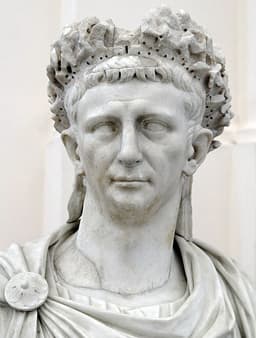
Claudius
Emperor · Ancient
54.4Total

Tudhaliya IV
Emperor · Ancient
59.4Total
Basic Information
Born
-10
-1237
Died
54
-1209
Era
Ancient
Ancient
Nationality
Roman Empire
Hittite Empire
Occupation
Emperor
Emperor
Civilization
Western
Middle Eastern
Score Comparison
Military (10%)
50.0
67.5
Political (20%)
68.0
68.0
Influence (20%)
54.9
62.0
Legacy (20%)
49.2
56.0
Leadership (15%)
53.2
53.2
Strategy (15%)
51.7
50.0
TOTAL
54.4
59.4
Claudius — Complete Timeline
41 AD
Accession as EmperorPolitical Action◆ Major
After Caligula's assassination, Claudius was found hiding and proclaimed emperor by the Praetorian Guard. The Senate reluctantly accepted him, marking the first time the Guard directly chose an emperor.
SuccessionPraetorian GuardImperial Rule
Impact: global
42 AD
Construction of the Port of OstiaOther◆ Major
Claudius initiated the construction of a new harbor at Ostia to improve Rome's grain supply. The project included a large artificial basin and a lighthouse, facilitating trade and food imports.
InfrastructureGrain SupplyRome
Impact: nationalconstructive
43 AD
Conquest of BritainWar
Claudius ordered the invasion of Britain, sending four legions under Aulus Plautius. He later visited the island to accept the surrender of the British tribes, incorporating southern Britain into the Roman Empire.
ConquestBritainExpansion
Impact: regionalconstructive
48 AD
Expansion of Roman CitizenshipReform◆ Major
Claudius extended Roman citizenship to certain provincial communities, particularly in Gaul. He also admitted Gauls into the Senate, promoting integration of the empire's elites.
CitizenshipIntegrationProvincial Policy
Impact: regionalprogressive
49 AD
Marriage to Agrippina the YoungerPolitical Action◆ Major
Claudius married his niece Agrippina the Younger, who then maneuvered to have her son Nero adopted as Claudius's heir. This marriage led to Claudius's eventual poisoning and Nero's succession.
MarriageSuccessionNero
Impact: nationaldestructive
Tudhaliya IV — Complete Timeline
1235 BC
Treaty with AmurruPolitical Action
Tudhaliya IV negotiated a treaty with the kingdom of Amurru in Syria, securing its loyalty as a vassal state. The treaty helped maintain Hittite control over Syria against Assyrian expansion.
Hittite EmpireSyriaDiplomacy
Impact: regionalconstructive
1230 BC
Construction of Yazilikaya SanctuaryCultural◆ Major
Tudhaliya IV commissioned the construction of the rock sanctuary at Yazilikaya near Hattusa. The sanctuary features reliefs of Hittite gods and the king himself, serving as a religious and ceremonial center for the Hittite state.
Hittite EmpireArchitectureReligion
Impact: regionalconstructive
1225 BC
Battle of NihriyaWar◆ Major
Tudhaliya IV fought the Assyrian king Tukulti-Ninurta I at the Battle of Nihriya in northern Mesopotamia. The Hittites were defeated, leading to the loss of Hittite territories in the Upper Euphrates region and a decline in Hittite influence.
Hittite EmpireAssyriaBattle
Impact: regionaldestructive
Expert Analysis
Origins
Claudius was born on August 1, 10 BC, in Lugdunum (modern Lyon, Gaul) to Nero Claudius Drusus and Antonia Minor. He suffered from physical disabilities, including a limp and stammer, and was largely excluded from public life by his family. His intellectual pursuits in history and literature kept him occupied, and he was often underestimated by his peers. Tudhaliya IV was born around 1240 BC, likely in Hattusa, the capital of the Hittite Empire. He was the son of King Hattusili III and Queen Puduhepa. He received a royal education in military strategy, diplomacy, and religious rites, preparing him for kingship in a period of Hittite resurgence after the turmoil of the previous century.
Rise to Power
Claudius's rise was accidental. After the assassination of his nephew Caligula in 41 AD, Claudius, then aged 50, was found hiding behind a curtain in the palace. The Praetorian Guard, seeking a pliable emperor, proclaimed him. The Senate, initially opposed, reluctantly accepted. Claudius's political score of 68.0 reflects his adeptness at consolidating power despite his physical limitations. Tudhaliya IV ascended to the throne around 1237 BC, succeeding his father Hattusili III, who had usurped power from his nephew Mursili III. Tudhaliya's rise was smoother, as he was designated heir and co-ruler. He faced challenges from rival branches of the royal family but maintained stability through his father's alliances.
Leadership & Governance
Claudius's governance focused on administrative efficiency and integration. He expanded the Roman bureaucracy, created departments for finance and justice, and improved the grain supply by building the Port of Ostia. His decision to admit Gauls into the Senate in 48 AD (the Lugdunum speech) promoted provincial integration. He also extended Roman citizenship to certain communities, enhancing loyalty. Tudhaliya IV governed through a feudal system, relying on vassal treaties and religious authority. He commissioned the rock sanctuary of Yazilikaya, which depicted the Hittite pantheon and legitimized his rule through divine association. His treaty with Amurru secured a key vassal, but his military score of 67.5 indicates a mixed record.
Triumph & Tragedy
Claudius's triumph was the conquest of Britain in 43 AD. He sent four legions under Aulus Plautius, and after initial success, he personally visited to accept the surrender of British tribes. This added a wealthy province to the empire. His tragedy was his personal life: his marriage to Agrippina the Younger led to his poisoning in 54 AD, likely at her instigation, to clear the way for Nero. Tudhaliya IV's triumph was the construction of Yazilikaya, a masterpiece of Hittite art and religion. His tragedy was the Battle of Nihriya (c. 1230 BC) against Assyria, where he was defeated, leading to the loss of Hittite influence in northern Mesopotamia. His total score of 59.4 exceeds Claudius's 54.4, but the defeat was a strategic setback.
Character & Destiny
Claudius was scholarly, cautious, and underestimated. His physical ailments led to a perception of weakness, but he was intelligent and pragmatic. His marriages, especially to Agrippina, revealed his vulnerability to manipulation. Tudhaliya IV was ambitious and religiously devout, using architecture and treaties to project power. His defeat at Nihriya exposed strategic overreach. Both men faced challenges from internal and external forces, but their characters shaped their fates: Claudius's trust in Agrippina led to his death; Tudhaliya's military aggression led to Assyrian retaliation.
Legacy
Claudius's legacy includes the conquest of Britain, which remained Roman for nearly 400 years. His administrative reforms influenced imperial governance, and his extension of citizenship set a precedent for inclusion. His scores: Military 50.0, Political 68.0, Influence 54.9, Legacy 49.2, Leadership 53.2, Strategy 51.7. Tudhaliya IV's legacy is primarily cultural: Yazilikaya is a UNESCO World Heritage site, essential for understanding Hittite religion. His treaty system influenced later Hittite diplomacy. His scores: Military 67.5, Political 68.0, Influence 62.0, Legacy 56.0, Leadership 53.2, Strategy 50.0. Despite higher total, his defeat at Nihriya limited his impact.
Conclusion
While Tudhaliya IV scores higher overall (59.4 vs 54.4), Claudius's impact on world history is greater. The Roman conquest of Britain shaped the island's language, culture, and institutions for millennia. Claudius's administrative innovations influenced the Roman Empire's longevity. Tudhaliya's achievements, though culturally significant, were confined to a smaller region and his empire collapsed shortly after his reign. Claudius's legacy endured through the Roman Empire's continued expansion and integration policies. Thus, Claudius had a more profound and lasting impact on the course of history.
Rankings
🥇
Tudhaliya IVLeader
Mil: 67.5Pol: 68.0Inf: 62.0
59.4
🥈
Claudius
Mil: 50.0Pol: 68.0Inf: 54.9
54.4
+5.0 behind
How This Comparison Works
Algorithm
Each figure is scored on 6 dimensions (0—100 scale) based on structured historical data: Military (10%), Political (20%), Influence (20%), Legacy (20%), Leadership (15%), Strategy (15%). The weighted total produces the final ranking.
Data Sources
Scores are computed from structured sub-indicators in the database. Scale factors adjust for era (Ancient ×0.85, Modern ×1.0) and civilization size (Eastern ×1.05, Other ×0.80) to account for differences in population and military scale.
Maximum 3 Figures
Comparisons are limited to 2—3 figures to ensure readability and statistical meaningfulness.
Error Margins
±5 points per dimension — Sub-scores are derived from historical records with inherent uncertainty. Two figures within 5 points on a dimension should be considered roughly equivalent in that area.
Total Score Accuracy
±3 points overall — The weighted combination of 6 dimensions produces a total score with approximately ±3 points of uncertainty. Differences of less than 3 points are not statistically significant— the figures are effectively tied.
Known Limitations
- Historical records are incomplete and uneven across civilizations
- Figures from oral-tradition societies may be underrepresented
- Occupation labels can misclassify multi-role figures
- Scores measure capability and impact, not moral character
- Quantitative scoring is a comparison tool, not absolute truth
Capability Radar
Military (10%) — Battles & Warfare
Battles
30
65
Win Rate
40
60
Expansion
60
55
Political (20%) — Governance & Reform
Reform
60
60
Diplomacy
55
65
Economy
50
55
Influence (20%) — Cultural & Global Reach
Cultural
45
75
Global
45
55
Legacy (20%) — Historical Impact
Historical
55
70
Longevity
50
70
Leadership (15%) — Power & Stability
Tenure
65
70
Stability
55
50
Strategy (15%) — Tactics & Innovation
Strategy
45
60
Tactics
35
55
Reform
30
50
Similar Comparisons
Comments & Discussion
No comments yet. Be the first to share your thoughts!