Loading...
Clovis I vs Theodosius the Great
Theodosius the Great leads by 12.4 pts · 2 figures compared
…
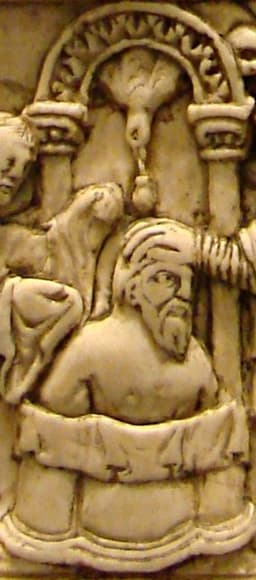
Clovis I
Emperor · Ancient
57.1Total
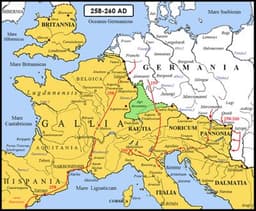
Theodosius the Great
Emperor · Ancient
69.5Total
Basic Information
Born
466
347
Died
511
395
Era
Ancient
Ancient
Nationality
Frankish Empire
Roman Empire
Occupation
Emperor
Emperor
Civilization
Western
Western
Score Comparison
Military (10%)
67.3
65.0
Political (20%)
45.0
65.0
Influence (20%)
55.0
75.0
Legacy (20%)
52.0
75.0
Leadership (15%)
72.0
68.0
Strategy (15%)
60.7
55.0
TOTAL
57.1
69.5
Clovis I — Complete Timeline
486 AD
Battle of SoissonsWar
Clovis defeated Syagrius, the last Roman ruler in Gaul, at Soissons. This victory ended Roman control in the region and established Clovis as the dominant power in northern Gaul, laying the foundation for the Frankish kingdom.
Frankish ExpansionRoman GaulSyagrius
Impact: regional
496 AD
Conversion to ChristianityCultural
Clovis converted to Nicene Christianity after the Battle of Tolbiac, following a vow to the Christian God. He was baptized by Bishop Remigius at Reims, becoming the first Germanic king to adopt Catholicism, which aligned him with the Gallo-Roman population and the Church.
ConversionCatholicismReimsChurch
Impact: globalconstructive
507 AD
Issuance of the Salic LawReform◆ Major
Clovis codified the Salic Law, a legal code combining Frankish customary law with Roman influences. It regulated inheritance, property, and criminal penalties, and later influenced medieval European legal systems.
Legal CodeSalic LawInheritance
Impact: regionalconstructive
Theodosius the Great — Complete Timeline
380 AD
Edict of ThessalonicaReform
Theodosius issued the Edict of Thessalonica, declaring Nicene Christianity the official state religion of the Roman Empire. All other Christian sects were deemed heretical, and pagan practices were increasingly suppressed.
ChristianityReligious PolicyState Religion
Impact: globalprogressive
390 AD
Massacre of ThessalonicaPolitical Action◆ Major
Theodosius ordered a massacre in Thessalonica after a riot killed a Roman official. Thousands of citizens were killed in the circus. Bishop Ambrose of Milan excommunicated Theodosius until he performed public penance.
MassacreChurch-State RelationsAmbrose
Impact: regionaldestructive
394 AD
Battle of the FrigidusWar◆ Major
Theodosius defeated the usurper Eugenius and his general Arbogast at the Battle of the Frigidus. The victory reunited the Roman Empire under Theodosius's rule for the last time before its permanent division.
Civil WarReunificationEugenius
Impact: national
395 AD
Division of the Roman EmpirePolitical Action
Upon his death, Theodosius divided the Roman Empire between his sons: Arcadius received the East and Honorius the West. This division became permanent, leading to the separate development of the Byzantine and Western Roman Empires.
Imperial DivisionSuccessionByzantine Empire
Impact: global
Expert Analysis
Origins
Clovis I, born around 466 AD, was the son of Childeric I, a Frankish chieftain of the Salian Franks, and Queen Basina. Little is known of his early education, but he was raised in a pagan Germanic warrior culture. His father's death in 481 left Clovis as king of a small Frankish tribe based in Tournai (modern Belgium). In contrast, Theodosius the Great was born in 347 AD in Cauca, Hispania (modern Coca, Spain), into a Christian Roman military family. His father, Theodosius the Elder, was a high-ranking general who had suppressed rebellions in Britain and Africa. Theodosius received a thorough classical education and military training, serving under his father in campaigns. The two men's origins reflect the divide between the emerging Germanic kingdoms and the established Roman Empire.
Rise to Power
Clovis rose by conquering neighboring Frankish tribes and Roman remnants. In 486, at the Battle of Soissons, he defeated Syagrius, the last Roman ruler in Gaul, ending Roman control and gaining vast territory. This victory earned him recognition as a dominant military leader. He then expanded his realm through alliances and wars, including defeating the Alemanni at the Battle of Tolbiac (496). According to Gregory of Tours, Clovis converted to Nicene Christianity after this battle, securing support from the Gallo-Roman clergy. Theodosius rose through military appointments. He was proclaimed co-emperor of the East in 379 after a successful campaign against the Sarmatians. Following the death of Emperor Valens at Adrianople, Theodosius was made Augustus by Gratian. He consolidated power by negotiating with the Goths, settling them in the empire as foederati. His rise was marked by political acumen rather than conquest, though he also suppressed usurpers like Maximus and Eugenius.
Leadership & Governance
Clovis ruled as a warrior-king, centralizing authority through conquest and legal codification. Around 507-511, he issued the Salic Law, a legal code that combined Frankish custom with Roman influences, regulating inheritance and criminal justice. He also established the Merovingian dynasty by eliminating rival Frankish kings through assassination and warfare. His governance relied on personal loyalty and military prowess. Theodosius governed as a Roman emperor, emphasizing religious unity. In 380, he issued the Edict of Thessalonica, making Nicene Christianity the state religion and outlawing Arianism and paganism. He convened the First Council of Constantinople (381) to affirm the Nicene Creed. Theodosius also faced a major crisis in 390 when he ordered the Massacre of Thessalonica, killing thousands in retaliation for a riot. Bishop Ambrose excommunicated him, forcing a public penance—a rare instance of church authority over an emperor.
Triumph & Tragedy
Clovis's greatest triumph was uniting the Frankish tribes and converting to Christianity, which laid the foundation for the Merovingian and later Carolingian kingdoms. His military score of 67.3 reflects his consistent battlefield victories. However, his political score of 45.0 indicates weaknesses: his kingdom was divided among his sons after his death, leading to internal strife. Theodosius's triumph was establishing Nicene orthodoxy as the empire's official religion, with an influence score of 75.0 and legacy of 75.0. His tragic failure was the Massacre of Thessalonica, which tarnished his reputation. Additionally, his division of the empire upon his death in 395 permanently split East and West, a decision with long-term consequences. His military score of 65.0 is comparable to Clovis's 67.3, but his political score of 65.0 surpasses Clovis's 45.0.
Character & Destiny
Clovis was pragmatic and ruthless, converting to Christianity for political advantage. He used religion to legitimize his rule among Gallo-Romans while maintaining Frankish traditions. His leadership score of 72.0 reflects his ability to inspire loyalty, but his strategy score of 60.7 shows a reliance on immediate gains. Theodosius was devout and authoritarian, deeply committed to religious uniformity. His leadership score of 68.0 indicates a firm but sometimes harsh hand. His strategy score of 55.0 is lower than Clovis's, as his decision to divide the empire proved strategically flawed. Theodosius's character led to greater long-term influence through institutional change, while Clovis's impact was more personal and dynastic.
Legacy
Clovis's legacy is the foundation of the Frankish kingdom and the Merovingian dynasty, which eventually evolved into the Carolingian Empire under Charlemagne. The Salic Law influenced European legal traditions for centuries. His conversion made Gaul a Christian stronghold. However, his political fragmentation limited his direct impact. Theodosius's legacy is profound: he made Christianity the official religion of the Roman Empire, shaping the medieval Christian world. The Edict of Thessalonica and the Council of Constantinople established doctrines that endure. His division of the empire led to the Byzantine Empire's continuation in the East while the West declined. Theodosius's total score of 69.5 versus Clovis's 57.1 reflects his greater institutional and religious impact.
Conclusion
Theodosius the Great had a greater impact than Clovis I, as his decisions shaped the religious and political structure of Europe for over a millennium. While Clovis's unification of the Franks and conversion to Christianity were crucial for the rise of medieval France, Theodosius's enforcement of Nicene Christianity as state religion and his division of the Roman Empire had more far-reaching consequences. Theodosius scores higher overall (69.5 vs 57.1) and in influence (75.0 vs 55.0) and legacy (75.0 vs 52.0). Clovis's leadership score of 72.0 exceeds Theodosius's 68.0, but the scale of Theodosius's decisions—affecting the entire Roman world—gives him the edge. Therefore, Theodosius the Great is the more significant historical figure.
Rankings
🥇
Theodosius the GreatLeader
Mil: 65.0Pol: 65.0Inf: 75.0
69.5
🥈
Clovis I
Mil: 67.3Pol: 45.0Inf: 55.0
57.1
+12.4 behind
How This Comparison Works
Algorithm
Each figure is scored on 6 dimensions (0—100 scale) based on structured historical data: Military (10%), Political (20%), Influence (20%), Legacy (20%), Leadership (15%), Strategy (15%). The weighted total produces the final ranking.
Data Sources
Scores are computed from structured sub-indicators in the database. Scale factors adjust for era (Ancient ×0.85, Modern ×1.0) and civilization size (Eastern ×1.05, Other ×0.80) to account for differences in population and military scale.
Maximum 3 Figures
Comparisons are limited to 2—3 figures to ensure readability and statistical meaningfulness.
Error Margins
±5 points per dimension — Sub-scores are derived from historical records with inherent uncertainty. Two figures within 5 points on a dimension should be considered roughly equivalent in that area.
Total Score Accuracy
±3 points overall — The weighted combination of 6 dimensions produces a total score with approximately ±3 points of uncertainty. Differences of less than 3 points are not statistically significant— the figures are effectively tied.
Known Limitations
- Historical records are incomplete and uneven across civilizations
- Figures from oral-tradition societies may be underrepresented
- Occupation labels can misclassify multi-role figures
- Scores measure capability and impact, not moral character
- Quantitative scoring is a comparison tool, not absolute truth
Capability Radar
Military (10%) — Battles & Warfare
Battles
65
65
Win Rate
70
70
Expansion
70
50
Political (20%) — Governance & Reform
Reform
65
85
Diplomacy
75
75
Economy
55
60
Influence (20%) — Cultural & Global Reach
Cultural
70
85
Global
60
85
Legacy (20%) — Historical Impact
Historical
75
90
Longevity
70
95
Leadership (15%) — Power & Stability
Tenure
70
70
Stability
60
55
Strategy (15%) — Tactics & Innovation
Strategy
65
75
Tactics
60
60
Reform
55
55
Similar Comparisons
Comments & Discussion
No comments yet. Be the first to share your thoughts!