Loading...
Conrad II vs Julius Caesar
Julius Caesar leads by 24.0 pts · 2 figures compared
…
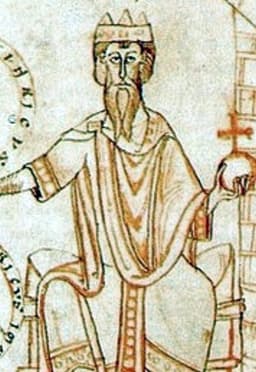
Conrad II
Emperor · Medieval
58.8Total

Julius Caesar
General · Ancient
82.8Total
Basic Information
Born
990
-100
Died
1039
-44
Era
Medieval
Ancient
Nationality
Holy Roman Empire
Roman Republic
Occupation
Emperor
General
Civilization
Western
Western
Score Comparison
Military (10%)
47.5
88.0
Political (20%)
72.0
78.0
Influence (20%)
55.7
85.0
Legacy (20%)
50.0
82.0
Leadership (15%)
72.0
80.0
Strategy (15%)
60.0
85.0
TOTAL
58.8
82.8
Conrad II — Complete Timeline
1024 AD
Election as King of GermanyPolitical Action◆ Major
Following the death of Henry II without heirs, Conrad II was elected King of Germany in 1024, becoming the first ruler of the Salian dynasty. His election ended the Ottonian line and established a new royal house.
SuccessionSalian Dynasty
Impact: regional
1027 AD
Coronation as Holy Roman EmperorPolitical Action◆ Major
Pope John XIX crowned Conrad II Holy Roman Emperor in Rome on March 26, 1027. The coronation solidified Salian imperial authority and included the participation of kings from Burgundy and Italy.
CoronationImperial Authority
Impact: regionalconstructive
1032 AD
Acquisition of the Kingdom of BurgundyPolitical Action◆ Major
Upon the death of King Rudolf III of Burgundy in 1032, Conrad II claimed the Kingdom of Burgundy through a treaty of succession. He was crowned King of Burgundy in 1033, expanding the Empire's territory into the Rh
Territorial ExpansionBurgundy
Impact: regionalconstructive
1037 AD
Promulgation of the Constitutio de feudisReform◆ Major
Conrad II issued the Constitutio de feudis in 1037, which made fiefs hereditary for lesser nobles in Italy. This legal reform strengthened the position of the lower nobility and stabilized feudal relationships in the kingdom of Italy.
Legal ReformFeudalism
Impact: regionalconstructive
Julius Caesar — Complete Timeline
58 BC
Gallic WarsWar◆ Major
Caesar, as proconsul of Gaul, launched a series of campaigns that conquered all of Gaul (modern France, Belgium, and parts of Switzerland). He fought numerous battles, including against the Helvetii, the Belgae, and the Gallic chieftain Vercingetorix. The wars brought immense wealth and a loyal army to Caesar.
Gallic WarsConquestRoman Expansion
Impact: regional
49 BC
Crossing the RubiconPolitical Action◆ Major
Caesar led Legio XIII across the Rubicon River into Italy, defying the Roman Senate's order to disband his army. This act triggered a civil war against Pompey and the Optimates, ultimately leading to Caesar's dictatorship and the end of the Roman Republic.
Roman Civil WarEnd of RepublicPower Struggle
Impact: global
48 BC
Battle of PharsalusWar◆ Major
Caesar's outnumbered army defeated the larger forces of Pompey the Great at Pharsalus in Greece. Caesar's tactical use of a reserve line to counter Pompey's cavalry charge proved decisive. Pompey fled to Egypt, where he was assassinated, leaving Caesar as the undisputed master of the Roman world.
Roman Civil WarBattleDecisive Victory
Impact: regional
44 BC
Appointment as Dictator for LifePolitical Action◆ Major
The Roman Senate appointed Caesar dictator perpetuo (dictator for life), granting him unprecedented personal power. This move concentrated military, legislative, and judicial authority in one person, effectively ending the Roman Republic's traditional system of checks and balances and alarming many senators.
DictatorshipEnd of RepublicPower Consolidation
Impact: regionaldestructive
Assassination on the Ides of MarchPolitical Action◆ Major
A group of Roman senators, led by Marcus Junius Brutus and Gaius Cassius Longinus, stabbed Caesar to death at a meeting of the Senate in the Theatre of Pompey. The assassination was intended to restore the Republic, but instead triggered another civil war that led to the rise of the Roman Empire.
AssassinationRoman PoliticsEnd of Republic
Impact: globaldestructive
Expert Analysis
conrad-ii-vs-julius-caesar
# The Emperor and the General: Two Paths to Power in the West
On a winter morning in 49 BCE, a fifty-year-old Roman general stood at the banks of a small river in northern Italy. The Rubicon was little more than a stream, but crossing it with an army meant civil war. Julius Caesar paused, then gave the order. Thirteen centuries later, in 1024, another man stood before a gathering of German nobles in the Rhineland. Conrad II, a middle-aged count from the Salian dynasty, had just been elected king—not through conquest, but through the careful negotiation of princes. One man seized history with a sword; the other inherited it with a crown. Why did these two Western leaders, both architects of empires, travel such different roads to power?
Origins
Caesar was born into the twilight of the Roman Republic, a world of patrician rivalries and crumbling traditions. His family, the Julii, claimed descent from Venus herself, but their political influence had faded. Young Caesar watched his uncle Marius fight civil wars and saw Sulla’s proscriptions paint Rome red. He learned early that the Republic’s old rules no longer protected anyone. His education in rhetoric and war was a preparation for survival, not statesmanship.
Conrad II emerged from a different world entirely. Born in 990, he grew up in the shadow of the Holy Roman Empire, a patchwork of German duchies, Italian city-states, and Burgundian lands. The Salian family held lands in Franconia, but they were not kings. Conrad’s father died when he was young, and his mother remarried into the powerful Wetterau family. The young Conrad learned not the art of war but the art of patience—watching, waiting, building alliances among the fractious nobility of Germany. His world was one of oaths and charters, not legions and battlefields.
Rise to Power
Caesar’s ascent was a masterpiece of calculated risk. He climbed the Roman political ladder—quaestor, aedile, praetor—but his true springboard came in 58 BCE when he secured command of Gaul. Over eight years, he conquered a territory larger than Italy itself, amassing wealth, loyal veterans, and a reputation that made the Senate tremble. His military score of 88 reflects this: he was not merely a general but a revolutionary who understood that victory in the field could rewrite the constitution.
Conrad’s path was slower and quieter. When Emperor Henry II died childless in 1024, the German princes faced a crisis of succession. Conrad was not the obvious choice—he was a cousin, not a son. But he had spent decades cultivating relationships with the archbishops and dukes who held the real power. In the election at Kamba, they chose him not for his brilliance but for his reliability. His military score of 36 suggests he never needed to conquer his throne; he simply outlasted his rivals.
Leadership & Governance
Caesar governed as he conquered—with speed, audacity, and a willingness to break any rule. As dictator, he reformed the calendar, extended citizenship to Gauls, and packed the Senate with his supporters. His political score of 78 understates his genius: he understood that the Republic was dying and tried to replace it with a monarchy disguised as a restoration. But his reforms were always personal, never institutional. He solved problems by centralizing power in himself.
Conrad II governed by building consensus. His great achievement, the *Constitutio de feudis* of 1037, made fiefs hereditary for lesser nobles in Italy. This was not a dramatic reform but a legal codification that stabilized the empire. His political score of 72 reflects a ruler who understood that power in a medieval kingdom came from law, not force. He acquired Burgundy in 1032 through a treaty of succession, not war. Where Caesar broke the Senate, Conrad co-opted the nobility.
Triumph & Tragedy
Caesar’s greatest moment was also his most fatal: the crossing of the Rubicon. It won him the civil war and made him master of Rome, but it also sealed his doom. The Ides of March, 44 BCE, saw him fall to sixty dagger wounds from men he had pardoned. His tragedy was that he could destroy the old order but could not build a stable new one. His assassination plunged Rome into another generation of civil war.
Conrad’s triumph was quieter but more lasting. When he died in 1039, he left an empire that was stronger than when he found it. The Salian dynasty would rule for another century, and the *Constitutio de feudis* shaped European law for generations. His tragedy was obscurity: a ruler who built stability rarely inspires poetry or plays. He was never assassinated because he never threatened the powerful—he simply outmaneuvered them.
Character & Destiny
Caesar was a gambler. He staked everything on his own genius, and his personality—arrogant, charismatic, reckless—drove every decision. “The die is cast,” he supposedly said at the Rubicon, and he meant it. He could not imagine defeat because he could not imagine limits. That confidence built an empire but also destroyed him.
Conrad II was a builder of fences, not a breaker of walls. He understood that medieval kingship was about managing expectations, not imposing will. His character was cautious, patient, and legalistic. He never had to say “the die is cast” because he never cast the die—he let events unfold and positioned himself to benefit. One man bent history to his will; the other bent himself to history’s currents.
Legacy
Caesar’s legacy is immortal. His name became a title—Kaiser, Tsar—and his reforms shaped Western governance for two millennia. He is remembered as a genius and a tyrant, a visionary and a warning. His total score of 83 does not capture his cultural weight: he is a character in Shakespeare, a symbol in political philosophy, a ghost that still haunts the West.
Conrad II is remembered, if at all, as a footnote. His score of 66 reflects a competent ruler who did what was needed but nothing more. He has no plays, no famous quotes, no dramatic death. Yet his quiet consolidation of imperial power made possible the Holy Roman Empire that would dominate Europe for centuries. He was not a star but a foundation.
Conclusion
Standing at the Rubicon, Caesar saw a river that would make him immortal. Standing before the electors at Kamba, Conrad saw a crown that would make him forgettable. Both men built empires, but one built for drama and the other for durability. History remembers the gambler and ignores the steward. Yet perhaps Conrad’s lesson is the more useful one: that power often comes not to those who seize it, but to those who wait for it to be given. In the end, Caesar’s name echoes through the ages, but Conrad’s empire outlasted his by centuries. Which is the truer measure of success?
Rankings
🥇
Julius CaesarLeader
Mil: 88.0Pol: 78.0Inf: 85.0
82.8
🥈
Conrad II
Mil: 47.5Pol: 72.0Inf: 55.7
58.8
+24.0 behind
How This Comparison Works
Algorithm
Each figure is scored on 6 dimensions (0—100 scale) based on structured historical data: Military (10%), Political (20%), Influence (20%), Legacy (20%), Leadership (15%), Strategy (15%). The weighted total produces the final ranking.
Data Sources
Scores are computed from structured sub-indicators in the database. Scale factors adjust for era (Ancient ×0.85, Modern ×1.0) and civilization size (Eastern ×1.05, Other ×0.80) to account for differences in population and military scale.
Maximum 3 Figures
Comparisons are limited to 2—3 figures to ensure readability and statistical meaningfulness.
Error Margins
±5 points per dimension — Sub-scores are derived from historical records with inherent uncertainty. Two figures within 5 points on a dimension should be considered roughly equivalent in that area.
Total Score Accuracy
±3 points overall — The weighted combination of 6 dimensions produces a total score with approximately ±3 points of uncertainty. Differences of less than 3 points are not statistically significant— the figures are effectively tied.
Known Limitations
- Historical records are incomplete and uneven across civilizations
- Figures from oral-tradition societies may be underrepresented
- Occupation labels can misclassify multi-role figures
- Scores measure capability and impact, not moral character
- Quantitative scoring is a comparison tool, not absolute truth
Capability Radar
Military (10%) — Battles & Warfare
Battles
45
95
Win Rate
50
92
Expansion
60
97
Political (20%) — Governance & Reform
Reform
65
90
Diplomacy
75
85
Economy
60
82
Influence (20%) — Cultural & Global Reach
Cultural
40
88
Global
35
94
Legacy (20%) — Historical Impact
Historical
55
95
Longevity
50
96
Leadership (15%) — Power & Stability
Tenure
70
75
Stability
70
60
Strategy (15%) — Tactics & Innovation
Strategy
55
94
Tactics
40
96
Reform
30
88
Similar Comparisons
Comments & Discussion
No comments yet. Be the first to share your thoughts!