Loading...
Constantine IV vs Hattusili I
Constantine IV leads by 4.2 pts · 2 figures compared
…

Constantine IV
Emperor · Ancient
61.2Total
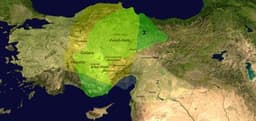
Hattusili I
Emperor · Ancient
57.0Total
Basic Information
Born
-650
-1650
Died
—
-1620
Era
Ancient
Ancient
Nationality
Byzantine Empire
Hittite Empire
Occupation
Emperor
Emperor
Civilization
Western
Middle Eastern
Score Comparison
Military (10%)
67.3
63.3
Political (20%)
62.7
68.0
Influence (20%)
58.0
54.1
Legacy (20%)
52.0
49.2
Leadership (15%)
72.0
64.0
Strategy (15%)
67.2
50.0
TOTAL
61.2
57.0
Constantine IV — Complete Timeline
678 AD
Defeated the Arab siege of ConstantinopleWar
Constantine IV successfully defended Constantinople against a massive Arab siege that lasted from 674 to 678. The Byzantine victory, aided by the use of Greek fire, forced the Umayyad Caliphate to sue for peace and pay tribute.
Arab-Byzantine WarsSiegeGreek Fire
Impact: globalconstructive
680 AD
Reorganized the Byzantine army into themesReform◆ Major
Constantine IV continued the reorganization of the Byzantine military into thematic provinces. This system, which combined civil and military authority, proved effective in defending the empire against external threats.
Military ReformAdministrationByzantine Empire
Impact: nationalconstructive
Convened the Third Council of ConstantinopleCultural◆ Major
Constantine IV convened the Third Council of Constantinople, which condemned Monothelitism as a heresy. The council restored religious unity between Constantinople and Rome, ending a long-standing theological dispute.
Ecumenical CouncilReligious UnityByzantine Empire
Impact: regionalconstructive
Hattusili I — Complete Timeline
1650 BC
Crossing of the Taurus MountainsWar◆ Major
Hattusili I led the Hittite army across the Taurus Mountains into northern Syria, conquering the kingdom of Alalakh and other cities. This campaign established Hittite control over key trade routes and marked the beginning of the Hittite Old Kingdom's expansion.
Hittite EmpireMilitary CampaignSyria
Impact: regional
Foundation of the Hittite Old KingdomPolitical Action
Hattusili I established the Hittite Old Kingdom by consolidating control over central Anatolia and moving the capital to Hattusa. He initiated a centralized administration and military reforms that laid the foundation for Hittite imperial power.
Hittite EmpireState FormationHattusa
Impact: regionalconstructive
Expert Analysis
Origins
**Constantine IV** (born c. 652 AD) was the eldest son of Emperor Constans II. He was raised in the Byzantine court, receiving a traditional imperial education in military and administrative affairs. His early life was overshadowed by the ongoing Arab-Byzantine wars and internal religious disputes over Monothelitism. He came to power at age 16 after his father's assassination, thrust into leadership during a period of existential crisis.
**Hattusili I** (reigned c. 1650–1620 BC) was a Hittite king who founded the Old Kingdom. Little is known of his early life, but he likely came from a noble lineage in central Anatolia. He established his capital at Hattusa (modern Boğazkale) and began the unification of Hittite tribes. His name means "man of Hattusa," indicating his close association with the city.
Rise to Power
Constantine IV became emperor in 668 AD after his father Constans II was murdered in Sicily. He immediately faced a massive Arab threat: the Umayyad Caliphate launched a series of annual attacks on Constantinople from 674 to 678. Constantine took personal command of the defense, coordinating the use of Greek fire and naval tactics. His successful resistance forced the Arabs to lift the siege in 678, a turning point that saved the Byzantine Empire.
Hattusili I rose to power by consolidating Hittite city-states under his rule. He moved the capital to Hattusa and began military campaigns to expand territory. His crossing of the Taurus Mountains into Syria around 1650 BC marked his major achievement, conquering Alalakh and other cities. This established Hittite presence in the region and laid the foundation for the Old Kingdom.
Leadership & Governance
Constantine IV governed with a focus on military defense and religious unity. He convened the Third Council of Constantinople (680-681) to condemn Monothelitism, restoring Orthodox doctrine and healing a schism with the Papacy. He also reorganized the Byzantine army into thematic provinces, combining civil and military authority under strategoi, which improved local defense. His leadership was pragmatic, prioritizing survival over expansion.
Hattusili I ruled as an absolute monarch, centralizing power in Hattusa. He established a royal administration and appointed loyal governors. His military campaigns were aimed at securing trade routes and resources. He also left a legal testament, the "Edict of Hattusili," which outlined succession rules and administrative principles. His governance was foundational but lacked the institutional depth of later Hittite kings.
Triumph & Tragedy
Constantine IV's greatest triumph was the defense of Constantinople (674-678), a victory that preserved the Byzantine Empire for centuries. His use of Greek fire and naval strategy scored him a military score of 67.3. However, his later reign saw setbacks: he failed to prevent Arab raids into Anatolia and died young (c. 685 AD), possibly from dysentery. His political score of 62.7 reflects his success in religious unity but limited expansion.
Hattusili I's triumph was founding the Hittite Old Kingdom and expanding into Syria, earning a political score of 68.0. However, his military score of 63.3 is lower due to incomplete consolidation; after his death, the kingdom faced internal revolts. His legacy score of 49.2 indicates that his achievements were overshadowed by later Hittite rulers like Suppiluliuma I.
Character & Destiny
Constantine IV was determined and strategic, known for his calm under pressure during the siege. He prioritized unity, both militarily and religiously. His early death prevented him from fully capitalizing on his victory, but his leadership during crisis defined his reign. Historians often see him as a capable emperor who stabilized the empire.
Hattusili I was ambitious and expansionist, willing to cross mountains to extend Hittite power. His character was that of a founder, but his aggressive campaigns sometimes overextended resources. He died of natural causes, but his kingdom faced succession issues. His total score of 57.0 reflects his foundational role but limited long-term impact.
Legacy
Constantine IV's legacy is tied to the survival of Byzantium. The defeat of the Arab siege allowed the empire to recover and later counterattack. The Third Council of Constantinople reinforced Orthodox doctrine, influencing Christian theology. The theme system he supported became a model for medieval military organization. His influence score of 58.0 and legacy score of 52.0 reflect his importance in Byzantine history.
Hattusili I's legacy is foundational: he established Hattusa as the capital and started the Hittite Old Kingdom. However, his achievements were built upon by successors, and his name is less known than later Hittite kings. His influence score of 54.1 and legacy score of 49.2 indicate that while he was crucial, his impact was more localized and overshadowed.
Conclusion
Comparing total scores, Constantine IV (61.2) edges out Hattusili I (57.0) by 4.2 points. Constantine IV's defense of Constantinople was a pivotal event in world history, saving a civilization that preserved classical knowledge. Hattusili I founded a kingdom, but his impact was regional and his empire later declined. Therefore, Constantine IV had greater impact on the broader course of history.
Rankings
🥇
Constantine IVLeader
Mil: 67.3Pol: 62.7Inf: 58.0
61.2
🥈
Hattusili I
Mil: 63.3Pol: 68.0Inf: 54.1
57.0
+4.2 behind
How This Comparison Works
Algorithm
Each figure is scored on 6 dimensions (0—100 scale) based on structured historical data: Military (10%), Political (20%), Influence (20%), Legacy (20%), Leadership (15%), Strategy (15%). The weighted total produces the final ranking.
Data Sources
Scores are computed from structured sub-indicators in the database. Scale factors adjust for era (Ancient ×0.85, Modern ×1.0) and civilization size (Eastern ×1.05, Other ×0.80) to account for differences in population and military scale.
Maximum 3 Figures
Comparisons are limited to 2—3 figures to ensure readability and statistical meaningfulness.
Error Margins
±5 points per dimension — Sub-scores are derived from historical records with inherent uncertainty. Two figures within 5 points on a dimension should be considered roughly equivalent in that area.
Total Score Accuracy
±3 points overall — The weighted combination of 6 dimensions produces a total score with approximately ±3 points of uncertainty. Differences of less than 3 points are not statistically significant— the figures are effectively tied.
Known Limitations
- Historical records are incomplete and uneven across civilizations
- Figures from oral-tradition societies may be underrepresented
- Occupation labels can misclassify multi-role figures
- Scores measure capability and impact, not moral character
- Quantitative scoring is a comparison tool, not absolute truth
Capability Radar
Military (10%) — Battles & Warfare
Battles
75
60
Win Rate
80
65
Expansion
40
65
Political (20%) — Governance & Reform
Reform
55
60
Diplomacy
70
50
Economy
60
45
Influence (20%) — Cultural & Global Reach
Cultural
50
45
Global
60
40
Legacy (20%) — Historical Impact
Historical
65
55
Longevity
55
50
Leadership (15%) — Power & Stability
Tenure
65
55
Stability
65
40
Strategy (15%) — Tactics & Innovation
Strategy
75
60
Tactics
70
55
Reform
60
50
Similar Comparisons
Comments & Discussion
No comments yet. Be the first to share your thoughts!