Loading...
Hattusili I vs Julius Caesar
Julius Caesar leads by 25.8 pts · 2 figures compared
…
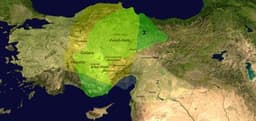
Hattusili I
Emperor · Ancient
57.0Total

Julius Caesar
General · Ancient
82.8Total
Basic Information
Born
-1650
-100
Died
-1620
-44
Era
Ancient
Ancient
Nationality
Hittite Empire
Roman Republic
Occupation
Emperor
General
Civilization
Middle Eastern
Western
Score Comparison
Military (10%)
63.3
88.0
Political (20%)
68.0
78.0
Influence (20%)
54.1
85.0
Legacy (20%)
49.2
82.0
Leadership (15%)
64.0
80.0
Strategy (15%)
50.0
85.0
TOTAL
57.0
82.8
Hattusili I — Complete Timeline
1650 BC
Crossing of the Taurus MountainsWar◆ Major
Hattusili I led the Hittite army across the Taurus Mountains into northern Syria, conquering the kingdom of Alalakh and other cities. This campaign established Hittite control over key trade routes and marked the beginning of the Hittite Old Kingdom's expansion.
Hittite EmpireMilitary CampaignSyria
Impact: regional
Foundation of the Hittite Old KingdomPolitical Action
Hattusili I established the Hittite Old Kingdom by consolidating control over central Anatolia and moving the capital to Hattusa. He initiated a centralized administration and military reforms that laid the foundation for Hittite imperial power.
Hittite EmpireState FormationHattusa
Impact: regionalconstructive
Julius Caesar — Complete Timeline
58 BC
Gallic WarsWar◆ Major
Caesar, as proconsul of Gaul, launched a series of campaigns that conquered all of Gaul (modern France, Belgium, and parts of Switzerland). He fought numerous battles, including against the Helvetii, the Belgae, and the Gallic chieftain Vercingetorix. The wars brought immense wealth and a loyal army to Caesar.
Gallic WarsConquestRoman Expansion
Impact: regional
49 BC
Crossing the RubiconPolitical Action◆ Major
Caesar led Legio XIII across the Rubicon River into Italy, defying the Roman Senate's order to disband his army. This act triggered a civil war against Pompey and the Optimates, ultimately leading to Caesar's dictatorship and the end of the Roman Republic.
Roman Civil WarEnd of RepublicPower Struggle
Impact: global
48 BC
Battle of PharsalusWar◆ Major
Caesar's outnumbered army defeated the larger forces of Pompey the Great at Pharsalus in Greece. Caesar's tactical use of a reserve line to counter Pompey's cavalry charge proved decisive. Pompey fled to Egypt, where he was assassinated, leaving Caesar as the undisputed master of the Roman world.
Roman Civil WarBattleDecisive Victory
Impact: regional
44 BC
Appointment as Dictator for LifePolitical Action◆ Major
The Roman Senate appointed Caesar dictator perpetuo (dictator for life), granting him unprecedented personal power. This move concentrated military, legislative, and judicial authority in one person, effectively ending the Roman Republic's traditional system of checks and balances and alarming many senators.
DictatorshipEnd of RepublicPower Consolidation
Impact: regionaldestructive
Assassination on the Ides of MarchPolitical Action◆ Major
A group of Roman senators, led by Marcus Junius Brutus and Gaius Cassius Longinus, stabbed Caesar to death at a meeting of the Senate in the Theatre of Pompey. The assassination was intended to restore the Republic, but instead triggered another civil war that led to the rise of the Roman Empire.
AssassinationRoman PoliticsEnd of Republic
Impact: globaldestructive
Expert Analysis
hattusili-i-vs-julius-caesar
# The Conqueror and the Founder: Caesar and Hattusili I
The Ides of March dawned gray and ominous over Rome. Gaius Julius Caesar, the most powerful man in the Mediterranean world, walked into the Senate chamber unarmed and unsuspecting. Within minutes, sixty daggers would tear through his body, and the Roman Republic would bleed out alongside him. Fifteen centuries earlier and a thousand miles to the east, another ruler—Hattusili I—stood atop the Taurus Mountains, looking down at the Syrian plains he had just conquered. He would die of natural causes decades later, his kingdom intact but his name fading into the dust of Anatolia. Why did one man’s life end in such spectacular violence, while the other’s passed in relative obscurity? The answer lies not in their deeds, but in the worlds they built and the worlds they inherited.
Origins
Julius Caesar was born into a patrician family in 100 BCE, at a time when the Roman Republic was tearing itself apart. His uncle Gaius Marius had been a populist reformer, and his father died when Caesar was only sixteen, leaving him to navigate a world of civil wars, proscriptions, and shifting alliances. Rome was a city of marble and blood, where ambition was both a virtue and a death sentence. Caesar’s education was Greek philosophy, military tactics, and the brutal reality that politics was war by other means.
Hattusili I emerged from a very different world. He ruled around 1650 BCE, in an age when writing was still young, bronze was the height of military technology, and kingdoms rose and fell in the span of a single generation. The Hittites were a people of the Anatolian highlands, speaking an Indo-European language that had no written form before their rise. Hattusili’s background is shrouded in the mists of prehistory—no childhood anecdotes survive, no rivalries with uncles or cousins. What we know is that he was the first king to unite the scattered Hittite tribes into something resembling a state. He was a founder in the truest sense, carving order out of chaos with nothing but a bronze sword and a will of iron.
Rise to Power
Caesar’s path to power was a masterclass in political survival. He climbed the cursus honorum—the ladder of Roman offices—through a combination of military glory and popular appeal. His conquest of Gaul between 58 and 50 BCE gave him an army loyal to him personally, not to the Senate. When his political enemies in Rome moved to strip him of command, Caesar made his fateful decision: crossing the Rubicon River in 49 BCE, an act of war against the Republic itself. “The die is cast,” he reportedly said, and the civil war that followed would remake the Roman world.
Hattusili I’s rise was simpler and more brutal. He was likely a tribal chieftain who saw the opportunity to unite the Hittite-speaking peoples of central Anatolia under a single rule. His defining moment came in 1650 BCE, when he led his army across the formidable Taurus Mountains—a feat of logistics and courage that would echo through Hittite history. He conquered the kingdom of Alalakh in northern Syria, securing trade routes and establishing Hittite presence in the fertile plains. There was no Senate to defy, no legal niceties to observe. He simply marched, conquered, and declared himself king.
Leadership & Governance
Caesar governed as a reformer and a revolutionary. As dictator, he overhauled the Roman calendar, granted citizenship to provincials, reformed debt laws, and began massive public works. His military brilliance—most famously at the Siege of Alesia in 52 BCE, where he defeated a Gallic coalition led by Vercingetorix—was matched by his political cunning. Yet his rule was always fragile. He pardoned his enemies, only to have them conspire against him. He centralized power, but never fully abolished the republican institutions that opposed him. His leadership score of 82.0 reflects a man who could inspire armies but struggled to build lasting political consensus.
Hattusili I ruled differently. As the founder of the Hittite Old Kingdom, his governance was about survival and consolidation. He moved the capital to Hattusa, a city that would become the heart of the Hittite Empire for centuries. His military campaigns were less about personal glory and more about establishing borders that could be defended. With a military score of only 45.0—far below Caesar’s 88.0—Hattusili was no tactical genius. But his strategy score of 65.2 suggests a ruler who understood that building a kingdom required more than winning battles; it required institutions, alliances, and a capital that could endure.
Triumph & Tragedy
Caesar’s greatest triumph was his conquest of Gaul, which added a vast territory to the Roman sphere and made him the richest man in the Republic. His most devastating failure was his inability to secure his own safety. The Ides of March in 44 BCE was not just a personal tragedy—it was a political catastrophe that plunged Rome into another round of civil wars. Caesar had transformed the Republic, but he had not transformed its soul. The institutions he bypassed eventually destroyed him.
Hattusili I’s triumph was the foundation of the Hittite Old Kingdom itself. The crossing of the Taurus Mountains in 1650 BCE was both a military achievement and a symbolic act—it announced that the Hittites were no longer a collection of hill tribes but a power to be reckoned with. His tragedy was that his kingdom would not last. Within a century of his death, the Hittite Old Kingdom collapsed under internal strife and external pressure. His legacy score of 65.6, compared to Caesar’s 82.0, reflects this fragility. He built a house of bronze, not marble.
Character & Destiny
Caesar was audacious, charismatic, and ruthless. He forgave his enemies not out of kindness but out of a calculated belief that mercy would win him loyalty. He was wrong. His personality—the gambler’s instinct, the orator’s charm, the general’s arrogance—drove him to take risks that lesser men would never attempt. That same personality made him a target. He could not imagine that the men he had pardoned would be the ones to kill him.
Hattusili I was a builder, not a gambler. His personality is harder to reconstruct, but the evidence suggests a cautious, methodical ruler who understood the limits of his power. He did not try to conquer the entire Near East; he focused on what could be held. His destiny was to be forgotten by all but specialists—a fate that would have seemed natural to a man who lived in an age when kingdoms were as ephemeral as the rains of spring.
Legacy
Caesar’s legacy reshaped the world. His name became synonymous with imperial rule—the German “Kaiser” and Russian “Tsar” both derive from “Caesar.” The Roman Empire that followed him lasted for another five centuries in the West and a thousand years in the East. His writings, especially the *Commentaries on the Gallic War*, remain classics of military literature. He is remembered not just as a conqueror but as a symbol of ambition and tragedy.
Hattusili I’s legacy is more modest but no less real. He founded a tradition of kingship that would later produce Suppiluliuma I, the Hittite ruler who challenged Egypt for supremacy in the Near East. The Hittite Empire that reached its peak two centuries after Hattusili’s death owed its existence to his initial vision. Yet his name is known only to historians and students of the ancient Near East. He built a kingdom; Caesar built a myth.
Conclusion
Standing on the Taurus Mountains in 1650 BCE, Hattusili I could see the land he had conquered. He could not see the future—the collapse of his kingdom, the rise of new empires, the eventual rediscovery of his capital at Hattusa in the nineteenth century. Julius Caesar, walking into the Senate on that March morning, could see only his enemies. Both men were products of their eras—the founder and the revolutionary, the builder and the destroyer. One died in obscurity, the other in infamy. But both understood the same truth: that power is a river that flows through time, and those who try to hold it are always swept away.
Rankings
🥇
Julius CaesarLeader
Mil: 88.0Pol: 78.0Inf: 85.0
82.8
🥈
Hattusili I
Mil: 63.3Pol: 68.0Inf: 54.1
57.0
+25.8 behind
How This Comparison Works
Algorithm
Each figure is scored on 6 dimensions (0—100 scale) based on structured historical data: Military (10%), Political (20%), Influence (20%), Legacy (20%), Leadership (15%), Strategy (15%). The weighted total produces the final ranking.
Data Sources
Scores are computed from structured sub-indicators in the database. Scale factors adjust for era (Ancient ×0.85, Modern ×1.0) and civilization size (Eastern ×1.05, Other ×0.80) to account for differences in population and military scale.
Maximum 3 Figures
Comparisons are limited to 2—3 figures to ensure readability and statistical meaningfulness.
Error Margins
±5 points per dimension — Sub-scores are derived from historical records with inherent uncertainty. Two figures within 5 points on a dimension should be considered roughly equivalent in that area.
Total Score Accuracy
±3 points overall — The weighted combination of 6 dimensions produces a total score with approximately ±3 points of uncertainty. Differences of less than 3 points are not statistically significant— the figures are effectively tied.
Known Limitations
- Historical records are incomplete and uneven across civilizations
- Figures from oral-tradition societies may be underrepresented
- Occupation labels can misclassify multi-role figures
- Scores measure capability and impact, not moral character
- Quantitative scoring is a comparison tool, not absolute truth
Capability Radar
Military (10%) — Battles & Warfare
Battles
60
95
Win Rate
65
92
Expansion
65
97
Political (20%) — Governance & Reform
Reform
60
90
Diplomacy
50
85
Economy
45
82
Influence (20%) — Cultural & Global Reach
Cultural
45
88
Global
40
94
Legacy (20%) — Historical Impact
Historical
55
95
Longevity
50
96
Leadership (15%) — Power & Stability
Tenure
55
75
Stability
40
60
Strategy (15%) — Tactics & Innovation
Strategy
60
94
Tactics
55
96
Reform
50
88
Similar Comparisons
Comments & Discussion
战锤与权杖6/17/2026
说凯撒比哈图西里一世伟大?笑死人了。凯撒被刺杀是因为他把罗马共和国玩弄于股掌之间,自找的;哈图西里一世却自然驾崩,因为他懂得治理比征服更难。凯撒的《高卢战记》写得好,但他并没有创立一个真正的帝国——屋大维才是。而哈图西里建立了赫梯王国的根基,他的后代延续了两百年霸权。真正的君王不是靠写回忆录流芳百世的。
The Numidian's Shadow6/17/2026
Comparing them is apples and chariots. Caesar faced a collapsing Republic—his context was civil strife and personal rivalry. Hattusili I had a blank slate in Anatolia, building a kingdom from scratch with no written laws or precedents. That's like comparing a surgeon to a sculptor. Caesar was assassinated because he couldn't control his peers; Hattusili died old because his enemies were foreign kings, not ambitious senators. Different worlds, different fates.
黄沙下的王座6/17/2026
数据史学家来告诉你真相:凯撒征服的高卢面积约50万平方公里,哈图西里一世扩张的领土可能只有一半。但凯撒面对的是成熟的农耕文明与书写传统,哈图西里面对的是青铜时代的部落与城邦。难度系数根本不在一个量级。而且凯撒的征服是政治野心驱动,哈图西里更多是生存压力——赫梯王国当时被亚述人威胁。动机不同,结果也自然不同。
Dictator vs. Builder6/17/2026
Caesar's assassination proves he was a failed politician, not just a successful general. His reforms were shallow—no institutional change survived him. Hattusili I, by contrast, left a lasting administrative system, a capital at Hattusa, and a dynastic legacy that shaped the Near East for centuries. Caesar gave us March 15th; Hattusili gave us the first real empire in Anatolia. I'll take the founder over the celebrity any millennium.
Chronicler21506/17/2026
Caesar is overrated as a military commander—his Gallic Wars were mostly against disorganized tribes, while Hattusili I crushed actual empires like Yamhad. The Hittite king's Syrian campaigns were strategic masterpieces against fortified cities, not scattered villages. Give me a Bronze Age conqueror who faced real civilizations over a Roman celebrity any day. Caesar's luck ran out; Hattusili's empire endured.