Loading...
Hattusili I vs Napoleon Bonaparte
Napoleon Bonaparte leads by 13.9 pts · 2 figures compared
…
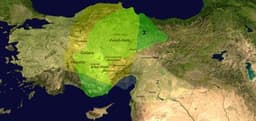
Hattusili I
Emperor · Ancient
57.0Total

Napoleon Bonaparte
General · Modern
70.9Total
Basic Information
Born
-1650
1769
Died
-1620
1821
Era
Ancient
Modern
Nationality
Hittite Empire
France
Occupation
Emperor
General
Civilization
Middle Eastern
Western
Score Comparison
Military (10%)
63.3
94.0
Political (20%)
68.0
72.0
Influence (20%)
54.1
40.0
Legacy (20%)
49.2
80.0
Leadership (15%)
64.0
78.0
Strategy (15%)
50.0
90.0
TOTAL
57.0
70.9
Hattusili I — Complete Timeline
1650 BC
Crossing of the Taurus MountainsWar◆ Major
Hattusili I led the Hittite army across the Taurus Mountains into northern Syria, conquering the kingdom of Alalakh and other cities. This campaign established Hittite control over key trade routes and marked the beginning of the Hittite Old Kingdom's expansion.
Hittite EmpireMilitary CampaignSyria
Impact: regional
Foundation of the Hittite Old KingdomPolitical Action
Hattusili I established the Hittite Old Kingdom by consolidating control over central Anatolia and moving the capital to Hattusa. He initiated a centralized administration and military reforms that laid the foundation for Hittite imperial power.
Hittite EmpireState FormationHattusa
Impact: regionalconstructive
Napoleon Bonaparte — Complete Timeline
1799 AD
Coup of 18 BrumaireOther◆ Major
Napoleon Bonaparte, with support from his brother Lucien and key political figures, overthrew the Directory in a bloodless coup. He established the Consulate with himself as First Consul, effectively becoming the ruler of France. This event ended the French Revolution's most unstable period.
French RevolutionCoupRise to Power
Impact: regional
1804 AD
Promulgation of the Napoleonic CodeOther◆ Major
Napoleon enacted the Civil Code of the French, known as the Napoleonic Code, a comprehensive set of laws that replaced the fragmented feudal legal systems. The code established legal equality, protected property rights, and secularized law. It became the basis for legal systems in many European and world countries.
Legal ReformNapoleonic CodeCivil Law
Impact: globalconstructive
1805 AD
Battle of AusterlitzWar◆ Major
Napoleon's Grande Arm
Napoleonic WarsBattleDecisive Victory
Impact: global
1812 AD
Invasion of RussiaWar◆ Major
Napoleon led the Grande Arm
Napoleonic WarsInvasionDisaster
Impact: globaldestructive
1815 AD
Battle of WaterlooWar◆ Major
Napoleon's French army was defeated by the combined forces of the Duke of Wellington's Anglo-Allied army and Gebhard Leberecht von Bl
Napoleonic WarsBattleFinal Defeat
Impact: globaldestructive
Expert Analysis
hattusili-i-vs-napoleon-bonaparte
# The Conqueror's Mirror: Napoleon and Hattusili I Across Three Millennia
On a June morning in 1815, Napoleon Bonaparte watched his Imperial Guard advance across the muddy fields of Waterloo, their bearskin caps bobbing through cannon smoke like waves against a crumbling dike. Thirty-seven centuries earlier, another conqueror stood atop the Taurus Mountains, gazing south toward the fertile plains of Syria where his army would soon shatter the kingdom of Alalakh. One would end his days in exile on a remote Atlantic island; the other would be remembered as the founder of an empire that lasted half a millennium. Between these two figures—the Corsican artilleryman who became master of Europe and the Hittite king who crossed a mountain range to forge a civilization—lies a chasm of time so vast it nearly defies comprehension. Yet when we place them side by side, we see not opposites but mirrors: ambition meeting circumstance, genius colliding with fate, and the eternal question of what separates triumph from tragedy.
Origins
Napoleon Bonaparte was born in 1769 on the island of Corsica, a land that had passed from Genoese to French control only months before his birth. His family belonged to the minor nobility, poor enough to feel the sting of want but connected enough to secure his admission to French military academies. There, the young Corsican learned mathematics and artillery science while enduring the contempt of aristocratic classmates who mocked his accent and provincial manners. This outsider's hunger—the desperate need to prove himself—became the engine of his ambition.
Hattusili I emerged from a world so distant that even his name is partly conjecture. He ruled around 1650 BCE, when Egypt still built pyramids and Babylon's Hanging Gardens were centuries away. The Hittites were a Indo-European people who had migrated into Anatolia, establishing themselves among older civilizations. Hattusili's origins remain obscure, but his actions speak of a king who inherited a fledgling state and chose to transform it through war. Where Napoleon fought his way through a rigid social hierarchy, Hattusili faced a world of competing city-states and shifting alliances, where a king's legitimacy rested on his sword.
Rise to Power
Napoleon's ascent was meteoric. At twenty-four, he drove the British from Toulon; at twenty-six, he crushed a royalist uprising in Paris with a "whiff of grapeshot"; at twenty-seven, he commanded the Army of Italy and conquered the peninsula in a whirlwind campaign. Each victory opened new doors—political connections, military commands, the adoration of a nation exhausted by revolution. His 1798 Egyptian campaign, though ultimately a strategic failure, burnished his legend. By 1799, he was First Consul of France; by 1804, Emperor of the French.
Hattusili's path was slower, carved from stone and blood. The key event of his reign, recorded in the Hittite annals, was the crossing of the Taurus Mountains around 1650 BCE. This was no mere military march but a logistical feat that demonstrated his strategic vision. By leading his army through these formidable peaks into northern Syria, he struck at the heart of Hittite rivals, conquering Alalakh and extending Hittite influence deep into Mesopotamia. This single campaign established the Hittite Old Kingdom, with its capital at Hattusa. Where Napoleon seized power through a coup, Hattusili built his throne by expanding his kingdom's borders, one conquered city at a time.
Leadership & Governance
Napoleon's genius lay in his ability to combine military brilliance with administrative reform. His Napoleonic Code standardized French law, abolished feudal privileges, and established principles that still influence legal systems across Europe. He created the Bank of France, reformed education, and built infrastructure that connected his empire. On the battlefield, his strategy was aggressive and adaptive—he sought decisive battles, used speed to divide his enemies, and exploited terrain with the eye of a mathematician. His political wisdom, however, was flawed. He placed family members on thrones across Europe, alienated potential allies through arrogance, and failed to understand the limits of his power.
Hattusili governed a smaller, more fragile state. His military score of 45.0 reflects a commander who was competent but not revolutionary—he conquered through persistence rather than tactical innovation. His political score of 49.9 suggests a ruler who understood the need for consolidation but lacked Napoleon's institutional vision. Yet his leadership score of 41.7, while modest, understates his achievement: he founded a kingdom that would endure for centuries, laying the groundwork for Hittite civilization. He did not write codes or build banks, but he established the structures of power that allowed his successors to thrive.
Triumph & Tragedy
Napoleon's greatest triumph was Austerlitz in 1805, where he destroyed the combined armies of Russia and Austria, cementing his mastery of Europe. His greatest tragedy was the 1812 invasion of Russia, where he lost half a million men to winter, disease, and guerrilla warfare. Forced into exile on Elba, he returned for the Hundred Days, only to meet final defeat at Waterloo in 1815. His second exile on Saint Helena was a slow death from stomach cancer, surrounded by British guards and bitter memories.
Hattusili's triumph was the foundation of the Hittite Old Kingdom itself. His crossing of the Taurus Mountains and conquest of Alalakh established Hattusa as a capital and his dynasty as the ruling house of Anatolia. His tragedy is harder to discern, lost in the gaps of ancient records. He may have faced rebellions, succession crises, or the simple exhaustion of ruling a kingdom built on conquest. What we know is that he died around 1620 BCE, his work unfinished, but his legacy secure.
Character & Destiny
Napoleon's character was a paradox: a man of supreme self-confidence who was also deeply insecure, a rationalist who believed in his own destiny, a reformer who became a tyrant. "Impossible is a word to be found only in the dictionary of fools," he said, and he lived by that creed. But his ambition outstripped his wisdom. He could not stop conquering, could not accept limits, and so he fell.
Hattusili's character is inferred from his actions. He was patient, methodical, and strategic—willing to cross mountains and risk everything for a kingdom that did not yet exist. He lacked Napoleon's charisma but possessed a steadiness that allowed him to build rather than merely conquer. Where Napoleon's destiny was shaped by the French Revolution and the vacuum of power it created, Hattusili's was shaped by the brutal realities of Bronze Age geopolitics, where empires rose and fell with the seasons.
Legacy
Napoleon's legacy is written across the map of Europe. His legal code, his reforms, and his wars reshaped the continent. He is remembered as both a liberator who spread revolutionary ideals and a tyrant who drowned them in blood. His influence score of 82.0 and legacy score of 78.0 reflect this complexity—a figure who cannot be reduced to simple judgment.
Hattusili's legacy is quieter but no less profound. He founded the Hittite Old Kingdom, which would evolve into the Hittite Empire, a civilization that rivaled Egypt and Babylon. His influence score of 72.5 and legacy score of 65.6 acknowledge his role as a founder. He is remembered not in statues or codes but in the annals of ancient kings and the ruins of Hattusa, where archaeologists still uncover his story.
Conclusion
What drives a man to cross a mountain range into the unknown? What drives another to conquer a continent? Napoleon and Hattusili I answered these questions differently, yet both understood that power is never given—it is taken, held, and lost. One built an empire that crumbled in a generation; the other built a kingdom that lasted centuries. The difference was not genius but patience, not ambition but wisdom. In the end, both men remind us that the greatest conquerors are not those who win the most battles, but those who build something that outlasts their own ambition.
Rankings
🥇
Napoleon BonaparteLeader
Mil: 94.0Pol: 72.0Inf: 40.0
70.9
🥈
Hattusili I
Mil: 63.3Pol: 68.0Inf: 54.1
57.0
+13.9 behind
How This Comparison Works
Algorithm
Each figure is scored on 6 dimensions (0—100 scale) based on structured historical data: Military (10%), Political (20%), Influence (20%), Legacy (20%), Leadership (15%), Strategy (15%). The weighted total produces the final ranking.
Data Sources
Scores are computed from structured sub-indicators in the database. Scale factors adjust for era (Ancient ×0.85, Modern ×1.0) and civilization size (Eastern ×1.05, Other ×0.80) to account for differences in population and military scale.
Maximum 3 Figures
Comparisons are limited to 2—3 figures to ensure readability and statistical meaningfulness.
Error Margins
±5 points per dimension — Sub-scores are derived from historical records with inherent uncertainty. Two figures within 5 points on a dimension should be considered roughly equivalent in that area.
Total Score Accuracy
±3 points overall — The weighted combination of 6 dimensions produces a total score with approximately ±3 points of uncertainty. Differences of less than 3 points are not statistically significant— the figures are effectively tied.
Known Limitations
- Historical records are incomplete and uneven across civilizations
- Figures from oral-tradition societies may be underrepresented
- Occupation labels can misclassify multi-role figures
- Scores measure capability and impact, not moral character
- Quantitative scoring is a comparison tool, not absolute truth
Capability Radar
Military (10%) — Battles & Warfare
Battles
60
95
Win Rate
65
90
Expansion
65
95
Political (20%) — Governance & Reform
Reform
60
95
Diplomacy
50
80
Economy
45
85
Influence (20%) — Cultural & Global Reach
Cultural
45
85
Global
40
90
Legacy (20%) — Historical Impact
Historical
55
95
Longevity
50
90
Leadership (15%) — Power & Stability
Tenure
55
85
Stability
40
70
Strategy (15%) — Tactics & Innovation
Strategy
60
95
Tactics
55
98
Reform
50
92
Similar Comparisons
Comments & Discussion
ArtilleryOracle6/17/2026
Comparing Hattusili I to Napoleon is like putting a chariot next to a howitzer. Hattusili conquered Alalakh with bronze-age logistics—no supply lines, no maps worth a damn. Napoleon had the 13 Vendémiaire cannonade, a masterstroke of urban warfare. One used sheer audacity; the other engineered victory with math and gunpowder. The Hittite built a kingdom; the Corsican built a legend. Apples and siege towers.
尘封史官6/17/2026
把哈图西里一世比作拿破仑,简直是拿铁锹碰大炮。哈图西里攻陷阿拉拉赫靠的是铜器时代的土办法——没有正规补给线,地图画得跟鬼画符似的。拿破仑呢?人家在十三日葡月用大炮在巴黎街头清场,那是城市战的教科书。一个靠蛮勇闯天下,一个用数学和火药精算胜局。赫梯人建立了一个王国,科西嘉人创造了一个神话。这俩根本不是一码事。
NumismaticNerd6/17/2026
I'm skeptical of any "mirror" claims between Hattusili I and Napoleon. We have Napoleonic letters, memoirs, and 30,000 pages of his correspondence. For Hattusili? One "Annals" text on a clay tablet, likely propaganda. Napoleon's economic reforms—the Bank of France, the Franc germinal—reshaped Europe for a century. We have zero clue how Hattusili managed trade. The comparison is built on Napoleon's wealth of data and Hattusili's void of it. That's not a mirror; it's a mirage.
希腊语狂人6/17/2026
拿拿破仑和哈图西里一世硬凑,简直是对历史的强奸。拿破仑的遗产写满了欧洲的档案室——民法典至今还在用,警察体系照抄他的。哈图西里?靠几块赫梯泥板吹出来的“帝国奠基者”,连他是不是真干了那些事都存疑。拿破仑是白纸黑字的历史,哈图西里是考古学家脑补的童话。非要对着两千年的鸿沟谈“共鸣”,只能说明你根本不懂什么叫历史证据。
TacticalPedant6/17/2026
Hattusili I's "genius" is overblown by people who can't read cuneiform. His campaign against Alalakh wasn't brilliant; it was inevitable, given Hittite bronze superiority. Napoleon's strategic genius is undeniable—he consistently outmaneuvered larger Austrian and Russian armies. The "mirror" breaks entirely at Waterloo versus Hattusili's obscure mountain crossing. One is a catastrophic miscalculation against Wellington's combined-arms defense; the other is a hike. Let's stop romanticizing illite