Loading...
Constantine IV vs Tigranes the Great
Tigranes the Great leads by 0.6 pts · 2 figures compared
…

Constantine IV
Emperor · Ancient
61.2Total
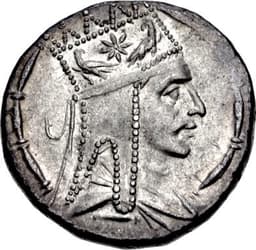
Tigranes the Great
Emperor · Ancient
61.8Total
Basic Information
Born
-650
-140
Died
—
-55
Era
Ancient
Ancient
Nationality
Byzantine Empire
Armenia
Occupation
Emperor
Emperor
Civilization
Western
Middle Eastern
Score Comparison
Military (10%)
67.3
76.0
Political (20%)
62.7
60.0
Influence (20%)
58.0
59.0
Legacy (20%)
52.0
49.2
Leadership (15%)
72.0
77.2
Strategy (15%)
67.2
65.4
TOTAL
61.2
61.8
Constantine IV — Complete Timeline
678 AD
Defeated the Arab siege of ConstantinopleWar
Constantine IV successfully defended Constantinople against a massive Arab siege that lasted from 674 to 678. The Byzantine victory, aided by the use of Greek fire, forced the Umayyad Caliphate to sue for peace and pay tribute.
Arab-Byzantine WarsSiegeGreek Fire
Impact: globalconstructive
680 AD
Reorganized the Byzantine army into themesReform◆ Major
Constantine IV continued the reorganization of the Byzantine military into thematic provinces. This system, which combined civil and military authority, proved effective in defending the empire against external threats.
Military ReformAdministrationByzantine Empire
Impact: nationalconstructive
Convened the Third Council of ConstantinopleCultural◆ Major
Constantine IV convened the Third Council of Constantinople, which condemned Monothelitism as a heresy. The council restored religious unity between Constantinople and Rome, ending a long-standing theological dispute.
Ecumenical CouncilReligious UnityByzantine Empire
Impact: regionalconstructive
Tigranes the Great — Complete Timeline
83 BC
Conquest of Syria and CiliciaWar
Tigranes conquered the remnants of the Seleucid Empire in Syria and Cilicia, extending his rule to the Mediterranean coast. He assumed the title 'King of Kings' and ruled an empire stretching from the Caspian Sea to the Mediterranean.
Seleucid ConquestEmpire BuildingKing of Kings
Impact: regionalconstructive
77 BC
Foundation of TigranocertaCultural◆ Major
Tigranes the Great founded the city of Tigranocerta as his new capital, located in northern Mesopotamia. The city was built with a mixed population of deportees from conquered Greek cities and became a center of Hellenistic culture and trade.
City FoundationHellenismCapital
Impact: regionalconstructive
69 BC
Battle of TigranocertaWar
Tigranes was decisively defeated by a Roman army under Lucullus at the Battle of Tigranocerta. The Roman victory led to the capture of the capital and the collapse of Tigranes' empire, reducing Armenia to a client kingdom of Rome.
Roman-Armenian WarLucullusDefeat
Impact: regionaldestructive
66 BC
Submission to PompeyPolitical Action◆ Major
Tigranes submitted to the Roman general Pompey, who confirmed him as king of Armenia proper but stripped him of all conquered territories. Tigranes paid a large indemnity and became a Roman ally, retaining his throne but losing his empire.
Roman DiplomacyClient KingdomPompey
Impact: regional
Expert Analysis
Origins
Constantine IV was born around 652 in Constantinople, the eldest son of Emperor Constans II. He was raised in the imperial court, receiving education in military and administrative affairs. His family, the Heraclian dynasty, had ruled the Byzantine Empire since 610. Constantine became co-emperor in 654 and assumed full power after his father's assassination in 668.
Tigranes the Great was born around 140 BC into the Artaxiad dynasty of Armenia. His father, Artavasdes I, was king of Armenia. Tigranes was raised as a hostage of the Parthian king Mithridates II, an experience that exposed him to Parthian politics and military tactics. He was released around 105 BC and became king of Armenia, initially as a vassal of Parthia.
Rise to Power
Constantine IV ascended to the throne in 668 after his father Constans II was murdered. The empire faced immediate threats: the Arab Umayyad Caliphate launched a series of attacks, culminating in the siege of Constantinople from 674 to 678. Constantine's leadership during this crisis solidified his authority. He also dealt with a rebellion by his brothers, Heraclius and Tiberius, whom he had mutilated to prevent future challenges.
Tigranes the Great expanded Armenian power by exploiting the decline of the Seleucid Empire and the internal conflicts of Parthia. Around 95 BC, he conquered Sophene and later allied with Mithridates VI of Pontus, marrying his daughter Cleopatra. By 83 BC, Tigranes had conquered Syria, Cilicia, and parts of Mesopotamia, proclaiming himself "King of Kings." His empire stretched from the Caspian Sea to the Mediterranean.
Leadership & Governance
Constantine IV continued the reorganization of the Byzantine military into thematic provinces, which combined civil and military authority. This system improved defense and administrative efficiency. He convened the Third Council of Constantinople in 680-681, which condemned Monothelitism, a theological controversy that had divided the empire. Politically, he scored 62.7, reflecting his ability to maintain stability but limited territorial expansion.
Tigranes the Great ruled a multi-ethnic empire through a system of vassal kings and satraps. He founded the city of Tigranocerta as his capital, populated with forced deportations from conquered territories. His leadership score of 77.2 reflects his capacity to build a large empire, but his political score of 60.0 indicates weaknesses in sustaining it against Roman pressure. His governance relied heavily on personal authority rather than institutional structures.
Triumph & Tragedy
Constantine IV's greatest triumph was the defeat of the Arab siege of Constantinople (674-678), which saved the Byzantine Empire from collapse. The use of Greek fire was crucial. He also secured a peace treaty with the Umayyads, guaranteeing a 30-year truce. However, his reign saw the loss of North Africa to the Arabs, and his mutilation of his brothers was seen as cruel. His military score of 67.3 reflects competent defense but limited offensive success.
Tigranes the Great's triumph was building the largest Armenian empire in history, with territory from the Caspian to the Mediterranean. However, his tragedy came when he underestimated Roman power. At the Battle of Tigranocerta (69 BC), he was decisively defeated by Lucullus, leading to the capture of his capital. Later, he submitted to Pompey in 66 BC, losing all conquered territories except Armenia proper. His military score of 76.0 reflects initial conquests but strategic errors against Rome.
Character & Destiny
Constantine IV was pragmatic and cautious, focusing on defense and internal unity. His decision to convene the church council showed a desire for religious harmony, while his harsh treatment of his brothers indicated a ruthless streak. His character suited the defensive needs of Byzantium at the time.
Tigranes the Great was ambitious and expansionist, with a vision of Armenian hegemony. However, his overconfidence led him to confront Rome directly, a miscalculation that cost him his empire. His character was shaped by his hostage years, making him skilled in diplomacy but also prone to grandiose projects.
Legacy
Constantine IV is remembered as a savior of Byzantium. His defense of Constantinople allowed the empire to survive for another 800 years. The theme system he developed became the backbone of Byzantine military organization for centuries. The Third Council of Constantinople also had lasting theological impact. His legacy score of 52.0 reflects his importance but limited global recognition.
Tigranes the Great is a national hero in Armenia, symbolizing a golden age of independence and power. However, his empire collapsed quickly after his death, leaving little lasting political structure. His legacy score of 49.2 is lower due to the ephemeral nature of his conquests. He is remembered more for his ambition than for durable institutions.
Conclusion
While Tigranes the Great built a larger empire and scored higher militarily (76.0 vs 67.3), Constantine IV had a more lasting impact. Constantine's defense of Constantinople preserved the Byzantine Empire, which shaped European history for centuries. Tigranes' empire, though impressive, disintegrated under Roman pressure and left no enduring political legacy. Constantine's total score of 61.2 is slightly lower than Tigranes' 61.8, but his influence on the course of history is greater. Constantine IV, not Tigranes the Great, had a more significant and enduring impact.
Rankings
🥇
Tigranes the GreatLeader
Mil: 76.0Pol: 60.0Inf: 59.0
61.8
🥈
Constantine IV
Mil: 67.3Pol: 62.7Inf: 58.0
61.2
+0.6 behind
How This Comparison Works
Algorithm
Each figure is scored on 6 dimensions (0—100 scale) based on structured historical data: Military (10%), Political (20%), Influence (20%), Legacy (20%), Leadership (15%), Strategy (15%). The weighted total produces the final ranking.
Data Sources
Scores are computed from structured sub-indicators in the database. Scale factors adjust for era (Ancient ×0.85, Modern ×1.0) and civilization size (Eastern ×1.05, Other ×0.80) to account for differences in population and military scale.
Maximum 3 Figures
Comparisons are limited to 2—3 figures to ensure readability and statistical meaningfulness.
Error Margins
±5 points per dimension — Sub-scores are derived from historical records with inherent uncertainty. Two figures within 5 points on a dimension should be considered roughly equivalent in that area.
Total Score Accuracy
±3 points overall — The weighted combination of 6 dimensions produces a total score with approximately ±3 points of uncertainty. Differences of less than 3 points are not statistically significant— the figures are effectively tied.
Known Limitations
- Historical records are incomplete and uneven across civilizations
- Figures from oral-tradition societies may be underrepresented
- Occupation labels can misclassify multi-role figures
- Scores measure capability and impact, not moral character
- Quantitative scoring is a comparison tool, not absolute truth
Capability Radar
Military (10%) — Battles & Warfare
Battles
75
75
Win Rate
80
70
Expansion
40
85
Political (20%) — Governance & Reform
Reform
55
65
Diplomacy
70
70
Economy
60
60
Influence (20%) — Cultural & Global Reach
Cultural
50
55
Global
60
60
Legacy (20%) — Historical Impact
Historical
65
65
Longevity
55
50
Leadership (15%) — Power & Stability
Tenure
65
80
Stability
65
55
Strategy (15%) — Tactics & Innovation
Strategy
75
78
Tactics
70
72
Reform
60
60
Similar Comparisons
Comments & Discussion
No comments yet. Be the first to share your thoughts!