Loading...
Juba II vs Tigranes the Great
Tigranes the Great leads by 11.9 pts · 2 figures compared
…
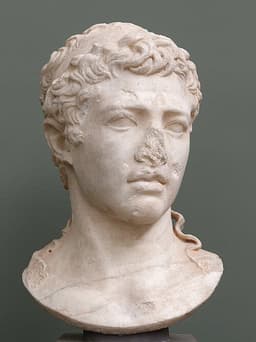
Juba II
Emperor · Ancient
49.9Total
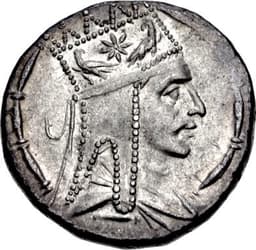
Tigranes the Great
Emperor · Ancient
61.8Total
Basic Information
Born
-48
-140
Died
23
-55
Era
Ancient
Ancient
Nationality
Mauretania
Armenia
Occupation
Emperor
Emperor
Civilization
Other
Middle Eastern
Score Comparison
Military (10%)
50.0
76.0
Political (20%)
46.6
60.0
Influence (20%)
52.5
59.0
Legacy (20%)
42.5
49.2
Leadership (15%)
74.0
77.2
Strategy (15%)
30.3
65.4
TOTAL
49.9
61.8
Juba II — Complete Timeline
25 BC
Marriage to Cleopatra Selene IIPolitical Action◆ Major
Juba II married Cleopatra Selene II, daughter of Cleopatra VII and Mark Antony. The marriage was arranged by Augustus to unite the client kingdoms of Mauretania and Numidia under a loyal couple, consolidating Roman influence in North Africa.
Marriage AllianceRoman Client KingdomNorth Africa
Impact: regionalconstructive
Reign as King of MauretaniaPolitical Action◆ Major
Augustus appointed Juba II as king of Mauretania, a Roman client kingdom. Juba ruled for nearly 50 years, promoting Romanization, urban development, and trade. He established the capital at Caesarea (modern Cherchell) and fostered cultural exchange.
KingshipRomanizationUrban Development
Impact: regionalconstructive
20 BC
Publication of Scholarly WorksCultural◆ Major
Juba II wrote numerous scholarly works in Greek on history, geography, natural history, and art. His writings, though mostly lost, were cited by later authors like Pliny the Elder and Plutarch. He was considered one of the most learned kings of antiquity.
ScholarshipGreek LiteratureNatural History
Impact: regionalconstructive
10 BC
Expedition to the Canary IslandsOther
Juba II sent an expedition to the Canary Islands, which he named after the large dogs (canes) found there. He described the islands in his writings, providing one of the earliest known accounts of the archipelago. This expedition expanded geographical knowledge.
ExplorationGeographyCanary Islands
Impact: regionalconstructive
Tigranes the Great — Complete Timeline
83 BC
Conquest of Syria and CiliciaWar
Tigranes conquered the remnants of the Seleucid Empire in Syria and Cilicia, extending his rule to the Mediterranean coast. He assumed the title 'King of Kings' and ruled an empire stretching from the Caspian Sea to the Mediterranean.
Seleucid ConquestEmpire BuildingKing of Kings
Impact: regionalconstructive
77 BC
Foundation of TigranocertaCultural◆ Major
Tigranes the Great founded the city of Tigranocerta as his new capital, located in northern Mesopotamia. The city was built with a mixed population of deportees from conquered Greek cities and became a center of Hellenistic culture and trade.
City FoundationHellenismCapital
Impact: regionalconstructive
69 BC
Battle of TigranocertaWar
Tigranes was decisively defeated by a Roman army under Lucullus at the Battle of Tigranocerta. The Roman victory led to the capture of the capital and the collapse of Tigranes' empire, reducing Armenia to a client kingdom of Rome.
Roman-Armenian WarLucullusDefeat
Impact: regionaldestructive
66 BC
Submission to PompeyPolitical Action◆ Major
Tigranes submitted to the Roman general Pompey, who confirmed him as king of Armenia proper but stripped him of all conquered territories. Tigranes paid a large indemnity and became a Roman ally, retaining his throne but losing his empire.
Roman DiplomacyClient KingdomPompey
Impact: regional
Expert Analysis
Origins
**Juba II** (c. 48 BC – AD 23) was born into the Numidian royal family, the son of King Juba I. After his father's defeat by Julius Caesar in 46 BC, the young Juba was taken to Rome as a captive. He was raised in the household of Augustus, receiving a thorough Roman education in Greek and Latin literature, history, and science. This early exposure to Roman culture and scholarship shaped his future as a learned king.
**Tigranes the Great** (c. 140 BC – 55 BC) was a member of the Artaxiad dynasty of Armenia. His early life is less documented, but he was taken hostage by the Parthians after a military defeat and later ransomed in exchange for territorial concessions. This experience gave him intimate knowledge of Parthian politics and military tactics, which he would later exploit to expand his kingdom.
Rise to Power
Juba II rose to power through Roman patronage. In 25 BC, Augustus appointed him king of Mauretania, a client kingdom that included parts of modern Algeria and Morocco. This appointment was part of Augustus's strategy to stabilize the region through loyal rulers. Juba married Cleopatra Selene II, daughter of Cleopatra VII and Mark Antony, a union arranged by Augustus to unite two client kingdoms. Juba's reign, lasting nearly 50 years, was marked by peace and collaboration with Rome.
Tigranes the Great's rise was more aggressive. After his release from Parthian captivity, he married Cleopatra, daughter of Mithridates VI of Pontus, and allied with his father-in-law. Around 95 BC, he became king of Armenia. He expanded his realm by conquering Sophene, then taking advantage of the weakening Seleucid Empire. By 83 BC, he had annexed Syria, Cilicia, and parts of Mesopotamia, proclaiming himself "King of Kings." His empire stretched from the Caspian Sea to the Mediterranean.
Leadership & Governance
Juba II governed as a Roman client king, promoting Romanization and urban development. He founded the city of Caesarea (modern Cherchell), which became a center of Greco-Roman culture. He encouraged trade, agriculture, and the construction of public buildings. His rule was stable but entirely dependent on Roman support. His scholarly pursuits, including writing works on history, geography, and natural history, were a hallmark of his reign, but his governance lacked military ambition.
Tigranes the Great ruled as an absolute monarch, building a multi-ethnic empire through conquest. He founded the city of Tigranocerta as his capital, populating it by forcibly relocating people from conquered territories. His administration was centralized but harsh, relying on tribute and military force. He assumed the title "King of Kings" after his conquests, but his empire was fragile, held together by his personal authority and military victories.
Triumph & Tragedy
Juba II's greatest triumph was his successful long reign and his contributions to scholarship. He wrote extensively on subjects like the Canary Islands (which he named), the history of Africa, and the medicinal properties of plants. His works were cited by later authors such as Pliny the Elder and Plutarch. His tragedy was that his kingdom remained a Roman puppet; his independence was nominal, and after his death, Mauretania was eventually annexed by Rome. His scholarly works are mostly lost, leaving only fragments.
Tigranes the Great's triumph was the creation of a vast Armenian empire, the largest in its history. He defeated the Seleucids and Parthians, and his capital Tigranocerta was a symbol of his power. However, his tragedy came with the Roman intervention. In 69 BC, Lucullus defeated him at the Battle of Tigranocerta, capturing the city. Two years later, Pompey forced him to submit, stripping him of all conquered territories except Armenia proper. Tigranes ended his life as a Roman client king, his empire shattered.
Character & Destiny
Juba II was a scholar-king, more interested in learning than warfare. His military score of 50.0 reflects his lack of martial ambition. He was loyal to Rome, which ensured his survival but limited his legacy. His political score of 46.6 indicates his dependence on Augustus. His character was cautious and intellectual, leading to a peaceful but unremarkable reign.
Tigranes the Great was a warrior and empire-builder, with a military score of 76.0 and strategy score of 65.4. He was ambitious and ruthless, but his overreach provoked Rome. His submission to Pompey showed pragmatism, but his destiny was to be a client king like Juba. His leadership score of 77.2 reflects his ability to command, but his political score of 60.0 indicates his failure to secure lasting independence.
Legacy
Juba II's legacy is primarily cultural. He contributed to knowledge through his writings, which influenced later Roman scholars. His reign demonstrated the possibilities of Roman client kingship, but his kingdom did not endure. His legacy score of 42.5 reflects the loss of his works and the absorption of Mauretania into the Roman Empire.
Tigranes the Great's legacy is nationalistic. He is remembered as the founder of a short-lived Armenian empire and a national hero. However, his empire collapsed quickly, and his capital Tigranocerta was abandoned. His legacy score of 49.2 is slightly higher than Juba's, as he symbolizes Armenian greatness, but his concrete achievements were ephemeral. The score gap of 11.9 points in Tigranes's favor is primarily due to military and leadership scores.
Conclusion
While Tigranes the Great's military exploits and empire-building are historically significant, Juba II's contributions to scholarship and stable governance under Roman hegemony are more enduring. However, in terms of impact on world history, Tigranes had a greater direct influence due to his role in shaping the ancient Near East. But his empire was fleeting, while Juba's cultural contributions, though fragmentary, lasted through Roman citations. Taking a clear position: Tigranes the Great had greater impact because his actions directly challenged Rome and reshaped regional borders, even if his empire was short-lived. Juba II's reign was a footnote in Roman history. Thus, despite Juba's intellectual achievements, Tigranes's military and political scores (76.0 and 60.0) outweigh Juba's scholarly legacy.
Rankings
🥇
Tigranes the GreatLeader
Mil: 76.0Pol: 60.0Inf: 59.0
61.8
🥈
Juba II
Mil: 50.0Pol: 46.6Inf: 52.5
49.9
+11.9 behind
How This Comparison Works
Algorithm
Each figure is scored on 6 dimensions (0—100 scale) based on structured historical data: Military (10%), Political (20%), Influence (20%), Legacy (20%), Leadership (15%), Strategy (15%). The weighted total produces the final ranking.
Data Sources
Scores are computed from structured sub-indicators in the database. Scale factors adjust for era (Ancient ×0.85, Modern ×1.0) and civilization size (Eastern ×1.05, Other ×0.80) to account for differences in population and military scale.
Maximum 3 Figures
Comparisons are limited to 2—3 figures to ensure readability and statistical meaningfulness.
Error Margins
±5 points per dimension — Sub-scores are derived from historical records with inherent uncertainty. Two figures within 5 points on a dimension should be considered roughly equivalent in that area.
Total Score Accuracy
±3 points overall — The weighted combination of 6 dimensions produces a total score with approximately ±3 points of uncertainty. Differences of less than 3 points are not statistically significant— the figures are effectively tied.
Known Limitations
- Historical records are incomplete and uneven across civilizations
- Figures from oral-tradition societies may be underrepresented
- Occupation labels can misclassify multi-role figures
- Scores measure capability and impact, not moral character
- Quantitative scoring is a comparison tool, not absolute truth
Capability Radar
Military (10%) — Battles & Warfare
Battles
15
75
Win Rate
10
70
Expansion
10
85
Political (20%) — Governance & Reform
Reform
30
65
Diplomacy
60
70
Economy
40
60
Influence (20%) — Cultural & Global Reach
Cultural
45
55
Global
30
60
Legacy (20%) — Historical Impact
Historical
40
65
Longevity
35
50
Leadership (15%) — Power & Stability
Tenure
55
80
Stability
50
55
Strategy (15%) — Tactics & Innovation
Strategy
15
78
Tactics
20
72
Reform
5
60
Similar Comparisons
Comments & Discussion
No comments yet. Be the first to share your thoughts!