Loading...
Deiotarus of Galatia vs Tigranes the Great
Tigranes the Great leads by 18.6 pts · 2 figures compared
…

Deiotarus of Galatia
Emperor · Ancient
43.2Total
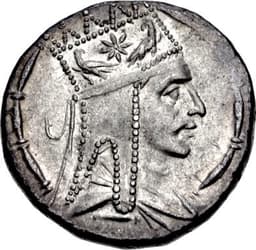
Tigranes the Great
Emperor · Ancient
61.8Total
Basic Information
Born
-90
-140
Died
-40
-55
Era
Ancient
Ancient
Nationality
Galatia
Armenia
Occupation
Emperor
Emperor
Civilization
Western
Middle Eastern
Score Comparison
Military (10%)
25.0
76.0
Political (20%)
40.8
60.0
Influence (20%)
46.3
59.0
Legacy (20%)
36.7
49.2
Leadership (15%)
62.2
77.2
Strategy (15%)
45.0
65.4
TOTAL
43.2
61.8
Deiotarus of Galatia — Complete Timeline
45 BC
Defense Before Cicero in the Roman SenatePolitical Action◆ Major
Deiotarus of Galatia was accused of plotting to assassinate Julius Caesar. The orator Cicero defended him in a speech before the Roman Senate, arguing his loyalty. Deiotarus was acquitted, retaining his kingdom.
TrialCiceroGalatia
Impact: regionalconstructive
Tigranes the Great — Complete Timeline
83 BC
Conquest of Syria and CiliciaWar
Tigranes conquered the remnants of the Seleucid Empire in Syria and Cilicia, extending his rule to the Mediterranean coast. He assumed the title 'King of Kings' and ruled an empire stretching from the Caspian Sea to the Mediterranean.
Seleucid ConquestEmpire BuildingKing of Kings
Impact: regionalconstructive
77 BC
Foundation of TigranocertaCultural◆ Major
Tigranes the Great founded the city of Tigranocerta as his new capital, located in northern Mesopotamia. The city was built with a mixed population of deportees from conquered Greek cities and became a center of Hellenistic culture and trade.
City FoundationHellenismCapital
Impact: regionalconstructive
69 BC
Battle of TigranocertaWar
Tigranes was decisively defeated by a Roman army under Lucullus at the Battle of Tigranocerta. The Roman victory led to the capture of the capital and the collapse of Tigranes' empire, reducing Armenia to a client kingdom of Rome.
Roman-Armenian WarLucullusDefeat
Impact: regionaldestructive
66 BC
Submission to PompeyPolitical Action◆ Major
Tigranes submitted to the Roman general Pompey, who confirmed him as king of Armenia proper but stripped him of all conquered territories. Tigranes paid a large indemnity and became a Roman ally, retaining his throne but losing his empire.
Roman DiplomacyClient KingdomPompey
Impact: regional
Expert Analysis
Origins
Deiotarus was born around 120 BCE into the ruling class of the Galatians, a Celtic people who had settled in central Anatolia. He inherited the position of tetrarch, one of four regional rulers among the Galatians. His early life was shaped by the Hellenistic culture of Asia Minor and the growing influence of Rome. He was educated in Greek and Roman traditions, which later helped him navigate Roman politics. Tigranes the Great was born around 140 BCE into the Artaxiad dynasty of Armenia. His father, Artavasdes I, ruled a kingdom that was often a pawn between Rome and Parthia. Tigranes was sent as a hostage to the Parthian court, where he learned about Parthian military and administrative systems. This experience deeply influenced his later expansionist policies.
Rise to Power
Deiotarus rose to prominence by consolidating the Galatian tribes under his leadership. He initially served as a loyal ally of Rome, supporting the Romans in their wars against Mithridates VI of Pontus. In 64 BCE, Pompey recognized him as king of Galatia, expanding his territory. Deiotarus further ingratiated himself with Rome by supporting Caesar in the Civil War, but after Caesar's assassination, he was accused of plotting against Caesar. His survival depended on Cicero's successful defense in 45 BCE. Tigranes the Great ascended to the Armenian throne in 95 BCE, but initially ruled as a vassal of Parthia. He later turned against Parthia, launching a series of conquests. By 85 BCE, he had defeated the Parthians and expanded his empire to include Syria, Cilicia, and parts of Mesopotamia. He assumed the title "King of Kings" and founded Tigranocerta as his capital.
Leadership & Governance
Deiotarus ruled as a client king under Roman suzerainty. His governance focused on maintaining the loyalty of his Galatian subjects while appeasing Roman authorities. He introduced Roman administrative practices and minted coins bearing his image, but his power was limited by Roman oversight. Tigranes, in contrast, built a centralized empire. He established Tigranocerta as a multicultural capital, forcibly relocating populations from conquered regions to foster loyalty. He adopted the title "King of Kings" and modeled his court after the Seleucids and Parthians. However, his overreach provoked Rome. Deiotarus scored 62.2 in leadership, reflecting his ability to maintain power through diplomacy, while Tigranes scored 77.2, indicating more assertive but ultimately riskier governance.
Triumph & Tragedy
Deiotarus's greatest success was surviving Roman politics. He successfully defended himself against assassination charges, retained his kingdom, and passed it to his heirs. His greatest failure was his inability to expand Galatian power beyond its traditional borders, as he was always constrained by Rome. Tigranes's greatest triumph was building the largest Armenian empire in history, stretching from the Caspian Sea to the Mediterranean. His defeat at the Battle of Tigranocerta in 69 BCE by Lucullus was a major tragedy, leading to the loss of his capital and territories. He later submitted to Pompey in 66 BCE, retaining only Armenia proper. Tigranes scored 76.0 in military, reflecting his initial conquests, but his political score of 60.0 shows his eventual submission.
Character & Destiny
Deiotarus was cautious and pragmatic, always aware of his subordinate position to Rome. He used rhetoric and legal defense (via Cicero) to secure his fate. His character was that of a survivor rather than a conqueror. Tigranes was ambitious and expansionist, driven by a vision of Armenian greatness. His hostage experience made him savvy but also overconfident. Historical assessments note his cruelty in relocating populations but also his administrative skills. Deiotarus's total score is 43.2, while Tigranes scores 61.8, reflecting their different scales of ambition and impact.
Legacy
Deiotarus is remembered primarily through Cicero's speech "Pro Rege Deiotaro," which preserved his legacy as a client king who navigated Roman politics. The Galatian kingdom continued under his descendants but was eventually annexed by Rome. Tigranes the Great is a national hero in Armenia, symbolizing Armenian unity and power. His empire set a precedent for later Armenian kingdoms. However, his legacy is also tied to Roman conquest, as his defeat marked the end of Armenian independence for centuries. Tigranes's influence score of 59.0 versus Deiotarus's 46.3 indicates his broader impact.
Conclusion
Tigranes the Great had a greater impact on history. While Deiotarus skillfully maintained a small kingdom under Rome, Tigranes built an empire that reshaped the Near East. His military campaigns (scoring 76.0) and political vision (scoring 60.0) overshadow Deiotarus's localized influence. The score gap of 18.6 points reflects this disparity. Tigranes's legacy endures in Armenian national identity, while Deiotarus remains a footnote in Roman legal history. Therefore, Tigranes the Great is the more significant historical figure.
Rankings
🥇
Tigranes the GreatLeader
Mil: 76.0Pol: 60.0Inf: 59.0
61.8
🥈
Deiotarus of Galatia
Mil: 25.0Pol: 40.8Inf: 46.3
43.2
+18.6 behind
How This Comparison Works
Algorithm
Each figure is scored on 6 dimensions (0—100 scale) based on structured historical data: Military (10%), Political (20%), Influence (20%), Legacy (20%), Leadership (15%), Strategy (15%). The weighted total produces the final ranking.
Data Sources
Scores are computed from structured sub-indicators in the database. Scale factors adjust for era (Ancient ×0.85, Modern ×1.0) and civilization size (Eastern ×1.05, Other ×0.80) to account for differences in population and military scale.
Maximum 3 Figures
Comparisons are limited to 2—3 figures to ensure readability and statistical meaningfulness.
Error Margins
±5 points per dimension — Sub-scores are derived from historical records with inherent uncertainty. Two figures within 5 points on a dimension should be considered roughly equivalent in that area.
Total Score Accuracy
±3 points overall — The weighted combination of 6 dimensions produces a total score with approximately ±3 points of uncertainty. Differences of less than 3 points are not statistically significant— the figures are effectively tied.
Known Limitations
- Historical records are incomplete and uneven across civilizations
- Figures from oral-tradition societies may be underrepresented
- Occupation labels can misclassify multi-role figures
- Scores measure capability and impact, not moral character
- Quantitative scoring is a comparison tool, not absolute truth
Capability Radar
Military (10%) — Battles & Warfare
Battles
35
75
Win Rate
40
70
Expansion
30
85
Political (20%) — Governance & Reform
Reform
25
65
Diplomacy
55
70
Economy
30
60
Influence (20%) — Cultural & Global Reach
Cultural
20
55
Global
15
60
Legacy (20%) — Historical Impact
Historical
25
65
Longevity
15
50
Leadership (15%) — Power & Stability
Tenure
45
80
Stability
35
55
Strategy (15%) — Tactics & Innovation
Strategy
35
78
Tactics
30
72
Reform
20
60
Similar Comparisons
Comments & Discussion
No comments yet. Be the first to share your thoughts!